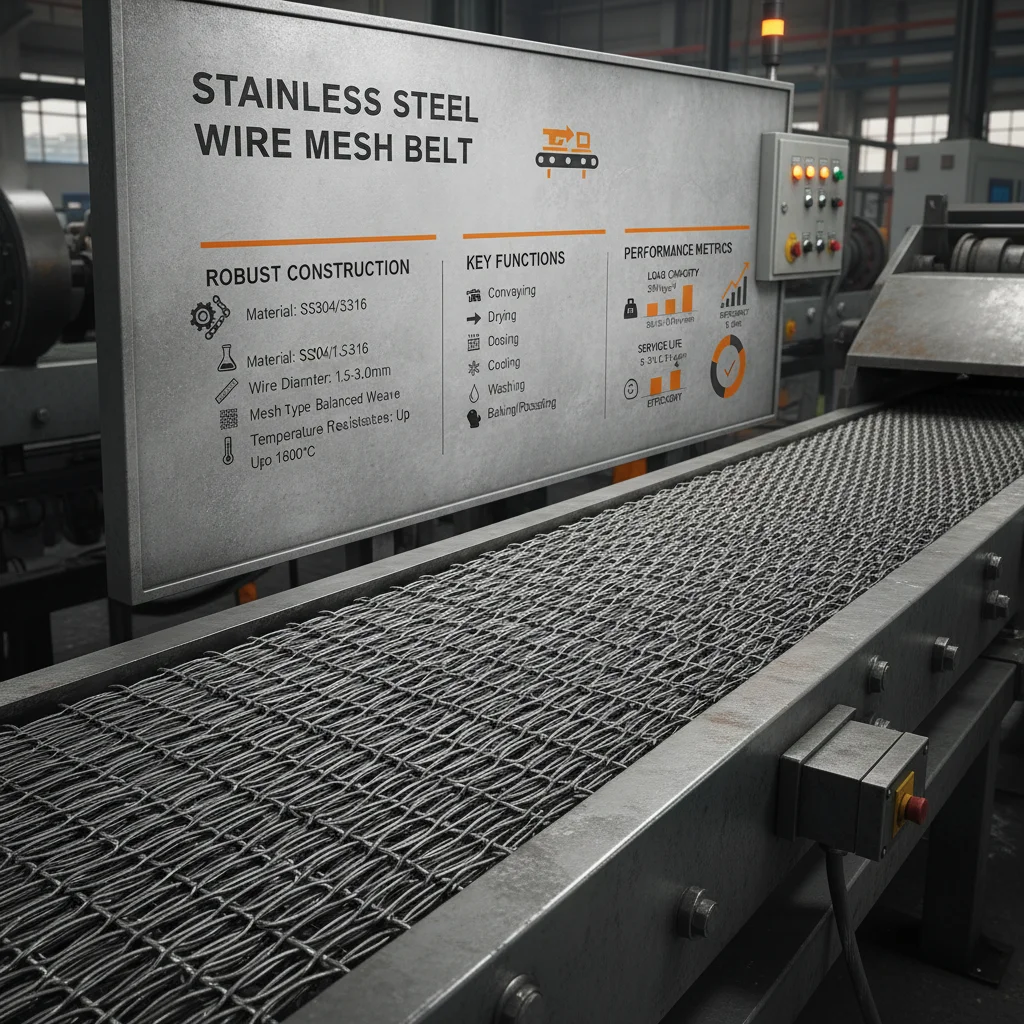
The modern industrial landscape demands precision and resilience, particularly in high-temperature processing. The Electronic Sintering Mesh Belt has emerged as a critical component in this evolution, bridging the gap between traditional conveyor systems and the rigorous requirements of electronic component manufacturing. By providing a stable, heat-resistant platform, these belts ensure that delicate sintering processes are carried out with absolute uniformity.
Across global markets, the adoption of advanced sintering technologies is accelerating as the demand for smaller, more powerful semiconductors and electronic ceramics grows. The reliability of an Electronic Sintering Mesh Belt directly impacts production yield and product quality, making it a cornerstone of efficiency in "Industry 4.0" facilities. Understanding the nuances of its material composition and weave structure is essential for any operation aiming to minimize downtime.
Ultimately, integrating high-performance mesh belts into a production line is not just about hardware replacement; it is about optimizing the thermal dynamics of the entire sintering cycle. From reducing oxidation to ensuring precise movement speeds, the Electronic Sintering Mesh Belt provides the structural integrity needed to withstand extreme temperatures while maintaining a flat, consistent surface for the smallest of components.

Global Industrial Context of Electronic Sintering Mesh Belt
In the current global manufacturing climate, the precision of electronic component production is governed by strict ISO standards and a drive toward zero-defect manufacturing. The Electronic Sintering Mesh Belt serves as the primary vehicle for moving sensitive materials through high-temperature furnaces, where even a slight deviation in belt flatness or a minor tremor can lead to catastrophic failure of the electronic parts.
As nations invest heavily in domestic semiconductor fabrication and green energy electronics, the demand for belts that can operate at temperatures exceeding 1000°C has spiked. The challenge lies in balancing high tensile strength with a dense weave that prevents small components from slipping through, a problem that modern compound weave designs have successfully addressed to maintain industrial throughput.
Defining the Electronic Sintering Mesh Belt Structure
An Electronic Sintering Mesh Belt is a specialized conveyor system typically utilizing a compound balanced weave. Unlike standard mesh, it features multiple spirals and cross rods per pitch, creating a high-density surface. This construction is specifically engineered to close up the apertures within the belt, ensuring that the smallest electronic components—such as micro-resistors or ceramic capacitors—are conveyed securely without falling through the mesh.
From a technical standpoint, this belt represents a fusion of mechanical stability and thermal conductivity. The "balanced" nature of the weave prevents the belt from drifting or "wandering" as it travels through the furnace, while the sintering-specific materials allow it to resist the oxidative pressures of high-heat environments. This makes it an indispensable tool for modern sintering furnaces used in the electronics and ceramics sectors.
Beyond its physical structure, the belt is designed to facilitate uniform heat transfer. Because the surface is remarkably flat and dense, it provides a consistent thermal bridge between the furnace elements and the product, eliminating "cold spots" that could lead to uneven curing or sintering of electronic substrates.
Core Components and Material Excellence
The effectiveness of an Electronic Sintering Mesh Belt depends heavily on its metallurgical composition. For standard electronics applications, 304 and 316 stainless steel are common; however, for extreme sintering temperatures, alloys like 310S and 314 are employed. These materials are selected for their ability to resist oxidation and scaling at temperatures reaching up to 1200°C.
A critical component of the Electronic Sintering Mesh Belt is the edge structure. Whether utilizing a welded edge for heavy-load stability or a chain edge for precise sprocket transmission, the edge determines the belt's tracking accuracy. Welded edges are often considered the "gold standard" for high-temperature stability, preventing the belt from fraying under intense thermal stress.
Furthermore, the spiral pitch and cross-wire diameter are meticulously calibrated. By adjusting the number of cross-wires per spiral coil, manufacturers can customize the "open area" of the belt. In the context of an Electronic Sintering Mesh Belt, a smaller open area is preferred to ensure the safe transport of miniature electronic components.
Key Performance Factors and Efficiency
When evaluating the efficiency of an Electronic Sintering Mesh Belt, engineers focus on four primary metrics: tensile strength, thermal stability, surface flatness, and abrasion resistance. High tensile strength is achieved through the compound weave structure, which distributes the load more evenly than simple spiral belts, reducing the risk of elongation over time.
Surface flatness is equally vital; any bowing or warping in the belt can result in uneven sintering, which is unacceptable in high-precision electronics. By utilizing high-carbon or high-grade stainless steels, the Electronic Sintering Mesh Belt maintains its geometry even after thousands of thermal cycles.
Comparative Performance Metrics of Sintering Belt Materials
Global Applications and Use Cases
The application of the Electronic Sintering Mesh Belt extends far beyond simple transport. In the electronics industry, these belts are the heart of curing furnaces and sintering ovens, where they move substrates through precise temperature zones to harden adhesives or fuse ceramic powders. In regions like East Asia and North America, where semiconductor hubs are concentrated, these belts are used 24/7 to maintain high-volume production.
Beyond electronics, the same technology is applied in the ceramic industry for sintering tiles and specialized industrial components. For instance, in the manufacturing of high-performance ceramic insulators, the Electronic Sintering Mesh Belt ensures that the fragile "green" state of the ceramic is not disturbed during its transition to a fully dense, fired state.
Long-Term Value and Technical Advantages
Investing in a high-quality Electronic Sintering Mesh Belt offers tangible long-term value through the reduction of operational expenses (OPEX). A belt made from 314 or 310S stainless steel lasts significantly longer in oxidative environments than cheaper alternatives, reducing the frequency of costly furnace shutdowns for belt replacement.
Furthermore, the technical advantage of the compound weave lies in its "flatness." In the precision world of electronics, a flat conveyor surface translates to uniform heating. This reliability builds trust in the production process, ensuring that every batch of components meets the same stringent quality specifications, regardless of where they sat on the belt.
Finally, the ability to customize the Electronic Sintering Mesh Belt—adding side plates or cross-flights—allows manufacturers to adapt their existing hardware to new product lines without replacing the entire conveyor system, providing a sustainable path for industrial scaling.
Future Trends in Sintering Mesh Technology
The future of the Electronic Sintering Mesh Belt is leaning heavily toward "Smart Conveying." We are seeing a trend where belts are integrated with sensors to monitor tension and temperature in real-time, allowing for predictive maintenance before a belt failure occurs. This digital transformation is essential for fully automated "dark factories."
Material science is also evolving, with the introduction of advanced nickel-cobalt alloys that can withstand even more aggressive chemical environments and higher temperatures. These innovations will allow the Electronic Sintering Mesh Belt to be used in the next generation of high-temperature superconducting material production.
Sustainability is another driving force. New manufacturing processes for these belts aim to reduce the carbon footprint of stainless steel production, while the increased longevity of the belts reduces industrial waste. The shift toward energy-efficient driving methods, such as optimized sprocket systems, further enhances the green credentials of the sintering process.
Material Temperature and Durability Analysis for Sintering Belts
| Material Grade |
Max Operating Temp |
Oxidation Resistance |
Typical Lifespan (Cycles) |
| Carbon Steel |
550 °C |
Low |
Moderate |
| 304 Stainless |
750 °C |
Medium |
High |
| 316L Stainless |
800 °C |
High |
Very High |
| 310S Stainless |
1200 °C |
Very High |
Extreme |
| 314 Stainless |
1200 °C |
Extreme |
Extreme |
| Nickel Alloy |
1200 °C+ |
Extreme |
Ultra High |
FAQS
The primary difference lies in the weave density and material. An Electronic Sintering Mesh Belt uses a compound balanced weave to create a very small open area, which prevents tiny electronic components from falling through. Additionally, it is manufactured from high-temperature alloys like 310S or 314 stainless steel to survive the extreme heat of sintering furnaces, whereas standard belts would warp or melt.
The lifespan depends heavily on the material. While 304 stainless steel is suitable for mid-range temperatures, belts made from 310S or 314 stainless steel are designed for extreme environments (up to 1200°C) and offer significantly longer service lives. With proper tensioning and maintenance, these belts can last for several years of continuous operation before showing signs of elongation or oxidation.
Yes, customization is key for integration. We offer four main edge types: welded edges for maximum stability and heavy loads; sidewalls to prevent material leakage; folded side guards for increased ductility; and chain edges for sprocket-driven systems to ensure smooth tracking over long distances and reduce energy consumption.
Absolutely. While optimized for electronics, the compound weave structure is ideal for any application requiring the transport of small items through heat. This includes glass annealing, ceramic sintering, and even food industry applications (like biscuit baking) where uniform heat transfer and a flat carrying surface are required.
To prevent tracking issues, we recommend utilizing a chain edge combined with sprocket transmission. This mechanical lock ensures the belt stays centered. Additionally, choosing a balanced weave structure minimizes natural drift, while ensuring the furnace rollers are perfectly aligned will further stabilize the operation of the Electronic Sintering Mesh Belt.
For operations at 1100°C, we strongly recommend 310S or 314 stainless steel. These grades are specifically engineered for high-temperature oxidation resistance and mechanical strength. Carbon steel or 304/316 stainless steel would fail rapidly at this temperature, leading to belt breakage and production downtime.
Conclusion
The Electronic Sintering Mesh Belt is more than a simple mechanical component; it is a critical enabler of precision in the electronics and ceramics industries. By combining the high-density compound weave with advanced alloys like 310S and 314 stainless steel, these belts ensure that miniature components are transported safely and heated uniformly under extreme conditions. The synergy of high tensile strength, thermal stability, and customizable edge configurations allows manufacturers to maximize their production yield and minimize maintenance overhead.
As we look toward the future, the integration of smart monitoring and even more resilient materials will continue to push the boundaries of what is possible in sintering technology. For companies aiming to optimize their thermal processing lines, investing in high-grade mesh belts is a strategic move toward operational excellence and sustainability. We invite you to explore our full range of industrial conveyor solutions to find the perfect fit for your facility. Visit our website: www.jymeshbelt.com