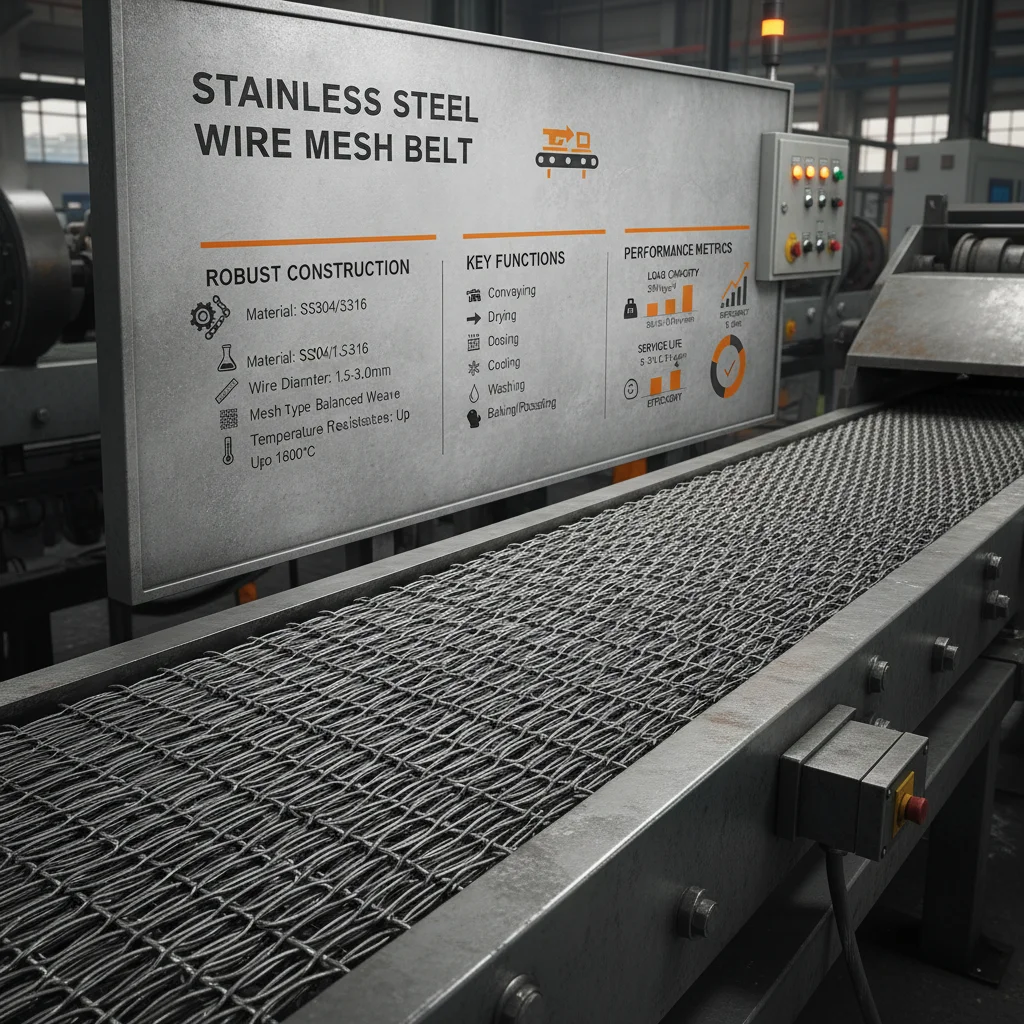
The modern manufacturing landscape demands an unprecedented level of precision and reliability in heat treatment processes. A critical component in achieving this is the use of specialized conveyor systems designed to withstand extreme thermal stress while ensuring a steady, uniform flow of materials. Among these, the Continuous Stainless Steel Brazing Furnace mesh belt stands out as a vital engineering solution for high-temperature industrial applications.
Across the globe, the shift toward automation and continuous processing has replaced outdated batch-style heating methods. This transition is driven by the need for higher throughput, reduced energy waste, and more consistent product quality. In brazing and sintering operations, the choice of the conveyor surface directly impacts the structural integrity of the components being processed, making the selection of materials like 310S and 314 stainless steel a non-negotiable priority for quality control.
Understanding the mechanical properties of a Continuous Stainless Steel Brazing Furnace mesh belt allows engineers to optimize furnace efficiency and extend equipment lifespan. By utilizing a compound balanced weave structure, these belts provide the high density and flat surface necessary for transporting small, delicate mechanical components without the risk of jamming or deformation.

Structural Engineering of Compound Balanced Weave Belts
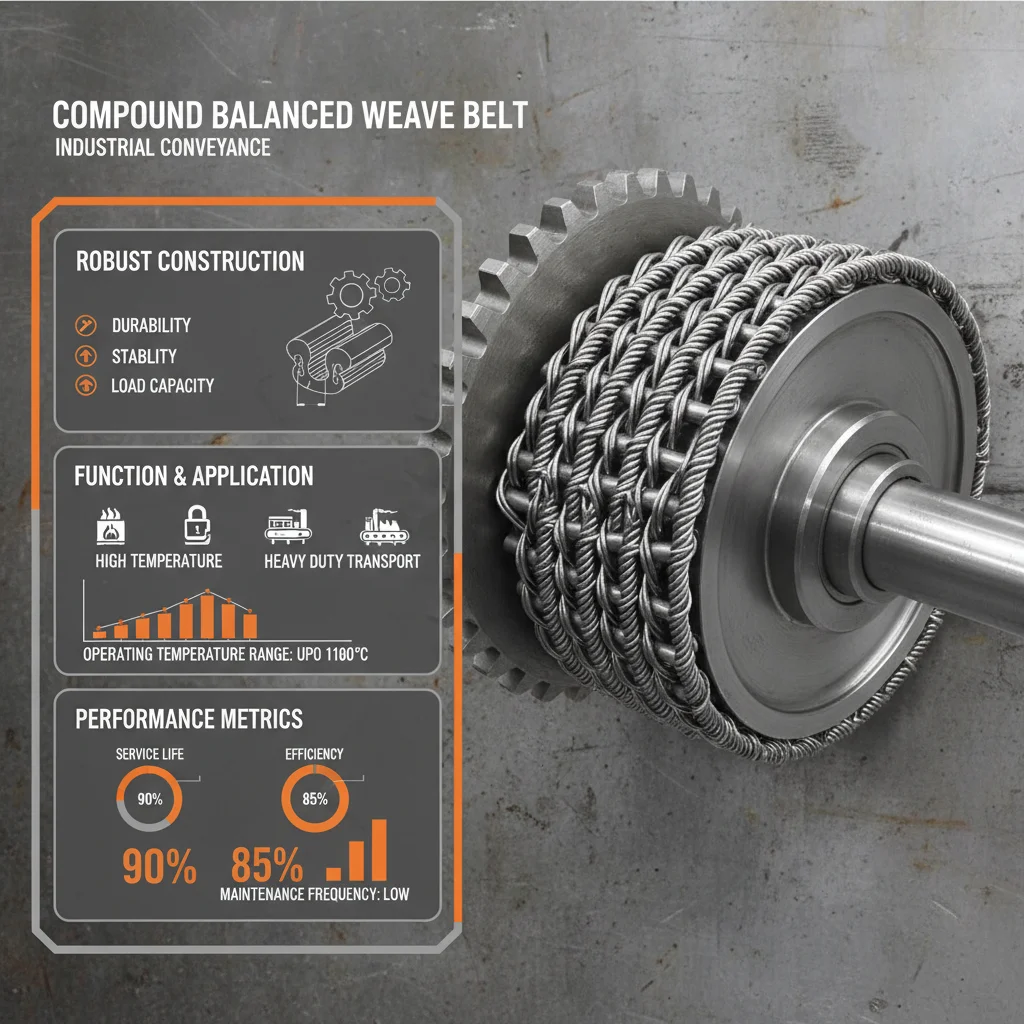
The structural integrity of a Continuous Stainless Steel Brazing Furnace mesh belt relies on its unique compound balanced weave. Unlike standard weaves, this design utilizes right-hand and left-hand spirals that are interconnected by straight cross rods. This complex interlocking system creates a belt with multiple spirals and cross rods per pitch, effectively closing the apertures and resulting in a characteristic high-density surface.
Because of this dense construction, the belt provides an extremely flat carrying surface, which is indispensable when conveying very small items. This prevents small components from falling through the mesh, while simultaneously ensuring that heat transfer remains uniform across the entire width of the belt, eliminating cold spots that could compromise the brazing or sintering process.
Material Science for High-Temperature Resistance
The choice of material is the most critical factor in ensuring the longevity of a Continuous Stainless Steel Brazing Furnace mesh belt. While 304 and 316 stainless steel are widely used in food-grade and low-temperature environments due to their hygienic and corrosion-resistant properties, they are insufficient for the extreme heat of brazing furnaces. For these applications, industry experts turn to 310S and 314 stainless steel.
These high-grade alloys are specifically engineered to withstand oxidation and maintain mechanical strength at temperatures reaching up to 1200°C. The chromium and nickel content in 310S and 314 stainless steel creates a protective oxide layer that prevents peeling, fractures, and short-cycle failures, which are common in powder metallurgy and brazing furnaces.
Beyond stainless steel, high carbon steel is available for environments where temperatures are limited to 550°C. However, for the most demanding thermal cycles, nickel alloy steels are integrated to provide maximum tensile strength and resistance to chemical abrasion, ensuring the belt does not stretch or warp under the combined pressure of heavy loads and intense heat.
Operational Advantages of High-Density Mesh
One of the primary benefits of utilizing a Continuous Stainless Steel Brazing Furnace mesh belt is the significant reduction in "open area." In industrial sorting and heat treatment, a smaller open area means that the belt can support minuscule parts without them slipping through the weave, thereby reducing product waste and machine downtime caused by fallen debris.
Moreover, the high density of the Continuous Stainless Steel Brazing Furnace mesh belt facilitates superior heat transfer. Because the surface is smoother and more compact than a standard balanced weave, it provides a more uniform thermal bridge between the furnace heating elements and the product, ensuring that every piece is brazed with absolute consistency.
Additionally, the compound structure inherently increases the tensile strength of the system. The presence of multiple spirals and cross rods per pitch allows the belt to withstand higher pulling forces during drive operations, making it a durable choice for long-distance transportation within large-scale industrial furnaces.
Comparative Performance Analysis by Material
Selecting the right material for a Continuous Stainless Steel Brazing Furnace mesh belt involves balancing the operating temperature against the required mechanical properties. While carbon steel is cost-effective for mild heat, it fails rapidly in oxidizing atmospheres. In contrast, the 300-series stainless steels offer a tiered progression of heat resistance.
For maximum performance in brazing and sintering, materials like 310S and 314 are the gold standard. These materials not only resist heat but also maintain their shape under tension, preventing the "sagging" effect that often occurs in lower-grade belts during long-term high-temperature exposure.
Material Operating Temperature Performance for Mesh Belts
Diverse Edge Configurations for Industrial Stability
To ensure the stable operation of a Continuous Stainless Steel Brazing Furnace mesh belt, the edge construction must be matched to the drive method and load requirements. Welded edges are the gold standard for heavy-load and high-temperature applications, featuring rounded, full electric welding points that provide maximum stability and long-term life in strict industrial scenarios.
For different operational needs, other options include sidewalls to prevent material leakage or jamming, and folded side guard edges which provide ductility without the need for welding. In long-distance transportation, chain edges are preferred; these combine chains and rods to reduce weight, lower energy consumption, and prevent the belt from running off the track.
Global Application Scenarios in Modern Industry
The versatility of the Continuous Stainless Steel Brazing Furnace mesh belt extends across several critical industries. In the heat treatment sector, these belts are essential for quenching, normalizing, and tempering furnaces, where they must endure rapid temperature shifts. Their oxidation resistance makes them ideal for bright annealing furnaces and cleaning elevators.
Beyond metallurgy, the glass and ceramic industries utilize these belts in annealing and sintering furnaces. The ability to provide a flat, uniform surface ensures that fragile glass or ceramic components are not distorted during the heating and cooling phases.
The electronics industry also relies on this technology for sintering and curing furnaces. Because electronic components are often extremely small, the compound weave's high density is the only way to ensure that tiny parts are transported safely and heated uniformly, which is critical for the reliability of the final electronic product.
Technical Specifications and Customization Options
Customization is key when implementing a Continuous Stainless Steel Brazing Furnace mesh belt into an existing production line. Parameters such as spiral pitch (typically 2.8mm to 12.5mm) and cross wire diameter (0.9mm to 3.5mm) can be adjusted to meet the specific size of the parts being conveyed.
Drive methods also offer flexibility; the belt can be powered via friction rollers or chains depending on the required torque and speed. For complex sorting tasks, custom baffles, cross flights, and side plates can be added to the center or edges of the belt, allowing for sophisticated product organization during the transport process.
The final choice of wire profile—whether round or flat—further dictates the belt's interaction with the product. Flat wires are often used to further increase the contact area and enhance heat transfer, making them a preferred choice for high-precision brazing applications.
Material and Temperature Performance Matrix for Mesh Belts
| Material Grade |
Max Operating Temp |
Oxidation Resistance |
Primary Application |
| Carbon Steel |
550 °C |
Low |
General Conveying |
| 304 Stainless |
750 °C |
Medium |
Food & Hygiene |
| 316 Stainless |
800 °C |
High |
Chemical Processing |
| 310S Stainless |
1200 °C |
Excellent |
Brazing Furnaces |
| 314 Stainless |
1200 °C |
Excellent |
Powder Metallurgy |
| Cr20Ni80 |
1200 °C |
Superior |
Extreme Heat-Treat |
FAQS
The compound weave features multiple spirals and cross rods per pitch, which drastically reduces the open area. This provides a flatter, denser surface that prevents small brazing components from falling through and ensures more uniform heat transfer across the belt, which is critical for consistent metallurgical bonds.
Yes, provided the correct material is selected. While 304 or 316 stainless steel would fail at such temperatures, belts made from 310S or 314 stainless steel are specifically designed to withstand temperatures up to 1200°C without peeling or fracturing, making them ideal for high-heat brazing and sintering.
The welded edge is the gold standard for heavy-load and high-temperature scenarios. Its full electric welding points provide maximum stability and structural integrity, ensuring the belt remains tracked and durable under extreme stress and constant thermal cycling.
For long-distance transportation, we recommend using a chain edge configuration. This system utilizes a combination of chains and rods to ensure smooth, flexible operation and significantly reduces the risk of the belt drifting off the track, while also lowering energy consumption.
Yes, custom baffles and side plates can be integrated into the belt's design. Depending on your needs, these can be added to the center or both sides of the belt to facilitate the sorting, upgrading, or separation of products as they move through the furnace.
316 stainless steel is excellent for corrosion resistance and can handle temperatures up to 800°C. However, for most brazing furnaces that exceed this temperature, 310S or 314 stainless steel is required to prevent oxidation and mechanical failure at the 1000°C+ range.
Conclusion
The implementation of a Continuous Stainless Steel Brazing Furnace mesh belt is more than a simple equipment choice; it is a strategic decision to enhance production quality and operational efficiency. By combining the high-density compound balanced weave with advanced alloys like 310S and 314 stainless steel, manufacturers can ensure that even the smallest components are processed with absolute thermal uniformity and mechanical stability.
As industrial automation continues to evolve, the demand for belts that offer high tensile strength and extreme temperature resistance will only grow. We recommend that engineers carefully evaluate their specific thermal cycles and load requirements to select the optimal material and edge configuration, ensuring a long service life and reduced maintenance costs. For high-performance solutions, visit our website: www.jymeshbelt.com.