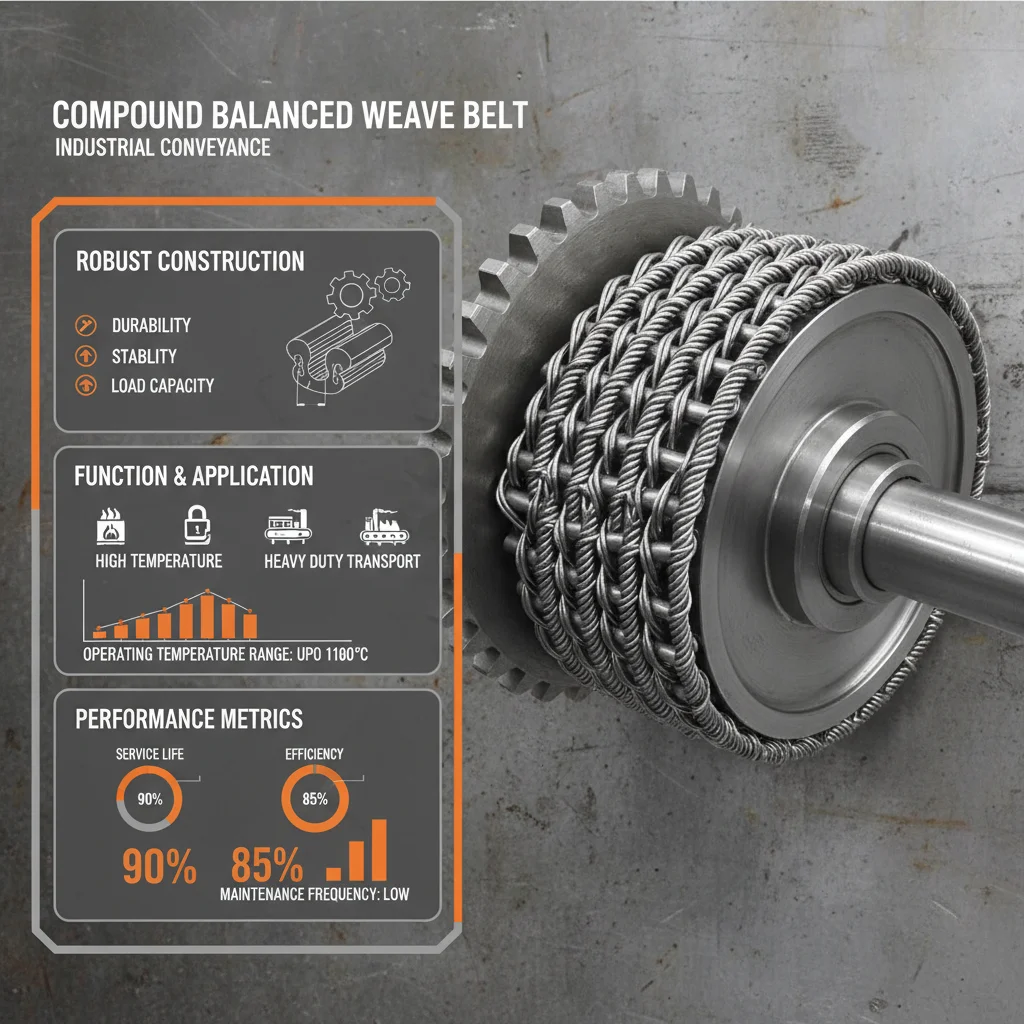
In the demanding world of industrial heat treatment, the efficiency of a production line often hinges on the reliability of its conveying system. The Continuous Aluminum Brazing Furnace mesh belt represents a pinnacle of engineering, specifically designed to handle the extreme thermal and mechanical stresses associated with aluminum brazing processes. By ensuring a stable, precise, and heat-resistant transport mechanism, these belts allow manufacturers to maintain tight tolerances and high throughput.
Global demand for lightweight automotive components and aerospace parts has pushed the boundaries of brazing technology, requiring materials that can withstand temperatures up to 1200°C without deformation. The integration of a high-performance Continuous Aluminum Brazing Furnace mesh belt is no longer just an operational choice but a strategic necessity to prevent costly downtime and material wastage. Its ability to provide uniform airflow and structural stability ensures that every workpiece is treated consistently.
Understanding the technical nuances of Rod Network (Flat Flex) belts—characterized by their unique "Y"-shaped wave structure—is essential for optimizing furnace performance. From increasing tensile strength by 30% to reducing operational noise, the right mesh belt configuration directly impacts the ROI of the entire brazing facility. This guide explores how these advanced conveyor solutions solve the most persistent challenges in high-temperature precision conveying.

The Engineering Logic of Continuous Aluminum Brazing Furnace mesh belt
The core of the Continuous Aluminum Brazing Furnace mesh belt lies in its Rod Network or "Flat Flex" architecture. Unlike traditional woven mesh, this belt utilizes left and right spiral wires cross-woven into a continuous "Y"-shaped wave. This precision design creates a regular rhombus or hexagonal mesh that effectively disperses stress across the entire surface, preventing the localized fatigue common in standard belts.
This structural innovation results in a tensile strength that is over 30% higher than ordinary mesh alternatives. By reducing the risk of stretching and deformation under heavy loads, the "Y"-wave structure ensures that the belt remains perfectly aligned, significantly decreasing the frequency of manual track adjustments and improving the overall stability of the brazing furnace operation.
Thermal Stability and Material Selection for Brazing Environments
Selecting the correct material for a Continuous Aluminum Brazing Furnace mesh belt is critical, as the belt must withstand extreme temperatures without losing its structural integrity. For standard high-heat applications, stainless steel grades like SS304, SS316, and SS310S provide an excellent balance of corrosion resistance and thermal stability. These materials ensure that the belt does not oxidize or become brittle during prolonged exposure to furnace heat.
In the most extreme environments, where peak temperatures can reach 1200°C, Inconel alloys are the gold standard. These superalloys are engineered to maintain high mechanical strength and resistance to oxidation and carburization at temperatures where standard stainless steels would fail. Utilizing Inconel for the mesh belt prevents the catastrophic failure of the conveying system in ultra-high heat zones.
Beyond just the heat, the material choice affects the surface interaction with aluminum parts. The smooth, low-adhesion surface of these high-grade alloys prevents material buildup and ensures that brazed components are transported without surface contamination or marking, which is essential for meeting stringent aerospace and automotive quality standards.
Optimizing Airflow and Permeability in Heat Treatment
Airflow efficiency is a determining factor in the success of any brazing or drying process. A Continuous Aluminum Brazing Furnace mesh belt is specifically engineered with a mesh permeability of ≥60%. This high open area allows for rapid and uniform heat penetration and cooling, ensuring that the temperature distribution across the workpiece is consistent.
This superior permeability means that the Continuous Aluminum Brazing Furnace mesh belt can significantly reduce cycle times for cooling and drying. By allowing the heating medium or cooling air to flow freely through the belt, the "Y"-wave structure eliminates "dead zones" where heat might trap, thereby preventing uneven brazing or warping of the aluminum components.
Furthermore, the precision of the rhombus or hexagonal mesh ensures that the air is distributed evenly across the entire width of the belt. This level of control is indispensable for precision conveying environments where even a small deviation in temperature can lead to a rejected batch of parts.
Comparing Tensile Strength and Operational Efficiency
When comparing the performance of a Continuous Aluminum Brazing Furnace mesh belt to traditional woven mesh, the differences in mechanical longevity are stark. The ability to handle heavy industrial loads without stretching allows for longer intervals between belt replacements, reducing total cost of ownership.
Additionally, the smooth sprocket engagement of the Rod Network design reduces operational noise by over 20%. This not only creates a safer and more pleasant working environment but also indicates a reduction in friction and wear, which translates directly into lower energy consumption for the drive components.
Performance Metrics of Continuous Aluminum Brazing Furnace mesh belt Solutions
Industrial Applications Across Global Manufacturing Sectors
The versatility of the Continuous Aluminum Brazing Furnace mesh belt makes it an essential component in several high-stakes industries. In the automotive sector, it is used extensively for the heat treatment of aluminum radiators and heat exchangers, where precision and heat stability are non-negotiable.
Beyond automotive, these belts are deployed in pharmaceutical sterilization and food processing. The use of SS316 and SS304 ensures compliance with hygiene standards, while the high permeability allows for efficient baking, frying, and rapid cooling. In the building materials industry, specifically for gypsum board production, the belt's ability to handle heavy loads and extreme heat ensures seamless, straight-track conveying.
Maintenance Strategies for High-Temperature Mesh Belts
Maintaining a Continuous Aluminum Brazing Furnace mesh belt requires a specialized approach to ensure longevity. Because these belts are often exposed to fluxes and metallic residues, regular cleaning is paramount. The smooth surface of the Rod Network design is specifically engineered to prevent material adhesion, facilitating fast cleaning via high-pressure water guns or ultrasonic cleaning systems.
Monitoring for belt drift is another critical maintenance step. While the integrated anti-deviation design significantly reduces the risk of shifting, periodic inspections of the sprocket engagement are recommended. Ensuring that the sprockets are not worn prevents uneven tension, which could otherwise compromise the belt's 30% strength advantage.
Finally, material audits should be conducted to check for signs of oxidation or thermal fatigue, especially when operating near the 1200°C limit. By implementing a proactive maintenance schedule, plant managers can extend the life of the conveyor system and avoid the catastrophic costs of unplanned furnace shutdowns.
Future Innovations in Precision Conveying Systems
The evolution of the Continuous Aluminum Brazing Furnace mesh belt is moving toward greater integration with Industry 4.0. Future iterations are expected to incorporate smart sensors that can detect belt tension and wear in real-time, allowing for predictive maintenance rather than reactive repairs.
Material science is also advancing, with new alloy coatings being developed to further reduce friction and increase resistance to corrosive brazing fluxes. This will likely lead to even longer belt lifespans and further reductions in operational noise, enhancing the sustainability of the manufacturing process.
As the industry shifts toward green energy and carbon neutrality, the optimization of thermal efficiency in furnaces becomes critical. High-permeability mesh belts will play a key role in this transition by reducing the energy required for heating and cooling cycles, thereby lowering the overall carbon footprint of the production line.
Core Performance Analysis of Advanced Mesh Belt Materials
| Material Grade |
Max Temperature |
Corrosion Resistance |
Typical Application |
| SS304 |
~850°C |
Moderate |
Food Processing / Drying |
| SS316 |
~870°C |
High |
Pharmaceutical / Chemical |
| SS310S |
~1050°C |
Very High |
Automotive Heat Treatment |
| Inconel Alloy |
1200°C |
Extreme |
Aerospace / Ultra-High Heat |
| Custom Alloy A |
~1100°C |
High |
Specialized Brazing Lines |
| Custom Alloy B |
~900°C |
Moderate |
General Industrial Conveying |
FAQS
The primary advantage is the specialized "Y"-shaped wave structure, which provides over 30% higher tensile strength and significantly lower operational noise. This makes the Continuous Aluminum Brazing Furnace mesh belt much more resistant to stretching and deformation under heavy industrial loads and extreme heat, ensuring a more stable conveying path.
Yes, they are ideal for these sectors. When manufactured from high-grade stainless steels like SS304 or SS316, they meet strict hygiene standards. Their smooth surface and high permeability (≥60%) make them easy to sterilize using high-pressure water or ultrasonic cleaners, ensuring zero residue during baking or sterilization processes.
The temperature limit depends on the material selected. Standard stainless steels handle high heat, but for extreme industrial environments, our Inconel alloy options can withstand temperatures up to 1200°C without losing their structural integrity, making them perfect for the most demanding brazing furnaces.
The unique "Y"-wave structure provides inherent stability and an integrated anti-deviation design. This reduces the risk of the belt drifting off-track, which is a common problem with traditional woven mesh. This stability ensures a consistent, straight conveying path with minimal need for manual adjustment.
Absolutely. With a mesh permeability of ≥60%, these belts allow for maximum airflow and heat penetration. This is highly efficient for rapid drying and cooling applications, such as those used in the production of gypsum boards or the heat treatment of aluminum automotive parts.
They are predominantly used in automotive heat treatment (brazing radiators), food processing (industrial baking/frying), pharmaceutical sterilization, and the building materials industry (cement and gypsum board production) where heavy loads and high temperatures are common.
Conclusion
The Continuous Aluminum Brazing Furnace mesh belt is more than just a conveyor; it is a precision-engineered component that directly influences the quality, efficiency, and safety of industrial heat treatment. By combining a high-strength "Y"-wave structure with advanced materials like Inconel and SS310S, these belts solve the critical challenges of thermal deformation, belt drift, and poor airflow. The result is a production line that operates with 30% more tensile strength and 20% less noise, ensuring maximum uptime and superior product consistency.
As global manufacturing evolves toward greater automation and sustainability, investing in high-performance conveying solutions is the most effective way to future-proof your operations. We recommend conducting a material audit of your current furnace setup to determine if upgrading to a Rod Network belt could reduce your maintenance cycles and energy costs. For those seeking to optimize their precision conveying, the shift toward high-permeability, high-stability mesh belts is the definitive path forward. Visit our website: www.jymeshbelt.com