In the demanding landscape of industrial wood processing, the efficiency of drying stages often determines the final quality of the timber. A high-performance wire mesh belt serves as the backbone of veneer drying systems, ensuring that delicate wood sheets are transported through extreme heat without compromising their structural integrity. These specialized conveyors are engineered to balance air permeability with mechanical strength, allowing for a consistent drying process.
Globally, the demand for precision-engineered conveyor solutions has surged as manufacturers seek to reduce waste and energy consumption. The integration of advanced materials, such as heat-resistant stainless steel, has transformed how veneer is handled, moving from rudimentary systems to high-capacity automated lines. Understanding the technical nuances of these belts is essential for any operation aiming to optimize production output and veneer surface consistency.
By implementing a precision-crafted wire mesh belt, producers can effectively eliminate common defects like warping and resin burn. This guide explores the critical role of these belts in veneer drying, detailing the technical specifications, material choices, and construction methods that drive modern manufacturing excellence in the mechanical transmission sector.

Understanding Veneer Dryer Wire Mesh Belts
Veneer dryer belts are specialized conveyor systems constructed from heat-resistant materials like stainless steel or galvanized steel. Their primary purpose is to transport wood veneers through drying ovens where they are subjected to intense heat to remove moisture. A high-quality wire mesh belt in this context must be engineered to withstand operating temperatures up to 600°C while maintaining minimal elongation to prevent tracking issues.
The open mesh design is the most critical feature, as it allows hot air to circulate freely across the surface of the veneer. This ensures that moisture is removed uniformly from both the top and bottom of the sheet, which is essential for preventing defects such as checking, warping, or resin burn. By ensuring structural integrity under extreme thermal stress, these belts enable manufacturers to maintain high production speeds without sacrificing product quality.
High Thermal Resistance and Material Integrity
The environmental conditions inside a veneer dryer are incredibly harsh, with continuous exposure to high temperatures and fluctuating humidity. To combat this, the materials used in a wire mesh belt are carefully selected for their thermal stability. Stainless steel is often the preferred choice due to its ability to resist oxidation and fatigue, ensuring the belt does not deform even when operating continuously at 600°C.
Material integrity is not just about heat; it is also about resisting the corrosive nature of resins and chemicals often present in the wood processing cycle. Galvanized steel offers a cost-effective alternative for certain applications, providing a protective zinc layer that prevents premature rust. However, for the most demanding high-temperature zones, the alloy composition of the stainless steel is optimized to prevent sagging and maintain a flat transport surface.
When a belt loses its dimensional stability due to heat fatigue, the risk of veneer curling or cupping increases significantly. Therefore, the manufacturing process of the belt involves precise tensioning and weaving techniques. This ensures that the belt retains its width and shape over thousands of cycles, reducing the frequency of replacements and minimizing unplanned downtime in the production line.
Optimizing Airflow for Uniform Drying
Uniformity is the gold standard in veneer production. The open mesh structure of a wire mesh belt is designed to maximize hot air penetration. If the belt were too dense, air would be blocked, leading to "wet spots" on the veneer and inconsistent moisture levels across the sheet, which would later cause failures during the gluing or pressing stages.
To achieve this balance, engineers adjust the mesh density and wire diameter based on the thickness of the veneer being processed. For thinner face veneers, a finer mesh may be used to provide more support, while thicker core veneers might utilize a wider mesh to facilitate faster moisture escape. This strategic design allows the wire mesh belt to function as an active part of the drying technology rather than just a transport mechanism.
Furthermore, the porosity of the belt directly impacts energy efficiency. When air flows freely, the drying speed increases, meaning the veneer spends less time in the oven. This reduces the total energy required per square meter of processed wood, contributing to a more sustainable manufacturing process and lower operational costs for the facility.
Dimensional Stability and Surface Contact
Maintaining a flat transport surface is vital to prevent the veneer from curling or cupping during the drying process. A reinforced wire mesh belt ensures that the veneer remains taut and flat, which is critical for high-grade face veneers used in premium furniture. Any deviation in the belt's flatness can lead to permanent deformations in the wood, rendering the material unusable.
Beyond stability, the texture of the belt's surface plays a role in quality control. A smooth, clean surface contact prevents marking and limits the buildup of resin on the belt. If resin accumulates, it can create "sticking" points that tear the veneer or leave unsightly stains. Regular maintenance and the use of corrosion-resistant materials ensure that the belt remains smooth and efficient over its lifespan.
Performance Comparison of Wire Mesh Belt Types
Comparative Analysis of Belt Constructions
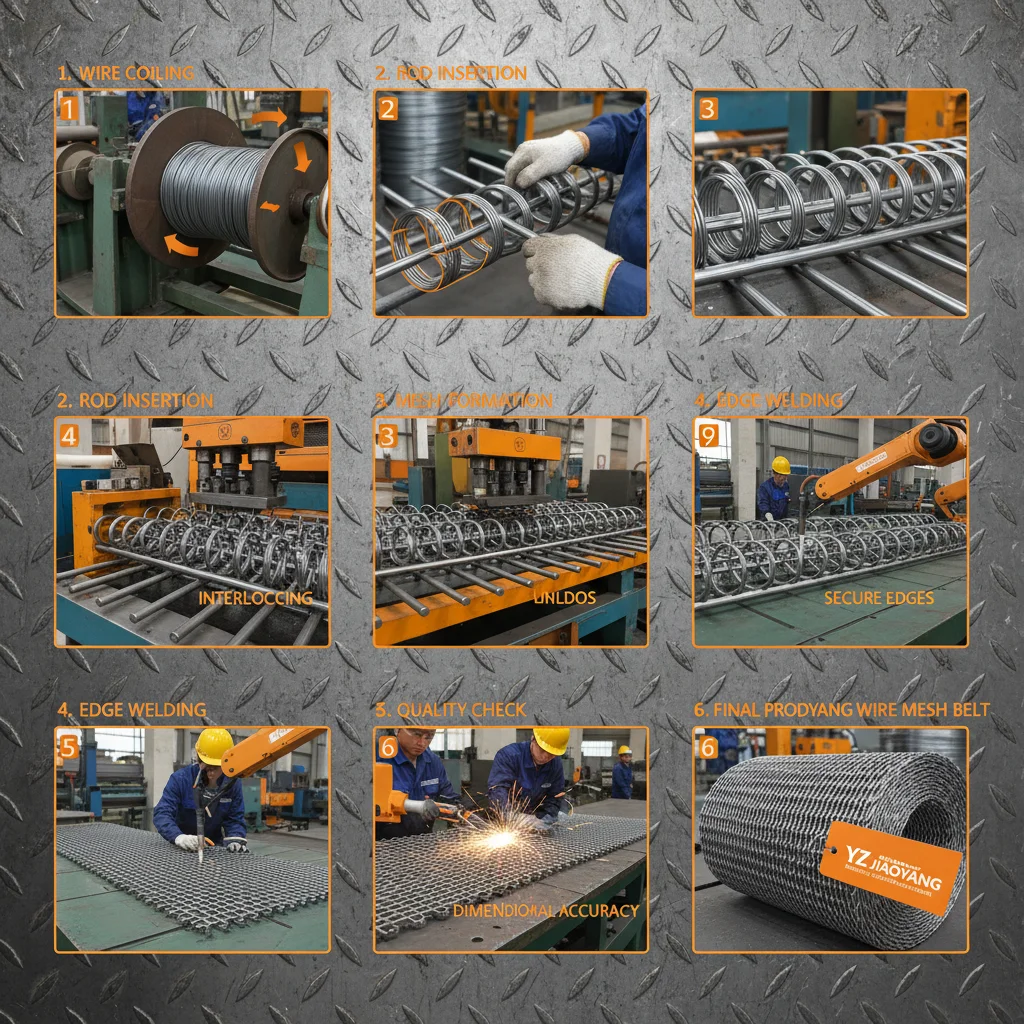
Depending on the specific dryer configuration, manufacturers typically choose between two primary constructions of a wire mesh belt. The first is the Spiral Wire Mesh Belt, which is constructed from interlinked pre-formed spirals and cross rods. This design offers superior flexibility and high tensile strength, making it the ideal choice for wide belt conveyors where minimal distortion is required to maintain tracking.
The second option is the Rod-Reinforced Flat Wire Belt. This construction features flat metal strips held together by solid cross rods and is often reinforced with side chains for stable tracking. These are specifically designed for heavy-duty drying lines that handle large veneer loads or operate in long-span and dual-deck dryer conditions, providing the necessary load-bearing capacity to prevent sagging.
Customization for Specific Veneer Types
Not all veneers are created equal, and neither are the belts used to dry them. The requirements for processing face veneer—which demands a flawless surface—differ greatly from those of core or back veneers. Consequently, a wire mesh belt must be custom-manufactured to fit the specific layout and width of the drying line, ensuring a seamless fit that prevents edge fraying or misalignment.
Customization extends to the technical specifications of the mesh. Engineers can vary the spiral pitches, wire diameters, and reinforcement types to match the specific weight and moisture content of the wood. For instance, a tighter mesh may be specified for very thin veneers to prevent them from sagging through the openings, whereas a more open weave is used for rapid moisture extraction in thicker sheets.
Edge treatments also play a vital role in the longevity of the system. Depending on the dryer's drive mechanism, belts can be finished with reinforced edges to withstand the friction of the drive sprockets. This level of detail ensures that the conveyor operates smoothly, reducing the risk of belt snaps or tracking deviations that could halt the entire production line.
Long-term Value and Maintenance Strategies
Investing in a high-grade wire mesh belt provides long-term value by reducing the total cost of ownership. While the initial investment in stainless steel may be higher than in basic galvanized options, the drastic reduction in maintenance and replacement frequency makes it the more economical choice. The durability of these belts in harsh environments means fewer production stoppages and a more consistent product output.
Effective maintenance strategies are key to extending the life of the belt. Regular inspections for wire fatigue, oxidation, and resin buildup are essential. Because these belts are designed for rugged use, they are relatively low-maintenance, but ensuring that the tensioning system is correctly calibrated prevents uneven wear and tear across the belt's width.
Ultimately, the reliability of the conveyor system translates directly into higher production output. By delivering stable performance under extreme conditions, these belts help manufacturers improve drying speeds and overall energy efficiency. This operational stability fosters trust in the production process and ensures that the final veneer meets the stringent quality standards required by global markets.
Technical Specifications for Veneer Dryer Belt Selection
| Belt Type |
Max Temperature |
Primary Application |
Durability Score |
| Spiral Wire Mesh |
600°C |
Wide Face Veneers |
9/10 |
| Flat Wire Reinforced |
600°C |
Heavy-Duty Core Veneers |
10/10 |
| Galvanized Steel Mesh |
300°C |
Low-Temp Drying |
6/10 |
| Stainless Alloy Mesh |
650°C |
Extreme Heat Zones |
9/10 |
| Chain-Reinforced Flat |
550°C |
Dual-Deck Conveyors |
8/10 |
| Precision Fine Mesh |
500°C |
Ultra-Thin Veneers |
7/10 |
FAQS
Most professional veneer dryer belts made from high-grade stainless steel are engineered to withstand continuous operating temperatures up to 600°C. This ensures the belt maintains its structural integrity and does not suffer from elongation or deformation during the intensive drying process.
Choose a spiral wire mesh belt if you require high flexibility and excellent airflow for wide conveyors. If your application involves heavy-duty loads, long-span dryers, or dual-deck configurations, a rod-reinforced flat wire belt is superior due to its enhanced load-bearing capacity and stability.
Yes, by providing a dimensionally stable and flat transport surface, these belts minimize the risk of curling. Additionally, their open mesh design ensures uniform hot air circulation, which prevents the uneven drying that typically leads to warping or checking in the veneer.
Stainless steel is the gold standard for durability due to its exceptional resistance to high temperatures and corrosion. While galvanized steel is available, stainless steel prevents oxidation and fatigue much more effectively, leading to a longer service life in harsh chemical or thermal environments.
Mesh density determines the porosity of the belt. A more open mesh allows for maximum hot air penetration and faster moisture escape, increasing drying speed. However, the density must be balanced with the veneer thickness to ensure the wood is properly supported and does not sag through the mesh.
Absolutely. Veneer dryer belts are typically custom-manufactured. You can specify the width, mesh density, wire diameter, spiral pitch, and edge treatments to ensure the belt fits your specific dryer dimensions and drive components perfectly.
Conclusion
In summary, the wire mesh belt is an indispensable component in the veneer drying process, bridging the gap between raw material processing and high-quality finished products. By combining extreme thermal resistance (up to 600°C) with optimized airflow and dimensional stability, these belts eliminate common production defects and enhance overall energy efficiency. Whether utilizing the flexibility of spiral designs or the strength of rod-reinforced flat belts, the right choice in construction and material is paramount for operational success.
Looking forward, the industry is moving toward even more specialized alloys and automated tracking systems to further reduce waste and increase throughput. For manufacturers aiming to elevate their product consistency and reduce long-term maintenance costs, investing in precision-engineered conveyor solutions is the most effective strategy. We invite you to explore our full range of industrial solutions to optimize your production line. Visit our website: www.jymeshbelt.com