- Tel: +86 15252586600 / +86 13705250816
- Email: 527966138@qq.com / 1026520412@qq.com
Ensuring thermal stability and precise transport is critical in the fabrication of high-energy storage components. When managing the delicate movement of electrodes or separators through curing and drying stages, the choice of conveyor architecture directly impacts yield and product consistency. High-performance metal wire belts, specifically those employing a rod network or flat flex structure, provide the necessary balance of structural rigidity and airflow permeability required for these sensitive processes.
For engineers designing battery production lines, the primary challenge is mitigating mechanical stress while maintaining an environment that supports rapid heat transfer. By utilizing a specialized "Y"-shaped wave construction, these belts offer superior tensile strength and minimal drift, ensuring that materials are conveyed smoothly without deformation. This technical approach reduces operational downtime and optimizes the efficiency of the entire thermal processing zone.

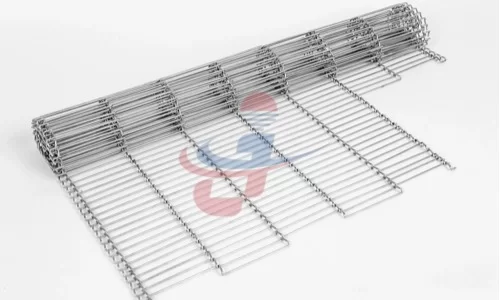
The efficiency of a conveyor system in high-temperature zones depends heavily on its geometric stability. Unlike traditional woven mesh, the rod network design utilizes cross-woven spiral wires to create a precision rhombus or hexagonal mesh. This unique "Y"-shaped wave architecture is not merely aesthetic; it serves a critical mechanical purpose by effectively dispersing longitudinal tension across the belt's surface.
This structural innovation results in a tensile strength increase of over 30% compared to standard mesh alternatives. In practical terms, this means the belt can handle heavier loads and withstand higher pulling forces without stretching or losing its structural geometry. For industries requiring absolute precision, such as automotive heat treatment or electronic component manufacturing, this stability is essential to prevent product misalignment and reduce the frequency of manual track adjustments.
Furthermore, the interaction between the belt and the drive sprockets is significantly optimized. The smooth engagement provided by the wave structure reduces operational noise by more than 20%, creating a safer and more sustainable workplace environment while decreasing wear and tear on the mechanical drive components.

Material selection is the cornerstone of belt longevity in corrosive or ultra-high temperature environments. Depending on the specific thermal requirements of the process, several high-grade alloys are employed to ensure the belt does not oxidize or warp under stress. Standard applications often utilize SS304 or SS316 for their excellent corrosion resistance and hygienic properties, making them suitable for food processing or pharmaceutical sterilization.
For more aggressive environments, such as sintering furnaces or advanced chemical processing, SS310S and Inconel alloys are recommended. Inconel, in particular, allows the conveyor system to operate at peak temperatures reaching up to 1200°C without compromising structural integrity. This capability is vital for processes involving metal powder metallurgy or advanced ceramics where uniform heat distribution is mandatory.
The permeability of the mesh is another critical factor. With an open area of ≥60%, these belts facilitate maximum airflow, which is essential for rapid cooling, frying, or drying. This high air permeability ensures that heat is applied or removed uniformly across the entire product surface, preventing "cold spots" and ensuring a consistent finish for every unit processed.
In the context of energy storage manufacturing, the conveying system must facilitate the seamless transition of components through multiple stages of heating and cooling. The integration of a Battery production mesh belt ensures that the fragile nature of battery layers is respected. The smooth, low-adhesion surface of the rod network design prevents material buildup and ensures that components are not marred or scratched during transport.
Operational efficiency is further enhanced through an integrated anti-deviation design. Because the wave structure provides inherent lateral stability, the risk of belt drift is minimized. This eliminates the need for constant manual intervention, allowing the production line to run at higher speeds with greater confidence in the alignment of the conveyed parts.
Maintenance is streamlined through the use of materials that support high-pressure water cleaning or ultrasonic sterilization. In clean-room environments, the ability to remove residues quickly without dismantling the conveyor system is a significant advantage, reducing the risk of cross-contamination and ensuring compliance with strict industry hygiene standards.
| Performance Metric | Standard Woven Mesh | Rod Network Belt | Application Impact |
|---|---|---|---|
| Tensile Strength | Baseline | +30% Increase | Higher load capacity |
| Operational Noise | Standard | 20% Lower | Improved workplace safety |
| Air Permeability | Moderate | High (≥60%) | Faster drying/cooling |
| Max Temp Limit | Low/Medium | Ultra-High (1200°C) | Extreme heat resistance |
| Maintenance Cycle | Frequent Adjustments | Extended Intervals | Increased machine uptime |
When sourcing high-performance conveyor solutions, procurement managers must look beyond the basic material list. The value of a supplier lies in their ability to tailor the mesh geometry—whether rhombus or hexagonal—to match the specific sprocket pitch and width of the existing machinery. Precision engineering at the weaving stage prevents premature wear and ensures a seamless fit that maximizes the lifespan of the drive system.
Evaluating a manufacturer's technical infrastructure is equally important. Facilities equipped with CNC straightening machines and intelligent embossing technology can deliver a higher degree of standardization. This precision is critical when belts must be replaced in a synchronized manner across multiple production lines to ensure consistent speed and tension across the entire plant.
Beyond the hardware, the level of process support provided by the supplier determines the long-term ROI. Comprehensive support—ranging from installation guidance to operational optimization and the reliable supply of compatible spare parts—transforms a simple purchase into a strategic partnership. This ensures that the conveyor system continues to deliver maximum uptime throughout its operational lifecycle.
The trajectory of industrial conveying is moving toward "smarter" materials and tighter tolerances. As the demand for higher energy density in batteries and more complex alloys in aerospace increases, the requirements for conveyor belts are shifting toward materials that can withstand not only higher temperatures but also more aggressive chemical environments.
We are seeing a trend toward the integration of hybrid alloys and advanced coatings that further reduce surface adhesion and friction. These developments will allow for even faster throughput speeds without increasing the risk of product slippage or surface damage. Additionally, the move toward automated monitoring of belt tension and alignment is reducing the reliance on manual inspections.
For companies investing in new production lines, the focus is shifting toward total lifecycle cost rather than initial acquisition price. This means prioritizing belts with a lower deviation rate and higher tensile strength, as these factors directly correlate to reduced downtime and lower replacement costs over a five-to-ten-year horizon.
The Rod Network Belt features a specialized "Y"-shaped wave structure that provides 30% higher tensile strength and significantly lower noise levels compared to standard woven mesh belts.
Yes, they are ideal for food processing. Made from high-grade stainless steel (304/316), they are easy to clean with high-pressure water and are widely used in baking, frying, and cooling equipment.
Depending on the material, temperatures vary. While stainless steel handles high heat, our Inconel alloy options can withstand extreme temperatures up to 1200°C.
The unique wave structure provides inherent stability and reduces the risk of the belt shifting off-track, ensuring a consistent and straight conveying path.
Absolutely. With a mesh permeability of ≥60%, it allows for maximum airflow and heat penetration, making it highly efficient for drying gypsum boards, pharmaceuticals, and food products.
They are predominantly used in food processing, pharmaceutical sterilization, automotive heat treatment, and the building materials industry, such as cement and gypsum board production.
Selecting the right conveyor architecture is a critical engineering decision that impacts long-term operational stability. Whether you are optimizing a curing oven or a high-temperature sintering line, focusing on tensile strength and thermal stability will ensure your investment delivers maximum value.