- Tel: +86 15252586600 / +86 13705250816
- Email: 527966138@qq.com / 1026520412@qq.com
When optimizing a high-temperature production line, the choice of conveyor surface often determines the balance between throughput and product integrity. For industries dealing with sintering or heat treatment, a standard belt often fails to provide the necessary structural stability and airflow required for uniform processing.
The shift toward specialized mesh structures has led to the increased adoption of balanced weave patterns. These belts are specifically engineered to maintain a flat profile under tension, preventing the "bowing" effect common in simpler weaves, which is critical for maintaining precise contact in industrial furnaces.
Understanding the technical nuances of sourcing a Wholesale balanced weave conveyor belt allows facility managers to reduce downtime and improve thermal efficiency across the entire mechanical transmission system.


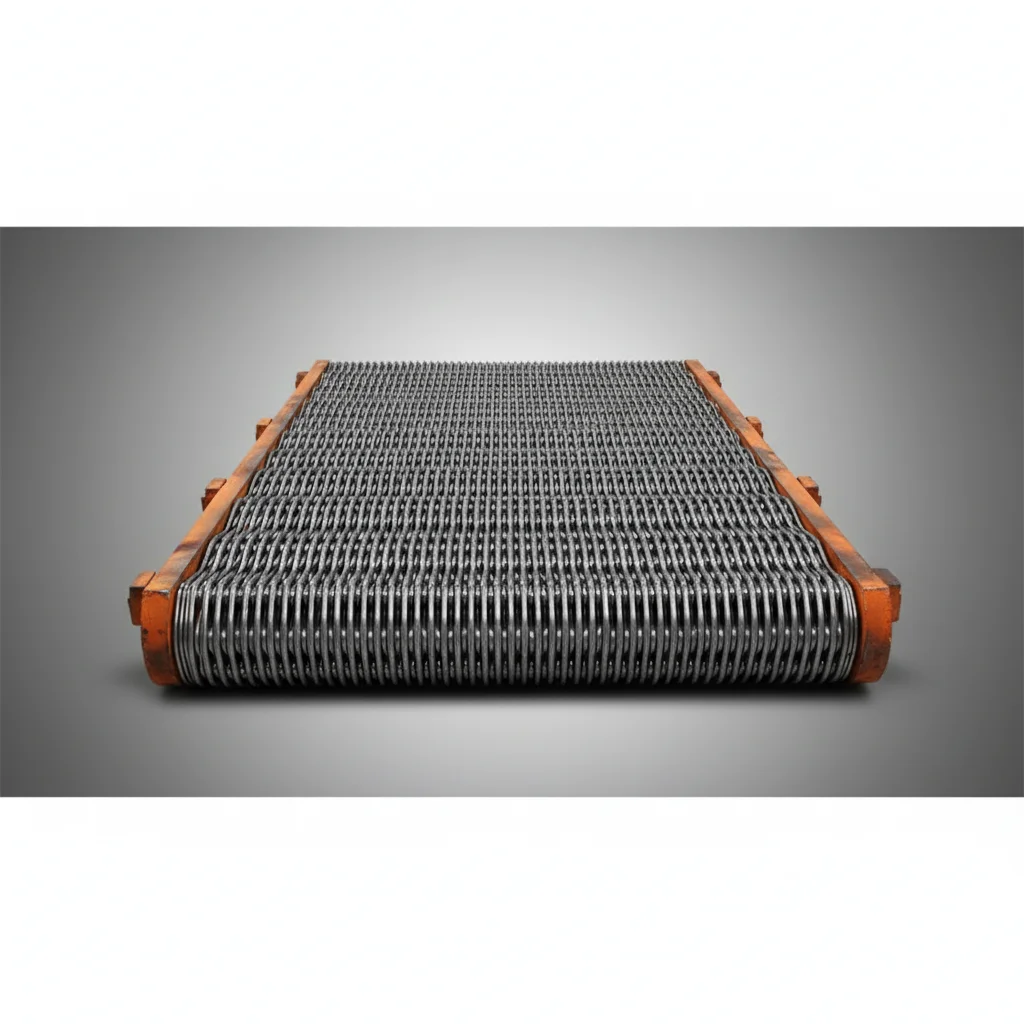
The balanced weave is a specialized interlacing technique where the longitudinal and transverse wires are woven in a pattern that cancels out the internal stresses created during the weaving process. Unlike plain weaves, which can shrink or stretch unevenly, the balanced approach ensures that the belt remains dimensionally stable across its entire width.
This structural integrity is paramount for high-speed conveying. When a belt maintains its shape, it reduces friction against the furnace side-walls and ensures that the product remains centered, which is essential for quality control in powder metallurgy and electronics manufacturing.
A conveyor belt is only as efficient as its power transmission mechanism. In metal belt systems, the interaction between the belt edge and the sprocket wheels is the primary point of failure. Precision-engineered chain links act as the critical interface, ensuring that power is delivered consistently without slippage or jarring movements.
These components must be meticulously matched to the belt's pitch and thickness. When the link dimensions deviate by even a fraction of a millimeter, it can lead to premature wear on the sprocket teeth or cause the belt to track off-center, resulting in costly operational downtime.
Yangzhou Jiaoyang Mesh Belt Manufacturing Co., Ltd. addresses this by offering fully customizable chain links. By tailoring the parameters—such as pin diameter and material hardness—to the specific dimensions of the balanced weave belt, the system achieves a synchronized movement that maximizes the equipment's operational lifespan.
The environmental stressors of a sintering or brazing furnace require a strategic approach to metallurgy. The choice between carbon steel, stainless steel, and alloy steel is not merely a cost decision but a technical requirement based on the operating temperature and the corrosive nature of the process atmosphere.
Material selection must prioritize oxidation resistance and thermal expansion coefficients; using stainless steel or specific alloy steels in high-temperature zones is essential to prevent belt warping and structural degradation.
While carbon steel is cost-effective for dry, low-corrosion environments, it lacks the longevity required for chemical fiber or catalyst processing. Stainless steel offers superior thermal stability, ensuring that the balanced weave remains taut and the drive interface remains low-friction even under extreme heat.
Evaluating the efficiency of a conveyor system involves analyzing the relationship between material durability, operational stability, and the frequency of replacement cycles. A system using premium alloy components typically exhibits a significantly lower total cost of ownership despite a higher initial investment.
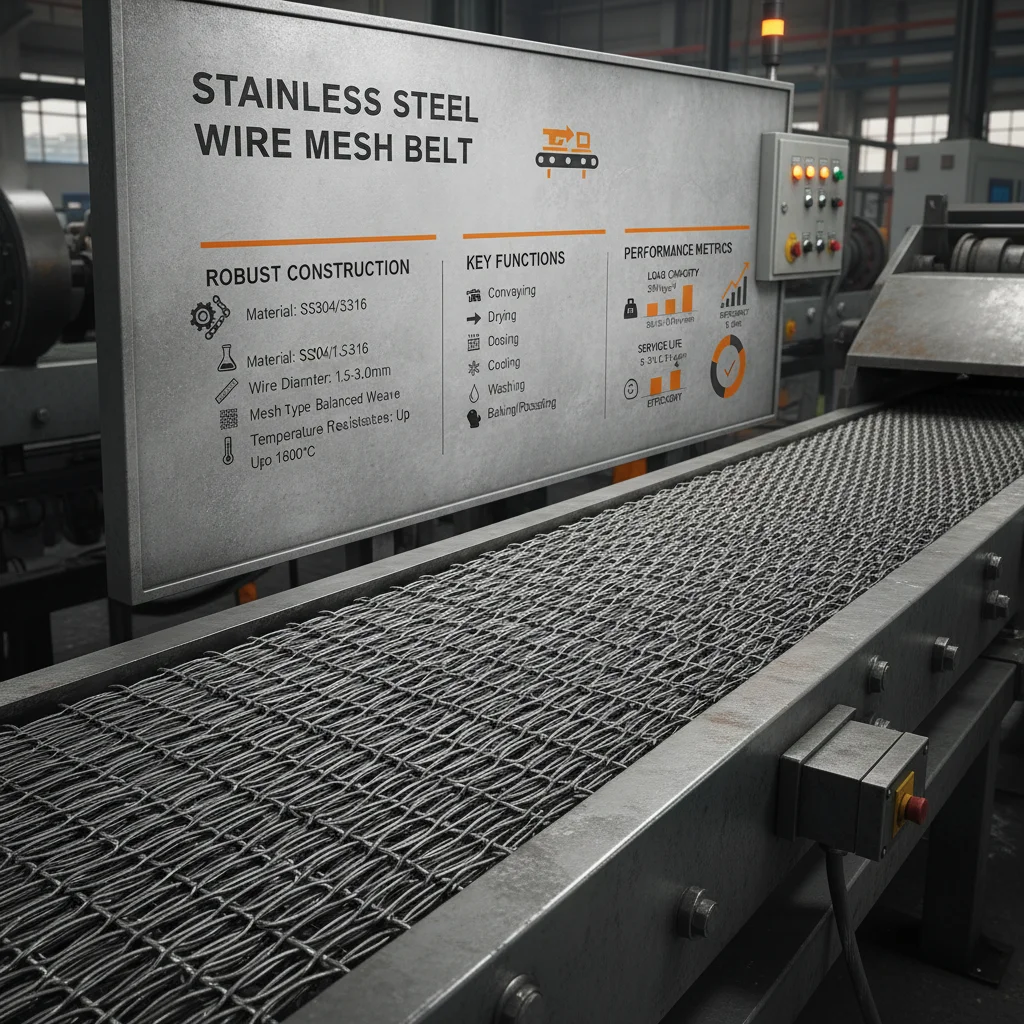
The following index compares standard industrial components against precision-matched premium links and balanced weave belts, highlighting the relative improvement in operational stability and wear resistance.
In a typical industrial setting, such as a brazing furnace, the balanced weave conveyor belt ensures that components are transported through varying temperature zones without shifting. This stability is critical for maintaining the precise alignment of parts, preventing joint failure in metal assemblies.
For manufacturers evaluating their current throughput, the integration of precision-matched drive components can eliminate the micro-vibrations that often lead to product misalignment. By optimizing the interface between the belt and the sprocket wheels, plants can achieve higher conveying speeds without compromising the safety or quality of the load.
The industry is moving toward "intelligent maintenance," where the wear analysis of conveyor edges is integrated into the overall plant lifecycle monitoring. By utilizing high-grade alloy steels with specific hardness profiles, manufacturers are extending the service intervals of their belts, reducing the frequency of total system shutdowns.
There is also a growing demand for hybrid material solutions that combine the strength of alloy steels with specialized anti-corrosion coatings. This evolution allows belts to operate in increasingly aggressive chemical environments, such as pyrolysis furnaces, while maintaining the dimensional stability of the balanced weave.
As automation increases, the requirement for "zero-slip" transmission is becoming a standard. This drives the need for tighter tolerances in the manufacturing of drive components, pushing the industry toward CNC-precision straightening and intelligent embossing processes to ensure a flawless fit.
Procuring a metal conveyor system requires a shift from focusing on the unit price to analyzing the total cost of ownership. A generic belt may be cheaper initially, but the costs associated with frequent replacement and unplanned downtime often outweigh the initial savings.
A professional decision framework involves auditing the current conveyor parameters—including pitch, width, and thickness—and matching them with a drive system that minimizes friction. This precision-matching approach ensures that the belt operates within its engineered tension limits.
The following table provides a relative assessment of different component grades to assist in selection based on the specific operational requirements of the facility.
| Evaluation Factor | Standard Grade | Premium Alloy Grade | Custom-Engineered |
|---|---|---|---|
| Wear Resistance | Moderate | High | Exceptional |
| Operational Stability | Occasional Vibration | Smooth | High-Precision |
| Customization Fit | Generic Sizes | Semi-Custom | Precision Matched |
| Replacement Cycle | Frequent | Extended | Significantly Extended |
| Thermal Stability | Low to Moderate | High | Optimized for Zone |
| TCO Impact | Higher (Downtime) | Moderate | Lowest (Durability) |
A balanced weave is engineered to distribute tension evenly across both the longitudinal and transverse wires. This prevents the belt from narrowing or "bowing" during operation, ensuring a flat conveying surface. Standard mesh belts may experience dimensional instability under high tension, which can lead to tracking issues and uneven product heating in industrial furnaces.
Material selection depends on the peak temperature and the atmosphere. For most high-temperature sintering or brazing applications, stainless steel or specialized alloy steels are recommended due to their resistance to oxidation and thermal warping. Carbon steel is generally reserved for dry, lower-temperature environments where corrosion is not a primary concern.
Yes, as long as the exact parameters of the existing belt are provided. By measuring the pitch, width, thickness, and pin diameter of the current belt edges, custom links can be engineered to provide a precision-matched interface with the sprocket wheels, regardless of the original belt manufacturer.
Precision-matched links reduce friction and eliminate the "jerking" motion that occurs when a link does not seat perfectly in the sprocket tooth. This reduces the mechanical stress on the weave of the belt, significantly extending the time between replacements and lowering the total cost of ownership.
The most accurate method is to provide a detailed technical drawing or a physical sample of the belt edge. Required parameters typically include the exact pitch (distance between pins), the wire thickness, the overall belt width, and the pin diameter. This ensures the drive components integrate seamlessly with your sprocket wheels.
Powder metallurgy requires extremely uniform heat distribution and precise movement. The balanced weave ensures that the belt remains perfectly flat, providing consistent airflow and thermal contact for the parts. This prevents quality variances that occur when a belt sags or fluctuates in tension during the sintering process.
Optimizing industrial conveying is not about selecting the most expensive component, but about achieving the highest degree of synchronization between the belt surface and the drive mechanism. The balanced weave conveyor belt provides the necessary structural foundation, while precision-matched chain links ensure that this foundation is utilized efficiently.
By prioritizing material science and dimensional accuracy, manufacturers can transform their conveyor systems from a recurring maintenance burden into a reliable asset that supports consistent production quality and long-term operational stability.