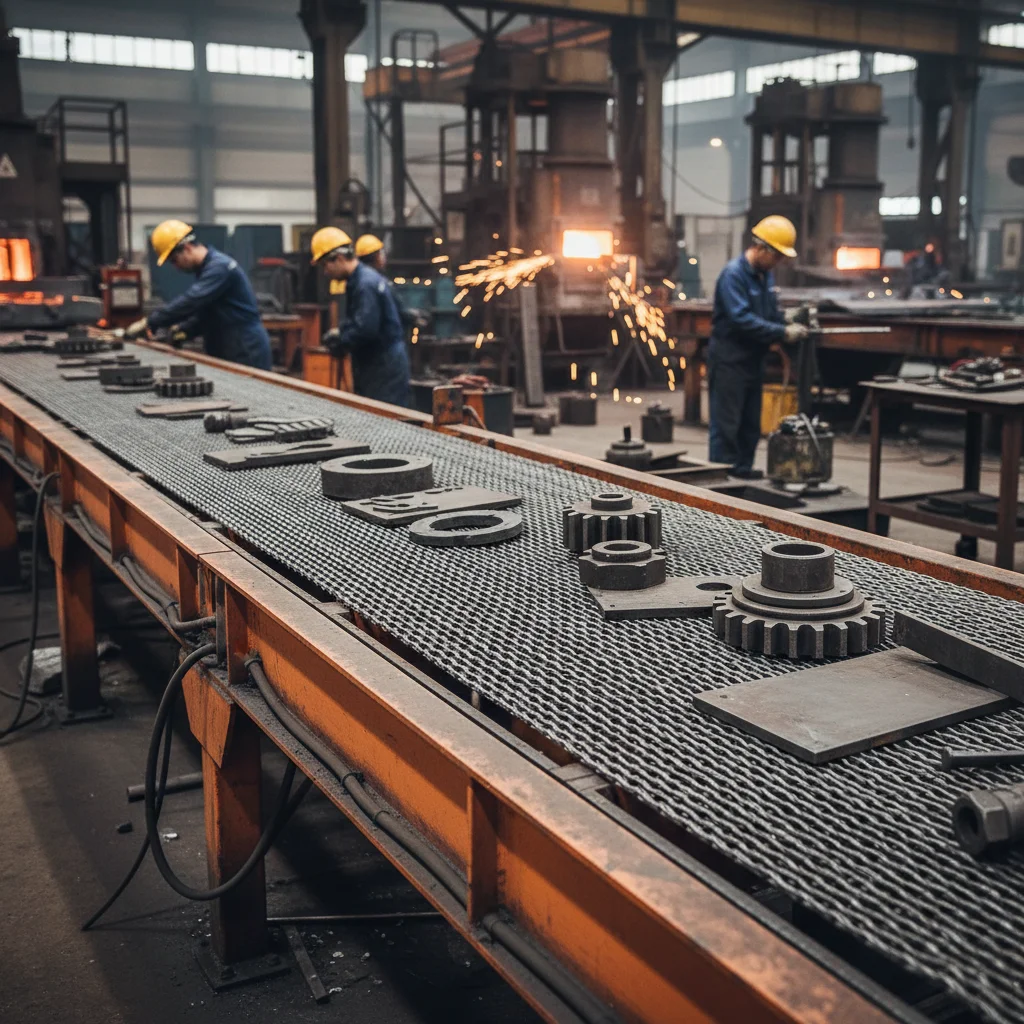
In the modern industrial landscape, the demand for high-performance conveying solutions has led to the widespread adoption of specialized materials. Among these, the Corrosion Resistant Mesh belt stands out as a critical component for industries operating in harsh environments where moisture, chemicals, and extreme temperatures are prevalent. By integrating advanced metallurgy with precision engineering, these belts ensure that production lines remain operational without the constant threat of material degradation.
The global shift toward stricter hygiene standards, particularly in food processing and pharmaceutical manufacturing, has amplified the need for belts that are not only durable but also easy to sanitize. A Corrosion Resistant Mesh belt provides the necessary chemical stability to withstand rigorous cleaning protocols while maintaining structural integrity. This prevents contamination and reduces the frequency of costly equipment replacements, directly impacting the bottom line of large-scale manufacturing operations.
Understanding the technical nuances of these systems is essential for engineers aiming to optimize throughput and reduce downtime. By selecting a Corrosion Resistant Mesh belt, companies can achieve a seamless balance between flexibility and strength, ensuring that their conveyor systems can navigate complex layouts while resisting the corrosive effects of the environment.

Material Composition and Corrosion Resistance
The primary strength of a Corrosion Resistant Mesh belt lies in its high-grade material selection, typically utilizing stainless steel or galvanized steel. These materials are chosen for their exceptional chemical stability, which prevents the oxidation process that typically plagues standard carbon steel belts in humid or acidic environments. This ensures that the belt does not flake or rust, which is paramount for maintaining product purity in sensitive production lines.
Beyond the base metal, the manufacturing process ensures a smooth, burr-free finish. This structural characteristic eliminates microscopic crevices where corrosive agents or organic residues could accumulate, further enhancing the belt's longevity. By combining robust construction with a polished surface, these belts offer a formidable defense against the most aggressive industrial environments.
Engineering Design for Maximum Flexibility
A key engineering feature of this conveyor system is the ability to provide side-flexing capabilities. This allows the belt to be utilized in spiral or round conveyors, as well as straight-running paths, making it an ideal choice for facilities with limited floor space. The flexibility enables the belt to navigate around existing obstacles without compromising the stability of the transported products.
To further enhance this versatility, the design often incorporates a rod and spiral alternating coils structure. This specific geometry not only improves the overall production efficiency but also significantly reduces potential downtime by minimizing the mechanical stress on the belt's joints. The resulting balance of rigidity and flexibility is what makes these belts a staple in complex automated systems.
For specialized needs, the belts can be supplied with U-shaped links integrated into the center of the belt width. This modification is specifically designed to decrease the turning radii, allowing for tighter curves in the conveyor path and improving the overall flow of materials through the factory, which is a hallmark of high-efficiency plant design.
Thermal Stability and Environmental Adaptability
Thermal resilience is a non-negotiable requirement for many industrial processes. A Corrosion Resistant Mesh belt is engineered to maintain peak performance across a vast temperature spectrum, from extreme cryogenic freezing to high-temperature cooking and baking cycles. This adaptability ensures that the belt does not warp or lose its tensile strength when exposed to rapid thermal cycling.
The use of premium stainless steel ensures that the Corrosion Resistant Mesh belt remains chemically inert even when subjected to intense heat. In applications such as industrial ovens or flash-freezers, the material's ability to withstand thermal expansion and contraction without fatigue is critical for avoiding unexpected belt failures and production halts.
Furthermore, the open-mesh design facilitates maximum ventilation. This is particularly beneficial for cooling large loaves of bread or other bulky food items, as it allows air to circulate freely around the entire product. This combination of thermal resistance and breathability makes the Corrosion Resistant Mesh belt indispensable for temperature-controlled processing.
Performance Metrics in Industrial Settings
Evaluating the efficiency of a conveyor system requires looking at a combination of durability, ease of installation, and maintenance requirements. Because of its robust construction, a Corrosion Resistant Mesh belt requires far less maintenance than traditional rubber or plastic belts, which are prone to tearing and degradation. The rigid structure ensures a long service life even under heavy loads.
Moreover, the lightweight nature of these belts simplifies the installation and replacement process. This reduces the labor costs associated with system overhauls and ensures that any necessary changes to the production line can be implemented with minimal disruption. When we quantify these benefits, the long-term value becomes evident through reduced OpEx.
Performance Comparison of Mesh Belt Variants
Global Applications in Food and Processing
In the food industry, the use of a Corrosion Resistant Mesh belt is standard for processes involving cooking, cooling, and freezing. Whether it is for transporting delicate pastries through a spiral freezer or moving large batches of vegetables through a steam blancher, these belts provide a sanitary and reliable surface. Their ability to be cleaned quickly and thoroughly ensures compliance with global health and safety regulations.
Beyond food, these belts are utilized in pharmaceutical plants and chemical processing zones where exposure to corrosive agents is a daily occurrence. In these high-stakes environments, the reliability of the conveyor system is directly linked to the safety of the operators and the quality of the final product. The adoption of these belts across diverse global regions underscores their versatility and industrial importance.
Maintenance Efficiency and Service Life
One of the most significant advantages of the flexible rod belt is its low maintenance profile. Traditional belts often require frequent tensioning or replacement due to wear and tear at the edges. However, the rigid construction and high-quality materials used in a Corrosion Resistant Mesh belt significantly extend the interval between service requirements, lowering the total cost of ownership.
The burr-free finish further contributes to maintenance efficiency. Since there are no jagged edges or rough spots, the belts do not snag on guide rails or cause premature wear on the drive components. This creates a symbiotic relationship between the belt and the motor system, extending the lifespan of the entire conveyor assembly.
Furthermore, the availability of optional side guards prevents product spillage, which in turn reduces the amount of cleaning required around the conveyor frame. By preventing debris from falling into the drive mechanisms, these guards protect the system from internal abrasion and unplanned mechanical failure.
Comparative Analysis of Mesh Belt Configurations
Selecting the right configuration for a Corrosion Resistant Mesh belt depends on the specific requirements of the production line. For instance, straight-running conveyors benefit from a standard rod structure that prioritizes stability and load-bearing capacity. In contrast, spiral conveyors require the side-flexing capabilities provided by the flexible rod design to navigate the vertical and circular path effectively.
The integration of U-shaped links is another critical decision point. While a standard belt is sufficient for wide turns, the U-link modification is essential for facilities where space is at a premium and tight turning radii are required to optimize the floor layout. This flexibility allows engineers to design more compact and efficient production cells.
Ultimately, the choice between stainless steel and galvanized steel depends on the level of corrosiveness in the environment. While galvanized steel offers excellent protection for general industrial use, high-grade stainless steel is the gold standard for food-grade applications where absolute corrosion resistance and hygiene are the primary concerns.
Technical Specifications and Comparison of Mesh Belt Types
| Belt Configuration |
Flexibility Level |
Corrosion Resistance |
Primary Use Case |
| Standard Rod Belt |
Low |
High (SS) |
Straight Conveying |
| Flexible Rod Belt |
High |
High (SS) |
Spiral/Round Paths |
| U-Link Center Belt |
Very High |
High (SS) |
Tight Radius Turns |
| Galvanized Mesh |
Medium |
Medium |
General Industrial |
| Side Guard Belt |
Medium |
High (SS) |
Spillage Prevention |
| Open Mesh Design |
High |
High (SS) |
High-Ventilation Cooling |
FAQS
Its suitability comes from the use of high-grade stainless steel and a burr-free finish, which prevents rust and bacterial growth. The open-mesh design also allows for efficient cleaning and ventilation, ensuring that food products are processed in a hygienic environment that meets strict safety standards.
Yes, the stainless steel materials used in these belts are specifically chosen for their thermal stability. They can maintain their structural integrity and performance in both high-temperature cooking ovens and cryogenic freezing tunnels without warping or cracking.
U-shaped links added to the center of the belt width significantly decrease the turning radii. This allows the conveyor to make tighter turns, which optimizes the use of factory floor space and allows for more compact equipment layouts without sacrificing conveying speed.
No, due to their robust construction and the use of corrosion-resistant materials, these belts require far less maintenance than traditional options. The rigid structure and smooth finish reduce wear and tear, extending the overall service life of the belt.
Side guards are installed on both edges of the belt to prevent products from spilling over the sides during transport. This not only reduces product waste but also prevents debris from falling into the drive components, which reduces the risk of mechanical failure.
Stainless steel offers superior corrosion resistance and is mandatory for food and pharmaceutical applications. Galvanized steel is a cost-effective alternative for general industrial environments where the corrosive agents are less aggressive and stringent hygiene levels are not required.
Conclusion
The implementation of a Corrosion Resistant Mesh belt is a strategic investment for any manufacturer operating in challenging environments. By combining material excellence—such as high-grade stainless steel—with innovative engineering like side-flexing and U-link configurations, these belts solve the dual challenge of durability and versatility. The result is a conveyor system that reduces downtime, ensures product hygiene, and optimizes production flow across various global industries.
Looking forward, the trend toward full automation and sustainable manufacturing will only increase the reliance on long-lasting, low-maintenance components. Investing in high-quality mesh belting today ensures that your facility remains competitive and compliant with evolving international standards. For more information on the right configuration for your system, visit our website: www.jymeshbelt.com.