In the modern industrial landscape, the efficiency of material handling systems often determines the overall productivity of a production line. Among the various solutions available, Honeycomb Conveyor Belts stand out as a critical component for industries requiring stable operation under challenging thermal or chemical conditions. These specialized belts provide a unique balance of structural integrity and permeability, ensuring that products are transported smoothly while allowing for essential airflow or drainage.
The global demand for high-precision mechanical transmission components has grown as automation integrates deeper into food processing, pharmaceuticals, and automotive manufacturing. Achieving a seamless transition between different stages of production requires conveyor systems that can withstand extreme temperatures and resist corrosion without sacrificing operational stability. This is where the engineered design of the honeycomb structure becomes indispensable, offering a durable alternative to traditional rubber or fabric belts.
Understanding the technical specifications and material options of Honeycomb Conveyor Belts is essential for engineers and procurement specialists aiming to optimize their operational uptime. By selecting the correct grade of stainless steel or carbon steel, businesses can significantly reduce maintenance costs and enhance the safety of their production environments.

Technical Design of Honeycomb Conveyor Belts
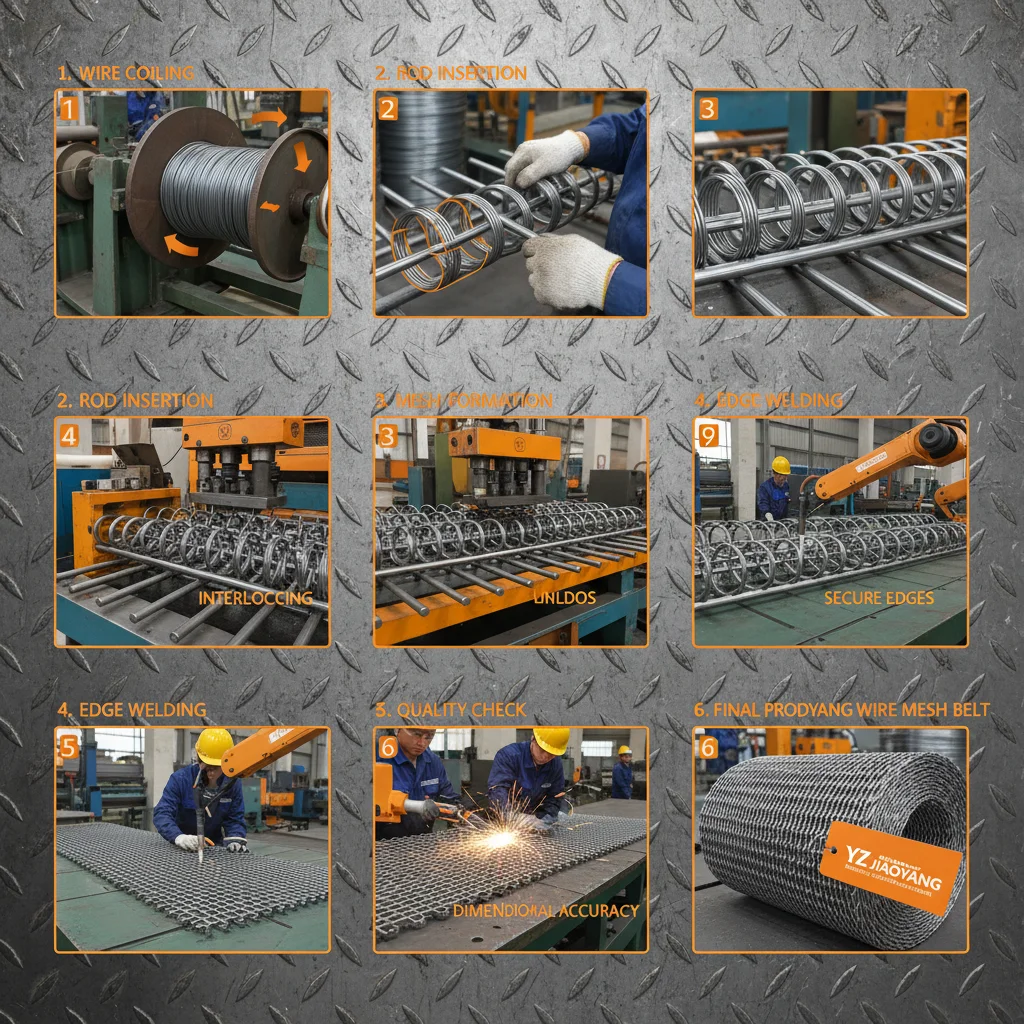
The technical essence of Honeycomb Conveyor Belts, also referred to as metal flat wire conveyor belts, lies in their precise geometric construction. These belts are engineered using a combination of support shafts and metal sheets, where the shafts are securely welded at both ends to create a rigid yet flexible framework. This configuration ensures that the belt maintains its shape and tension even when transporting heavy loads over long distances.
The uniform arrangement of mesh holes, typically in regular rectangles or squares, allows for maximum permeability. This design is particularly advantageous in processes involving heating or cooling, as it permits the rapid exchange of air or fluids around the product. The stability of the operation is further enhanced by the seamless integration of the support shafts, which prevent the belt from sagging or drifting during high-speed operation.
Material Selection for Industrial Durability
Choosing the right material for Honeycomb Conveyor Belts is a critical decision that impacts the lifespan and hygiene of the production line. For general-purpose applications where cost is a primary concern and the environment is non-corrosive, carbon steel serves as an economical and effective option. It provides the necessary structural strength to handle mechanical stress while keeping the initial investment low.
In environments where moisture or mild chemicals are present, galvanized steel is often the preferred choice. The zinc coating provides an essential layer of protection against oxidation, extending the belt's service life in humid conditions. However, for industries with strict sanitary requirements, such as food processing and pharmaceuticals, 304 stainless steel is the gold standard due to its food-grade properties and excellent resistance to a wide range of chemicals.
For the most extreme conditions, including exposure to strong acids or saltwater, 316 stainless steel is utilized. This molybdenum-enhanced alloy offers superior corrosion resistance, ensuring that the Honeycomb Conveyor Belts do not degrade or contaminate the product in highly aggressive chemical environments. This hierarchy of materials allows manufacturers to tailor the belt's durability to their specific operational challenges.
Core Structural Features and Customization
The versatility of Honeycomb Conveyor Belts is rooted in their customizable structural features. Beyond the basic mesh, these belts can be equipped with lock edges, edge baffles, and transverse baffles. These additions are crucial for preventing product slippage and ensuring that items remain centered during transport, which is especially important for fragile items or products moving through inclined sections of a conveyor.
A defining characteristic of Honeycomb Conveyor Belts is the precision of their rectangular or square openings. This uniform structure ensures consistent airflow and prevents "hot spots" or "cold spots" during thermal processing. By customizing the width and length to fit specific machinery, plants can eliminate gaps in their production line, thereby reducing the risk of product jams and increasing overall throughput.
The welding process used for the support shafts is executed with high precision to ensure that there are no weak points in the belt's structure. This attention to detail prevents the belt from warping under thermal expansion, a common failure point in lower-quality metal belts. Consequently, the Honeycomb Conveyor Belts provide a stable platform that minimizes vibration and noise, contributing to a safer and more efficient working environment.
Performance Analysis Across Industry Standards
When evaluating the efficiency of conveyor systems, the balance between load capacity and permeability is key. Honeycomb Conveyor Belts excel in this regard, providing a high strength-to-weight ratio that allows them to support significant weight while maintaining an open area for air passage. This performance is measurable across various material types, where stainless steel variants offer the best longevity in corrosive environments.
To better understand how different configurations perform, it is helpful to look at the comparative ratings of various material options used in these belts. The following data reflects typical performance benchmarks for durability, heat resistance, and cost-efficiency in industrial settings.
Material Performance Rating for Honeycomb Conveyor Belts
Global Applications in High-Heat Environments
In the food processing industry, Honeycomb Conveyor Belts are widely utilized in cooling and drying equipment. For instance, in industrial bread production, these belts transport dough through ovens and then through cooling tunnels, where the mesh structure allows hot air to escape and cool air to circulate, preventing condensation and ensuring a consistent product texture.
Beyond food, the pharmaceutical and building materials industries rely on these belts for critical sterilization and curing processes. In the production of gypsum boards and cement products, the belts move heavy materials through high-temperature drying chambers. The inherent stability of the metal structure prevents the belt from stretching or snapping under the combined stress of heat and weight, which is a common failure in non-metal alternatives.
Long-term Value and Operational Reliability
The long-term value of investing in high-quality Honeycomb Conveyor Belts is found in the drastic reduction of unplanned downtime. Because these belts are constructed from robust metals and welded support shafts, they exhibit far less wear and tear than rubberized belts. This reliability translates to fewer replacements and lower labor costs associated with maintenance.
From a sustainability perspective, metal belts offer a significant advantage over disposable synthetic belts. Stainless steel and galvanized steel are fully recyclable at the end of their service life. Furthermore, the ability to customize the belt's features means that a single belt can be optimized for the specific requirements of a production line, reducing waste and improving energy efficiency through better airflow.
Ultimately, the trust placed in these belts by the automotive industry—specifically in heat treatment and coating lines—demonstrates their operational excellence. When parts are moving through chemical baths or high-heat curing ovens, the consistency of the Honeycomb Conveyor Belts ensures that every part is treated uniformly, reducing scrap rates and increasing overall quality.
Future Trends in Conveyor Belt Technology
The future of Honeycomb Conveyor Belts is moving toward deeper integration with smart manufacturing and Industry 4.0. We are seeing a trend toward the development of "intelligent belts" that can incorporate sensors to monitor tension and wear in real-time. This shift toward predictive maintenance will allow factories to replace belts exactly when needed, rather than on a fixed schedule, further optimizing operational costs.
Material science is also evolving, with the exploration of advanced alloys that offer even higher temperature thresholds and lower friction coefficients. These innovations will enable Honeycomb Conveyor Belts to operate in even more aggressive chemical environments or at higher speeds without increasing the risk of structural fatigue.
As global industries move toward "green" production, the emphasis on energy-efficient conveyor drive components will grow. By reducing the weight of the belt while maintaining its strength, manufacturers can lower the energy required to move the system, directly contributing to a smaller carbon footprint.
Comparison of Honeycomb Conveyor Belt Material Specifications
| Material Type |
Corrosion Resistance |
Heat Tolerance |
Primary Application |
| Carbon Steel |
Low |
Moderate |
General Industrial |
| Galvanized Steel |
Moderate |
Moderate |
Humid Environments |
| 304 Stainless Steel |
High |
High |
Food & Pharma |
| 316 Stainless Steel |
Extreme |
High |
Chemical/Acidic |
| Alloy Steel |
Moderate |
Extreme |
Heavy Heat Treatment |
| Custom Coated |
Very High |
Moderate |
Specialized Coating Lines |
FAQS
Honeycomb Conveyor Belts, also known as metal flat wire conveyor belts, are industrial belts constructed from support shafts and metal sheets welded at the ends. They feature a uniform grid of rectangular or square mesh holes, designed to provide stable transport while allowing for high permeability of air, liquids, or heat, making them ideal for drying and cooling processes.
The choice depends on the aggressiveness of your environment. 304 stainless steel is excellent for most food-grade and general chemical applications. However, if your production line involves high concentrations of chlorides, saltwater, or strong acids, 316 stainless steel is recommended due to its superior corrosion resistance properties.
Yes, they are highly customizable. Beyond adjusting the width and length, you can add lock edges to prevent the belt from shifting, as well as edge baffles or transverse baffles to ensure that products remain securely in place during transport, especially on inclined conveyor sections.
Absolutely. Because they are made from materials like stainless steel and carbon steel, they can withstand extreme heat without melting or warping, unlike rubber or plastic belts. This makes them the primary choice for automotive heat treatment and industrial bread baking ovens.
While they are far more durable than synthetic belts, regular inspections for weld integrity and tension adjustments are recommended. Because of their robust construction, the interval between full replacements is significantly longer, reducing total cost of ownership over time.
Yes, they are highly sustainable. Unlike plastic or rubber belts that end up in landfills, the metals used in Honeycomb Conveyor Belts (carbon steel, galvanized steel, and stainless steel) are 100% recyclable, reducing the environmental impact of industrial waste.
Conclusion
In summary, Honeycomb Conveyor Belts represent a pinnacle of industrial engineering, blending structural stability with high permeability. From their versatile material options—ranging from economical carbon steel to high-performance 316 stainless steel—to their customizable baffles and edges, these belts are designed to meet the rigorous demands of the food, pharmaceutical, and automotive industries. By focusing on durability and precision, they effectively solve the challenges of high-heat transport and corrosive processing.
Looking ahead, the integration of smarter materials and predictive monitoring will further elevate the efficiency of these systems. For businesses seeking to optimize their production lines, investing in high-quality metal mesh solutions is not just a matter of equipment upgrade, but a strategic move toward long-term reliability and sustainability. To find the perfect configuration for your facility, visit our website: www.jymeshbelt.com.