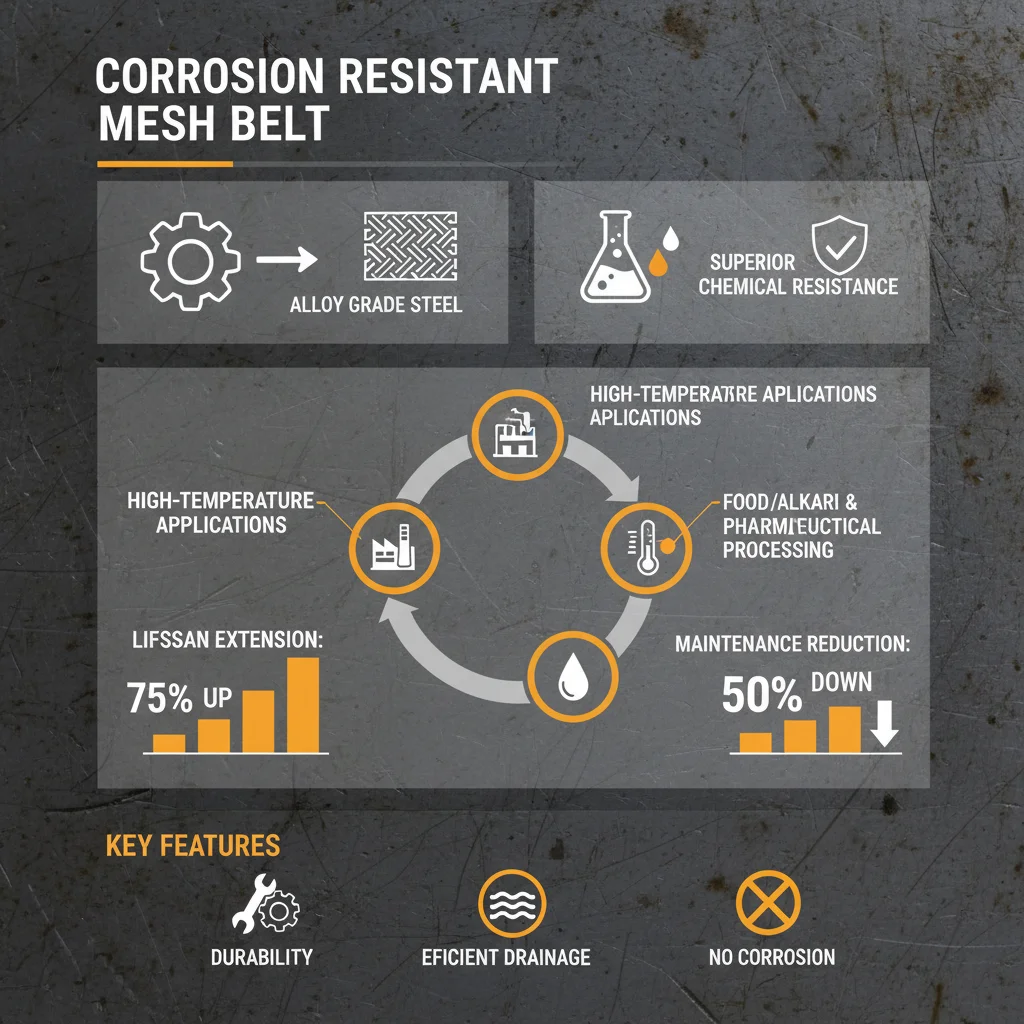
Procuring Wholesale Stainless Steel Wire Mesh Belt solutions requires a deep understanding of how mechanical transmission components interact with specific industrial environments. In the sector of general equipment and mechanical transmission parts manufacturing, the choice of conveyor belt material and architecture directly determines the throughput and longevity of the production line.
Many procurement managers face the challenge of balancing initial capital expenditure with long-term operational costs. Selecting a belt that fails to resist corrosion or sustains deformation under high loads leads to unplanned downtime, increased maintenance frequencies, and compromised product quality, particularly in temperature-sensitive industries.
This analysis provides a professional framework for evaluating stainless steel mesh belts, focusing on the technical advantages of flexible rod constructions, sprocket drive stability, and the critical parameters that influence a successful wholesale procurement decision for industrial conveyor systems.

Engineering Logic of Flexible Rod Mesh Belts

The structural integrity of a high-performance stainless steel wire mesh belt relies on precision winding. Flexible rod conveyor belts, often referred to as grid link belts, utilize a sophisticated combination of left-handed and right-handed spiral shapes. This opposing winding technique creates a balanced mesh body that resists lateral shifting and deformation, even when transporting heavy industrial loads.
Integration with high-strength horseshoe chains via a through-rod assembly ensures that the belt maintains its tension and alignment. From a mechanical transmission perspective, this architecture allows the belt to navigate both straight paths and complex curved maneuvers without the risk of slipping or twisting, making it a versatile choice for constrained facility layouts.
Critical Performance Parameters for Bulk Procurement
When engaging in the wholesale purchase of mesh belts, technical specifications must take precedence over generic descriptions. The primary focus should be on the material grade of the stainless steel to ensure it meets the specific corrosion resistance requirements of the environment—whether it be the high humidity of a food processing plant or the chemical exposure in a catalyst production line.
Key parameters include the spiral winding density, the tensile strength of the horseshoe chain, and the precision of the through-rod integration. These factors collectively determine the belt's wear rate. A precision-engineered belt reduces the frequency of replacement and minimizes the total cost of ownership by extending the operational lifespan of the transmission system.
Industry-Specific Application Analysis
Stainless steel mesh belts are indispensable in industries where hygiene and temperature resistance are non-negotiable. In food processing, particularly for quick-frozen meats, seafood, and pastries, these belts ensure hygienic transport while maintaining structural integrity in extreme cold logistics. The open-mesh design allows for efficient airflow and drainage, which is critical for flash-freezing and drying processes.
Beyond food, these belts are utilized in powder metallurgy, electronics, and heat treatment processes. For instance, the ability to withstand high temperatures makes them suitable for sintering and brazing furnaces, where consistent transport speeds are required to ensure uniform thermal processing of metal components.
Comparing Operational Efficiency Metrics
Evaluating the efficiency of a conveyor system involves analyzing the trade-off between stability and flexibility. The following conceptual comparison illustrates the relative performance of Flexible Rod Belts against standard mesh alternatives across five key operational dimensions.
The data indicates that flexible rod constructions significantly outperform standard belts in routing flexibility and deformation resistance. This makes them particularly valuable for complex production lines where the belt must navigate turns while carrying heavy, non-uniform loads without losing synchronization.
Evaluating Drive System Reliability
A mesh belt is only as reliable as its drive system. The use of a precision sprocket drive is critical for eliminating slippage and operational jitter. Unlike friction-based drives, a sprocket system provides positive mechanical engagement, ensuring that the speed of transport remains constant, which is essential for precise timing in automated production lines.
Regular maintenance of the drive system, including the calibration of sprocket synchronization and the lubrication of horseshoe chains, is necessary to prevent premature wear. Systems designed for low maintenance typically feature reinforced drive components that can withstand continuous 24/7 operation in demanding industrial environments.
Risk Mitigation in Conveyor Belt Selection
One of the most common risks in wholesale procurement is selecting a belt based solely on initial cost without considering the deformation rate. Standard mesh belts often experience "sagging" or lateral expansion under load, which can lead to misalignment with the drive sprockets and eventual system failure.
To mitigate this, buyers should specify anti-deformation designs that utilize synergistic spiral wire and straight string combinations. Furthermore, verifying the manufacturer's capacity for customization—such as tailored widths and lengths—ensures that the belt fits the mechanical transmission requirements exactly, reducing the need for onsite modifications that can compromise structural integrity.
Decision Framework for Mesh Belt Suppliers
When choosing a wholesale supplier, it is essential to look beyond the product catalog and evaluate the technical support ecosystem. A supplier's ability to provide installation guidance, maintenance alerts, and a reliable supply of compatible spare parts is what separates a vendor from a strategic partner.
| Belt Type | Deformation Rate | Routing Flexibility | Maintenance Need |
|---|---|---|---|
| Standard Mesh | Moderate | Limited | High |
| Flexible Rod | Ultra-Low | High (Turns) | Low |
| Flat Wire | Low | Straight Only | Moderate |
| Grid Link | Ultra-Low | High (Turns) | Low |
| Sintering Belt | Low | Straight | Moderate |
| Brazing Belt | Low | Straight | Moderate |
Based on this framework, the Flexible Rod/Grid Link architecture is the most suitable for applications requiring high stability and complex routing, while standard mesh may suffice for simple, low-load straight-line transport.
Frequently Asked Questions
The primary advantage is the spiral wire construction integrated with horseshoe chains, which prevents deformation and allows the belt to handle both straight and curved routing with high stability.
Yes, the stainless steel construction is highly resistant to both extreme cold (quick-freezing lines) and extreme heat (thermal processing and furnaces).
It provides positive mechanical engagement, which eliminates slippage and ensures stable transport speeds and precise product positioning on the line.
Food processing (frozen meats, seafood), cold chain logistics, powder metallurgy, and electronics manufacturing are the primary beneficiaries.
Maintenance is generally low, focusing on regular inspection of sprocket alignment and periodic lubrication of the horseshoe chains to extend service life.
Absolutely. Width, length, and spiral configurations (left or right-handed) can be tailored to match the specific mechanical requirements of a facility.
Conclusion
Selecting the right Wholesale Stainless Steel Wire Mesh Belt is a strategic decision that impacts operational uptime and product quality. By prioritizing flexible rod architectures and precision sprocket drives, manufacturers can achieve a high-stability transport system that resists deformation and adapts to complex routing needs across diverse thermal environments.
For organizations looking to optimize their mechanical transmission efficiency, detailed product specifications and technical support are available at www.jymeshbelt.com to ensure the chosen solution aligns with specific industrial requirements.