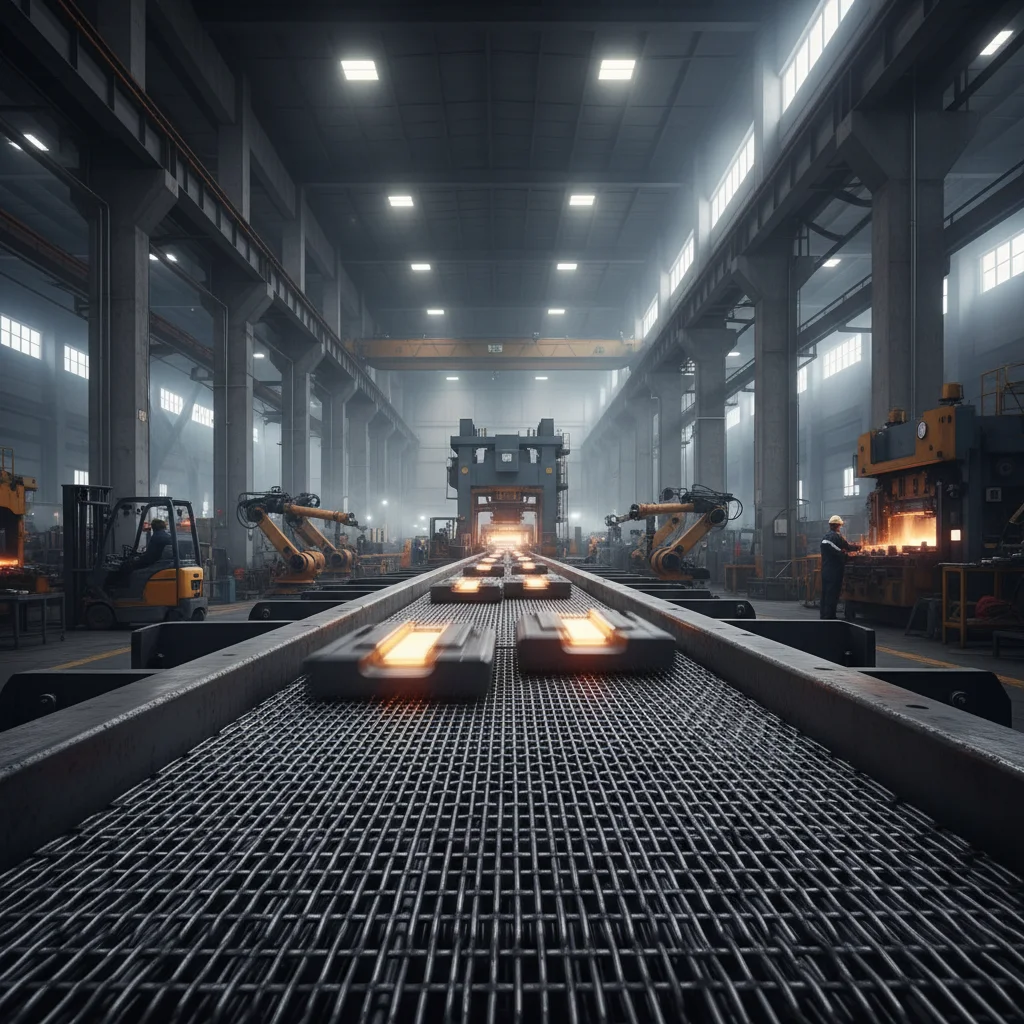
In the demanding landscape of industrial thermal processing, the selection of a conveying system can dictate the entire efficiency of a production line. A high-performance Dryer Mesh Belt serves as the critical interface between raw material and finished product, ensuring that heat is distributed evenly and moisture is removed consistently. For manufacturers operating in heavy-duty environments, the transition to precision-engineered mesh solutions is no longer an option but a necessity for maintaining competitive throughput.
The global shift toward automation and higher hygiene standards has pushed the boundaries of what mechanical transmission components can achieve. Traditional belts often suffer from thermal degradation or product entrapment, leading to costly downtime and material waste. By integrating advanced modular designs and high-strength steel specifications, modern industrial belts solve these systemic challenges, offering a stable, single-level surface that maximizes airflow and minimizes mechanical failure.
Whether you are optimizing a food dehydration line or a chemical curing oven, investing in a premium Dryer Mesh Belt ensures that your operation can withstand extreme temperatures and corrosive fluids without compromising structural integrity. The synergy of customizable configurations and superior drainage capabilities makes these systems the gold standard for modern material handling.

Engineering Strength of Eye Link Dryer Mesh Belts
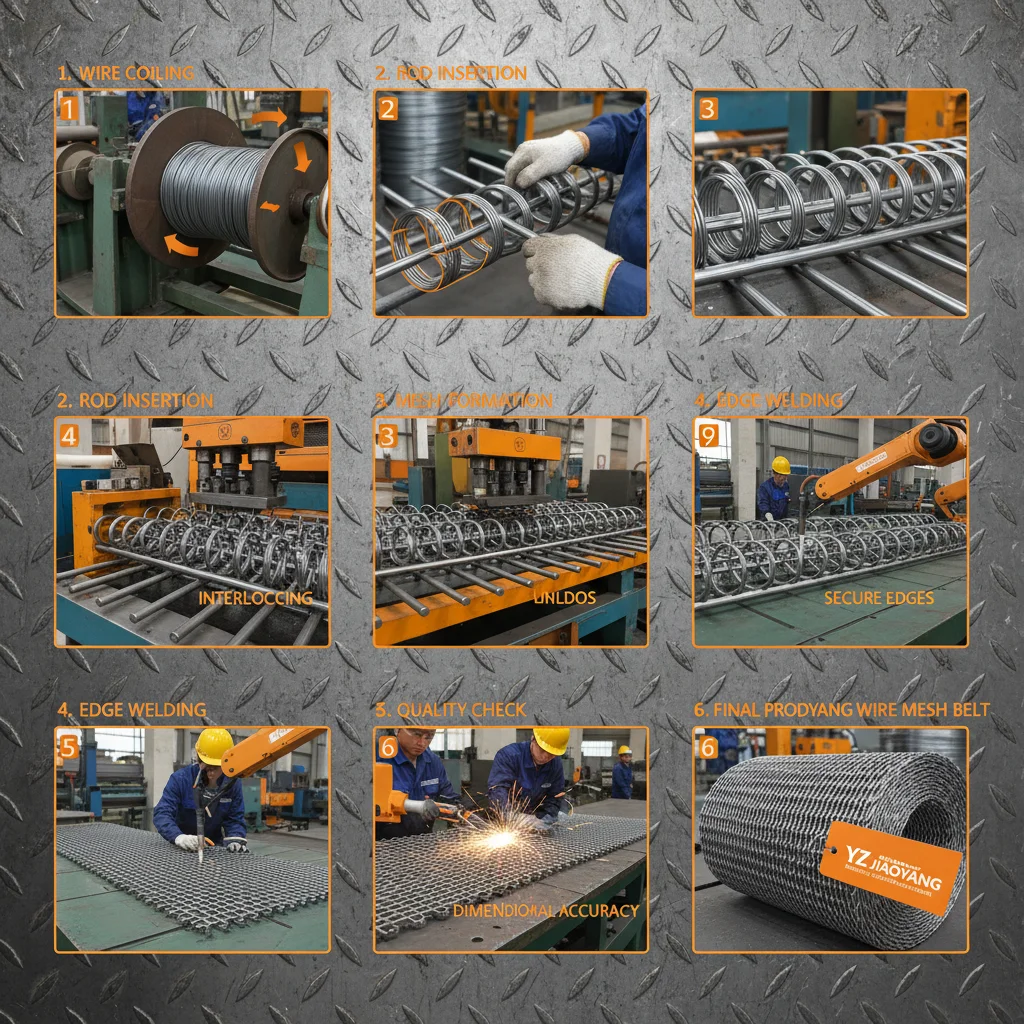
The structural integrity of an Eye Link Dryer Mesh Belt is rooted in its precision-engineered modular design. Unlike standard belts, these are constructed from a wide variety of high-grade steel specifications, allowing them to handle extreme heavy-duty loads without stretching or warping. This robustness is essential for industries where mechanical stress is constant and failure is not an option.
Beyond simple strength, the versatility of the configuration allows for a fully bespoke fit. From side guard plates that control product height to cross flights for inclined conveying, every element is designed to integrate seamlessly into the existing production line, ensuring peak operational performance under the most demanding industrial conditions.
Technical Specifications for Thermal Stability
Thermal resistance is a non-negotiable requirement for any belt operating within industrial ovens or curing chambers. The Eye Link series is specifically designed with high-temperature capability, utilizing steel grades that maintain their structural stability even when exposed to intense heat. This prevents the sagging or deformation often seen in lower-quality conveyor components.
Moreover, the open mesh configuration plays a dual role in thermal regulation. By allowing maximum air circulation and efficient fluid drainage, the belt promotes uniform heating and cooling across the entire product surface. This eliminates "cold spots" and ensures that every item passing through the dryer is processed with absolute consistency.
The combination of specialized material science and an optimized profile means these belts can operate in corrosive environments without premature degradation. This makes them an ideal choice for chemical processing and food production, where both heat and corrosive cleaning agents are frequently used.
Eliminating Product Entrapment and Waste
One of the most significant challenges in material handling is the accidental loss of small components or product fragments. A traditional multi-layered belt often creates gaps where materials can get caught. In contrast, the Eye Link Dryer Mesh Belt features a stable, single-level conveying surface that effectively eliminates product entrapment.
By ensuring that the surface remains flat and consistent, this specific design of the Dryer Mesh Belt significantly reduces product waste and prevents the risk of belt jams. In high-precision manufacturing, where every millimeter counts, the absence of overlapping layers means that product parts cannot migrate into the belt structure.
This "zero-entrapment" philosophy not only protects the product but also enhances the overall safety of the system. When debris is prevented from entering the internal mechanisms of the conveyor, the frequency of unplanned shutdowns decreases, leading to a more reliable and predictable production cycle.
Drive System Options and Tracking Precision
Reliable tracking is the backbone of any successful conveyor system. To achieve this, Eye Link systems offer multiple drive options, including friction-driven cage rollers and positive drive sprockets. Positive sprockets are particularly valuable for heavy-load scenarios, as they provide a mechanical lock that prevents belt slippage and ensures high-precision tracking over long distances.
For those requiring the ultimate in stability, an optional chain edge drive can be integrated. This system provides superior alignment, ensuring the belt stays centered even when carrying asymmetric loads or operating at high speeds, which further reduces the need for manual adjustment and maintenance.
Performance Rating of Dryer Mesh Belt Drive Systems
Global Industrial Applications and Use Cases
The versatility of these belts makes them essential across various global sectors. In the food processing industry, they are widely used for drying fruits, vegetables, and grains, where the open mesh ensures that moisture is removed quickly and hygienically. The ease of cleaning these belts helps facilities comply with strict international food safety standards.
In heavy industrial zones, such as automotive part curing or aerospace component drying, these belts handle heavy metal parts that would crush standard conveyor materials. Their ability to operate in high-temperature zones without losing tension makes them the preferred choice for large-scale industrial ovens in North America, Europe, and Asia.
Long-Term Value and Maintenance Efficiency
From an investment perspective, the transition to Eye Link belts represents a shift from "replacement-based" maintenance to "lifecycle-based" management. The use of high-strength steel drastically extends the operational lifespan compared to standard belts, which often succumb to thermal fatigue. This longevity directly translates into a lower total cost of ownership (TCO).
Furthermore, the modular design simplifies spare parts management. Instead of replacing an entire belt due to a localized failure, operators can often replace specific modules, reducing downtime from days to hours. This agility is critical for 24/7 production environments where every minute of downtime represents a significant financial loss.
When comparing the long-term ROI, the reduction in product loss (due to the zero-entrapment surface) and the decrease in maintenance frequency create a compelling financial case. The reliability of the system fosters trust in the production process, allowing managers to focus on scaling output rather than troubleshooting equipment.
Future Innovations in Mesh Conveying Technology
The future of conveyor technology is leaning heavily toward "Smart Conveying" and sustainable materials. We are seeing a trend toward the integration of wear-monitoring sensors that can alert operators to structural fatigue before a failure occurs. This digital transformation will allow for predictive maintenance, further reducing unplanned downtime in the Dryer Mesh Belt ecosystem.
Sustainability is also playing a larger role, with the development of new alloy coatings that increase corrosion resistance while reducing the need for harsh chemical cleaners. These eco-friendly advancements ensure that industrial processes can become "greener" without sacrificing the extreme durability required for heavy-duty applications.
As automation continues to evolve, the ability to seamlessly integrate side guards and custom flights into a modular belt will allow for more complex, multi-stage processing within a single conveyor line. This consolidation will reduce the footprint of factories and increase the efficiency of material flow.
Investment Return Comparison: Standard vs. Eye Link Belts
| Performance Metric |
Standard Belts |
Eye Link Belts |
Improvement Score (1-10) |
| Operational Lifespan |
Moderate |
Extreme / Long-Term |
9 |
| Maintenance Frequency |
High (Frequent) |
Low (Durable) |
8 |
| Product Loss Rate |
Higher (Entrapment) |
Near Zero |
10 |
| Thermal Tolerance |
Limited |
High-Temperature Ready |
9 |
| Customization Level |
Fixed Designs |
Fully Bespoke |
10 |
| Tracking Stability |
Moderate |
Superior (Chain Edge) |
8 |
FAQS
Their suitability comes from the use of high-strength steel specifications, high-temperature capabilities, and a robust modular design that withstands extreme mechanical stress and corrosive fluids. This ensures the belt maintains its shape and strength even in the most aggressive industrial settings.
A single-level surface prevents small product parts from getting trapped between layers, which is a common issue with traditional belts. This significantly reduces product waste, prevents belt jams, and ensures a cleaner, more efficient conveying process.
We offer several options to match your specific needs, including friction-driven cage rollers for standard use, positive drive sprockets for higher precision, and an optional chain edge drive for enhanced tracking and reliability in heavy-load scenarios.
Yes, the modular design allows for total customization. Side guard plates can be added to control product height and keep materials centered, while cross flights are available for applications requiring inclined conveying.
The open mesh configuration allows for excellent air and fluid drainage, which means debris and liquids don't pool on the surface. This makes the belt significantly easier to clean and maintain in accordance with strict industry hygiene standards.
Absolutely. These belts are specifically designed with high-temperature capability and various steel grades to maintain structural stability and resist warping in heat-intensive applications, making them ideal for dryer ovens.
Conclusion
The implementation of a high-performance Dryer Mesh Belt is more than a simple hardware upgrade; it is a strategic decision to enhance operational reliability and reduce waste. By combining high-strength steel, a zero-entrapment single-level surface, and versatile drive options, the Eye Link system addresses the most critical pain points of industrial thermal processing—durability, precision, and maintenance.
As industries move toward greater automation and stricter efficiency requirements, the value of a fully customizable, modular conveying solution becomes undeniable. We recommend evaluating your current conveyor failure rates and product loss to see how a transition to precision-engineered mesh can improve your bottom line. Visit our website for more information: www.jymeshbelt.com