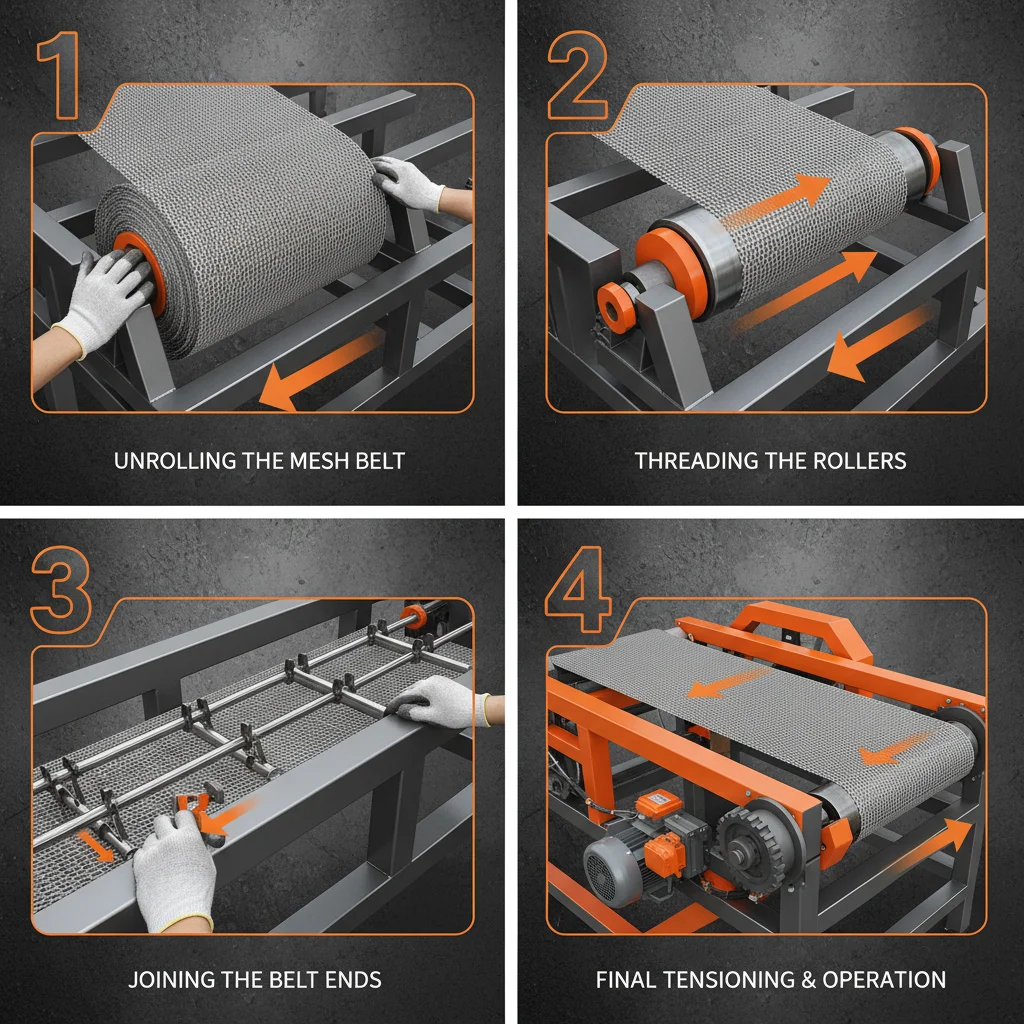
Wholesale Sintering furnace mesh belt refers to high-precision industrial conveyor solutions specifically engineered to transport materials through extreme thermal environments. These belts, often featuring advanced rod network or flat flex architectures, are critical components in sintering furnaces where uniform heat distribution and structural integrity under high tension are mandatory for material synthesis.
In the demanding sectors of powder metallurgy and automotive heat treatment, manufacturers often struggle with belt elongation, high operational noise, and insufficient airflow. Traditional woven meshes frequently fail to maintain track alignment at temperatures exceeding 1000°C, leading to costly production downtime and inconsistent product quality.
This guide provides a technical analysis of sintering furnace mesh belts, exploring the advantages of "Y"-shaped wave structures, material selection between stainless steel and Inconel alloys, and procurement criteria to help engineering teams optimize their production line efficiency and lifespan.

1Technical Architecture of Sintering Mesh Belts

The core of a high-performance sintering furnace mesh belt is its sophisticated "Y"-shaped wave structure. Unlike standard weaves, this architecture is created by cross-woven spiral wires that form a precision rhombus or hexagonal mesh. This geometry is specifically designed to disperse mechanical stress across the belt surface, which significantly reduces localized tension and prevents premature stretching during high-load operations.
From a mechanical perspective, this design ensures that the belt maintains a consistent width and tension, which is critical for sintering processes where any shift in belt position could lead to uneven heating of the parts. The precision engineering involved allows for a seamless fit with machine sprockets, reducing the friction coefficient during transport.
Furthermore, the open-area design is optimized for maximum permeability. In sintering applications, this allows for rapid heating and cooling cycles, ensuring that the furnace atmosphere penetrates the material evenly, which is essential for achieving the desired density in powder metallurgy parts.
2Key Performance Advantages and Materiality
Material selection is the most critical factor in determining the operational lifespan of a sintering furnace belt. For standard high-temperature needs, SS304 and SS316 stainless steels offer excellent corrosion resistance. However, for ultra-high temperature zones reaching up to 1200°C, Inconel alloys are deployed due to their superior creep resistance and oxidation stability.
Beyond heat resistance, these belts are engineered for ultra-low noise operation. The smooth engagement between the belt's wave structure and the drive sprockets reduces mechanical vibration, which not only improves the workplace environment but also minimizes the wear and tear on the drive components of the conveyor system.
Another significant advantage is the anti-deviation design. The inherent stability of the hexagonal or rhombus mesh minimizes the risk of belt drift. This ensures that the conveying track remains perfectly aligned without the need for constant manual adjustment, thereby increasing the overall uptime of the sintering line.
3Industrial Application Scenarios
Sintering furnace mesh belts are indispensable in powder metallurgy, where they transport green compacts through heating zones to achieve final structural properties. The belt's ability to withstand heavy loads without stretching ensures that the spacing between parts remains constant, preventing collisions or clumping during the sintering process.
In the automotive heat treatment sector, these belts are used for brazing and tempering components. The high permeability (often ≥60% open area) allows for efficient gas flow and rapid thermal exchange, which is vital for precision tempering where temperature ramp rates are strictly controlled.
Additionally, the building materials industry utilizes these belts for the production of gypsum boards and cement-based products. In these environments, the low-adhesion surface of the belt prevents material buildup, allowing for easy cleaning via high-pressure water or ultrasonic systems, which maintains a sterile and efficient production environment.
4Quantitative Performance Analysis
When analyzing the efficiency of a sintering furnace mesh belt, engineers focus on the relationship between tensile strength and thermal deformation. Standard mesh belts often exhibit significant "sag" as temperatures rise, whereas the specialized wave architecture maintains structural geometry, ensuring a flat transport surface.
The data indicates that the transition to a rod network structure can reduce operational noise by over 20% and increase the maintenance interval by extending the time between tension adjustments. This quantitative improvement directly translates to a lower Total Cost of Ownership (TCO) over the belt's lifecycle.
Wholesale Sintering furnace mesh belt Performance Metrics
As illustrated in the performance metrics, the synergy of high-grade alloys and a rhombus wave structure allows for a significant jump in both air permeability and heat stability compared to traditional industrial belts, making them the optimal choice for continuous high-heat processing.
5Procurement and Selection Criteria
Selecting the right sintering belt requires a detailed analysis of the furnace's peak operating temperature and the chemical composition of the atmosphere. If the environment contains high levels of sulfur or chlorides, SS316 or specialized Inconel alloys are mandatory to prevent stress corrosion cracking.
Weight load distribution is another key factor. Procurement teams must calculate the maximum load per linear meter to ensure the belt's tensile strength can handle the mass without permanent deformation. Custom-woven widths and lengths are typically required to match the specific dimensions of the furnace tunnel.
Finally, consider the end-of-life recycling value. High-grade metal belts made from Inconel or 310S stainless steel have significant scrap value, which can partially offset the initial investment cost when the belt is eventually replaced after its service life.
6Maintenance and Operational Constraints
While highly durable, sintering furnace mesh belts are not maintenance-free. The primary constraint is the accumulation of oxidation scales or material residue, which can clog the mesh and reduce air permeability. Regular high-pressure cleaning or ultrasonic treatment is recommended to maintain thermal efficiency.
Thermal cycling can also lead to gradual fatigue. Although the wave structure disperses stress, extreme temperature fluctuations can eventually cause micro-cracks in the wire. Monitoring the belt for "wire breaks" during scheduled shutdowns is essential to prevent catastrophic belt failure during production.
Furthermore, ensure that the drive sprockets are inspected for wear. A worn sprocket can create uneven tension points, which may lead to "belt drift" or premature stretching, negating the anti-deviation benefits of the rod network architecture.
7Comparative Analysis: Rod Network vs. Woven Mesh
The choice between a traditional woven mesh and a rod network (flat flex) belt often comes down to the specific requirements of the sintering cycle. Woven meshes are generally more cost-effective for low-temperature applications but lack the structural stability needed for extreme heat.
The rod network belt's ability to maintain its geometry under load makes it superior for precision conveying. The following table summarizes the primary trade-offs between these two common industrial solutions.
| Metric | Standard Woven Mesh | Rod Network Belt | Impact on Production |
|---|---|---|---|
| Tensile Strength | Baseline | +30% Increase | Lower elongation/drift |
| Operational Noise | Standard | 20% Lower | Improved workplace safety |
| Air Permeability | Moderate | High (≥60%) | Faster heating/cooling |
| Max Temp Limit | Low/Medium | Ultra-High (1200°C) | Wider material range |
| Maintenance Cycle | Frequent | Extended | Reduced downtime |
| Initial Cost | Lower | Higher | Higher ROI via longevity |
In conclusion, while the initial investment for a Wholesale Sintering furnace mesh belt is higher, the gains in operational stability, thermal efficiency, and reduced maintenance make it the logical choice for high-volume, professional sintering operations.
Frequently Asked Questions
Conclusion
Selecting a high-performance Wholesale Sintering furnace mesh belt is a strategic decision that impacts both product quality and operational costs. By leveraging the "Y"-shaped wave architecture and appropriate high-temperature alloys like Inconel, manufacturers can achieve superior tensile strength, reduced noise, and exceptional thermal stability, which are essential for modern powder metallurgy and heat treatment processes.
For procurement teams and engineers seeking to optimize their production lines for maximum uptime and precision, reviewing technical specifications and material compatibility is key. Detailed product information and customized solutions for sintering and brazing applications can be found at www.jymeshbelt.com.