UK HighPrecision Balanced Spiral Conveyor Belt Engineering Solutions

High-Performance Compound Balanced Weave Belt Solutions for UK Manufacturing

Engineering precision-driven conveyor systems for the United Kingdom's most demanding industrial food processing and metallurgy sectors.

High-Performance Compound Balanced Weave Belt Solutions for UK Manufacturing

Optimizing throughput and hygiene standards across the United Kingdom with advanced mechanical transmission components and wear-resistant conveyor architectures.

Industrial Conveying Landscape in the United Kingdom

Analyzing the intersection of strict UK health regulations and high-precision engineering requirements.

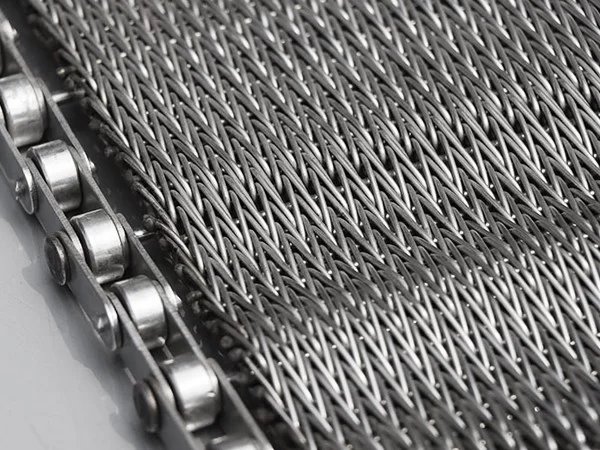
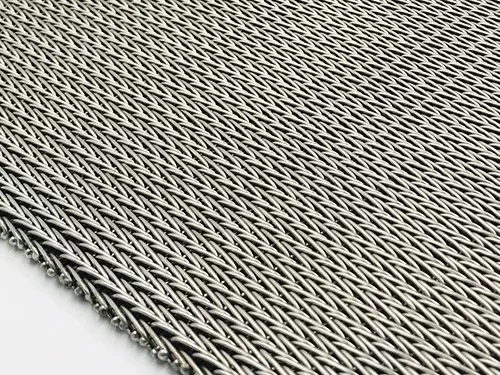
The UK manufacturing sector, particularly in the Midlands and Northern England, faces a dual challenge: adhering to some of the world's strictest Food Standards Agency (FSA) hygiene mandates while maintaining high operational efficiency. This environment demands the use of a premium Stainless Steel Wire Mesh Belt to prevent contamination and ensure longevity in humid, coastal, or corrosive industrial climates.

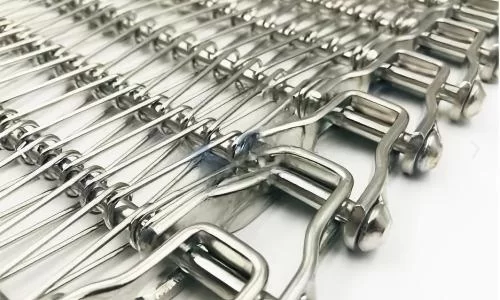
With the rise of automated "smart factories" in the UK, there is a critical shift toward components that minimize friction and energy consumption. The integration of a Balanced Spiral Conveyor Belt has become essential for UK-based spiral freezing and proofing lines, allowing for space-saving vertical transport without compromising product integrity.

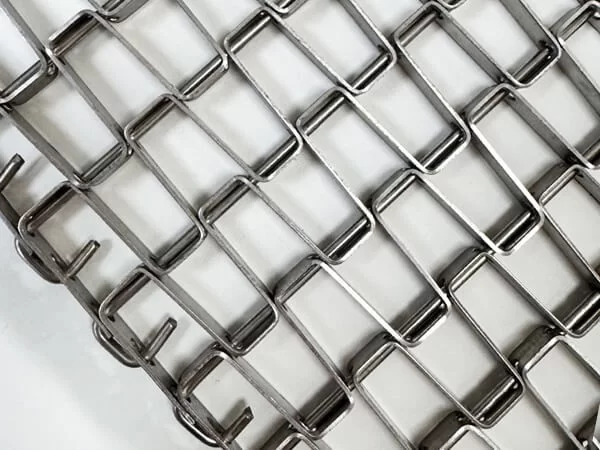
Economically, the UK market is currently prioritizing "Total Cost of Ownership" (TCO) over initial procurement costs. This has led to an increased adoption of high-grade alloys and specialized weaves, such as Honeycomb Conveyor Belts, which provide superior structural stability and airflow for the UK's expanding commercial bakery and pharmaceutical sectors.
Evolution of UK Conveyor Technology

From traditional heavy-duty steel to precision-engineered balanced weaves.

Market Development History

In the early 20th century, UK industrial belts were predominantly heavy carbon steel, characterized by high wear and frequent replacement. By the 1980s, the transition to stainless steel began to accelerate as hygiene standards became formalized, leading to the widespread use of the basic Flat Wire Conveyor Belt for simple linear transport.

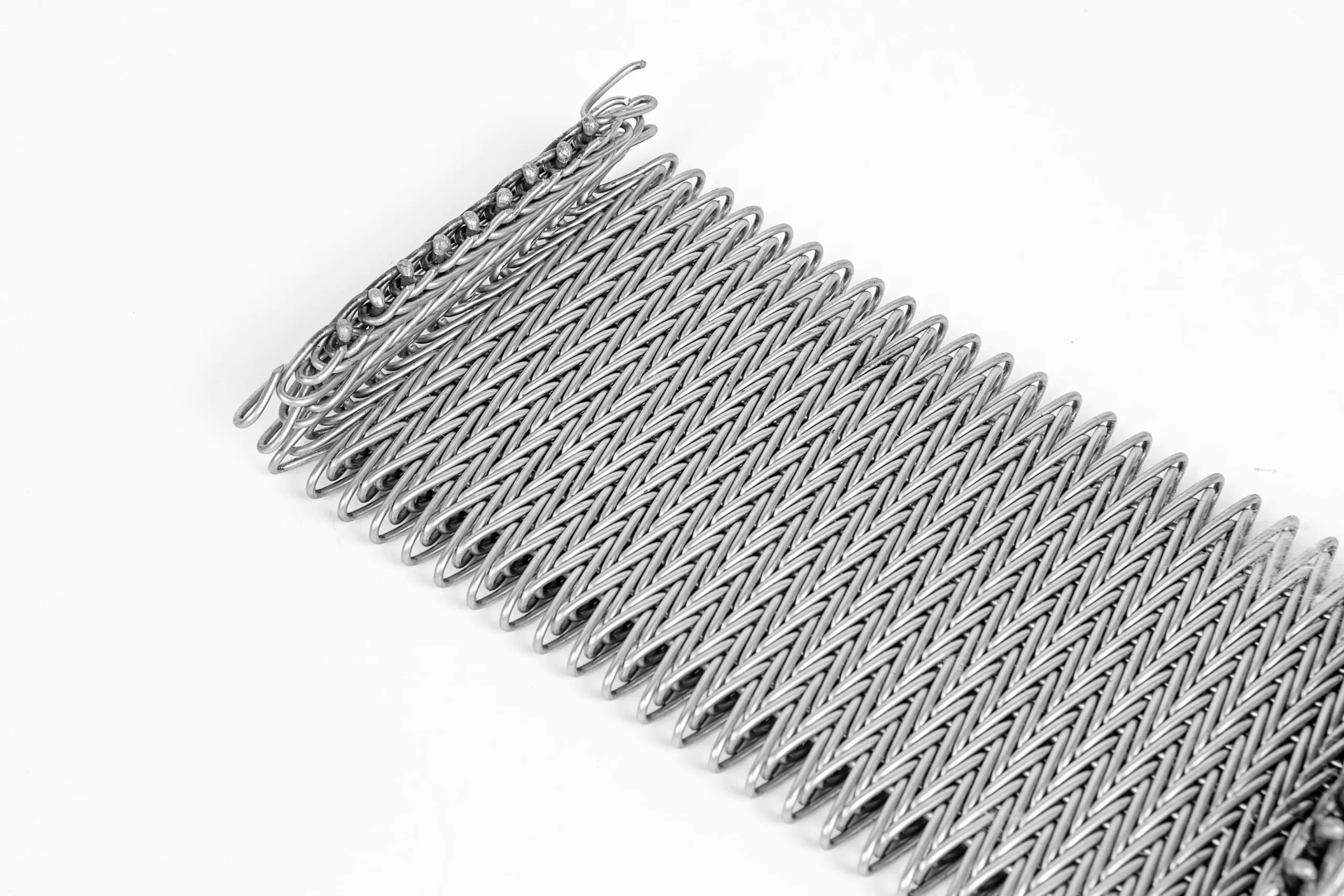
The turn of the millennium saw a technical pivot toward "Balanced" technology. Between 2000 and 2015, the industry evolved from simple weaves to complex geometries, reducing the "tracking" issues that plagued older systems. This era established the Compound Balanced Weave Belt as the gold standard for high-tension applications.

Since 2018, the focus has shifted toward "Integrated Intelligence." Modern UK systems now combine advanced metallurgy with sensor-compatible belt designs, ensuring that the mechanical transmission components can withstand the high-torque demands of high-speed robotics and automated sorting.

Future Development Trends

Nano-Coating for Ultra-Hygiene

We predict the integration of antimicrobial nano-coatings on wire mesh surfaces to further reduce cleaning downtime in UK pharmaceutical plants.

Energy-Efficient Friction Reduction

Future designs will focus on reducing the coefficient of friction between the belt and the wear strip to lower the electricity consumption of large-scale UK conveyor systems.

AI-Driven Predictive Wear Analysis

Integration of IoT sensors within the belt framework to predict failure points in the wire weave before they cause production halts.

UK Industry Trends and Future Outlook

Strategic directions for mechanical transmission and conveyor components in the British market.

Sustainability-Driven Materials
Shift towards 100% recyclable high-grade stainless alloys to meet UK Net Zero 2050 goals.
Precision Tracking Tech
Implementation of balanced weave architectures to eliminate lateral belt drift in high-speed lines.
Modular System Integration
Standardizing belt widths and joint types for rapid interchangeability in flexible UK plants.
Extreme Temp Resilience
Developing alloys that maintain tension stability from -40°C (flash freezing) to +300°C.

Industry Outlook

Based on Google search trend analysis for "industrial automation UK," there is a significant increase in demand for high-durability transmission components. The future will be dominated by systems that reduce manual intervention, making the reliability of the Stainless Steel Wire Mesh Belt a non-negotiable requirement for operational continuity.

Furthermore, as the UK strengthens its domestic supply chain, we expect a surge in the adoption of specialized belts that can handle multi-stage processing (heating, cooling, and transporting) on a single continuous line, drastically reducing factory footprints.

UK Localized Application Scenarios

Real-world deployment of high-performance belts across diverse British industries.

1. Commercial Bakery Lines in Greater London

Utilizing Honeycomb Conveyor Belts for high-volume artisan bread production, ensuring optimal airflow during the cooling phase and preventing product sticking.

2. Aerospace Component Heat Treatment in Derby

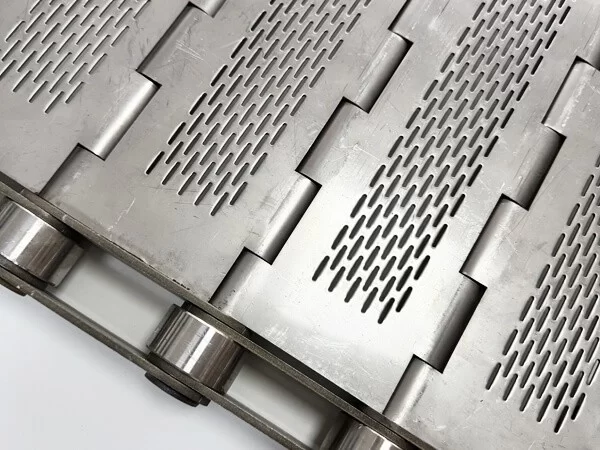
Applying Flat Wire Conveyor Belt systems for the precise transport of turbine components through high-temperature quenching tunnels.

3. Seafood Processing Plants in Scotland

Deploying Balanced Spiral Conveyor Belt systems for the efficient, space-saving blast freezing of Atlantic salmon fillets.

4. Pharmaceutical Tablet Coating in Oxford

Implementing Compound Balanced Weave Belt solutions to ensure vibration-free transport of sensitive medical coatings.

5. Automotive Part Degreasing in Birmingham

Using heavy-duty Stainless Steel Wire Mesh Belt for the continuous transport of chassis components through chemical baths.

Brand Story

Global Development Journey of Yangzhou JiaoYang Mesh Belt Manufacturing Co., Ltd.

Foundation and Technical Core

Established with a mission to solve the frequent fatigue failure of industrial belts, focusing on the fundamental physics of wire weaving.

Innovation in Balanced Weaves

Developed proprietary weaving techniques that eliminated the tracking issues common in traditional mesh belts, enabling high-speed stability.

Global Quality Certification

Achieved international quality standards to penetrate the stringent European and North American markets, ensuring E-E-A-T compliance in every product.

UK Market Specialization

Customized product lines specifically for the UK's food and aerospace sectors, focusing on high-corrosion resistance and precision fit.

Vision for Future Industry

Leading the transition towards sustainable, smart-conveying systems that reduce waste and energy consumption globally.

Comprehensive Conveying Portfolio for the United Kingdom

Tailored mechanical transmission solutions designed for British industrial standards.

UK Industrial Belt FAQ

Expert answers to common technical queries from UK plant managers.

How do I choose the right Stainless Steel Wire Mesh Belt for high-salinity environments in coastal UK plants?

For coastal environments, we recommend AISI 316L grade stainless steel, which offers superior molybdenum content to resist chloride-induced pitting corrosion compared to standard 304 grade.

What are the main advantages of a Balanced Spiral Conveyor Belt for space-constrained UK factories?

Balanced spiral belts allow for high-density vertical transport, reducing the factory footprint while ensuring the belt remains centered without expensive external guiding systems.

Can a Compound Balanced Weave Belt handle high-tension loads in heavy-duty UK metallurgy?

Yes, the compound weave is specifically engineered to distribute tension evenly across the wire structure, preventing elongation and reducing the frequency of belt re-tensioning.

How do Honeycomb Conveyor Belts improve energy efficiency in UK commercial bakeries?

The honeycomb structure reduces the overall mass of the belt, lowering the torque required for the motor to move the load and increasing airflow for faster cooling.

What is the typical lifespan of a Flat Wire Conveyor Belt in a high-temperature UK industrial oven?

Depending on the alloy and temperature, our precision flat wire belts typically last 3-5 years with minimal maintenance, provided that lubrication and tension are monitored.

Are your mesh belts compliant with UK FSA hygiene standards for food contact?

Absolutely. All our food-grade belts are manufactured from certified non-toxic stainless steel, ensuring no chemical migration and ease of CIP (Clean-In-Place) sterilization.

Ready to Optimize Your Production Line?

Our engineering team is ready to provide customized conveyor solutions for your facility in the United Kingdom.

Contact Us Now

If you are interested in our products, you can choose to leave your information here, and we will be in touch with you shortly.