- Tel: +86 15252586600 / +86 13705250816
- Email: 527966138@qq.com / 1026520412@qq.com
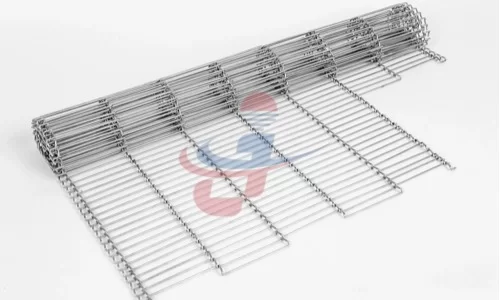
When industrial processes involve extreme thermal exposure, the integrity of the material transport system becomes the primary bottleneck for production efficiency. Flat Flex conveyor systems address this by combining a lightweight, single-layer stainless steel architecture with a precision positive drive mechanism. These belts are specifically engineered to eliminate the slippage and tracking issues common in traditional high-heat environments, ensuring that delicate components—whether in powder metallurgy or food processing—are moved with absolute consistency. By optimizing airflow through an open-mesh design, these systems reduce thermal lag and accelerate cooling or drying cycles, directly impacting the overall throughput of the production line.

The operational success of a high-temperature transport system depends on the synergy between material science and mechanical design. Our Flat Flex belts utilize high-tensile spring wire or premium stainless steel, allowing them to maintain structural stability even under intense thermal stress. Unlike standard belts, the single-layer construction reduces the total mass of the system, which significantly lowers the energy required for acceleration and deceleration, reducing the mechanical load on the drive motors.
A critical technical advantage is the positive sprocket drive mechanism. By utilizing precision-engineered sprockets that lock into the belt mesh, the system eliminates the risk of belt drift or slippage. This is especially vital for curved conveyor configurations where centrifugal forces often cause misalignment in friction-driven belts. The result is a stable, predictable flow of materials that ensures every item spends the exact required time within the heating or cooling zone.

In sectors such as food processing, chemical fibers, and catalyst production, the "open area" of a belt is not just a design feature—it is a functional requirement. With an open area of up to 85%, these belts facilitate maximum airflow and rapid liquid drainage. In frying, baking, or freezing operations, this prevents the "shielding effect" where the belt blocks heat or cold from reaching the product, ensuring uniform thermal exposure across the entire batch.
Furthermore, the sanitary design is critical for HACCP compliance. The minimal contact points reduce areas where organic matter or bacteria can accumulate, simplifying the cleaning process and reducing the volume of chemical detergents required. For heat treatment and brazing furnaces, this open structure allows for the efficient escape of combustion gases or volatile chemicals, preventing contamination of the processed parts and enhancing the quality of the final joint or sinter.
Selecting the correct belt configuration requires a deep analysis of the interaction between the product and the thermal environment. Buyers must evaluate the wire diameter—ranging from 0.8 mm to 3.0 mm—against the weight of the load to prevent sagging, which can lead to uneven heating. The pitch range (4 mm to 2000 mm) must be matched precisely to the sprocket geometry to ensure seamless power transmission.
Engineering considerations should also include the specific chemical environment. While stainless steel is the standard for corrosion resistance, certain brazing or pyrolysis environments may require specialized alloys to prevent premature fatigue. Additionally, the choice between straight and curved systems dictates the tensioning requirements and the type of end-rolls used; smaller diameter rolls are preferred for delicate item transfers to minimize product deformation during transitions.
| Feature Dimension | Standard Mesh Belt | Flat Flex Design | Operational Impact |
|---|---|---|---|
| Energy Consumption | High (Heavy Weight) | Low (Lightweight) | Reduced Power Cost |
| Tracking Accuracy | Manual Adjustments | Positive Drive | Minimal Drift |
| Airflow/Drainage | Moderate | Up to 85% Open | Faster Cycle Times |
| Cleaning Complexity | High (More Contact) | Low (Open Design) | Easier HACCP Audit |
| Transfer Precision | Standard Rolls | Small Diameter Rolls | Less Product Loss |
Reliability in high-temperature zones is achieved through standardized production and rigorous testing. Our manufacturing facility utilizes over 30 fully automatic wire winding machines and CNC straightening equipment to ensure that every link in the mesh is dimensionally accurate. This precision is what enables the Flat Flex belts to operate smoothly with sprockets without causing premature wear or "jumping" during operation.
Beyond the physical build, our commitment extends to the entire lifecycle of the conveyor. We integrate ISO9001 management systems to monitor corrosion resistance and heat stability through repeated stress testing. By providing matching sprockets and customized wire diameters, we ensure that the conveyor is not just a component, but a fully optimized system tailored to the specific throughput and thermal requirements of the client's machinery.
For procurement managers, the focus should shift from the initial cost per meter to the Total Cost of Ownership (TCO). A lightweight, positive-drive system reduces long-term operational costs by minimizing maintenance downtime and energy expenditure. When sourcing for Wholesale High Temperature Conveyor Belt needs, it is essential to partner with a manufacturer that can provide not only the belt but also the engineering support for installation and operational optimization.
The future of thermal conveyance is moving toward higher precision and lower environmental impact. By adopting belts with higher open areas and more durable alloys, companies can reduce their carbon footprint through improved energy efficiency in furnaces and ovens. We recommend a comprehensive audit of the current drive components to ensure that the transition to a Flat Flex system is seamless and delivers maximum uptime year after year.
We primarily use high-grade stainless steel and spring wire, which provide the necessary balance of tensile strength, heat resistance, and corrosion protection for industrial environments.
Yes, Flat Flex belts are specifically engineered for compatibility with both straight and curved configurations, maintaining stability through their positive drive mechanism.
The high open area allows for superior airflow and liquid drainage, which is essential for ensuring uniform baking, frying, or freezing and faster cooling times.
Absolutely. The sanitary, open-mesh design minimizes product contact points and bacterial buildup, making them ideal for HACCP-compliant environments.
We offer wire diameters from 0.8-3.0mm, pitches from 4-2000mm, and widths up to 3 meters, with full customization available to meet specific machine requirements.
Yes, we provide matching sprockets and essential drive components to ensure a fully integrated and efficient mechanical transmission system.
Ensuring the smooth operation of your high-temperature processes requires a partnership based on technical expertise and reliable hardware. Whether you are optimizing a sintering furnace or a food production line, our team is ready to provide the precision engineering needed for maximum uptime.