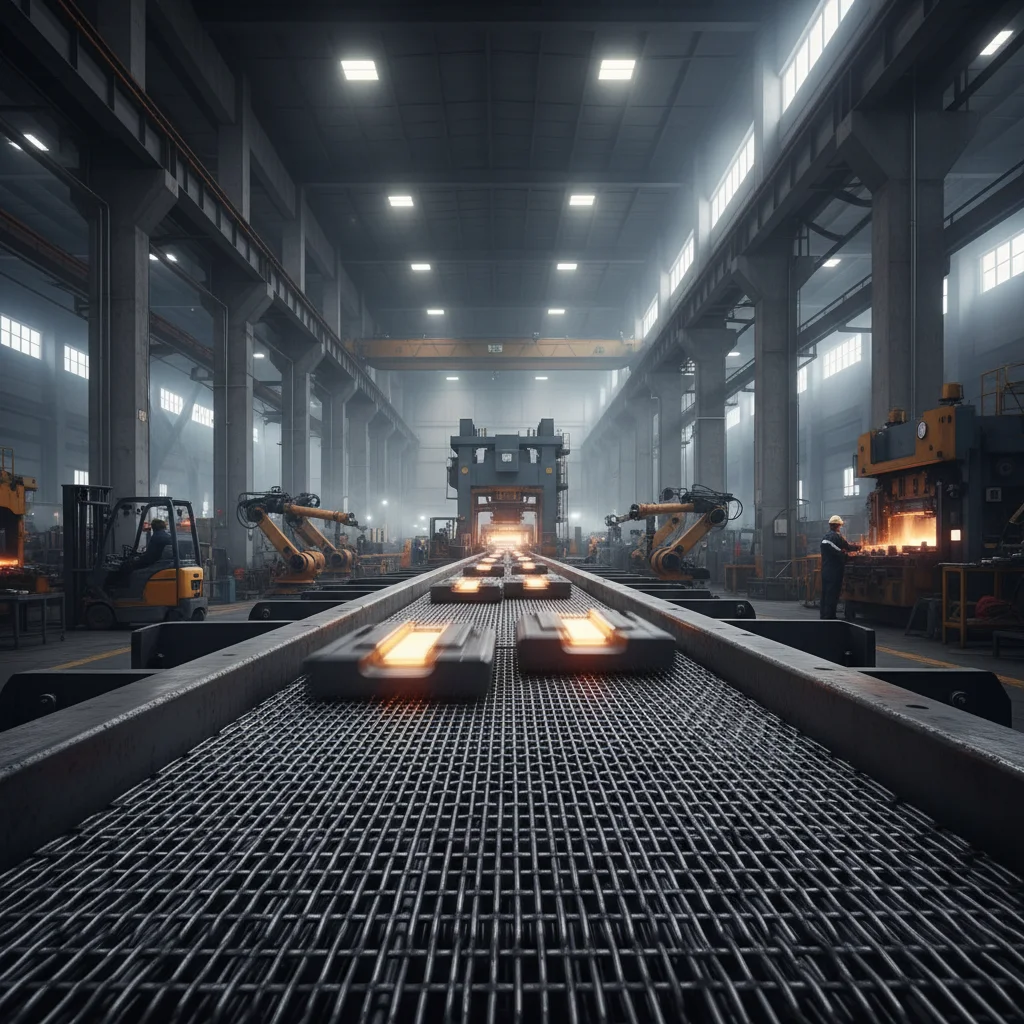
In the high-stakes environment of industrial food processing and precision manufacturing, the efficiency of thermal treatment and cooling depends heavily on the reliability of the transport system. The Balanced Spiral Woven Conveyor Belt emerges as a critical engineering solution, designed to optimize vertical space while maintaining a steady, vibration-free flow of products. By blending structural stability with a woven architectural design, these belts allow industries to maximize throughput without expanding their physical plant footprint.
Across global markets, the shift toward automated, continuous processing has increased the demand for conveyor systems that can withstand extreme temperature fluctuations—from blast freezing to high-heat baking. A Balanced Spiral Woven Conveyor Belt is specifically engineered to handle these stressors, ensuring that the tension remains uniform across the spiral trajectory, which prevents belt drift and reduces mechanical wear on the drive components.
Understanding the nuances of this technology is not merely about selecting a part; it is about enhancing operational longevity and food safety. By integrating advanced metallurgy and precise weaving patterns, the Balanced Spiral Woven Conveyor Belt reduces downtime and energy consumption, making it an indispensable asset for any facility aiming for ISO-certified quality standards and sustainable production cycles.

Global Industry Context of Balanced Spiral Woven Conveyor Belt
On a global scale, the manufacturing of mechanical transmission components has evolved to meet the rigorous demands of "Industry 4.0." The Balanced Spiral Woven Conveyor Belt plays a pivotal role in this evolution, particularly in regions like Europe and North America where land costs for factories are astronomical. By utilizing vertical spiral movement, manufacturers can achieve the same residence time for a product in a fraction of the floor space.
Statistical trends from ISO and international trade data indicate a rising preference for stainless steel woven meshes over traditional rubber or plastic belts in high-temperature applications. The inherent challenge has always been the "tracking" issue—where belts slide off-center during the spiral climb. The development of the balanced weave solves this by ensuring equal tension across the width of the belt, effectively eliminating the costly downtime associated with belt misalignment.
Defining the Balanced Spiral Woven Conveyor Belt Architecture
At its core, a Balanced Spiral Woven Conveyor Belt is a precision-engineered metal mesh designed to travel in a helical path. Unlike standard flat belts, the "balanced" aspect refers to the specific interlacing pattern of the wires, which prevents the belt from bunching or stretching unevenly as it navigates the curve of the spiral. This geometric precision ensures that the product remains stable and undisturbed during transit.
From a technical standpoint, these belts are often constructed from high-grade stainless steel (such as 304 or 316), ensuring they are corrosion-resistant and compliant with stringent food-grade regulations. The woven structure allows for maximum airflow and liquid drainage, which is essential for applications like flash freezing or oil draining, where the environment must interact with the product from all angles.
This technology connects modern industrial needs with humanitarian goals by increasing the efficiency of food preservation and pharmaceutical production. By reducing the energy required for cooling and decreasing product waste through smoother handling, the balanced spiral system contributes to a more sustainable global supply chain, ensuring that essential goods are processed with minimal resource waste.
Core Components for Maximum Operational Stability
The structural integrity of a Balanced Spiral Woven Conveyor Belt relies on its material composition. High-tensile wires are woven using a specialized loom that locks the mesh into a stable grid, preventing the "accordion effect" during the vertical transition. This durability ensures that the belt can operate for thousands of hours without significant elongation.
Scalability is another key factor. Because these belts can be customized in width and pitch, a Balanced Spiral Woven Conveyor Belt can be integrated into small-scale artisanal bakeries or massive industrial frozen-food plants. The ability to adjust the spiral diameter allows engineers to precisely control the dwell time of the product.
Finally, cost efficiency is realized through the reduction of drive component wear. A truly balanced belt puts less strain on the motors and sprockets, as there is no fighting against centrifugal forces or belt drift. This synergy between the woven mesh and the drive system results in a lower Total Cost of Ownership (TCO) over the lifespan of the machinery.
Global Applications and Industrial Use Cases
The application of the Balanced Spiral Woven Conveyor Belt is most prominent in the food and beverage industry. In large-scale spiral freezers used for seafood or prepared meals, these belts move products through different temperature zones in a compact tower, ensuring a consistent freeze rate that preserves the cellular structure of the food.
Beyond food, these systems are utilized in the automotive and electronics sectors for curing and drying processes. For instance, in high-tech industrial zones in East Asia, spiral conveyors are used to move circuit boards through ovens, where the woven mesh allows heat to permeate the components evenly from the bottom, preventing hotspots and ensuring quality control.
Performance Metrics of Balanced Spiral Woven Conveyor Belt Variations
Long-Term Economic and Sustainability Advantages
Investing in a Balanced Spiral Woven Conveyor Belt provides tangible long-term value through enhanced reliability. The logical advantage is clear: less friction and better alignment lead to lower electricity consumption for the drive motors. From an emotional perspective, plant managers gain peace of mind knowing that the risk of catastrophic belt failure—which could halt an entire production line—is significantly mitigated.
Furthermore, the sustainability impact is profound. Because these belts are made of recyclable stainless steel, they avoid the landfill waste associated with disposable plastic belts. The open-weave design also allows for more efficient cleaning with less water and chemical detergents, aligning the production process with global "Green Manufacturing" initiatives and improving the overall hygiene and dignity of the workplace.
Future Innovations in Spiral Conveying Technology
The future of the Balanced Spiral Woven Conveyor Belt lies in the integration of smart materials and IoT sensors. We are seeing the emergence of "intelligent belts" embedded with tension-sensing fibers that can alert operators to wear and tear in real-time, allowing for predictive maintenance rather than reactive repairs.
Digital transformation is also influencing the design process. Using AI-driven simulations, engineers can now predict exactly how a specific weave pattern will behave under various load weights and speeds before the belt is even manufactured. This ensures that every Balanced Spiral Woven Conveyor Belt is perfectly tailored to the specific viscosity or weight of the product being transported.
Additionally, new alloy coatings are being developed to further reduce friction and increase heat conductivity. These innovations will allow spiral conveyors to operate at even higher speeds without sacrificing stability, pushing the boundaries of how much output a single square meter of factory floor can produce.
Challenges and Expert Solutions in Belt Maintenance
Despite their advantages, the primary challenge with any spiral system is the accumulation of debris within the weave. In food processing, organic buildup can lead to bacterial growth if not managed. The expert solution involves the implementation of automated CIP (Clean-in-Place) systems that use high-pressure nozzles aligned with the spiral's path to scrub the Balanced Spiral Woven Conveyor Belt during operation.
Another common limitation is the initial complexity of installation. Achieving the perfect "balance" requires precise alignment of the drive sprockets. To overcome this, leading manufacturers now provide laser-alignment tools and comprehensive commissioning services to ensure the belt is centered perfectly from day one, preventing early-stage edge wear.
Lastly, thermal expansion can occasionally cause tension variations in extremely high-temperature environments. By utilizing "expansion-compensating" drive components, the Balanced Spiral Woven Conveyor Belt can maintain a constant tension regardless of the ambient heat, ensuring a seamless flow of products without the need for manual adjustments.
Comparative Analysis of Balanced Spiral Woven Conveyor Belt Specifications
| Belt Material |
Temperature Range |
Stability Score (1-10) |
Typical Application |
| SS 304 Woven |
-40°C to 250°C |
8 |
General Food Freezing |
| SS 316 Woven |
-50°C to 300°C |
9 |
Acidic/Saline Environments |
| Nickel Alloy |
-20°C to 600°C |
7 |
Industrial Heat Treatment |
| Teflon-Coated SS |
-60°C to 200°C |
10 |
Non-Stick Baking |
| Custom High-Tension |
-40°C to 280°C |
9 |
Heavy-Duty Pharma Lines |
| Micro-Woven Mesh |
-30°C to 220°C |
8 |
Small Component Drying |
FAQS
The primary difference lies in the weave pattern and tension distribution. A balanced belt is specifically engineered to maintain its shape and tracking while moving in a helical or spiral path. Standard mesh belts are often designed for linear travel and may "drift" or bunch up when forced into a spiral, whereas a balanced spiral woven conveyor belt ensures uniform tension across its entire width, eliminating the need for constant manual adjustments.
Depending on the material (e.g., SS 304 vs. SS 316) and the environmental stressors, these belts can last anywhere from 5 to 15 years. Their longevity is significantly higher than plastic alternatives because they do not degrade under UV light or extreme heat. Regular lubrication of drive components and periodic tension checks can extend the lifespan of a balanced spiral woven conveyor belt further.
Yes, absolutely. Because they are typically constructed from stainless steel or high-nickel alloys, these belts can withstand extreme temperatures without warping. The woven design also allows for optimal heat penetration from below, making the balanced spiral woven conveyor belt ideal for continuous baking or curing processes where space is limited but temperature consistency is critical.
Yes. Customization is a core feature of the balanced spiral woven conveyor belt. Engineers can specify the weave density (to support very small items), the belt width, and the pitch of the spiral to ensure the product has the exact residence time required for processing. This flexibility makes them suitable for everything from tiny pharmaceutical pills to large frozen pizzas.
The best approach is a combination of a high-quality, smooth-finish weave and an automated cleaning system. Many facilities use high-pressure spray bars that follow the spiral path. Additionally, choosing a balanced spiral woven conveyor belt with a specific open-area percentage allows for easier drainage and prevents "trapping" particles within the mesh fibers.
Yes, when manufactured from food-grade stainless steel (like 304 or 316), they are fully compliant. The non-porous nature of the metal and the open-weave design prevent the harborage of bacteria and allow for complete sterilization, making the balanced spiral woven conveyor belt a gold standard in hygienic food processing environments globally.
Conclusion
The Balanced Spiral Woven Conveyor Belt represents the perfect intersection of mechanical precision and industrial practicality. By solving the critical challenge of belt tracking in vertical systems and offering unparalleled durability across extreme temperature ranges, this technology allows manufacturers to optimize their floor space while increasing throughput. From its high-grade material composition to its sustainable, recyclable nature, it provides a comprehensive solution for the most demanding processing environments.
As we move toward a future of smarter, more automated factories, the role of high-performance transmission components will only grow. For businesses looking to reduce operational downtime and adhere to the strictest global safety standards, upgrading to a balanced spiral system is not just a technical improvement—it is a strategic investment in scalability and reliability. We encourage you to evaluate your current conveyor efficiency and explore how specialized weaving can transform your production line. Visit our website: www.jymeshbelt.com