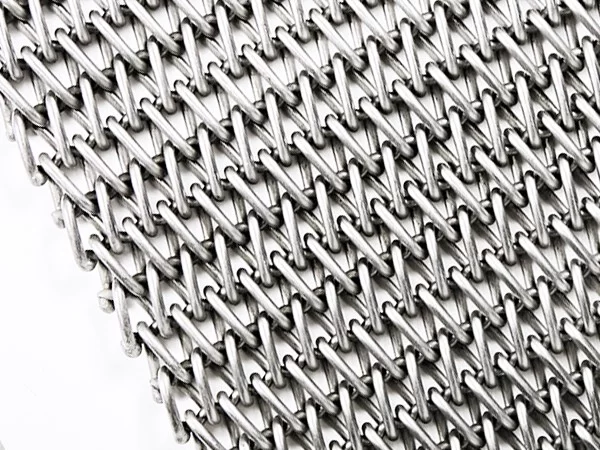
Advanced Industrial Conveying Solutions with Balanced Spiral Conveyor Belt in Romania

  • Home
  • Global Service
  • Advanced Industrial Conveying Solutions with Balanced Spiral Conveyor Belt in Romania

Industrial Conveying Solutions: High-Performance Balanced Spiral Conveyor Belt for Romania

Precision-engineered stainless steel transmission components tailored for the Romanian manufacturing sector to enhance thermal stability and operational longevity.

Industrial Conveying Solutions: High-Performance Balanced Spiral Conveyor Belt for Romania

Providing the Romanian mechanical transmission industry with state-of-the-art wire mesh technology to optimize high-temperature processing and hygienic transport.

Current Landscape of Transmission Components in Romania

Analyzing the synergy between Romanian industrial growth and advanced conveyor technology.

Romania's manufacturing sector, particularly in regions like Timișoara and Cluj-Napoca, is experiencing a surge in automotive and food processing investments. This growth has increased the demand for a durable Stainless Steel Wire Mesh Belt that can withstand the rigorous demands of continuous production cycles and strict EU sanitary standards.

The local climate, characterized by humid continental variations, necessitates materials with superior corrosion resistance. Industrial plants are moving away from carbon steel toward high-grade stainless steel to prevent oxidation in high-moisture environments, ensuring that transmission components remain structurally sound over years of operation.

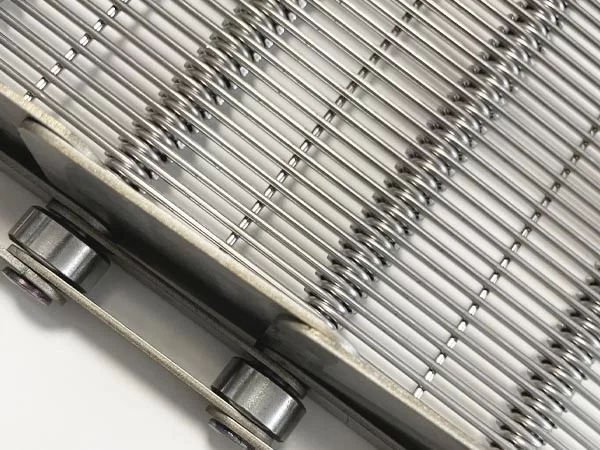
Currently, the integration of Flat Wire Conveyor Belt systems is becoming standard for Romanian SMEs looking to upgrade their assembly lines. The shift is driven by the need for higher precision in tracking and a reduction in maintenance downtime compared to traditional rubber or chain-based systems.
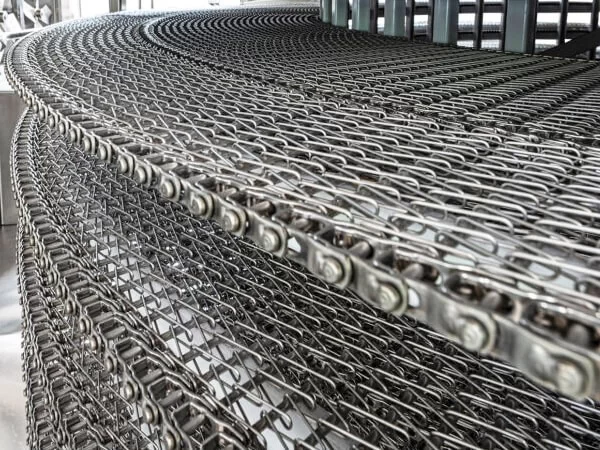
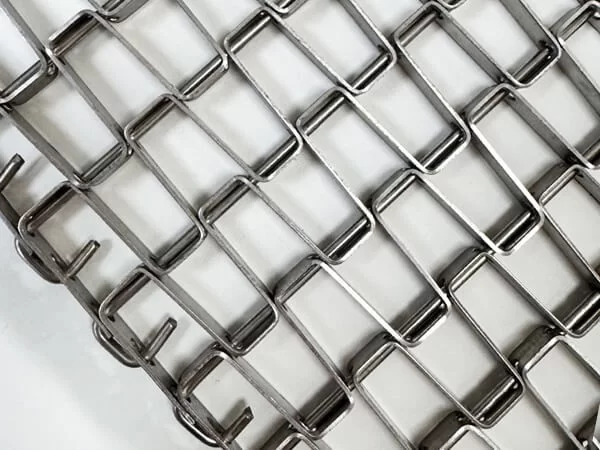
Evolution of Conveyor Technology in Romania

From traditional mechanical links to high-precision balanced weaves.

Market Development History

In the early 2000s, Romanian industry relied heavily on heavy-duty carbon steel belts, which offered strength but suffered from rapid wear and corrosion. These systems required frequent lubrication and were unsuitable for the emerging pharmaceutical and food sectors.

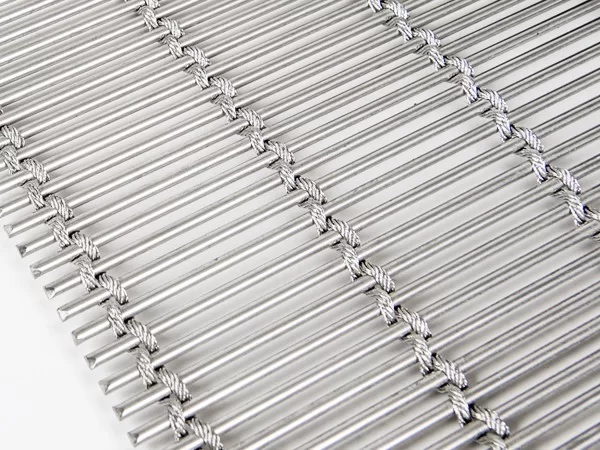
Between 2010 and 2020, the adoption of the Compound Balanced Weave Belt marked a significant shift. This period saw the introduction of "balanced" technology, which eliminated the belt's tendency to drift or "snake," allowing for narrower frames and more efficient space utilization in factories.

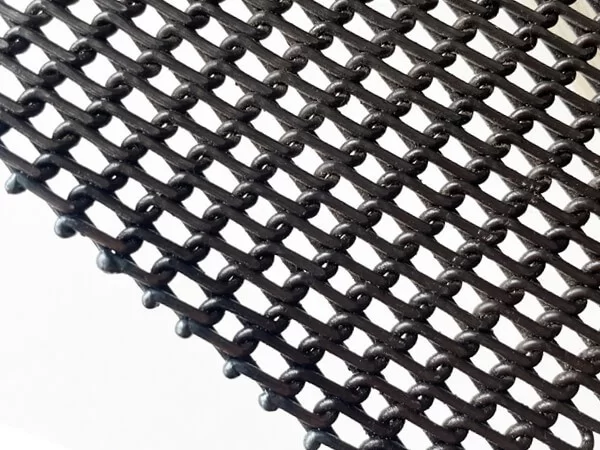
By 2023, the market transitioned toward specialized geometries. The introduction of Honeycomb Conveyor Belts allowed Romanian producers to optimize airflow and heat distribution in industrial ovens, representing the peak of current technical iteration in the region.

Future Development Trends

Smart Material Integration

The next 3-5 years will see the integration of sensors within the weave to monitor belt tension and wear in real-time, reducing unplanned outages in Romanian automotive plants.

Ultra-High Temperature Alloys

As roasting and tempering processes become more intensive, the shift toward Ni-based alloys for wire mesh will accelerate to handle temperatures exceeding 1100°C.

Energy-Efficient Drive Synergy

Google search trends indicate a rise in "low-friction conveyor systems," leading to a trend where belt weave is optimized to reduce the torque required from motors, lowering electricity costs.

Future Outlook for Mechanical Transmission in Romania

Strategic projections for high-efficiency belt systems in the Eastern European market.

Predictive Maintenance
Shift toward AI-driven monitoring of mesh integrity to prevent sudden breaks in critical production lines.
Carbon Neutrality
Reducing the carbon footprint of belt manufacturing through recycled stainless steel and energy-efficient weaving.
Modularization
Rapid-replacement modular belt sections to reduce downtime in Romanian industrial hubs.
Hygienic Optimization
Advanced weave patterns that minimize residue buildup for Romanian organic food exporters.

Industry Outlook

The Romanian market is expected to see a 4.5% annual growth in automated conveying systems. The integration of precision-engineered Honeycomb Conveyor Belts will likely dominate the baking and chemical sectors, where uniform heat transfer is critical for product quality.

Furthermore, as Romania aligns more closely with Western European "Industry 4.0" standards, the demand for high-tolerance mechanical components will lead to an increase in customized, application-specific belt weaves over generic off-the-shelf solutions.

Localized Applications for Romanian Industries

Real-world deployments of wire mesh belts across Romania's key economic sectors.

01. Automotive Parts Heat Treatment in Pitești

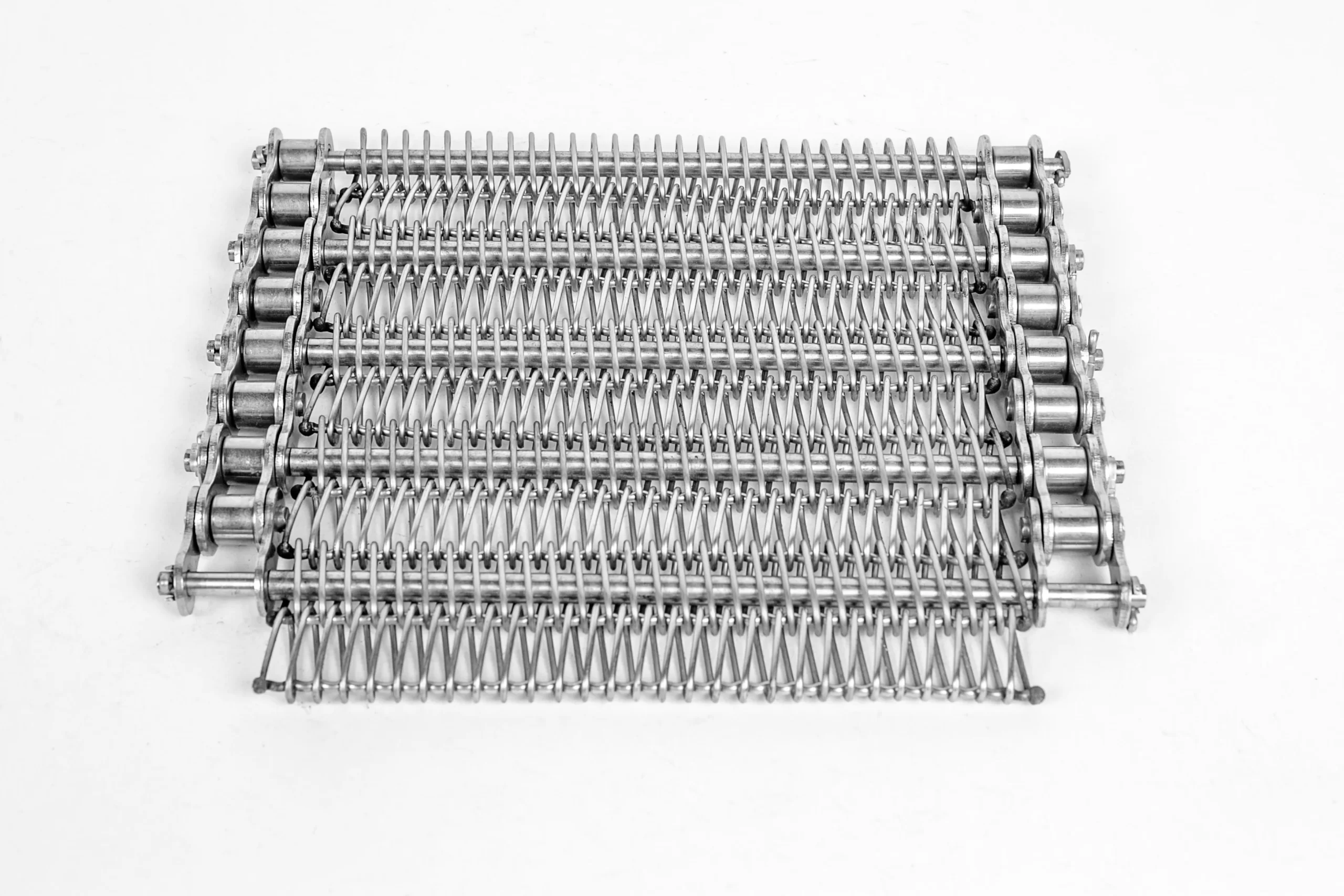
Utilizing Balanced Spiral Conveyor Belt systems for the continuous cooling and tempering of small precision engine components, ensuring zero deformation during the transition.

02. Organic Bakery Production in Brașov

Implementation of Honeycomb Conveyor Belts to provide optimal airflow for artisanal bread lines, reducing baking time while maintaining a consistent crust texture.

03. Meat Processing Facilities in Timișoara

Deployment of Stainless Steel Wire Mesh Belt systems for blast freezing and hygienic transport, meeting all EU food safety regulations regarding easy cleanability.

04. Chemical Component Drying in Ploiești

Using Compound Balanced Weave Belt to transport chemically sensitive polymers through drying tunnels without risking belt slippage or material contamination.

05. Electronics Assembly in Cluj-Napoca

Integration of Flat Wire Conveyor Belt for the low-friction movement of PCB boards through soldering and inspection phases, preventing electrostatic discharge.

Brand Story

Global Development Journey of Yangzhou JiaoYang Mesh Belt Manufacturing Co., Ltd.

Foundation and Technical Core

Established with a focus on precision weaving, we began by solving the fundamental problem of belt tracking and durability for local heavy industries.

R&D Innovation Breakthrough

We developed proprietary balanced weave technology, eliminating the "drift" issue that plagued traditional wire mesh belts globally.

Global Market Expansion

Expanding into the European market, we adapted our standards to meet CE and ISO certifications, becoming a trusted partner for Romanian manufacturers.

Industry 4.0 Integration

Implementing smart manufacturing processes to ensure every belt produced has a tolerance of less than 0.1mm, ensuring perfect fitment.

Vision for Sustainable Transmission

Our current mission is to lead the transition toward zero-waste manufacturing of stainless steel components for a greener industrial future.

Comprehensive Transmission Portfolio for Romania

A complete range of high-performance mesh belts engineered for Romanian industrial standards.

Common Technical Queries in Romania

Expert answers to the most frequent challenges faced by Romanian transmission engineers.

How do I choose the right Stainless Steel Wire Mesh Belt for food processing in Romania?

For food processing, we recommend AISI 304 or 316 stainless steel. The choice depends on the acidity of the food; 316 is preferred for high-salt or acidic environments common in Romanian brine-processing plants.

What are the advantages of a Balanced Spiral Conveyor Belt over traditional spirals?

Balanced spiral belts prevent the lateral movement of the belt, meaning you don't need frequent manual adjustments or heavy-duty guides, significantly reducing labor costs in Romanian factories.

Can Honeycomb Conveyor Belts handle extreme temperature fluctuations?

Yes, our honeycomb designs are engineered for thermal stability, making them ideal for the rapid heating and cooling cycles used in the Romanian automotive painting and curing industries.

How often should a Compound Balanced Weave Belt be inspected for wear?

Depending on the load, we recommend a monthly visual inspection of the edges and a quarterly tension check to ensure the balanced weave remains centered on the drive sprocket.

Is the Flat Wire Conveyor Belt suitable for low-friction electronic transport?

Absolutely. The flat wire construction provides a smooth surface that minimizes friction and vibration, which is critical for the precision electronics assembly hubs in Cluj-Napoca.

What is the average lead time for custom mesh belt orders delivered to Romania?

Standard sizes are shipped within 7-10 days. Custom-engineered belts typically take 15-25 days including quality testing and secure international shipping to Romanian ports.

Ready to Optimize Your Production Line?

Consult with our engineers to find the perfect transmission solution for your facility in Romania.

Contact Us Now

If you are interested in our products, you can choose to leave your information here, and we will be in touch with you shortly.