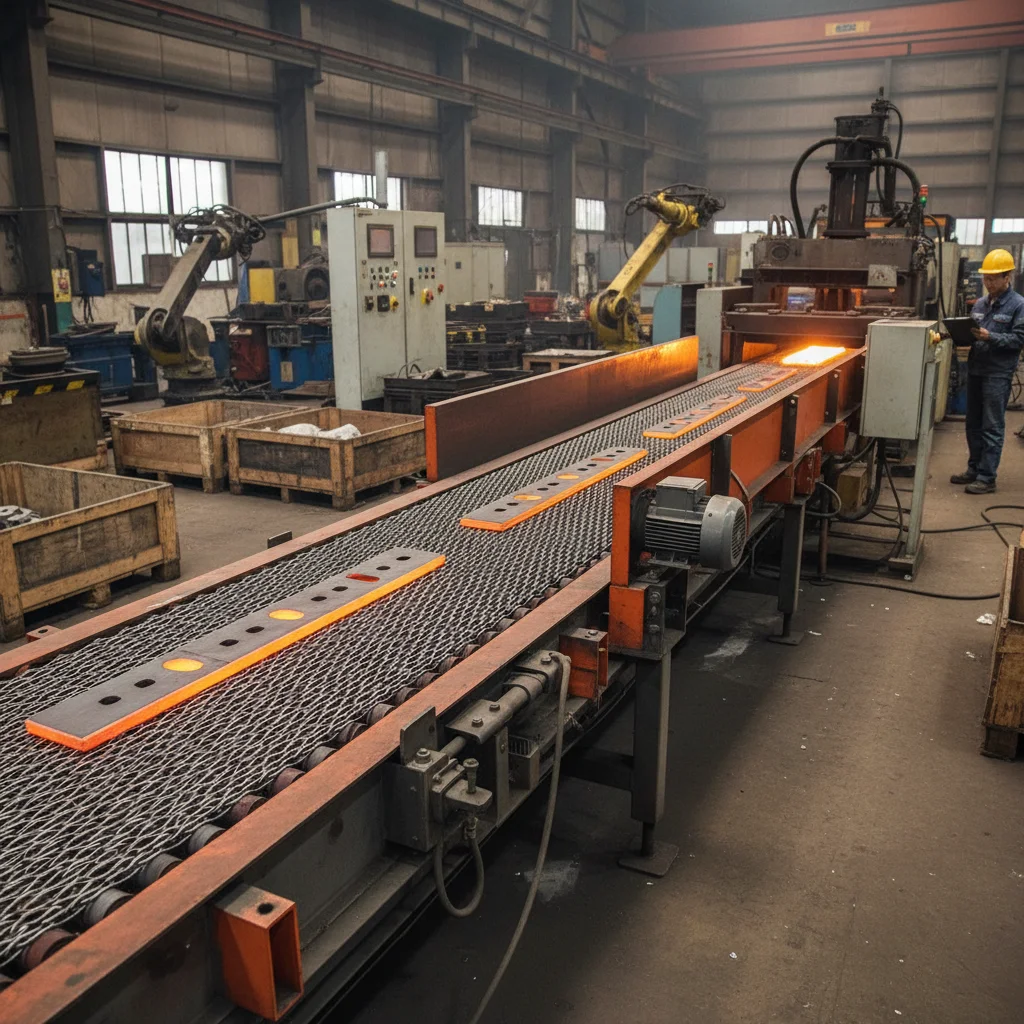
In the rigorous landscape of modern automotive manufacturing, the precision of thermal processing is paramount. The Automotive Pipe Brazing Mesh Belt serves as a critical conduit in this process, ensuring that complex piping systems are joined with absolute integrity through controlled heat application. By utilizing a woven rod bar architecture, these belts provide the structural stability and thermal transparency required for high-stakes industrial brazing.
Globally, the shift toward electric vehicles and high-efficiency internal combustion engines has increased the demand for intricate cooling and fuel lines. These components require uniform heat distribution to avoid warping or structural failure, a challenge that is directly addressed by the open-mesh design of the woven rod bar system. This technology ensures that heat penetrates every angle of the automotive pipe, reducing scrap rates and improving overall production yield.
Understanding the technical nuances of the Automotive Pipe Brazing Mesh Belt is essential for engineers aiming to optimize their assembly lines. From managing extreme temperatures up to 400°C to navigating curved conveyor paths, the right choice of mesh belt impacts not only the quality of the final product but also the operational lifespan of the entire mechanical transmission system.

The Technical Architecture of Automotive Pipe Brazing Mesh Belt
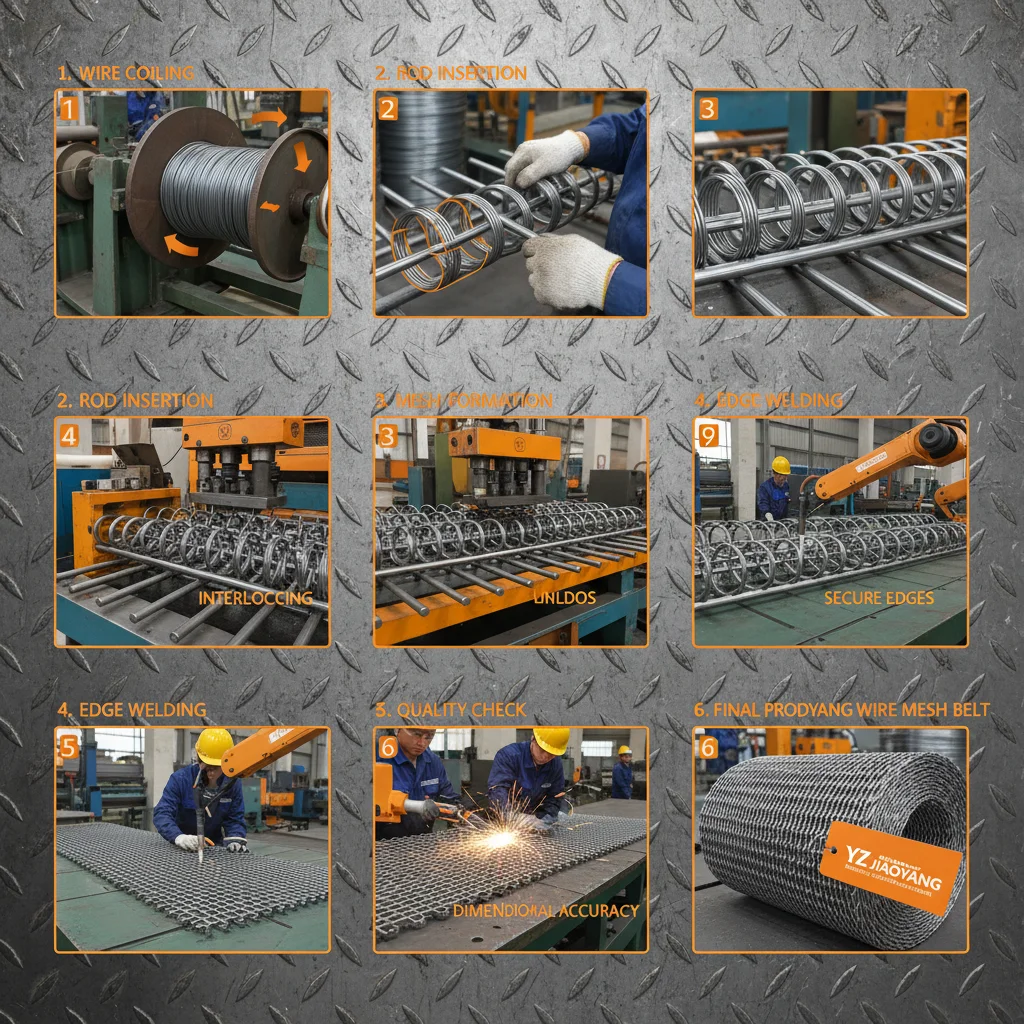
The Automotive Pipe Brazing Mesh Belt is engineered with a sophisticated woven rod bar structure, consisting of smooth, solid crossbars interconnected by high-strength wire strands. This specific geometry is not merely for support but is designed to create an open architecture that facilitates maximum airflow and uniform heat distribution. In the context of pipe brazing, this ensures that the thermal energy is applied consistently across the workpiece, preventing "cold spots" that could lead to leakages in automotive fluid lines.
Furthermore, the use of premium heat-resistant alloys, specifically high-grade stainless steel, allows these belts to maintain their tension and shape even when exposed to temperatures reaching 400°C. The precision weaving ensures consistent rod spacing, which is critical when transporting delicate automotive pipes that must not be deformed under their own weight during the brazing process.
Global Industrial Relevance and Demand
In the global automotive sector, the transition toward higher efficiency and stricter emission standards has led to more complex heat exchanger and piping designs. The Automotive Pipe Brazing Mesh Belt has become a standard in facilities adhering to ISO quality certifications, where the repeatability of the brazing process is non-negotiable. The ability to transport parts through a furnace with zero slippage and optimal thermal exposure is a key competitive advantage for Tier 1 suppliers.
Industries across Europe and Asia have seen a significant uptick in the adoption of reinforced-edge woven belts to handle higher throughput speeds. As production cycles shorten, the mechanical fatigue resistance of the belt becomes the primary bottleneck. By implementing belts capable of navigating small-diameter pulleys and curved paths, manufacturers can reduce the overall footprint of their brazing lines while increasing output.
The challenge often lies in balancing the need for high open-area percentages (for heat) with the need for structural rigidity (for load). The modern woven rod bar design solves this conflict, providing a stable platform for heavy automotive pipes while remaining virtually "invisible" to the infrared or convection heat sources used in the brazing furnace.
Core Components for Thermal Stability
At the heart of the Automotive Pipe Brazing Mesh Belt is the selection of high-temperature resistant alloys. These materials are chosen for their exceptional oxidation resistance, ensuring that the belt does not degrade or flake into the product during the brazing cycle.
The interwoven rod bar structure is a primary component that defines the belt's performance. By customizing the rod diameter and mesh spacing, engineers can tailor the Automotive Pipe Brazing Mesh Belt to support specific pipe diameters, ensuring that the parts are held securely without being crushed or skewed.
Edge optimization is another critical factor. Depending on the application, either cut edges for maximum agility or reinforced edges for heavy-duty longevity are employed. This ensures the belt remains tracked perfectly throughout the furnace, preventing costly downtime caused by belt misalignment.
Comparative Performance Metrics in Brazing
When evaluating the efficiency of a production line, the choice between standard metal belts and the specialized Automotive Pipe Brazing Mesh Belt becomes clear through empirical data. The woven rod bar design offers superior thermal stability, allowing for operating temperatures up to 400°C without compromising the structural integrity of the mesh.
Moreover, the airflow efficiency of an open-mesh system far exceeds that of rigid plate belts, which often create a thermal barrier between the heat source and the pipe. This results in a more uniform brazing joint and a significant reduction in energy consumption per unit.
Efficiency Ratings: Automotive Pipe Brazing Mesh Belt Variants
Real-World Applications in Automotive Lines
In the actual deployment of an Automotive Pipe Brazing Mesh Belt, the most common use case is found in the continuous brazing furnace. Here, pipes are laid across the woven rods, which act as a stable carrier that allows brazing flux and heat to reach all surfaces of the pipe simultaneously. This is particularly vital for aluminum brazing in radiators and condensers.
Beyond the furnace, these belts are utilized in cooling zones where the open mesh facilitates rapid heat dissipation via forced air, preventing the brazed joints from cooling too slowly, which could otherwise lead to brittle fractures. Their adaptability to curved paths also allows for a more compact factory layout, enabling the transition from the brazing chamber to the inspection station in a seamless, automated flow.
Long-Term Value and Maintenance Benefits
Investing in a high-quality Automotive Pipe Brazing Mesh Belt yields significant long-term returns through reduced maintenance costs. The use of stainless steel and corrosion-resistant alloys prevents the premature wear and tear typically seen in humid industrial environments. Because the structure is open, cleaning processes—such as removing flux residue—are significantly faster and more effective.
Furthermore, the high fatigue resistance of the woven rod design means that the belts can operate on small-diameter pulleys for extended periods without stretching or breaking. This stability reduces the frequency of belt replacements and minimizes the risk of unplanned production halts.
From a sustainability perspective, the extended service life of these belts reduces industrial waste. The precision engineering ensures that the belt does not distort, meaning the automotive pipes are delivered to the next stage of production without the need for manual realignment, thus increasing overall operational efficiency.
Future Innovations in Mesh Belt Engineering
The future of the Automotive Pipe Brazing Mesh Belt is moving toward "smart" integration and advanced metallurgy. We are seeing the emergence of nano-coated alloys that provide even higher resistance to oxidation at temperatures exceeding 500°C, allowing for faster brazing cycles and higher throughput.
Digital transformation is also playing a role, with manufacturers integrating sensors into the belt's drive components to monitor tension and wear in real-time. This predictive maintenance approach ensures that a belt is replaced exactly when needed, eliminating both premature replacement and catastrophic failure.
As the industry pivots toward green energy, the focus is shifting toward belts that maximize thermal efficiency, thereby reducing the carbon footprint of the brazing furnace. The optimization of rod diameters to the micron level is allowing for an even more "invisible" carrier, ensuring that every joule of energy is directed toward the automotive pipe rather than the conveyor system.
Technical Comparison of Woven Rod Bar Mesh Belt Configurations
| Configuration Type |
Thermal Limit |
Wear Resistance |
Application Suitability |
| Standard Woven Rod |
Up to 400°C |
High |
General Brazing |
| Reinforced Edge |
Up to 400°C |
Superior |
Heavy-Duty Pipes |
| Cut Edge Agile |
Up to 350°C |
Moderate |
Complex Curved Paths |
| High-Alloy SS |
Up to 450°C |
Excellent |
Corrosive Environments |
| Ultra-Wide Mesh |
Up to 400°C |
High |
Large-Scale Assemblies |
| Fine-Pitch Mesh |
Up to 380°C |
Moderate |
Small Diameter Tubing |
FAQS
The woven rod bar design of the Automotive Pipe Brazing Mesh Belt creates an open structure that allows heat and airflow to surround the pipe. Flat belts create a thermal barrier and can cause uneven heating, leading to brazing defects. The open mesh ensures uniform heat distribution and efficient liquid drainage of fluxes.
Yes, our belts are constructed from high-grade stainless steel and heat-resistant alloys specifically designed to operate in environments up to 400°C. This ensures the belt maintains its structural integrity and tension without stretching or oxidizing under extreme thermal stress.
Cut edges are ideal for applications requiring maximum flexibility and agility, especially when navigating tight curves. Reinforced edges are recommended for heavy-duty industrial usage where the belt is subject to higher mechanical stress, as they significantly extend the belt's lifespan by preventing edge wear.
Absolutely. The flexible architecture of the woven rod bar system is specifically engineered to adapt to various contours and curved paths. This allows manufacturers to design more efficient, compact production lines without sacrificing the stability of the transported pipes.
We offer extensive customization options to fit your specific line needs, with maximum widths available up to 3,500 mm. This allows us to support everything from small-scale precision tubing lines to massive industrial automotive component assemblies.
While our belts feature high fatigue resistance, we recommend a technical inspection every 3-6 months, depending on the load and speed. The open structure makes these inspections straightforward, allowing operators to quickly check for rod spacing consistency and edge wear.
Conclusion
The Automotive Pipe Brazing Mesh Belt is more than just a conveyor component; it is a precision tool that enables the high-performance joining of critical automotive systems. By combining high-temperature resistant alloys with a woven rod bar architecture, these belts solve the dual challenge of structural support and thermal transparency. From reducing energy consumption to increasing the longevity of the production line, the integration of a specialized mesh belt is a strategic investment in quality and efficiency.
Looking forward, as the automotive industry embraces more complex materials and tighter tolerances, the role of customizable conveyor solutions will only grow. We suggest that manufacturers audit their current thermal processing lines to identify bottlenecks in heat distribution or belt wear. By upgrading to a precision-engineered woven rod system, companies can ensure they are ready for the next generation of automotive engineering. Visit our website: www.jymeshbelt.com