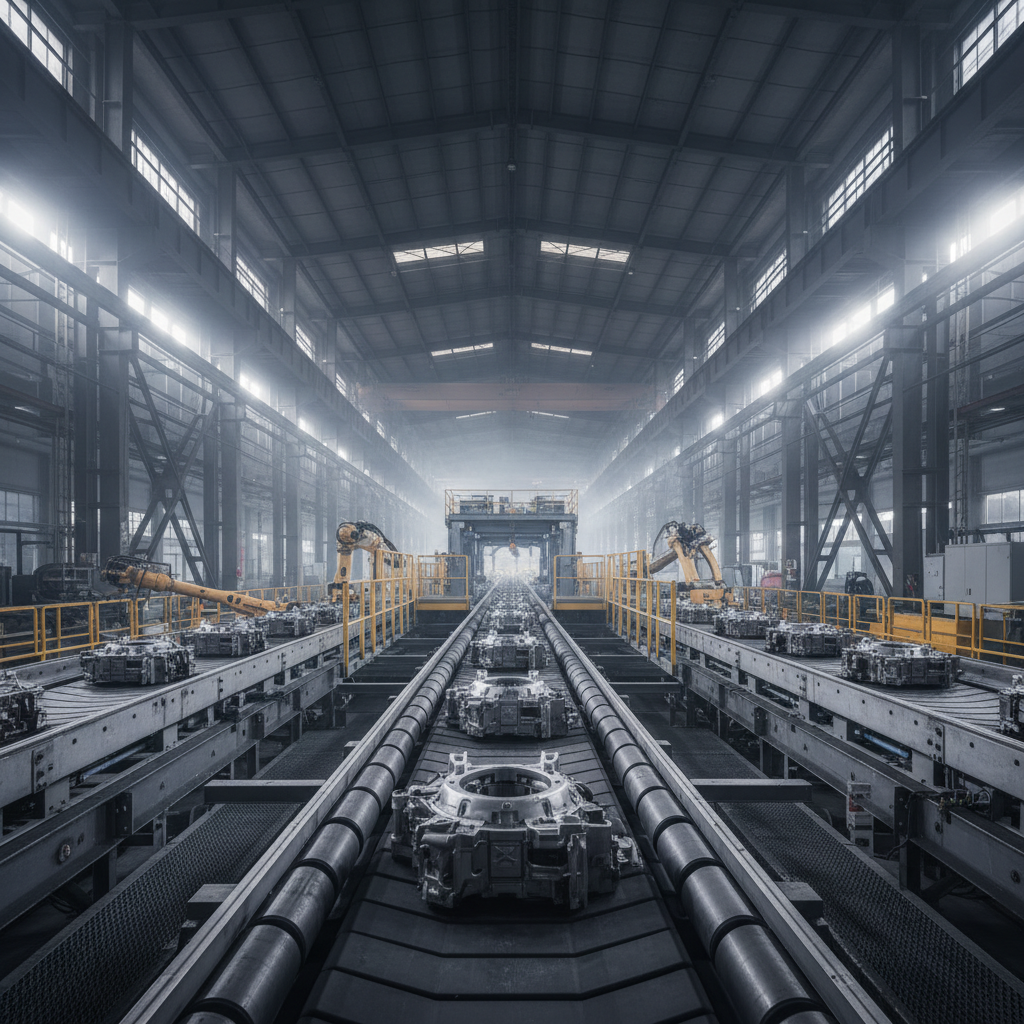
Industrial conveying systems rely heavily on the synergy between mechanical stability and material compatibility. When seeking Wholesale wavy threading mesh belt solutions, procurement managers focus on achieving a balance between high throughput and minimal friction. These specialized belts are engineered to facilitate the movement of components through complex thermal or chemical processes without compromising the integrity of the product being transported.
In the context of high-temperature manufacturing, the selection of a conveyor surface is not merely a logistical choice but a technical necessity. Industries ranging from powder metallurgy to glass processing require surfaces that can withstand extreme thermal cycling while maintaining precise tracking. The challenge lies in finding a supplier capable of integrating R&D with large-scale production to ensure that every belt meets rigorous ISO9001 standards for dimensional accuracy and surface finish.
This analysis explores the critical factors in selecting high-performance metal mesh belts, examining the intersection of material science and mechanical engineering. Readers will gain insights into how structural designs, such as alternating rod and spiral coils, impact operational efficiency. By evaluating technical parameters and supplier capabilities, businesses can optimize their production lines to reduce downtime and extend the lifecycle of their conveying assets.
Industrial Belt Integration and Material Flow
The fundamental purpose of a professional Wholesale wavy threading mesh belt is to provide a continuous, stable platform for material transport in environments where traditional rubber or plastic belts would fail. In B2B industrial applications, the "wavy" or flexible rod architecture is specifically designed to handle non-linear paths, such as spiral cooling towers or curved heat-treatment furnaces. This flexibility allows manufacturers to maximize their factory floor space by utilizing vertical or rounded conveyor configurations.
From a technical standpoint, the interaction between the belt and the drive components determines the overall efficiency of the system. High-precision CNC straightening and automatic winding processes are essential to prevent "tracking" issues, where the belt drifts to one side. When a belt is manufactured with standardized, high-precision tolerances, it ensures that the tension remains uniform across the width of the belt, reducing wear on the motor and drive sprockets. For companies operating in the electronics or building materials sectors, this mechanical consistency is the difference between seamless production and costly unplanned shutdowns.
Strategic Procurement and Technical Evaluation
Evaluating a high-performance conveying solution requires a deep dive into the operational environment. It is not enough to match a keyword; one must match the technical specifications to the physical stressors of the production line. The following sections break down the core dimensions of quality and performance that define industrial-grade metal belting.
Material Composition and Chemical Stability
The choice between stainless steel and galvanized steel depends entirely on the corrosive nature of the environment. For food processing or chemical catalyst production, premium stainless steel is mandatory to prevent oxidation and ensure compliance with hygiene standards. A burr-free finish is critical here, as it prevents the accumulation of debris and allows for rapid sterilization. The chemical stability of the material ensures that no contaminants are introduced into the product stream, maintaining the purity of the end result.
| Material Option | Chemical Resistance | Primary Use Case | Maintenance Need |
|---|---|---|---|
| Stainless Steel 304 | High | Food & Pharma | Very Low |
| Stainless Steel 316 | Excellent | Chemical Processing | Minimal |
| Galvanized Steel | Moderate | General Manufacturing | Periodic Coating Check |
| Nickel-Alloy Steel | Extreme | Ultra-High Temp Furnaces | Specialized Inspection |
| Carbon Steel | Low | Dry Heavy-Duty Cargo | High (Lubrication) |
| Custom Alloy | Tailored | Specialized Metallurgy | Technical Monitoring |
Thermal Performance in Extreme Environments
In sintering and brazing furnaces, belts are subjected to extreme thermal expansion and contraction. A high-quality mesh belt must maintain its structural geometry across a wide temperature gradient—from cryogenic freezing tunnels to high-temperature ovens. The use of intelligent embossing and CNC precision ensures that the belt does not warp or lose tension during these cycles. This thermal stability is vital for maintaining uniform heat distribution across the product, which is essential for high-quality joints in metal brazing.
Structural Integrity and Load Distribution
The alternating rod and spiral coil architecture provides a unique combination of rigidity and flexibility. The rods provide the longitudinal strength required to pull heavy loads, while the spiral coils allow for the side-flexing necessary to navigate tight radii. This design significantly reduces the stress concentrations that typically lead to wire breakage in standard weave belts. By distributing the load more evenly, these belts can handle higher throughput without increasing the risk of mechanical failure.
Precision Engineering and Customization
Standard off-the-shelf belts often fail in complex production lines. Customization, such as the integration of U-shaped center links, allows for a significantly reduced turning radius, enabling the belt to fit into tighter spatial configurations. Furthermore, the addition of side guards prevents product spillage during transport, which is crucial for small-component manufacturing. Precision manufacturing ensures that these add-ons are seamlessly integrated without creating weak points in the belt structure.
Application Scenarios in Food and Glass
In the food industry, maximum ventilation is key for cooling large loaves or freezing delicate items. An open-mesh design without covers allows air to circulate freely around the product, accelerating the cooling process and improving energy efficiency. In the glass and electronics industries, the focus shifts to surface smoothness to prevent scratching or marking the product. The burr-free finish provided by advanced polishing techniques ensures that sensitive materials are transported safely.
Operational Lifespan and Maintenance Logic
Reducing total cost of ownership requires a move from reactive to proactive maintenance. High-performance belts are designed for low maintenance, but monitoring weld integrity and surface wear is essential. A robust construction reduces the frequency of replacements, but when replacement is necessary, a lightweight, user-friendly design allows for quick installation. This minimizes production downtime, which is often the most significant cost associated with conveyor system failure.
Supplier Quality Assurance Frameworks
When sourcing these components, buyers should evaluate the supplier's technical infrastructure. A factory equipped with fully automatic winding machines and a certified ISO9001 management system can provide the consistency required for large-scale operations. Beyond the product, the availability of lifelong support—including installation guidance and operational optimization—is what transforms a vendor into a strategic partner. Reliable supply of compatible spare parts ensures that the system can be restored quickly after an incident.
FAQ
How does the rod and spiral structure improve belt performance?
This specific architecture combines the tensile strength of longitudinal rods with the lateral flexibility of spiral coils. This allows the belt to navigate curved paths and spiral conveyors without twisting or wearing out prematurely, leading to higher production throughput and a significant reduction in maintenance-related downtime compared to standard flat-weave belts.
Which material is best for high-temperature sintering furnaces?
For high-temperature environments, high-grade stainless steel or specialized nickel alloys are recommended. These materials maintain their mechanical properties and structural integrity under extreme heat, preventing the belt from sagging or stretching, which ensures that the product receives uniform heat treatment throughout the furnace length.
Can the turning radius of a conveyor belt be adjusted?
Yes, the turning radius can be optimized through custom engineering. By integrating specialized U-shaped links into the center of the belt width, the flexibility is increased, allowing for a tighter turn. This is particularly useful in facilities with limited space or those using spiral conveyor systems to save floor area.
How is hygiene maintained in food-grade conveying belts?
Hygiene is ensured through the use of premium stainless steel and a smooth, burr-free surface finish. The open-mesh design prevents the entrapment of food particles and allows for rapid cleaning and sterilization. This ensures compliance with strict food safety standards and prevents cross-contamination during the cooling or freezing stages.
What should I look for when evaluating a wholesale belt supplier?
Buyers should verify the supplier's manufacturing capabilities, such as the use of CNC straightening and automatic winding machines, and check for ISO9001 certification. Additionally, evaluate their ability to provide technical support for installation and their capacity for customization to ensure the belt fits your specific system requirements perfectly.
How do side guards impact the efficiency of the conveyor?
Side guards increase efficiency by ensuring that products remain centered on the belt during transport. This prevents spillage and reduces the risk of products getting jammed between the belt and the conveyor frame, which in turn reduces the frequency of emergency stops and manual interventions.
References and further reading
- International Organization for Standardization. (2015). ISO 9001:2015 Quality management systems — Requirements.
- Material Properties Database: Thermal Expansion Coefficients of Austenitic Stainless Steels.
- Industrial Conveying Engineering: Principles of Mesh Belt Tension and Tracking.
Related Articles