HighPrecision Balanced Spiral Conveyor Belt Solutions for Singapore Manufacturing

  • Home
  • Global Service
  • HighPrecision Balanced Spiral Conveyor Belt Solutions for Singapore Manufacturing

High-Precision Balanced Spiral Conveyor Belt Solutions for Singapore Manufacturing

Optimizing mechanical transmission efficiency with industrial-grade stainless steel mesh technology tailored for the Asia-Pacific hub.

High-Precision Balanced Spiral Conveyor Belt Solutions for Singapore Manufacturing

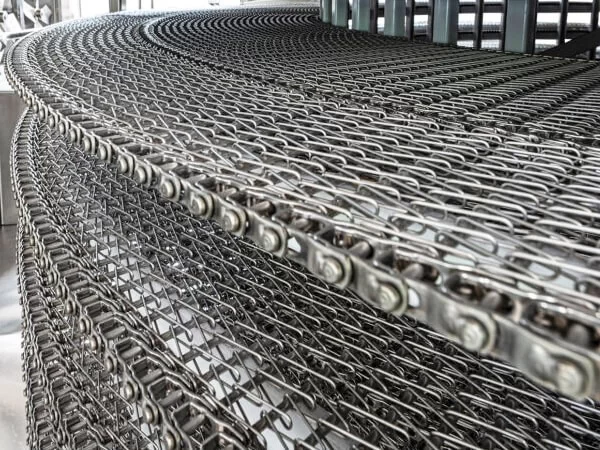
We provide advanced conveyor belt engineering that integrates high-strength alloys with precise weaving patterns to meet the rigorous standards of Singapore's automated production lines.

Industrial Landscape of Mechanical Transmission in Singapore

Analyzing the synergy between humid tropical climates and high-end metallurgy in the Lion City.

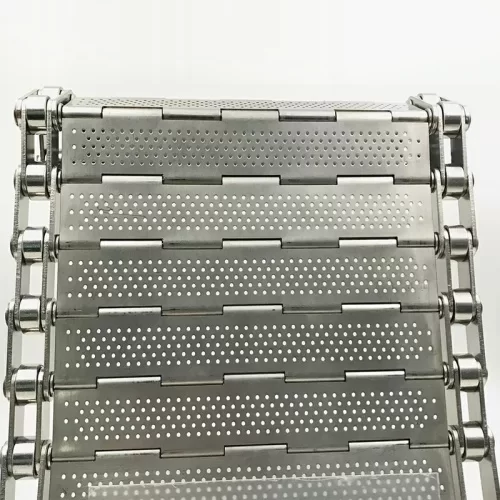
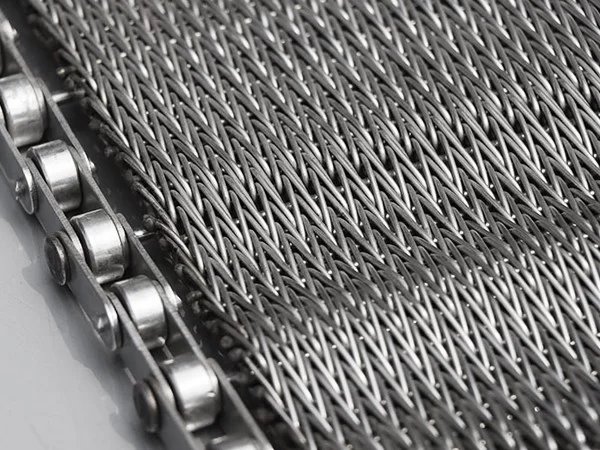
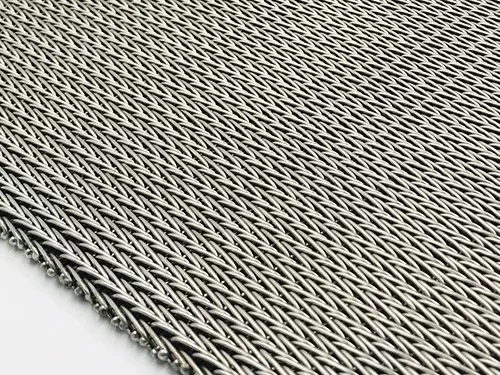
Singapore's manufacturing sector is characterized by a shift toward high-value, automated precision engineering. Due to the high humidity and saline air of the coastal environment, the demand for Stainless Steel Wire Mesh Belt has surged, as traditional carbon steel components suffer from rapid oxidation and corrosion.

The local industry prioritizes "Industry 4.0" integration, meaning conveyor components must not only be durable but also compatible with sensor-driven tracking systems. This has led to the adoption of specialized weaves that minimize vibration and noise during high-speed operation.

Furthermore, the scarcity of industrial land in Singapore encourages the use of vertical processing. This spatial constraint makes the Balanced Spiral Conveyor Belt an essential tool for maximizing throughput per square meter in food processing and electronics assembly.
Evolution of Wire Mesh Transmission Technology

From basic woven fabrics to engineered balanced structures.

Market Development History

In the early 2000s, the Singaporean market relied heavily on standard flat weaves. These basic structures often experienced "tracking" issues where the belt would drift laterally, causing downtime in critical pharmaceutical and food lines.

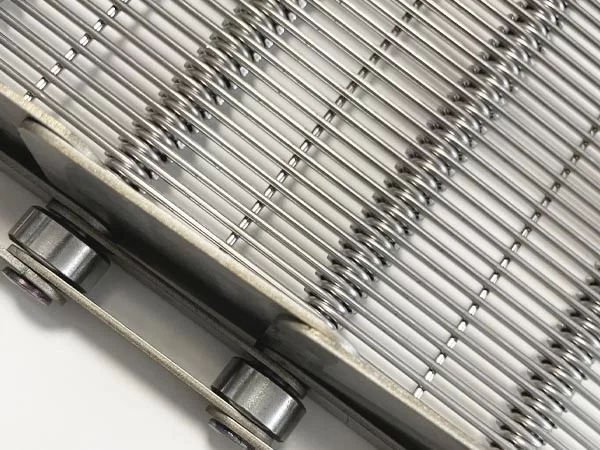
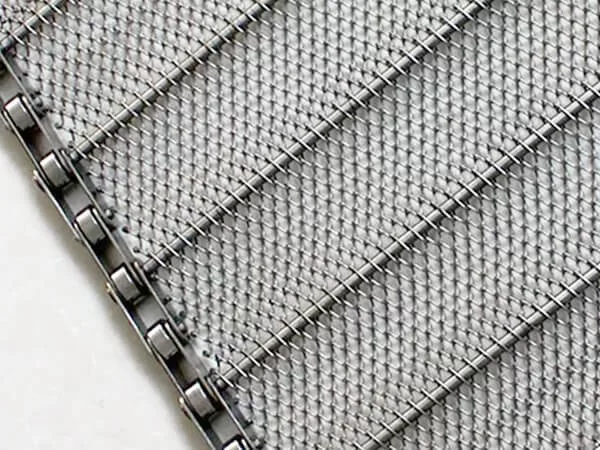
Between 2010 and 2020, the introduction of the Compound Balanced Weave Belt revolutionized the industry. By incorporating reinforced longitudinal wires, engineers achieved a "zero-drift" performance, significantly reducing maintenance overhead for local factories.

Recently, the trend has shifted toward application-specific geometries. The emergence of Honeycomb Conveyor Belts has provided a solution for high-airflow requirements, essential for the rapid cooling of electronics and baked goods in Singapore's urban factories.

Future Development Trends

AI-Driven Predictive Wear Analysis

Integration of embedded sensors within the mesh structure to monitor tension and wear in real-time, reducing unplanned shutdowns.

Advanced Nano-Coatings

Application of hydrophobic and oleophobic coatings to wire mesh to further enhance corrosion resistance in Singapore's humid climate.

Ultra-Lightweight High-Strength Alloys

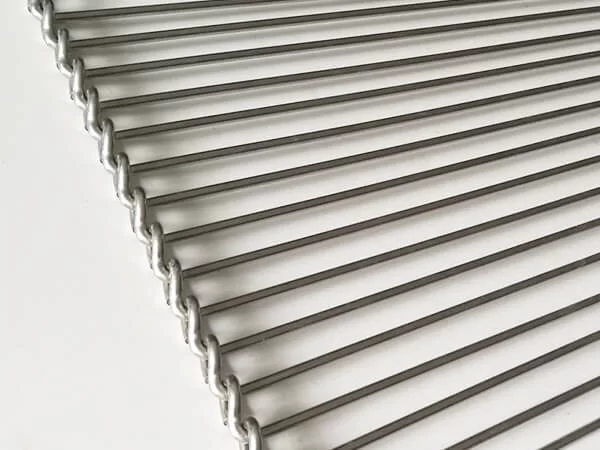
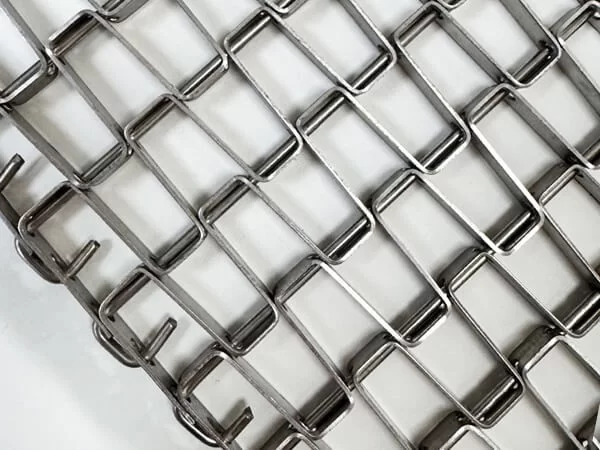
Shift toward titanium-infused stainless steels to reduce the inertia of Flat Wire Conveyor Belt systems, lowering energy consumption.

Industry Trends and Future Outlook

Charting the trajectory of mechanical transmission parts toward sustainable automation.

Green Manufacturing
Reducing carbon footprints through energy-efficient drive systems and 100% recyclable stainless steel components.
Modularization
Shift toward plug-and-play belt modules that allow for rapid replacement without dismantling the entire conveyor frame.
Hygiene Standardization
Enhanced focus on FDA and EHEDG standards for mesh belts used in Singapore's booming food-tech sector.
Smart Integration
Syncing belt speed and tension with IoT controllers to optimize throughput in real-time.

Industry Outlook

Based on Google search trends for "Automated Manufacturing Singapore," there is a marked increase in demand for high-durability transmission components. The transition from manual to autonomous systems requires belts that can maintain extreme dimensional stability over millions of cycles.

We anticipate that the next 3-5 years will see a convergence of material science and digital twins, where every Flat Wire Conveyor Belt has a digital counterpart to simulate wear and tear before it occurs physically.

Localized Application Scenarios in Singapore

Practical deployments of mesh belt technology across Singapore's key economic sectors.

01. Jurong Island Petrochemical Processing

Utilization of high-grade stainless steel mesh for transporting corrosive chemical components where chemical resistance and heat dissipation are critical.

02. Changi Airport Food Logistics

Deploying Balanced Spiral Conveyor Belt systems for rapid cooling and sorting of gourmet catering meals in constrained space.

03. Tuas Biomedical Hub

Implementing Compound Balanced Weave Belt for sterile transportation of pharmaceutical vials to ensure zero contamination and precise positioning.

04. Woodlands Electronics Assembly

Using Honeycomb Conveyor Belts for the soldering and curing process of PCB boards to allow uniform heat distribution.

05. Central Business District Urban Farming

Application of Flat Wire Conveyor Belt for automated hydroponic seedling transport in vertical farming facilities.

Brand Story

Global Development Journey of Yangzhou JiaoYang Mesh Belt Co., Ltd.

Foundational Precision

Established with a focus on solving the "drift" problem in traditional mesh belts, bringing engineering rigor to wire weaving.

Technological Breakthrough

Developed the proprietary balanced weave technique, reducing mechanical friction and extending belt lifespan by 40%.

Global Expansion

Entered the Southeast Asian market, establishing Singapore as a strategic hub for high-end industrial transmission parts.

Certification Excellence

Achieved international quality certifications to meet the stringent hygiene and safety requirements of the global food and pharma sectors.

Future-Proofing Industry

Committing to sustainable metallurgy and AI-integrated belt systems to lead the next wave of industrial automation.

Complete Product Portfolio for the Singapore Market

A comprehensive range of transmission solutions engineered for tropical industrial environments.

Singapore Industrial Transmission FAQ

Expert answers to technical queries regarding mesh belt implementation.

How do I choose the right Stainless Steel Wire Mesh Belt for high-humidity environments?

For Singapore's humidity, we recommend AISI 304 or 316L stainless steel. 316L is particularly effective for coastal areas due to its molybdenum content which prevents pitting corrosion.

What are the advantages of a Balanced Spiral Conveyor Belt in vertical farming?

Balanced spiral belts allow for a compact footprint, enabling vertical movement of plants while ensuring the belt remains centered without expensive guiding systems.

Can a Compound Balanced Weave Belt handle heavy industrial loads?

Yes, the compound structure integrates heavy-duty longitudinal wires that distribute the load evenly, preventing stretching and deformation under heavy weights.

Why use Honeycomb Conveyor Belts for electronics cooling?

The hexagonal open-area design provides maximum airflow and uniform heat dissipation, which is critical for the curing process of electronic components.

How often should a Flat Wire Conveyor Belt be inspected in a 24/7 factory?

In high-intensity operations, we recommend a visual inspection every 48 hours and a full tension calibration every 30 days to prevent premature wear.

What is the lead time for custom mesh belt fabrication for Singapore clients?

Standard sizes are available for rapid dispatch; custom-engineered belts typically require 2-4 weeks for precision weaving and quality testing.

Expert Engineering Consultation

Ready to optimize your production line in Singapore? Our technical team is available for site audits and custom design services.

Contact Us Now

If you are interested in our products, you can choose to leave your information here, and we will be in touch with you shortly.