- Tel: +86 15252586600 / +86 13705250816
- Email: 527966138@qq.com / 1026520412@qq.com

Flat Flex Rod Network Conveyor Belts China Factory Suppliers


Flat Flex Rod Network Conveyor Belts China Factory Suppliers
Contact Us Now >
Download
Rod Network Conveyor Belts, widely recognized as Flat Flex Conveyor Belts, are high-performance industrial transport solutions engineered for the most demanding environments. Featuring a precision cross-woven architecture of left and right spiral wires, these belts create a continuous "Y"-shaped wave structure with a regular rhombus or hexagonal mesh. This innovative design achieves an optimal equilibrium between high tensile strength, exceptional air permeability, and superior resistance to deformation.
Specifically optimized for extreme conditions, our Rod Network belts excel in high-temperature, heavy-load, and precision conveying scenarios. By effectively dispersing mechanical stress through its unique wave structure, this belt provides a tensile strength more than 30% higher than traditional woven mesh belts. With a mesh permeability of ≥60%, it is the indispensable choice for critical cooling, baking, and drying processes across the food, pharmaceutical, and automotive sectors.
Detailed Parameters
| Product Name | Rod Network Conveyor Belt (Flat Flex) | Mesh Structure | Rhombus or Hexagonal "Y"-Wave |
|---|---|---|---|
| Permeability | ≥ 60% Open Area | Tensile Strength | 30%+ Higher than Standard Mesh |
| Material Options | Stainless Steel 304, 316, 310S | Special Alloy | Inconel (High Temperature) |
| Max Temperature | Up to 1200°C (with Inconel) | Noise Reduction | > 20% Lower than Traditional Belts |
| Application | Industrial Heat Treatment & Food Processing | Surface Property | Low Adhesion & Easy Clean |
Key Advantages
Superior Strength
The "Y"-wave structure disperses stress efficiently, increasing tensile strength by over 30% compared to ordinary mesh.
Stable Operation
Reduced risk of belt deviation and high track stability ensures smooth, continuous, and reliable production cycles.
Noise Mitigation
Low-friction transmission and smooth sprocket engagement reduce operational noise by more than 20%.
High Permeability
With ≥60% air permeability, it is perfect for rapid cooling, frying, baking, and drying applications.
Anti-Adhesion
A smooth surface reduces the adhesion of sticky resins or food, facilitating effortless maintenance.
Easy Sanitation
Compatible with high-pressure water jetting and ultrasonic cleaning for strict hygiene standards.
Product Gallery


Management Platforms
Material Control
Rigorous selection of SS304, SS316, and Inconel alloys to ensure maximum durability.
Precision Weaving
Advanced weaving technology for consistent "Y"-shaped wave structures and mesh regularity.
Thermal Testing
Comprehensive testing to verify stability at temperatures reaching up to 1200°C.
Quality Assurance
Strict inspection of tensile strength and permeability for every produced batch.
Customization
Tailored mesh sizes and alloy specifications to meet specific industry requirements.
Delivery Logistics
Optimized packaging and shipping to prevent deformation during transit.
Investment Return Comparison
| Performance Metric | Standard Woven Belt | Rod Network Belt |
|---|---|---|
| Tensile Strength | Baseline | 30% Increase |
| Operational Noise | Standard | 20% Reduction |
| Heat Resistance | Limited | Up to 1200°C |
| Maintenance Cost | Moderate | Low (Easy Clean) |
| Track Stability | Average | High (Anti-Deviation) |
Frequently Asked Questions
Q: What is the difference between a Rod Network Belt and a standard mesh belt?
The Rod Network Belt features a unique "Y"-shaped wave structure that provides 30% more tensile strength and significantly lower operational noise compared to standard woven mesh belts.
Q: Which materials are best for extremely high-temperature applications?
For ultra-high temperatures up to 1200°C, Inconel alloy is the recommended choice. For standard high-heat scenarios, Stainless Steel 310S is highly effective.
Q: How does the belt handle sticky materials in food processing?
The smooth surface is designed to minimize material adhesion. Furthermore, it supports high-pressure water gun cleaning and ultrasonic cleaning to maintain hygiene.
Q: Can these belts be used in the pharmaceutical industry?
Yes, they are widely used in pharmaceutical production lines for drug drying and sterilization due to their corrosion-resistant stainless steel materials and high permeability.
Q: What is the typical air permeability of the Flat Flex conveyor belt?
The mesh permeability is ≥60%, which ensures efficient airflow for cooling, frying, and drying processes.
Q: Does the wave structure affect the tracking of the belt?
On the contrary, the wave structure reduces the risk of belt deviation and helps keep the conveying track stable, reducing downtime for adjustments.
Ready to Optimize Your Production Line with High-Strength Mesh Belts?
Contact Us-
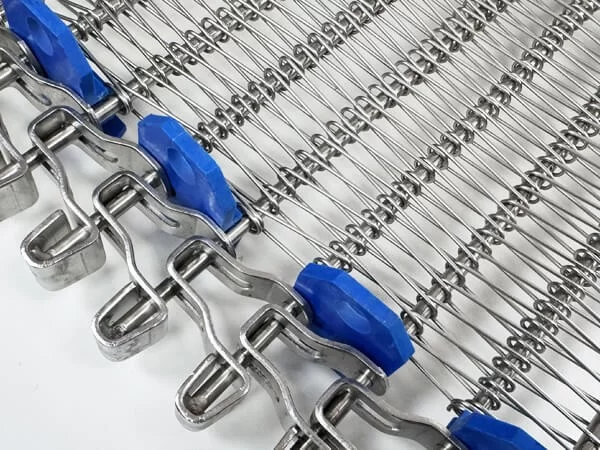 Edge Drive Spiral Freezer Belts
 are precision-engineered stainless steel conveyor belts used in spiral freezers across the food processing industry. Designed for edge-driven systems, these belts provide stable, hygienic, and efficient transport of food products during the freezing process. They are ideal for high-capacity operations where product integrity, airflow, and hygiene are critical.
-
 Compound Weave Conveyor Belts China Factory | HighTemp Mesh Belt SuppliersLeading China factory and suppliers of high-performance Compound Weave Conveyor Belts. Also known as Stainless Steel Cordweave or Baking Band belts, our balanced woven solutions feature minimal apertures for transporting small items with extreme thermal stability up to 1250C. Ideal for food processing and precision manufacturing.
-
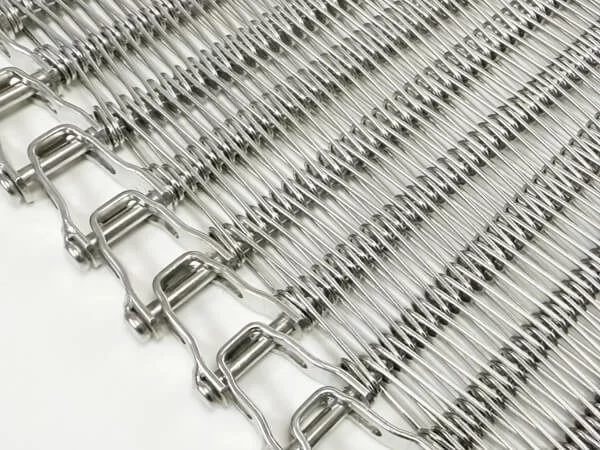 Flexible Rod Conveyor Belts
A Flexible Rod Belt is constructed from 3 components.
1. Alternating spirals take care of the belt overlay.
2. These spirals are connected to each other by means of smooth cross rods.
3. Special chain links are mounted at the outer sides, which are locked by means of button heads.
-
 Chain Driven Conveyor Belts China Factory | High Precision Mesh Belt SuppliersLeading China factory and suppliers of stainless steel chain link belts with precision-driven rollers. High-tensile, corrosion-resistant solutions for heavy-duty industrial material handling.
-
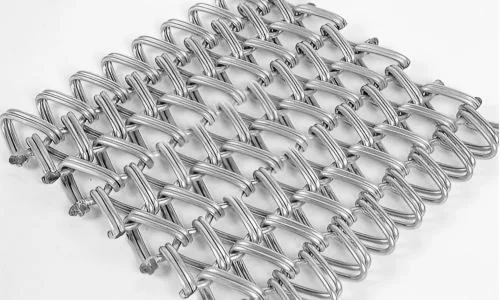 Double Balanced Weave Conveyor Belt
Double Wire Wrap Construction – Enhanced durability with interlocking spiral design……
-
 Rod Network Conveyor Belts Factory China High Temperature Flat Flex Belt SuppliersLooking for high-performance Rod Network Conveyor Belts? As leading China suppliers and a professional factory, we provide Flat Flex belts with 1200C heat resistance and 30 percent higher tensile strength for industrial conveying.
-
 HighPerformance Plate Link Conveyor Belts China Suppliers and FactoryLooking for reliable Plate Link Conveyor Belt China suppliers? Our factory provides robust stainless steel belts driven by chains, ideal for heavy load applications in die-casting and forging. Experience smooth operation, easy installation, and long service life with our self-supporting industrial belts.
-
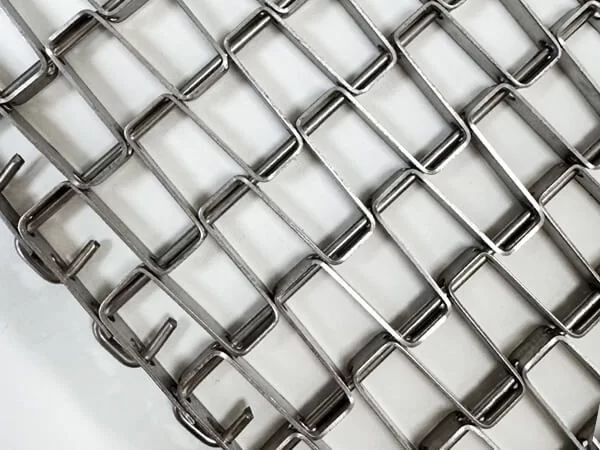 Honeycomb (Flat Wire) Conveyor Belts
Honeycomb conveyor belt, also called flat wire conveyor belt. The honeycomb belt is constructed of cross rods and a flat metal strip.
At the sides of the belt the cross rods have a welded ring (welded edges). In a number of dimensions it is possible to give the sides of the belt a clinged edge.
There are a number of predefined belt executions with different pitches and material dimensions. The belt can also be provided with side plates or flights. The flat wires are arranged in the form of lattice and jointed with the straight round rods. The material of flat wire belt are commonly high carbon steel, galvanized steel, stainless steel and other materials.
-
 June 03, 2026High Performance Electronic Sintering Mesh Belt for IndustryThe modern industrial landscape demands precision and resilience, particularly in high-temperature processing. The Electronic Sintering Mesh Belt has emerged as a critical component in this evolution, bridging the gap between traditional conveyor systems and the rigorous requirements of electronic component manufacturing. By providing a stable, heat-resistant platform, these belts ensure that delicate sintering processes are carried out with absolute uniformity. Across global markets, the adoption of advanced sintering technologies is accelerating as the demand for smaller, more powerful semiconductors and electronic ceramics grows. The reliability of an Electronic Sintering Mesh Belt directly impacts production yield and product quality
-
 May 18, 2026High Performance Sintering Mesh Belt for Industrial FurnacesIn the demanding world of high-temperature industrial processing, the Sintering Mesh Belt stands as a critical component for ensuring operational stability and product quality. These specialized conveyor systems are engineered to withstand extreme thermal stress while maintaining dimensional stability, making them indispensable for powder metallurgy and advanced ceramics manufacturing. By providing a seamless transition of materials through sintering furnaces, they bridge the gap between raw compressed powder and high-performance finished components. The global shift toward precision engineering and the miniaturization of mechanical parts has placed an unprecedented premium on the reliability of heat-treatment equipment.
-
 October 12, 2026High Efficiency Industrial Wholesale Dryer Mesh Belt GuideHigh-efficiency industrial drying requires a precise balance between material transport and thermal exposure. The selection of a conveyor medium, specifically the Wholesale Dryer Mesh Belt, determines the uniformity of the drying process and the overall throughput of the production line. This guide examines the technical requirements for selecting mesh belts that can withstand extreme temperatures while maintaining structural integrity. In B2B procurement, the challenge lies in matching the metallurgy of the belt with the chemical properties of the product being dried. Whether in powder metallurgy, chemical fibers, or glass processing, the conveyor must facilitate maximum airflow and heat penetration.
-
 October 01, 2026High Performance Wholesale Flat Flex Conveyor Belt GuideFlat flex conveyor belts represent a critical engineering solution for industrial processes requiring a balance between structural rigidity and flexible movement. These specialized metal mesh systems are designed to transport materials through extreme environments, such as high-temperature furnaces or chemically active zones, where traditional rubber or plastic belts would fail instantly. This article examines the technical specifications and procurement logic necessary for selecting high-performance metal conveying systems. In B2B industrial procurement, the choice of a conveyor system directly affects production uptime and product yield. For industries like powder metallurgy, electronics, and glass annealing, the belt is not merely a transport tool
-
 June 12, 2026High Performance Stainless Steel Brazed Wire Mesh Belt SolutionsIn the demanding world of industrial conveying, the selection of a high-performance transmission medium is critical for operational efficiency. The stainless steel brazed wire mesh belt stands as a pinnacle of engineering, offering a robust solution for transporting materials through extreme thermal and chemical environments. By combining the inherent strength of stainless steel with precise brazing techniques, these belts ensure structural integrity where traditional materials fail. Globally, the push toward automation and stricter hygiene standards in food processing and pharmaceuticals has amplified the need for durable, non-corrosive conveying solutions.
-
 October 29, 2026High Quality Wholesale Balanced Spiral Woven Conveyor Belt GuideIn high-temperature industrial processing, the stability of the transport medium directly dictates product yield and operational safety. A Balanced Weave Conveyor Belt is a specialized mesh solution designed to maintain dimensional stability under extreme thermal stress, preventing the lateral drift and deformation common in standard weaves. This article examines the engineering principles that make this dual-spiral structure essential for sintering, brazing, and glass manufacturing. For procurement officers and plant engineers, selecting the right mesh configuration involves balancing mechanical strength with thermal conductivity. The integration of precision-curled cross wires and professional welding ensures that the belt can handle heavy loads
-
 August 31, 2026High Temperature Industrial Mesh Belt Technical Selection GuideIndustrial material transport in high-temperature environments requires specialized conveyor solutions that can withstand extreme thermal stress without losing structural integrity. A high-performance mesh belt is engineered to facilitate the continuous movement of components through sintering, brazing, or drying processes, ensuring that materials are exposed to uniform heat. This article examines the technical specifications and selection criteria for these critical components in B2B manufacturing. The challenge for engineers lies in balancing porosity for airflow with the mechanical strength required to prevent elongation. In sectors such as powder metallurgy and electronics, the choice of belt construction whether spiral or rod-reinforced directly impacts production efficiency
-
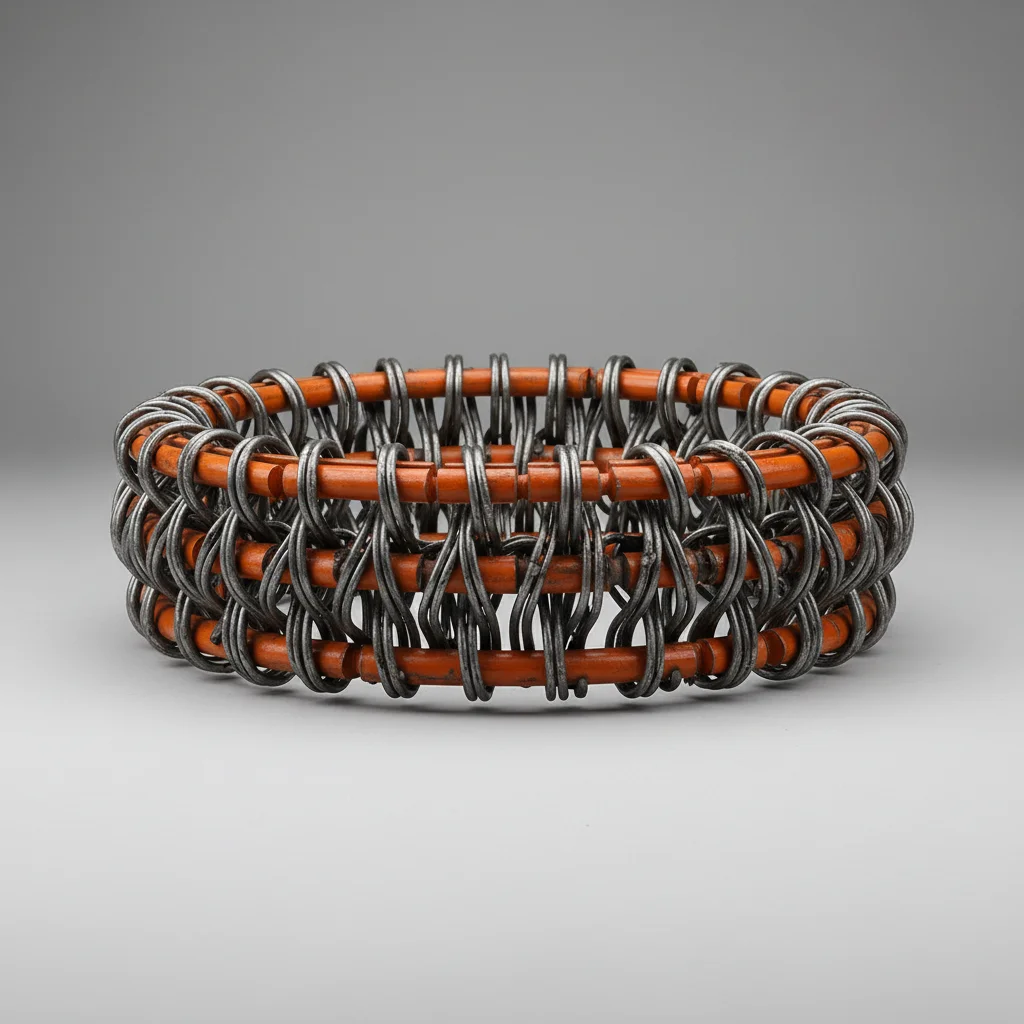 March 12, 2026Comprehensive Guide to Compound Balanced Weave Belt Technology and ApplicationsIn the world of industrial material handling, the efficiency and reliability of conveyor belts are paramount. Among the various types available, the Compound Balanced Weave Belt stands out as a robust and versatile solution. This article delves into the specifics of these belts, exploring their construction, benefits, applications, and why choosing the right weave is crucial for optimal performance. We'll examine how these belts contribute to streamlined operations and reduced downtime. A Compound Balanced Weave Belt is a type of conveyor belt constructed from interwoven strands of materials – typically stainless steel or other high-strength alloys. The “compound” aspect refers to the use of multiple strands combined to create a belt with increased strength and durability. The "balanced weave" design ensures the belt maintains stability during operation, preventing lateral movement and ensuring consistent tracking.
Get Your Custom Solution
Facing challenges with high-temperature conveying? Contact us now.
Our engineers will provide you with expert product consultation and tailored solutions.
Sign up
for our Newsletter
Subscribe to the weekly newsletter for all the latest updates


