- Tel: +86 15252586600 / +86 13705250816
- Email: 527966138@qq.com / 1026520412@qq.com

Rod Network Conveyor Belts Price Comparison & Supplier Review
Rod Network Conveyor Belts Price Comparison & Supplier Review
Rod Network Conveyor Belts Price Comparison & Supplier Review

Procurement directors in food, pharmaceutical, and automotive industries establish analytical baselines for evaluating high strength rod network conveyor belt pricing structures without assuming hidden cost bundles. Financial comparisons depend strictly on documented material options including Stainless Steel 304, 316, 310S, and Inconel.
Competing vendor proposals require identical volume, specification, delivery, and warranty parameters before unit rates are compared. Miscellaneous fees and volume discounts remain excluded unless explicit line-item verification accompanies the quotation.
Establishing a Controlled Baseline for Price Comparisons
Defining the Structural Framework for Financial Comparisons
Cost analyses of high strength rod network conveyor belts require aligning quotation line items strictly with documented material options including Stainless Steel 304, 316, 310S, and Inconel. Comparative evaluations remain invalid unless competing vendor proposals share identical quantities, specifications, delivery schedules, and warranty parameters.
Volume discounts and bundled miscellaneous fees are systematically excluded from baseline financial models unless explicit line-item verification accompanies the documentation. Sourcing evaluations reject unverified price reductions that lack written confirmation from the supplier.
Establishing Parity Across Competing Proposals
Price comparisons require standardized baseline inputs across all vendor bids before financial metrics are finalized. Specification sheets submitted by suppliers must detail exact quantity metrics and delivery terms without introducing hidden service charges.
Financial variances between competing quotations are isolated by verifying each cost component independently. Documentation gaps identified during initial reviews prevent the inclusion of unverified handling fees or ambiguous discount structures in the final comparison matrix.
Mapping Quoted Materials Against Operational Applications
Evaluating Metallurgical Options Against Processing Requirements
Material verification proceeds through strict mapping between documented alloy designations and operational workflows.
Cost assessments separate alloy choices—specifically Stainless Steel 304, 316, 310S, and Inconel—from unverified functional assumptions during financial audits.
Isolating Material Performance Variables in Cost Models
Financial evaluations treat each listed alloy independently to prevent unverified structural claims from skewing budgetary comparisons.
Procurement teams verify that quotations containing Stainless Steel 304, 316, 310S, and Inconel maintain distinct line items without incorporating unverified performance attributes into baseline pricing.

Price differentials across competing vendor proposals remain anchored strictly to documented material grades and stated supply terms.
Evaluating Industry-Specific Cost Allocations
Sectoral Cost Variables
Quotation structures applied across industrial sectors do not rely on standardized pricing tiers, requiring procurement teams to examine submitted price sheets independently.
When operating environments involve rapid cooling or drug drying, variable handling requirements prevent uniform cost projections from being applied universally.
Sourcing analysts separate base production expenses from auxiliary handling charges during initial reviews.
Application-Specific Price Projections
Specialized processing workflows introduce distinct logistical variables that demand granular itemization.
Reviewing submitted vendor price sheets allows financial analysts to isolate base manufacturing costs from secondary service fees without relying on cross-industry benchmarks.

| industry | application | material | Auxiliary Cost Documentation Check |
|---|---|---|---|
| food | cooling | Stainless Steel 304 | Are base manufacturing rates separated from auxiliary handling surcharges? |
| pharmaceutical | rapid cooling | 316 | Do vendor price sheets itemize secondary processing fees independently? |
| automotive | rapid cooling | 310S | Have specialized environmental charges been isolated from unit rates? |
| food | frying | Inconel | Are auxiliary service fees documented without cross-industry benchmarks? |
Identifying Vendor Documentation Gaps in Quotation Reviews
Evaluating Documentation Limits in Quotation Packages
Purchasing evaluations must account for the complete absence of verified certification numbers, issuing bodies, test reports, and customs clearance scopes within current vendor portfolios.
Material designations such as Stainless Steel 304, 316, 310S, and Inconel serve strictly as metallurgical identifiers rather than independent test evidence or formal regulatory compliance confirmation.
Systematic Disclosures Review Checklist
A structured review matrix must be deployed to record all missing supplier disclosures regarding warranty coverage limits and manufacturing tolerances across competing bids.

Technical parameters requested in vendor price sheets are cross-checked against documented application boundaries without presuming unverified operational suitability.
| Material Option | Application Scope | Industrial Sector | Missing Documentation Item |
|---|---|---|---|
| Stainless Steel 304 | cooling | food | Unverified test reports and issuing bodies |
| 316 | drug drying | pharmaceutical | Missing certification numbers and customs scope |
| 310S | rapid cooling | automotive | Unconfirmed warranty limits and tolerances |
| Inconel | frying | food | Absent formal compliance documentation |
Procurement teams log these missing disclosures to ensure that incomplete paperwork does not compromise the accuracy of financial cost comparisons.
Direct follow-up inquiries remain necessary to resolve documentation gaps before final commercial terms are authorized.
Structuring Vendor Inquiry Parameters for Price Verification
Isolating Freight and Handling Variations Across Bids
Conditional comparison methods are implemented to isolate freight, packaging, and handling variations between competing bids. Sourcing teams evaluate separate shipping terms before final cost tables are compiled.
When bids include mixed transport arrangements, auxiliary fees are separated from base manufacturing rates. Vendor proposals that combine packaging expenses into lump sums are returned for itemized clarification.

Capturing Unit Rates and Minimum Order Quantities
Specific procurement inquiry fields capture exact unit rates, lead times, and minimum order quantities from prospective suppliers. Quotation templates require discrete pricing tiers without incorporating unverified volume discounts.
Itemized cost breakdowns replace lump-sum pricing to maintain transparent evaluation standards across submissions. Material options such as Stainless Steel 304, 316, 310S, and Inconel are requested individually alongside specified quantities.
Vendor Quotation Parameter Verification Matrix
| material | application | industry |
|---|---|---|
| Stainless Steel 304 | cooling | food |
| 316 | baking | pharmaceutical |
| 310S | rapid cooling | automotive |
| Inconel | frying | automotive |
Procurement documents record whether prospective vendors supply complete rate schedules for drug drying and sterilization workflows. Each proposal is cross-referenced against documented application criteria to ensure full alignment with operational requirements.
Consolidating Procurement Decision Records and Next Steps
Systematic Data Consolidation
Gathered quotation records are systematically compiled into a structured tracking matrix using only verified facts and documented terms.
Collected vendor responses are reviewed against the established baseline to eliminate unverified performance claims and hidden fee structures before financial sign-off occurs.
Audit Record Finalization
Internal sourcing records are finalized by outlining the necessary follow-up communications required to close identified documentation gaps.
| Evaluation Field | Recorded Parameter | Required Follow-Up Action |
|---|---|---|
| Base Material | Stainless Steel 304, 316, 310S, or Inconel | Verify exact alloy designation against written vendor line items |
| Application Scope | Cooling, baking, drying, rapid cooling, frying, drug drying, or sterilization | Confirm operational environment matches stated processing parameters |
| Industrial Sector | Food, pharmaceutical, or automotive | Check that quotation terms reflect sector-specific delivery schedules |
All outstanding items are logged to prevent unverified claims from entering purchasing records.
Frequently Asked Questions
What specific parameters must be checked when mapping alloy choices against cooling, baking, and drying applications?
Quotations covering Stainless Steel 304, 316, 310S, and Inconel are evaluated independently for processes such as rapid cooling, frying, drug drying, and sterilization. Thermal or chemical performance advantages cannot be inferred from alloy names alone without explicit operational verification. Each material category requires separate analysis against the specific operational environment.
How should purchasing teams audit cost allocations across food, pharmaceutical, and automotive industrial sectors?
Sector-specific pricing structures are examined by separating base manufacturing costs from auxiliary handling charges within vendor price sheets. Standardized pricing tiers are never assumed across different industrial environments. Quotation reviews separate alloy choices specifically Stainless Steel 304, 316, 310S, and Inconel from unverified functional assumptions during financial audits.
What documentation gaps must be recorded when supplier proposals lack verified certification numbers and test reports?
Initial quotation reviews must document the complete absence of verified certification numbers, issuing bodies, test reports, and customs clearance scopes. Material designations submitted by vendors do not constitute independent test evidence or regulatory compliance confirmation. Sourcing teams record these missing disclosures systematically to establish baseline compliance tracking.
How do we structure vendor inquiry fields to capture exact unit rates and lead times without hidden charges?
Inquiry templates must demand itemized cost breakdowns separating freight, packaging, and handling variations across competing bids rather than accepting lump-sum pricing. Sourcing teams capture exact unit rates, lead times, and minimum order quantities through conditional comparison methods. Transparent evaluation standards require every cost component to be verified independently.
What steps are necessary to compile gathered quotation data into a structured tracking matrix?
Gathered quotation data is compiled using exclusively verified facts and documented commercial terms to eliminate unverified performance claims and hidden fee structures. Collected vendor responses are reviewed against the established baseline to ensure data integrity. Final sourcing records outline the necessary follow-up communications required to address identified documentation gaps.
Conclusion
Sourcing Execution Protocol
Selected vendors receive detailed inquiry templates requiring exact unit rates and specified delivery timelines. Responses must strictly reflect approved baseline parameters without introducing unverified performance claims or hidden miscellaneous fees.
Operational Verification Steps
Submitted bids undergo systematic cross-checking against established material boundaries. Qualified bids are compiled into the final tracking matrix only when all requested line items match the documented criteria.
- Dispatch itemized inquiry forms to shortlisted vendors.
- Isolate freight and handling variations between competing bids.
- Archive finalized quotation records for internal audit purposes.


-
 Industrial Biscuit Baking Belts Factory High Quality Rolled Baking Band Suppliers in ChinaLooking for reliable Biscuit Baking Belt suppliers in China? Our factory provides premium Rolled Baking Bands and Z Belts designed for tunnel ovens. These stratified metal spiral belts offer low heat inertia and high strength for optimal industrial baking efficiency.
-
 Premium Veneer Dryer Wire Mesh Belts China Factory and Reliable SuppliersLooking for high-performance veneer dryer wire mesh belts? As a top China factory and trusted suppliers, we offer heat-resistant stainless and galvanized steel belts stable up to 600C to ensure uniform drying and eliminate defects in plywood manufacturing.
-
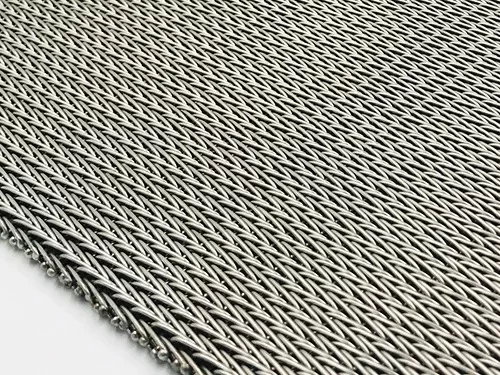 Compound Balanced Weave Conveyor Belt With Welded Edge
aka chevron conveyor belt with welded edge aka Compound weave mesh belt with welded edge
Compound Balanced Weave Belts with Welded Edge.The standard available type of edge finish for this application is welding, facilitated by the close meshing of both the crimp and cross wire.
-
 Chain Link Conveyor Belt China Suppliers Industrial Mesh Belt FactoryLooking for high-quality Chain Link Conveyor Belts? As leading China suppliers and a professional factory, we provide economical stainless steel wire mesh belts ideal for light-duty drying and cooling applications. Durable, lightweight, and energy-efficient solutions for industrial conveying.
-
 Veneer Dryer Wire Mesh Belts China Factory and Leading SuppliersHigh-performance veneer dryer wire mesh belts from a leading China factory. Our suppliers provide heat-resistant stainless and galvanized steel belts up to 600C to ensure uniform drying and reduced defects in plywood manufacturing.
-
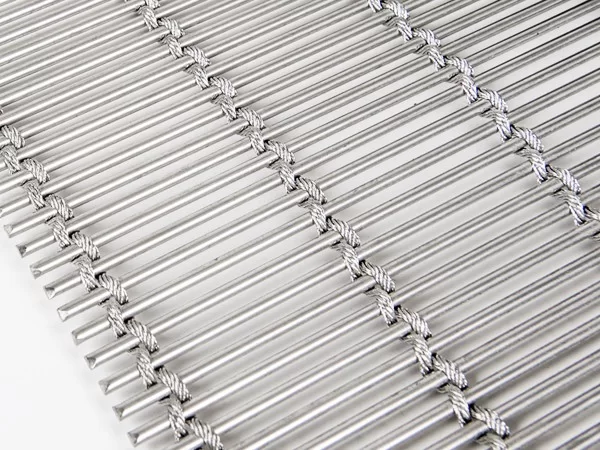 Woven Rod Bar Conveyor Belts
The woven rod bar belt is a specialized conveyor belt known for its durability, heat resistance, and versatile design, making it ideal for various industrial drying and conveying applications, especially in the food, agricultural, and chemical industries.
-
 Balanced Weave Conveyor Belt China Factory High Temp Mesh SuppliersPremium Balanced Weave Conveyor Belts from a leading China factory. Our suppliers provide Direct Edge Welding for maximum structural integrity and U-Shaped Edge reinforcement to prevent spillage in high-heat environments.
-
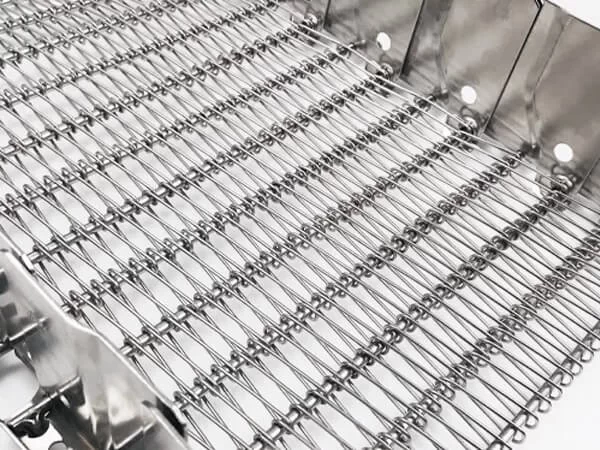 Self-Stacking Spiral Freezer Belts
Self-Stacking Spiral Freezer Belts are innovative conveyor solutions designed specifically for use in spiral freezers. With a unique stacking mechanism that eliminates the need for external support, these belts help maximize vertical space, reduce energy consumption, and improve overall freezing efficiency.
Engineered for high-performance food processing environments, these belts offer superior product handling, longer service life, and minimal maintenance — all while maintaining food quality and system hygiene.
-
 June 23, 2026TunnelType Stainless Steel Brazing Furnace mesh belt for IndustryIn the demanding world of high-temperature industrial processing, the stability and endurance of transport systems are paramount. The Tunnel-Type Stainless Steel Brazing Furnace mesh belt represents a critical intersection of materials science and mechanical engineering, providing the necessary structural integrity to move delicate or heavy components through intense heat zones without deformation. Understanding the nuances of these belts is essential for manufacturers aiming to minimize downtime and maximize throughput. Globally, the transition toward automated thermal processing has increased the reliance on high-precision conveying solutions.
-
 May 25, 2026Industrial Precision Metal Sintering Mesh BeltIndustrial Precision Metal Sintering Mesh Belt Engineering Elevating mechanical transmission with world-class sintered metal mesh technology, designed for extreme temperatures and high-load industrial environments. 4200 Annual Output 164 Countries Served 6 Days Sample Lead Time 99.7 On-Time Delivery Redefining Industrial Transmission As a global leader in mechanical transmission components, our metal sintering Mesh Belt sets the gold standard for structural integrity and dimensional stability . By integrating advanced powder metallurgy, we provide solutions that outlast conventional woven belts in the most aggressive thermal environments. Our proprietary sintering process ensures that every metal sintering Mesh Belt possesses zero-stretch performance and unmatched corrosion resistance.
-
 September 01, 2026High Temperature Balanced Weave Conveyor Belt for Industrial HeatWhen transporting micro-components or fragile food items through high-temperature environments, the primary challenge is preventing product fallout while ensuring uniform thermal distribution. A balanced weave conveyor belt addresses this by utilizing a dense, interwoven structure that eliminates the large apertures found in standard mesh belts. Unlike simple spiral belts, the compound balanced weave architecture employs multiple spirals and cross rods per pitch, creating a high-density, flat surface. This technical configuration is critical for industries where precise movement and extreme heat resistance up to 1250C are non-negotiable requirements.
-
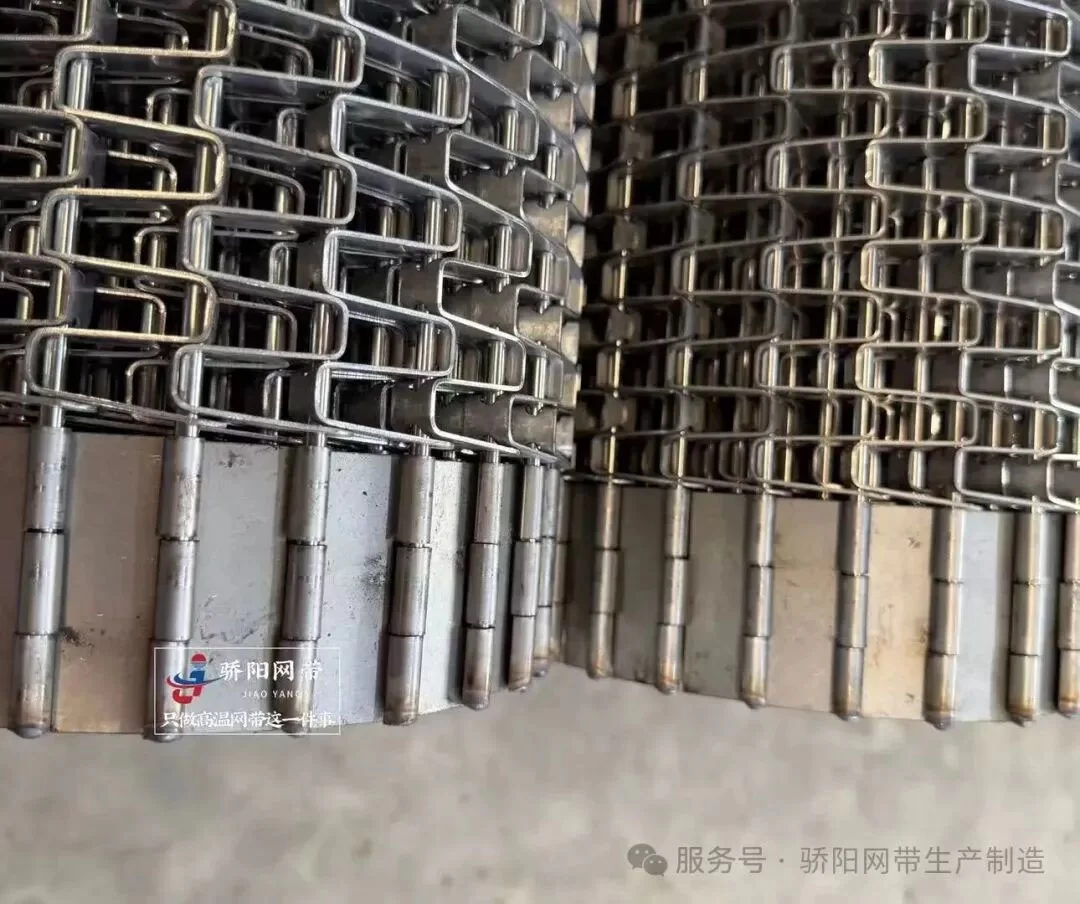 February 01, 2026What Are The Advantages Of The Great Wall Mesh Belt And Jiaoyang Products?
Jiaoyang selects excellent stainless steel materials, which meet the standards for strength, corrosion resistance, and wear resistance. Each batch of materials supports traceability.
-
 May 22, 2026High Performance Powder Metallurgy Sintering Furnace Mesh BeltThe Powder Metallurgy Sintering Furnace Mesh Belt serves as the critical backbone for high-precision metal component manufacturing, ensuring that delicate green compacts are transported through extreme temperature zones without deformation. In the competitive landscape of mechanical transmission parts, the efficiency of the sintering process determines not only the structural integrity of the final product but also the overall operational cost of the production line. Understanding the nuances of mesh belt selection is essential for any manufacturer aiming to minimize scrap rates and maximize throughput. Globally, the shift toward sustainable manufacturing and the demand for lightweight, high-strength automotive and aerospace parts have placed
-
 April 04, 2026Comprehensive Guide to Wire Mesh Belt Systems and Their ApplicationsIn numerous industries, efficient material handling is paramount. Wire mesh belts provide a robust and versatile solution for conveying a wide variety of products through various processes. This article delves into the world of wire mesh belts, covering their applications, benefits, types, and crucial considerations for selecting the right system for your specific needs. Whether you're involved in food processing, heat treatment, or any other industry requiring continuous conveying, understanding wire mesh belts is essential for optimizing your operations.
-
 July 03, 2026High Strength Upin Joint mesh belt for Industrial ConveyorsIn the demanding landscape of modern industrial automation, the efficiency of material transport often determines the overall productivity of a manufacturing plant. The U-pin Joint mesh belt represents a critical evolution in conveyor technology, offering a robust solution for transporting heavy components with surgical precision. By integrating high-strength materials with a flexible joint system, these belts ensure that production lines remain fluid and resilient against the stresses of continuous operation. Globally, the shift toward Industry 4.0 has placed an increased emphasis on durability and minimal downtime. Industries ranging from automotive assembly to food processing are facing the challenge of transporting diverse loads
-
 September 11, 2026Wholesale Yangzhou Jiaoyang Wire Mesh Belt Industrial GuideCompound balanced weave conveyor belts, often referred to as cordweave or V-shaped belts, represent a specialized engineering solution for transporting small items through rigorous industrial processes. These belts are characterized by a high-density weave consisting of right-hand and left-hand spirals interconnected by straight cross rods. By reducing the open area compared to standard balanced weaves, they provide a stable, flat surface essential for precision conveying in high-temperature environments. In B2B procurement, selecting the correct mesh belt involves balancing thermal resistance, mechanical stability, and material compatibility. For industries such as powder metallurgy and electronics, the choice of stainless steel grade directly impacts
Get Your Custom Solution
Facing challenges with high-temperature conveying? Contact us now.
Our engineers will provide you with expert product consultation and tailored solutions.
Sign up
for our Newsletter
Subscribe to the weekly newsletter for all the latest updates


