- Tel: +86 15252586600 / +86 13705250816
- Email: 527966138@qq.com / 1026520412@qq.com

Choosing a Rod Network Conveyor Belts Manufacturer: Flexible Rod Grid Link Belts, Opening Size, Wire Diameter and Application
Choosing a Rod Network Conveyor Belts Manufacturer: Flexible Rod Grid Link Belts, Opening Size, Wire Diameter and Application
Yangzhou Jiaoyang Mesh Belt Manufacturing Co., Ltd.JOURNAL / THE BUYER'S GUIDE / SELECTION
THE BUYER'S GUIDE / SELECTION
Choosing a Rod Network Conveyor Belts Manufacturer: Flexible Rod Grid Link Belts, Opening Size, Wire Diameter and Application
A buyer-focused guide for procurement teams comparing rod-type metal conveyor belts from Yangzhou Jiaoyang Mesh Belt Manufacturing Co., Ltd. It explains how flexible rod (grid link) belts, flat flex belts (which the manufacturer also calls Rod Network belts) and chain link belts differ in construction, drive, routing and application, which dimensions are published, and which parameters such as opening size and wire diameter must be confirmed in the inquiry before ordering.

Conveying path: straight only versus curved, spiral or round routing
Drive compatibility: sprocket, positive sprocket, or chain link/friction drive
Mesh construction: balanced left/right spirals with through-rods and horseshoe chains, flat flex single-layer mesh, or unidirectional spiral coils
Opening size and open area: flat flex published up to 85% open area; flexible rod and chain link values must be confirmed
Wire diameter: flat flex published at 0.8–3.0 mm; flexible rod and chain link values must be confirmed
Application and process: quick-freezing and cold chain, cooling/cooking, washing/frying/baking/coating, or light-duty drying and cooling
Load description: high-load operation (flexible rod) versus low-to-medium load (chain link)
Material options and hygiene documentation required by the buyer
Choosing a Rod Network Conveyor Belts Manufacturer: Flexible Rod Grid Link Belts, Opening Size, Wire Diameter and Application
When you look for a Rod Network Conveyor Belts Manufacturer, the product names can be confusing. Similar names cover belts with different construction, drive methods and use cases. This guide explains how Yangzhou Jiaoyang Mesh Belt Manufacturing Co., Ltd. describes its rod-type metal conveyor belts, which selection criteria its product pages support, and which details, including opening size and wire diameter for flexible rod belts, you still need to confirm in your inquiry.
1. Start with your line requirements
Before you compare belt types, write down the conditions the conveyor belt must work in:
- Conveying path: straight only, or straight with turns, spiral or round sections.
- Process: freezing, cooling, cooking, baking, frying, washing, coating or drying.
- Load: light-duty products or continuous higher-load operation.
- Airflow and drainage: how open the mesh must be for heat transfer or liquid run-off.
- Drive and existing equipment: sprocket drive, chain link or friction drive, and the sprockets already installed.
- Hygiene and documentation: any food-safety documents your market or customer requires.
- Dimensions: belt width, length, pitch, opening size and wire diameter.
These conditions decide which belt family fits. The manufacturer's own label does not.
2. Know the belt families behind the name
Flexible rod conveyor belts (grid link mesh belts)
The manufacturer describes its Flexible Rod Conveyor Belts, also called Grid Link Mesh Belts, like this:
- Construction: metal wire wound into left-handed and right-handed spirals, forming a balanced mesh body.
- Edge support and assembly: horseshoe chains joined to the mesh by through-rods.
- Drive: sprocket drive.
- Operational path: straight and curved.
- Material property: described as wear and corrosion resistant.
- Stated applications: quick-frozen food lines and cold chain transport for products such as meat, seafood, fruits, vegetables and pastries.
- Customization: belt widths and lengths made to fit the transmission requirements.
A related flexible rod belt page describes stainless steel or galvanized steel material options. It lists alternating rod and spiral coils, side-flex capability for spiral, round and straight conveyors, a smooth and burr-free surface finish, and optional U-shaped center links or side guards. The page also says the open design has no mesh cover, which gives ventilation for cooling, cooking and freezing.
Opening size and wire diameter: the flexible rod product pages do not give numbers for opening size, wire diameter, pitch, belt width range, load rating or temperature limits. Do not assume these from other belt types. Put your required values in the RFQ and ask for a written confirmation for your application.
Flat flex conveyor belts (also called Rod Network or Enrober belts)
On its flat flex product page, the manufacturer says this belt is also known as an Enrober or Rod Network belt. If your search for a rod network belt really means this design, the page gives more published dimensions:
- Materials: stainless steel or spring wire.
- Wire diameter: 0.8 mm to 3.0 mm.
- Pitch range: 4 mm to 2000 mm.
- Belt width: 10 mm to 3 m.
- Open area: up to 85%, described for airflow and liquid drainage.
- Drive: positive sprocket drive, for straight and curved systems.
- Stated uses: washing, frying, baking, freezing and coating in food processing. Small-diameter end rolls are described for tight transfers.
- Stated compliance: the page refers to HACCP and food-safety regulations. Ask for supporting documents if your project needs them.
Chain link conveyor belts
The chain link belt is presented as a light-duty, economical option. It uses unidirectional spiral coils joined by splicing rods, with cross rods to help tracking. The page lists stainless steel material, drying and cooling as the main uses, low-to-medium load capacity, welded or knuckled edges, chain link or friction drive, and optional side and center baffles.
3. Selection criteria compared
| Criterion | Flexible rod / grid link | Flat flex (Rod Network) | Chain link |
|---|---|---|---|
| Mesh construction | Left- and right-handed spirals with through-rods and horseshoe chains | Lightweight single-layer flat wire mesh | Unidirectional spiral coils with splicing rods |
| Drive | Sprocket | Positive sprocket | Chain link / friction |
| Routing | Straight and curved; side-flex for spiral and round (related page) | Straight and curved | Linear flow |
| Published wire diameter | Not published – confirm | 0.8–3.0 mm | Not published – confirm |
| Published opening / open area | Not published – confirm | Open area up to 85% | Not published – confirm |
| Stated applications | Quick-freezing, cold chain, cooling, cooking | Washing, frying, baking, freezing, coating | Light-duty drying and cooling |
| Load description | Described for high-load operation | Low-to-medium load |
4. When a flexible rod belt is a reasonable choice
A flexible rod grid link belt fits your shortlist when your line has turns, spiral or round sections and uses sprocket drive. It also fits quick-freezing or cold chain food transport, or a process that needs an open mesh for cooling or freezing.
5. When it may not apply
- If your line is a simple light-duty dryer or cooler and cost is the main concern, the chain link belt is presented for that use.
- If you need published wire diameters, pitches and open area now, or very tight end transfers for delicate items, the flat flex belt has more of those details on its page.
- If you need a fixed opening size, wire diameter, load capacity or temperature range, treat the flexible rod belt as a candidate only until the manufacturer confirms those values in writing.
6. What to send to the manufacturer
To get a useful answer from a Rod Network Conveyor Belts Manufacturer, include:
- The product you convey, its size and weight, and the process temperature.
- A layout of the conveyor path, including turning directions and radii.
- Belt width and length, plus the opening size and wire diameter you need.
- Your drive type and existing sprocket details.
- Your preferred material (for example stainless or galvanized steel for flexible rod belts) and the cleaning method.
- Any documents you need, such as food-safety compliance records.
This guide does not cover prices, lead times or certifications. Confirm them directly with the supplier for your order.
THE PEOPLE

About the author
THE COMPANY
Yangzhou Jiaoyang Mesh Belt Manufacturing Co., Ltd.
Yangzhou Jiaoyang Mesh Belt Manufacturing Co., Ltd. has been deeply engaged in the manufacturing of high-temperature metal wire belts for many years. It is an industry-leading enterprise integrating R&D, production, sales, installation, recycling, and after-sales services. Its core products include sintering furnace belt, brazing conveyor belt, heat treatment mesh belt, pyrolysis furnace mesh belt, flat wire belt, flat flex belt, etc.…
YOUR NEXT STEP
Bring your brief. Start a useful conversation.
Use case, specification, quantity and delivery window: make the next conversation specific.
-
 Custom Honeycomb Metal Flat Wire Conveyor Belts China Factory SuppliersHigh-performance honeycomb metal flat wire conveyor belts from a leading China factory. Professional suppliers offering custom widths and butterfly pressure plate adjustments for maximum industrial stability.
-
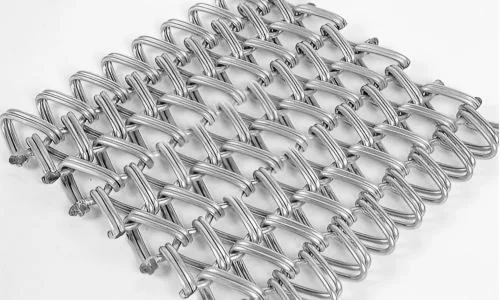 Double Balanced Weave Conveyor Belt
Double Wire Wrap Construction – Enhanced durability with interlocking spiral design……
-
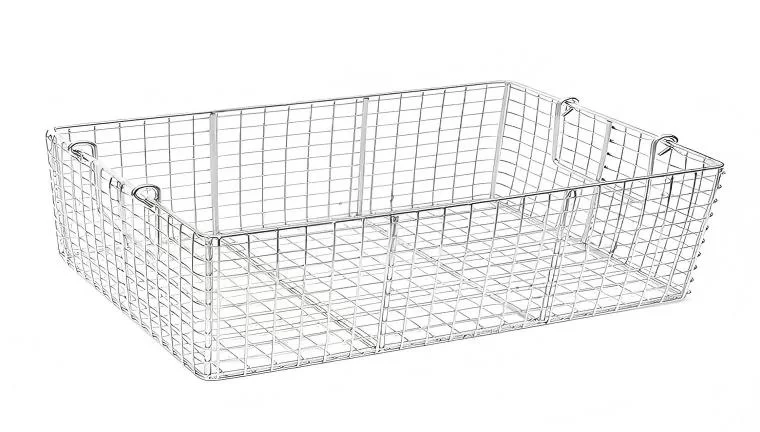 Stainless steel basket
Personalized customization service: If you have special requirements, whether it is material, sty……
-
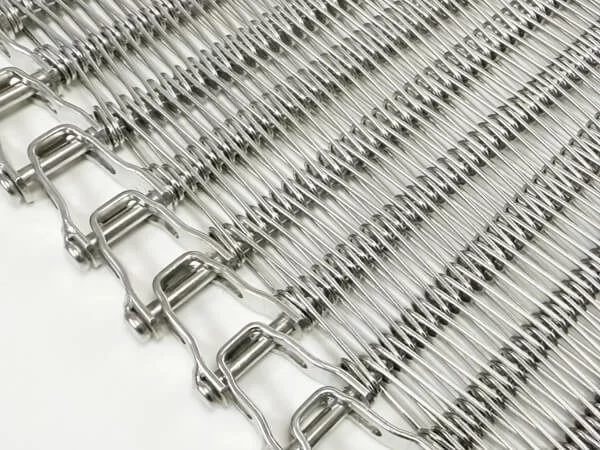 Flexible Rod Conveyor Belts
A Flexible Rod Belt is constructed from 3 components.
1. Alternating spirals take care of the belt overlay.
2. These spirals are connected to each other by means of smooth cross rods.
3. Special chain links are mounted at the outer sides, which are locked by means of button heads.
-
 Chain Link Conveyor Belt China Suppliers Industrial Mesh Belt FactoryLooking for high-quality Chain Link Conveyor Belts? As leading China suppliers and a professional factory, we provide economical stainless steel wire mesh belts ideal for light-duty drying and cooling applications. Durable, lightweight, and energy-efficient solutions for industrial conveying.
-
 Heavy Duty Chain Driven Conveyor Belts China Factory and Mesh Belt SuppliersLooking for reliable China factory and suppliers of stainless steel chain link belts? We provide precision-driven, high-tensile, and corrosion-resistant solutions for heavy-duty industrial material handling.
-
 Custom Industrial Stainless Steel Baskets China Factory and SuppliersHigh-performance industrial stainless steel baskets from a leading China factory. We offer personalized customization services for materials, styles, and mesh sizes to meet your exact needs. Contact the top suppliers for durable, corrosion-resistant solutions.
-
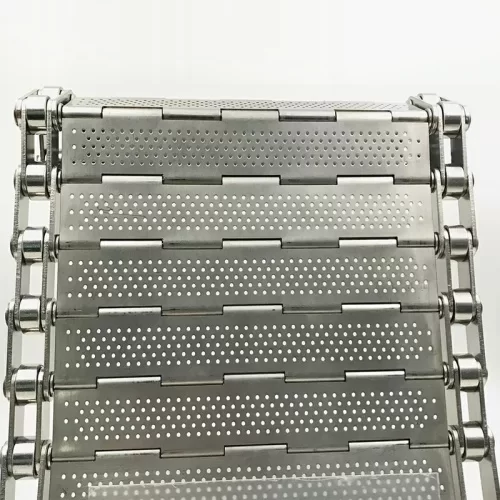 Plate Link Conveyor Belt
Plate conveyor belts are composed of hinged slats with or without holes. Hinge ……
-
 September 01, 2026High Temperature Balanced Weave Conveyor Belt for Industrial HeatWhen transporting micro-components or fragile food items through high-temperature environments, the primary challenge is preventing product fallout while ensuring uniform thermal distribution. A balanced weave conveyor belt addresses this by utilizing a dense, interwoven structure that eliminates the large apertures found in standard mesh belts. Unlike simple spiral belts, the compound balanced weave architecture employs multiple spirals and cross rods per pitch, creating a high-density, flat surface. This technical configuration is critical for industries where precise movement and extreme heat resistance up to 1250C are non-negotiable requirements.
-
 October 29, 2026Veneer Dryer Wire Mesh Belt Comparison: Mesh Geometry, Coatings and Installation RequirementsChoosing the right belt for a veneer drying line involves more than selecting a material grade. Mesh geometry, surface treatment, load configuration, and how a dryer mesh belt installs into your specific equipment all shape drying uniformity, energy use, and service life. Yangzhou Jiaoyang Mesh Belt Manufacturing Co., Ltd. offers two independently documented product lines — the standard Veneer Dryer Wire Mesh Belt and the Premium Veneer Dryer Wire Mesh Belt — each engineered around an open-mesh architecture but differentiated by construction emphasis and product positioning. This article maps both lines across six consistent criteria: mesh type options, material selection, thermal operating range, load capacity configuration, customization scope, and installation and maintenance requirements, helping procurement teams identify which product fits their dryer layout and production demands.
-
 November 02, 2026High Quality Wholesale Spiral Mesh Belts for Industrial FurnacesWhen industrial processes encounter extreme heat and heavy mechanical stress, the choice of conveying system becomes the critical point of failure or success. Eye Link conveyor systems are engineered specifically for these harsh environments, offering a robust alternative to standard mesh options. For procurement managers in powder metallurgy or electronics manufacturing, sourcing Wholesale Spiral Mesh Belts requires a deep understanding of how belt configuration impacts product stability and heat distribution. These heavy-duty solutions eliminate the risk of product entrapment while ensuring high-precision transport through sintering and brazing furnaces.
-
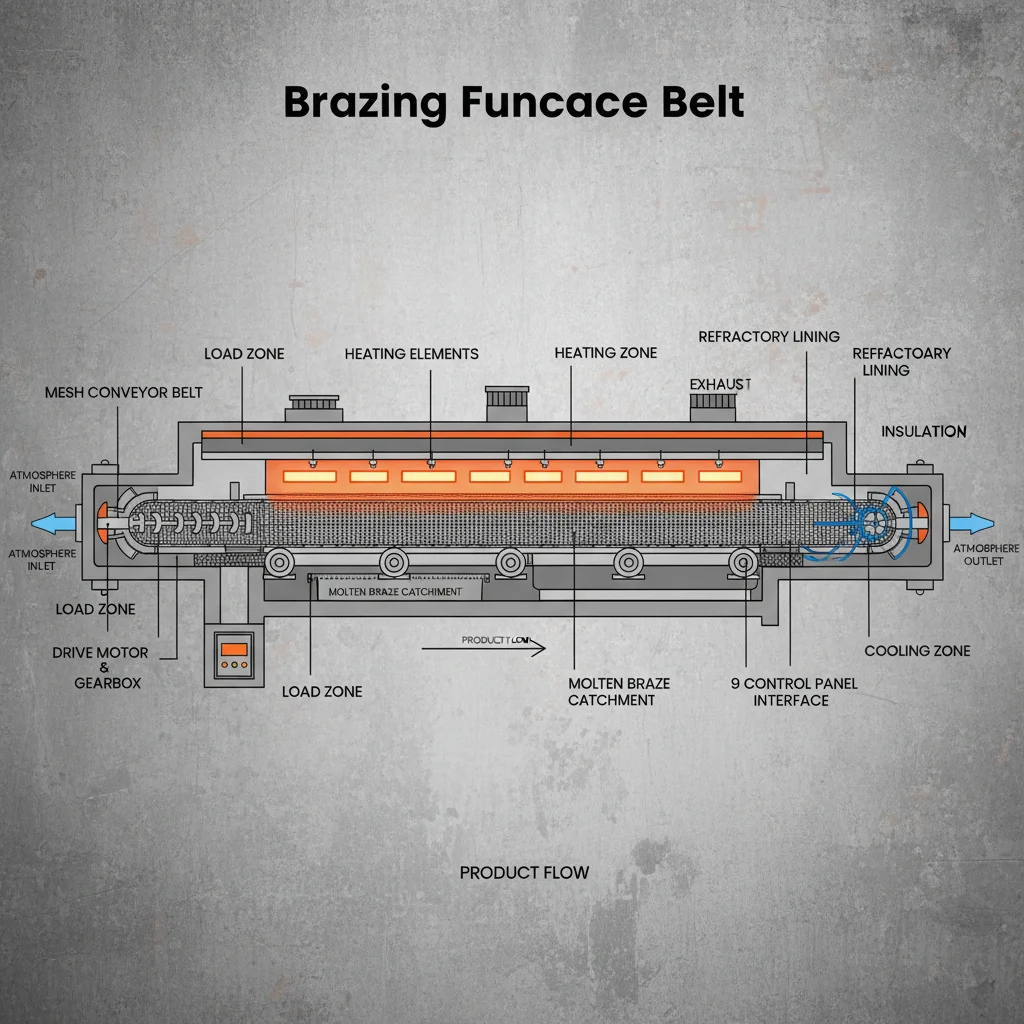 March 26, 2026Optimizing Brazing Processes with the Right Brazing Furnace Belt SelectionBrazing is a critical process in numerous industries, from automotive and aerospace to HVAC and manufacturing. Ensuring consistent and reliable operation of brazing furnaces is paramount, and a key component in achieving this is the brazing furnace belt. This article delves into the world of brazing furnace belts, exploring their function, types, materials, maintenance, and how to select the right belt for your specific brazing application. We'll cover everything you need to know to optimize your brazing process and maximize efficiency. A brazing furnace belt, also known as a mesh belt, is a continuous loop of metal mesh that serves as the conveyor system within a brazing furnace. It transports parts through the controlled atmosphere and heat, facilitating the brazing process. Its importance lies in providing a consistent and controlled method for part conveyance, ensuring uniform heating and cooling, and ultimately, the quality of the brazed joints.
-
 November 04, 2026Custom Brazing Furnace Belt Supplier for Reliable High-Temperature Industrial Processing
Brazing is widely used to join metal components in automotive manufacturing, heat exchangers, electrical equipment, HVAC systems, and precision engineering.
-
 November 09, 2026Wholesale edge overlocking mesh belt for industrial conveyingIn high-precision industrial conveying, the integrity of the belt edge is critical to preventing fraying and ensuring stable tracking. Wholesale edge overlocking mesh belt solutions provide a reinforced boundary that protects the mesh structure from mechanical wear and thermal degradation, making them indispensable for heavy-duty manufacturing lines. Industrial operators often face challenges with belt drift and premature edge failure, especially in high-temperature sintering or food processing environments. By implementing specialized edge overlocking, companies can significantly reduce downtime and maintenance costs. This technical approach ensures that the mesh remains tensioned and aligned, regardless of the load or the complexity of the conveyor path.
-
 May 18, 2026High Performance Sintering Mesh Belt for Industrial FurnacesIn the demanding world of high-temperature industrial processing, the Sintering Mesh Belt stands as a critical component for ensuring operational stability and product quality. These specialized conveyor systems are engineered to withstand extreme thermal stress while maintaining dimensional stability, making them indispensable for powder metallurgy and advanced ceramics manufacturing. By providing a seamless transition of materials through sintering furnaces, they bridge the gap between raw compressed powder and high-performance finished components. The global shift toward precision engineering and the miniaturization of mechanical parts has placed an unprecedented premium on the reliability of heat-treatment equipment.
-
 October 14, 2026High Performance Industrial Wholesale conveyor belt SolutionsIntroduction When evaluating the efficiency of a high-temperature production line, the choice of conveyor system often determines the threshold of operational success. For many procurement managers in the mechanical transmission sector, finding a reliable source for a Wholesale conveyor belt is not merely about price, but about matching specific metallurgical properties with the extreme thermal and chemical demands of the furnace environment. The integration of Metal Conveyor Belts and their corresponding Drive Components creates a critical link in industries such as powder metallurgy and electronics. If the belt fails due to thermal deformation or corrosion, the entire sintering or brazing process halts
Get Your Custom Solution
Facing challenges with high-temperature conveying? Contact us now.
Our engineers will provide you with expert product consultation and tailored solutions.
Sign up
for our Newsletter
Subscribe to the weekly newsletter for all the latest updates


