- Tel: +86 15252586600 / +86 13705250816
- Email: 527966138@qq.com / 1026520412@qq.com

Veneer Dryer Wire Mesh Belt Comparison: Mesh Geometry, Coatings and Installation Requirements
Veneer Dryer Wire Mesh Belt Comparison: Mesh Geometry, Coatings and Installation Requirements
Yangzhou Jiaoyang Mesh Belt Manufacturing Co., Ltd.JOURNAL / SIDE BY SIDE
SIDE BY SIDE
Veneer Dryer Wire Mesh Belt Comparison: Mesh Geometry, Coatings and Installation Requirements
Choosing the right belt for a veneer drying line involves more than selecting a material grade. Mesh geometry, surface treatment, load configuration, and how a dryer mesh belt installs into your specific equipment all shape drying uniformity, energy use, and service life. Yangzhou Jiaoyang Mesh Belt Manufacturing Co., Ltd. offers two independently documented product lines — the standard Veneer Dryer Wire Mesh Belt and the Premium Veneer Dryer Wire Mesh Belt — each engineered around an open-mesh architecture but differentiated by construction emphasis and product positioning. This article maps both lines across six consistent criteria: mesh type options, material selection, thermal operating range, load capacity configuration, customization scope, and installation and maintenance requirements, helping procurement teams identify which product fits their dryer layout and production demands.

Standard Veneer Dryer Wire Mesh Belt — open-mesh industrial conveyor belt for veneer dryer applications; available in Spiral Wire and Rod-Reinforced Flat Wire constructions; stainless or galvanized steel; up to 600°C; configurable load capacity; customizable width, pitch, and density
Premium Veneer Dryer Wire Mesh Belt — open-mesh industrial conveyor belt for veneer dryer applications; available in Spiral Wire and Rod-Reinforced Flat Wire constructions; stainless or galvanized steel; up to 600°C; configurable load capacity; customizable width, pitch, and density; positioned with emphasis on precision engineering and surface integrity
Introduction
Veneer drying is one of the most thermally demanding continuous-process steps in plywood and engineered-wood manufacturing. The conveyor belt running through a dryer must resist sustained high temperatures, support uniform airflow across each sheet, carry veneers without surface marking, and remain dimensionally stable through millions of cycles. Selecting the wrong belt can introduce uneven moisture profiles, warping, resin burn, or premature failure — all of which raise cost per panel and reduce throughput.
Yangzhou Jiaoyang Mesh Belt Manufacturing Co., Ltd. supplies two independently documented product lines for this application: the standard Veneer Dryer Wire Mesh Belt and the Premium Veneer Dryer Wire Mesh Belt. Both are engineered for face, core, and back veneer processing. The sections below compare them on six criteria that matter most to buyers in the US, Middle East, European, and Southeast Asian markets.
Comparison Scope
Both products are classified as industrial conveyor solutions for the timber processing industry, specifically for veneer dryer applications.
Criterion 1 — Mesh Type Options
| Feature | Standard Line | Premium Line |
|---|---|---|
| Available mesh constructions | Spiral Wire; Rod-Reinforced Flat Wire | Spiral Wire; Rod-Reinforced Flat Wire |
| Spiral Wire characteristic | Superior flexibility and high ventilation | Maximum ventilation |
| Rod-Reinforced Flat Wire characteristic | Heavy-duty load-bearing stability | Heavy-duty stability |
Both lines offer the same two primary mesh constructions. The difference lies in how each positions the Spiral Wire variant: the standard line describes it as providing superior flexibility and high ventilation, while the Premium line focuses on maximum ventilation. For dryers where airflow uniformity is the primary constraint, either construction can satisfy that requirement. The flexibility emphasis in the standard line may be relevant for installations with tighter bend radii at the dryer's return path.
Criterion 2 — Material Selection
| Feature | Standard Line | Premium Line |
|---|---|---|
| Material options | Stainless Steel / Galvanized Steel | Stainless Steel / Galvanized Steel |
| Quality control note | Strict quality control for maximum heat endurance | Strict quality control for maximum heat endurance |
| Corrosion resistance | Low maintenance; corrosion-resistant | Low maintenance; corrosion-resistant |
Both products share identical documented material options. Galvanized steel is generally selected for cost efficiency in lower-temperature or lower-humidity zones, while stainless steel is preferred in environments combining high cyclic temperatures with elevated humidity from veneer moisture. Neither source specifies exact alloy grades; buyers requiring a particular grade should confirm this during the configuration process with Yangzhou Jiaoyang Mesh Belt Manufacturing Co., Ltd.
Criterion 3 — Thermal Operating Range
| Feature | Standard Line | Premium Line |
|---|---|---|
| Maximum operating temperature | Up to 600°C | Up to 600°C |
| Benchmark (standard mesh belts) | Deforms above 300°C | Deforms above 300°C |
| Continuous-operation claim | No deformation or fatigue at 600°C | No deformation or fatigue at 600°C |
Both lines document an identical maximum operating temperature of 600°C. Neither source provides a tested lower bound or a cyclic-fatigue life figure. The 600°C rating positions both products well above typical roller-type veneer dryer operating ranges, which is a useful safety margin even if not a differentiator between the two. Procurement teams should note that neither source quantifies hours or cycles at rated temperature; requesting this data before committing to a long-run production line is advisable.
Criterion 4 — Load Capacity Configuration
| Feature | Standard Line | Premium Line |
|---|---|---|
| Load capacity options | Heavy-duty / Standard (Configurable) | Heavy-duty / Standard (Configurable) |
| Heavy-duty construction | Rod-Reinforced Flat Wire | Rod-Reinforced Flat Wire |
| Dimensional stability claim | Reinforced construction prevents belt elongation | Reinforced construction prevents belt elongation |
Load capacity is configurable in both lines through the choice of mesh construction, with Rod-Reinforced Flat Wire providing the heavy-duty option.
Criterion 5 — Customization Scope
| Feature | Standard Line | Premium Line |
|---|---|---|
| Customizable parameters | Width, Diameter, Pitch, Density | Width, Diameter, Pitch, Density |
| Edge treatment | Tailored widths and edge treatments to match dryer layout | Tailored widths and edge treatments to match dryer layout and production size |
| Design process | Collaborative configuration for spiral pitches and wire diameters | Collaborative configuration for spiral pitches and wire diameters |
Customization scope is equivalent across both lines. The Premium product adds the phrase production size to the edge treatment note, which suggests positioning toward buyers whose output width varies across production batches or veneer species. Both products support face, core, and back veneer configurations within the same dryer installation.
Criterion 6 — Installation, Maintenance, and After-Sales Support
| Feature | Standard Line | Premium Line |
|---|---|---|
| Maintenance classification | Low (Corrosion Resistant) | Low (Corrosion Resistant) |
| Surface marking risk | Smooth texture prevents marking and resin buildup | Smooth texture prevents marking and resin buildup |
| After-sales support | Technical guidance on installation and maintenance | Technical guidance on installation and maintenance |
| Transit packaging | Secure packaging to prevent deformation | Secure packaging to prevent deformation |
| Pre-shipment validation | Rigorous stress testing under high-temperature conditions | Rigorous stress testing under high-temperature conditions |
Both lines document the same installation and maintenance profile: low maintenance owing to corrosion-resistant materials, smooth surfaces to limit resin accumulation, and after-sales technical guidance. Neither source specifies tensioning procedures, splice methods, or minimum roller diameters. Installers should request dryer-specific installation drawings before commissioning, particularly for multi-lane configurations.
Summary Table
| Criterion | Standard Line | Premium Line |
|---|---|---|
| Mesh types | Spiral Wire; Rod-Reinforced Flat Wire | Spiral Wire; Rod-Reinforced Flat Wire |
| Materials | Stainless Steel / Galvanized Steel | Stainless Steel / Galvanized Steel |
| Max operating temperature | Up to 600°C | Up to 600°C |
| Load capacity | Heavy-duty / Standard (Configurable) | Heavy-duty / Standard (Configurable) |
| Customizable parameters | Width, Diameter, Pitch, Density | Width, Diameter, Pitch, Density |
| Maintenance level | Low (Corrosion Resistant) | Low (Corrosion Resistant) |
| Positioning emphasis | Flexibility + ventilation; leading supply chain | Precision engineering + surface integrity; premium reliability |
Selecting the Right Dryer Belt for Your Application
Both products share the same specifications across thermal rating, materials, mesh constructions, load configuration, customization parameters, and maintenance classification. The principal difference is one of positioning and emphasis:
- The standard line foregrounds flexibility and high ventilation for the Spiral Wire variant — relevant when installation geometry requires tighter belt paths or when consistent airflow across a long dryer pass is the primary priority.
- The Premium line foregrounds precision engineering, surface integrity, and consistent quality — language associated with applications where veneer grade is critical, for example decorative face veneers where surface artifacts reduce value.
For procurement teams evaluating either option as a dryer mesh belt from Yangzhou Jiaoyang Mesh Belt Manufacturing Co., Ltd., the decision should ultimately be confirmed through direct specification documentation: alloy grade, wire diameter range, mesh opening dimensions, and tested load capacity for the intended veneer species and sheet format.
About Yangzhou Jiaoyang Mesh Belt Manufacturing Co., Ltd.
Yangzhou Jiaoyang Mesh Belt Manufacturing Co., Ltd. manufactures high-temperature metal wire belts, integrating R&D, production, sales, installation, recycling, and after-sales services. Its range includes sintering furnace belts, brazing conveyor belts, heat treatment mesh belts, flat wire belts, flat flex belts, and dryer mesh belts for the timber processing industry. Production uses advanced CNC straightening machines and intelligent embossing machines, and all products undergo rigorous stress testing under high-temperature conditions before shipment.
THE PEOPLE

About the author
THE COMPANY
Yangzhou Jiaoyang Mesh Belt Manufacturing Co., Ltd.
Yangzhou Jiaoyang Mesh Belt Manufacturing Co., Ltd. has been deeply engaged in the manufacturing of high-temperature metal wire belts for many years. It is an industry-leading enterprise integrating R&D, production, sales, installation, recycling, and after-sales services. Its core products include sintering furnace belt, brazing conveyor belt, heat treatment mesh belt, pyrolysis furnace mesh belt, flat wire belt, flat flex belt, etc.…
YOUR NEXT STEP
Bring your brief. Start a useful conversation.
Use case, specification, quantity and delivery window: make the next conversation specific.
Prev:
-
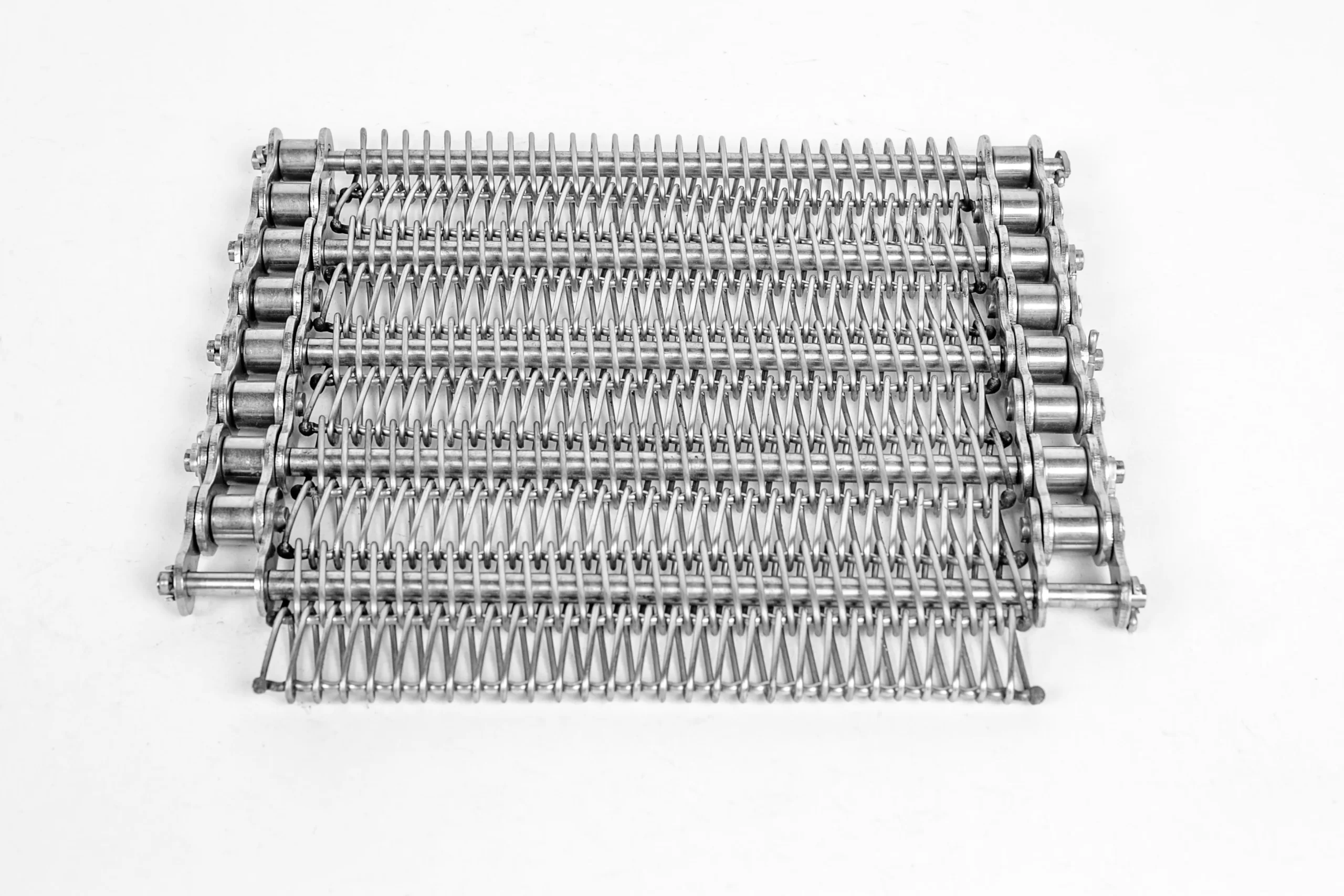 Chain Driven Conveyor Belts
Stainless steel chain link belt with precision-driven rollers
-
 Balanced Weave Conveyor Belt China Factory High Temp Mesh SuppliersPremium Balanced Weave Conveyor Belts from a leading China factory. Our suppliers provide Direct Edge Welding for maximum structural integrity and U-Shaped Edge reinforcement to prevent spillage in high-heat environments.
-
 Custom Industrial Stainless Steel Baskets China Factory and SuppliersHigh-performance industrial stainless steel baskets from a leading China factory. We offer personalized customization services for materials, styles, and mesh sizes to meet your exact needs. Contact the top suppliers for durable, corrosion-resistant solutions.
-
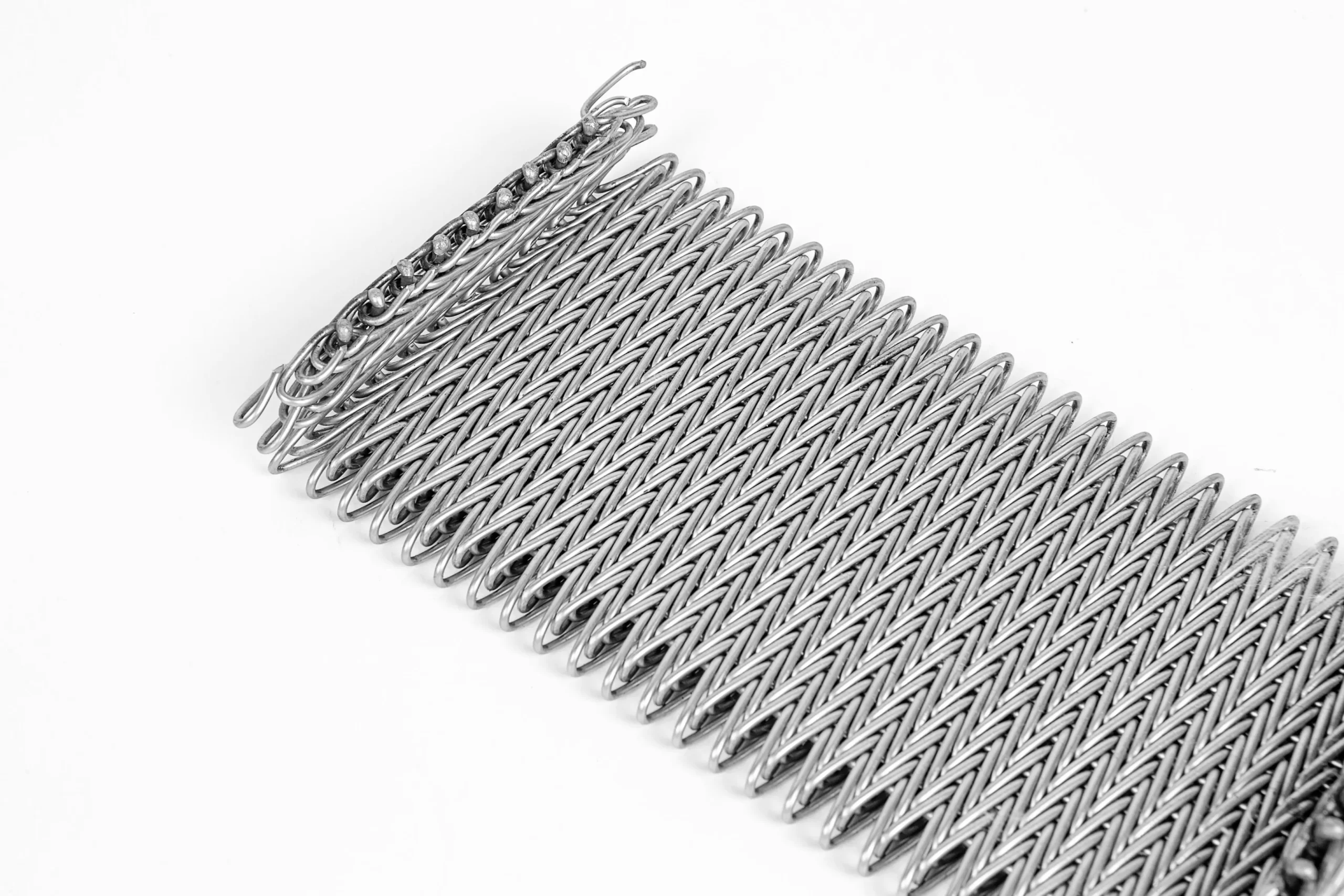 Compound Balanced Weave Conveyor Belt
aka cord weave conveyor belt
aka v shaped conveyor belt
aka chevron conveyor belt
Compound Balanced Weave Conveyor Belt: Also known as Chevron Conveyor Belt.It is a metal mesh belt with a special structure. It is woven by left and right spiral wires. It has a tight and strong structure. Its mesh holes are evenly arranged in a "herringbone" shape (also called "V" or "fishbone" shape). The edges can be welded, crimped or chain-reinforced to improve strength and stability.
This design gives it unique performance advantages and is widely used in industries that require high strength, high temperature resistance and stable transportation. It is usually made of stainless steel (such as stainless steel 314, stainless steel 316L, stainless steel 304), heat-resistant steel or other alloy materials.
-
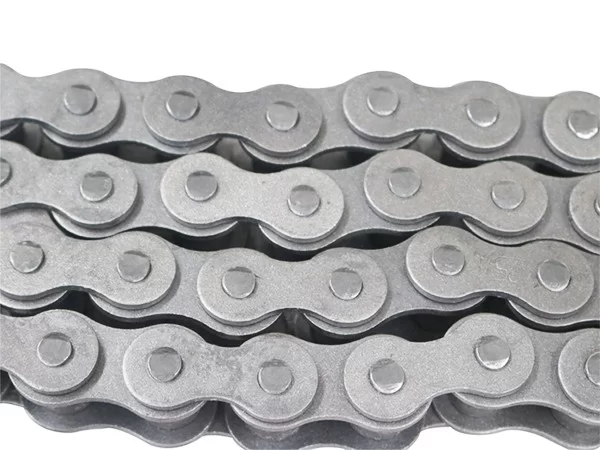 Chain Links
Chains links are important components and accessories in the whole conveyor belt system. They are used combined with sprockets as a drive system to ensure stable and smooth conveying and transmitting. We can supply all kinds of chain links for you.
-
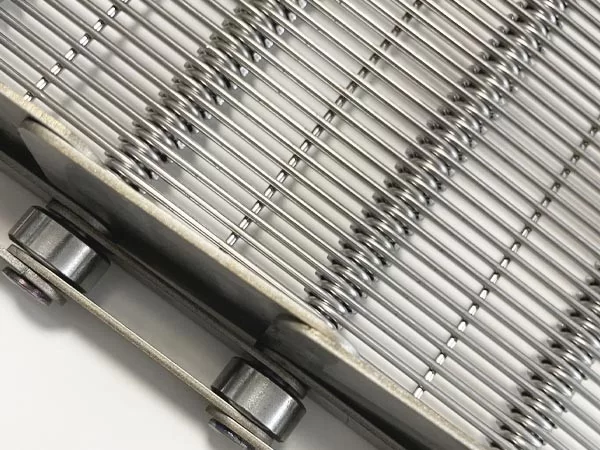 Eye Link Conveyor Belts
, also named Wire Link Conveyor Belts, Eye-Flex Conveyor Belt, Wire Loop Belt. Eye link belts are produced of stainless steel or other alloys. They consist of a series of eye links or eye link modules. Joined with cross rods they form a flat, simple surface, which is extremely stable and durable. The qualities of this versatile conveyor belt form a combination of advantages that make it particularly suitable for the most demanding applications in the food, chemical, pharmaceutical and packaging industries.
-
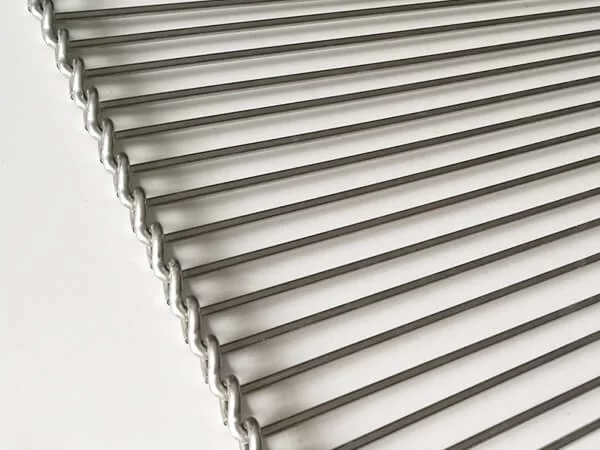 Ladder Conveyor Belts
Ladder Conveyor Belt is a simple but effective style of conveyor belt, generally used belt for common processes and common product loads. Its open design provides efficient operation with minimum maintenance as well as facilitating easy and thorough cleaning. Its lightweight and basic configuration make it a very economic and cost-effective style of belting for many different environments. The ladder belts are used in production processes with temperatures of -100ºC to +450ºC in food and other industries.
-
 Premium Chain Links for Metal Conveyor Belts | China Factory SuppliersLooking for high-performance chain links? As leading China factory suppliers, we provide customizable carbon steel and stainless steel chain links designed for seamless integration with sprocket wheels to ensure stable, smooth, and efficient conveyor transmission.
-
 May 22, 2026High Performance Powder Metallurgy Sintering Furnace Mesh BeltThe Powder Metallurgy Sintering Furnace Mesh Belt serves as the critical backbone for high-precision metal component manufacturing, ensuring that delicate green compacts are transported through extreme temperature zones without deformation. In the competitive landscape of mechanical transmission parts, the efficiency of the sintering process determines not only the structural integrity of the final product but also the overall operational cost of the production line. Understanding the nuances of mesh belt selection is essential for any manufacturer aiming to minimize scrap rates and maximize throughput. Globally, the shift toward sustainable manufacturing and the demand for lightweight, high-strength automotive and aerospace parts have placed
-
 October 01, 2026High Performance Wholesale Flat Flex Conveyor Belt GuideFlat flex conveyor belts represent a critical engineering solution for industrial processes requiring a balance between structural rigidity and flexible movement. These specialized metal mesh systems are designed to transport materials through extreme environments, such as high-temperature furnaces or chemically active zones, where traditional rubber or plastic belts would fail instantly. This article examines the technical specifications and procurement logic necessary for selecting high-performance metal conveying systems. In B2B industrial procurement, the choice of a conveyor system directly affects production uptime and product yield. For industries like powder metallurgy, electronics, and glass annealing, the belt is not merely a transport tool
-
 June 08, 2026High Efficiency Industrial Ceramic Sintering Mesh Belt SolutionsThe industrial landscape of high-temperature processing has been fundamentally transformed by the introduction of the Ceramic Sintering Mesh Belt , a critical component in the production of advanced ceramics and technical glass. As global demand for high-performance materials in aerospace, automotive, and medical sectors grows, the need for conveying systems that can withstand extreme thermal stress without compromising structural integrity has become paramount. Understanding the mechanics of these belts is essential for manufacturers aiming to optimize their throughput and ensure product consistency. Integrating a high-quality Ceramic Sintering Mesh Belt into a production line does more than just move materials
-
 June 25, 2026High Performance Compound Balanced Weave Conveyor Belt GuideIn the demanding world of industrial manufacturing, the precision and reliability of material handling systems are paramount. The compound balanced weave conveyor belt represents a pinnacle of engineering in mechanical transmission components, designed specifically to bridge the gap between high-density support and smooth material transit. By utilizing a complex interlocking structure, these belts ensure that even the smallest components are transported without risk of falling through the mesh. Globally, the demand for high-performance conveying solutions has surged as industries move toward greater automation and stricter quality control. From the delicate baking of biscuits to the rigorous heat treatment of powder metallurgy parts
-
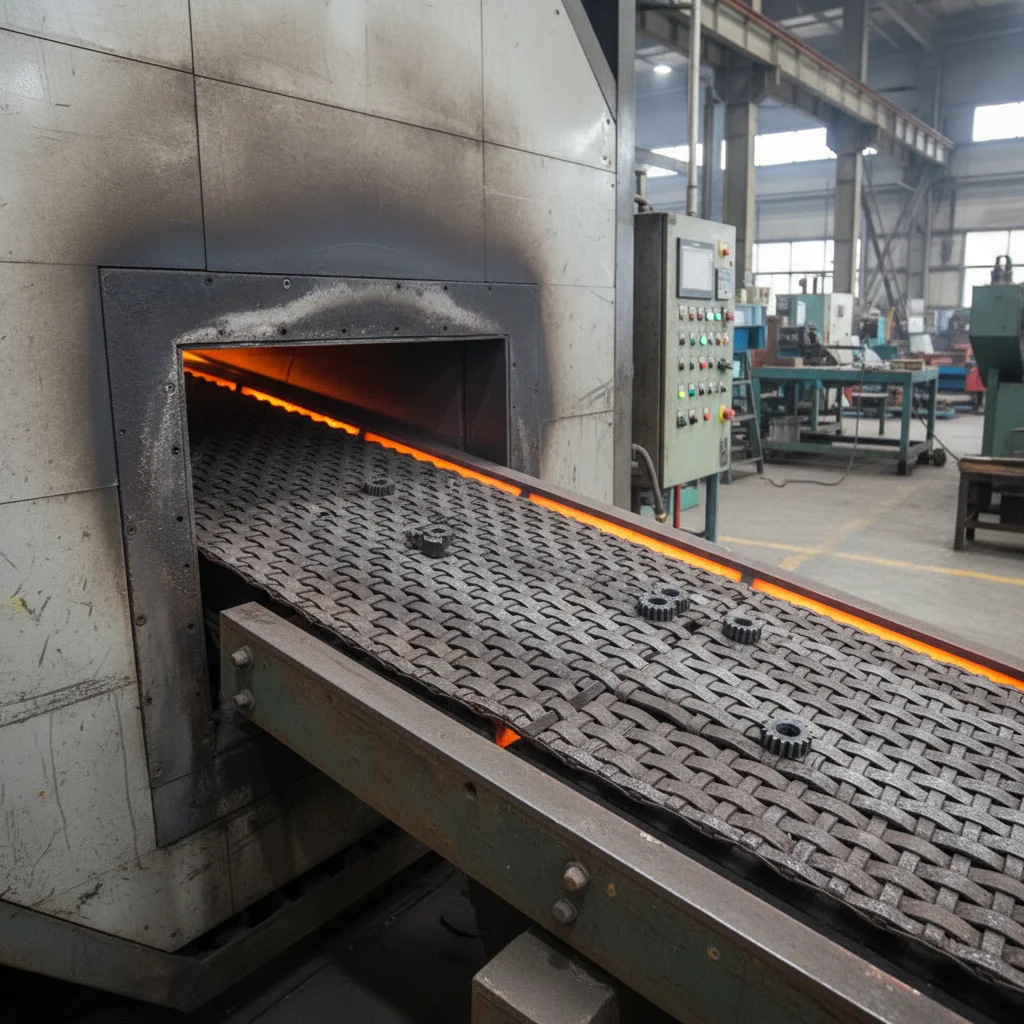 March 24, 2026Optimizing Sintering Processes with High Performance Sintering Furnace Mesh Belt SolutionsIn the realm of heat treatment processes, particularly sintering, the efficiency and reliability of the material handling system are crucial. A sintering furnace mesh belt plays a pivotal role in ensuring consistent product quality and maximizing throughput. This article will delve into the intricacies of these belts, exploring their construction, benefits, applications, maintenance, and future trends. We will also examine how selecting the right mesh belt can significantly impact your sintering process and overall operational costs. A high-quality belt means reduced downtime and a more consistent final product. A sintering furnace mesh belt is a continuous belt made of interwoven metal wires, designed to transport materials through a high-temperature sintering furnace. Sintering is a heat treatment process used to bond particles together without melting them, creating a solid mass. The mesh belt provides a stable and consistent surface for the parts to travel on, ensuring uniform heating and preventing damage. These belts are engineered to withstand extreme temperatures, resist oxidation, and maintain their shape under load.
-
 October 12, 2026High Efficiency Industrial Wholesale Dryer Mesh Belt GuideHigh-efficiency industrial drying requires a precise balance between material transport and thermal exposure. The selection of a conveyor medium, specifically the Wholesale Dryer Mesh Belt, determines the uniformity of the drying process and the overall throughput of the production line. This guide examines the technical requirements for selecting mesh belts that can withstand extreme temperatures while maintaining structural integrity. In B2B procurement, the challenge lies in matching the metallurgy of the belt with the chemical properties of the product being dried. Whether in powder metallurgy, chemical fibers, or glass processing, the conveyor must facilitate maximum airflow and heat penetration.
-
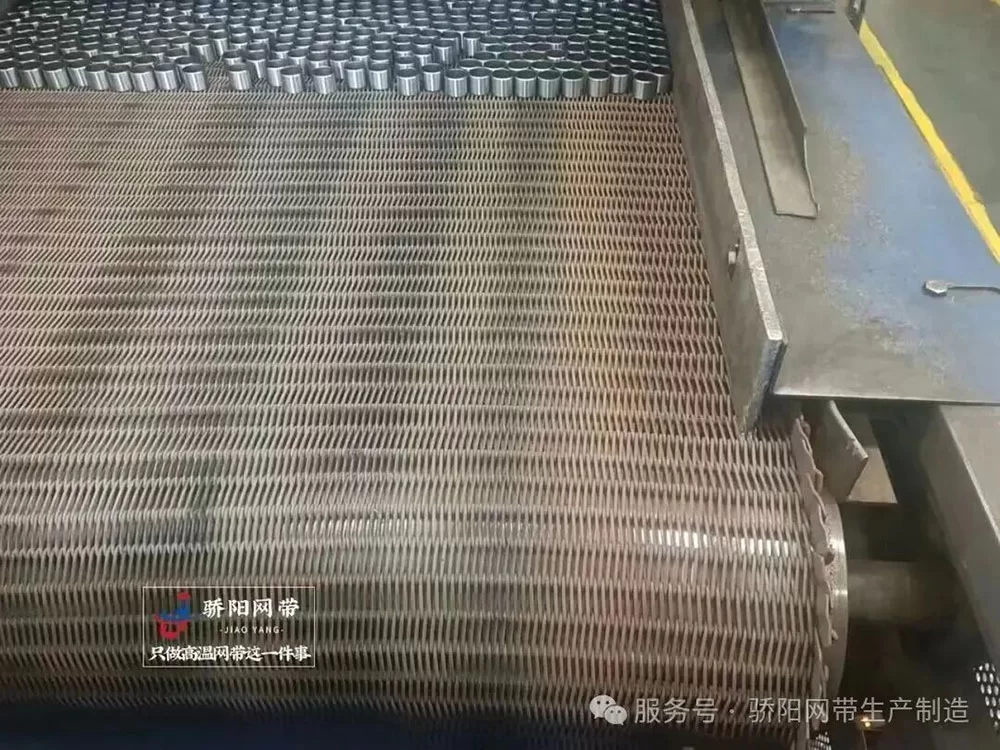 November 01, 2025Is The Mesh Belt Of The Heat Treatment Normalizing Furnace Prone To Hydrogen Embrittlement? What Causes This?
Key Considerations for Oil Pipeline Construction Worldwide3
-
 July 17, 2026Industrial Corrosion Resistant Mesh belt for Harsh EnvironmentsIn the modern industrial landscape, the demand for high-performance conveying solutions has led to the widespread adoption of specialized materials. Among these, the Corrosion Resistant Mesh belt stands out as a critical component for industries operating in harsh environments where moisture, chemicals, and extreme temperatures are prevalent. By integrating advanced metallurgy with precision engineering, these belts ensure that production lines remain operational without the constant threat of material degradation. The global shift toward stricter hygiene standards, particularly in food processing and pharmaceutical manufacturing, has amplified the need for belts that are not only durable but also easy to sanitize.
Get Your Custom Solution
Facing challenges with high-temperature conveying? Contact us now.
Our engineers will provide you with expert product consultation and tailored solutions.
Sign up
for our Newsletter
Subscribe to the weekly newsletter for all the latest updates


