- Tel: +86 15252586600 / +86 13705250816
- Email: 527966138@qq.com / 1026520412@qq.com

Industrial Efficiency with Chevron weave conveyor belt Systems
Industrial Efficiency with Chevron weave conveyor belt Systems
Maximizing Industrial Efficiency with Chevron Weave Conveyor Belt Systems
In the demanding landscape of modern manufacturing, the precision of material handling can define the success of a production line. The Chevron weave conveyor belt represents a pinnacle of engineering, specifically designed to handle challenging inclines and high-temperature environments. By combining a specialized V-shaped pattern with high-strength alloys, these belts ensure that materials remain secure during transport, preventing slippage and reducing downtime. Whether you are operating in food processing, chemical treatment, or heavy industrial drying, selecting the right conveyor architecture is critical for optimizing throughput and maintaining product integrity.

The Engineering Behind the Chevron Weave Conveyor Belt
The structural integrity of a Chevron weave conveyor belt is derived from its sophisticated mesh architecture. Unlike flat belts, the chevron pattern creates longitudinal ribs that act as physical barriers, providing superior grip for bulk materials moving upward on an incline. Constructed from premium stainless steel or heat-resistant alloys, these belts are capable of withstanding temperatures up to 400°C. This makes them indispensable for heat-treatment processes where thermal stability and oxidation resistance are non-negotiable. The precision weaving process ensures that the rod spacing remains consistent, preventing uneven wear and ensuring a smooth mechanical transmission across small diameter pulleys.
Technical Edge: The open-mesh design facilitates maximum airflow and liquid drainage, which is critical for drying applications, ensuring that heat is distributed uniformly across the entire product surface.
Optimal Performance: Chevron Weave vs. Standard Metal Belts
When comparing a Chevron weave conveyor belt to standard flat metal belts, the advantages in grip and stability become evident. Standard belts often struggle with material rollback on steep angles, leading to product damage and operational inefficiency. The chevron pattern effectively eliminates this risk. Additionally, the high fatigue resistance of the woven structure allows these belts to navigate curved paths without compromising structural integrity. For facilities looking to reduce maintenance costs, the ease of cleaning an open-weave structure provides a significant operational advantage over solid-surface alternatives.
Industrial Applications of the Chevron Weave Conveyor Belt
The versatility of the Chevron weave conveyor belt allows it to be deployed across various sectors of the manufacturing industry. In food processing, the stainless steel composition ensures compliance with hygiene standards while the open mesh allows for efficient steaming and cooling. In chemical and heat treatment plants, the belt's ability to resist corrosion and oxidation ensures a long service life even when exposed to aggressive agents. Furthermore, the belt's adaptable design makes it the preferred choice for conveyor systems that must navigate irregular contours or small-diameter pulleys, providing a seamless transition of materials throughout the factory floor.

Customization and Technical Specifications
Recognizing that every production line has unique requirements, the Chevron weave conveyor belt can be tailored to specific mechanical needs. From adjusting the rod diameter to modifying the mesh spacing, customization ensures optimal performance. Clients can choose between cut edges for maximum flexibility or reinforced edges for heavy-duty durability in high-stress environments. With widths available up to 3,500 mm, these belts can be integrated into almost any industrial scale setup, ensuring that the mechanical transmission is both efficient and reliable.
Maintenance and Longevity of Chevron Weave Belts
Investing in a Chevron weave conveyor belt is a decision that pays off in reduced long-term maintenance. The use of high-grade alloys prevents corrosion in humid environments, while the woven structure distributes mechanical stress evenly, reducing the likelihood of fatigue-induced failure. Because the belt is an open mesh, technical inspections and cleaning are straightforward, allowing for rapid removal of debris without the need for complete system disassembly. Regular checks on the reinforced edges and pulley alignment can further extend the service life of the belt, ensuring peak industrial performance for years.
Selecting the Right Chevron Weave Conveyor Belt for Your Facility
Choosing the correct belt involves analyzing the specific stresses of your application. For systems handling light products on steep inclines, a standard chevron weave with cut edges may suffice. However, for heavy-duty industrial transport where the belt is subjected to constant high-load tension, reinforced edges are essential to prevent lateral wear. Additionally, considering the operating temperature is paramount; while stainless steel is excellent for corrosion, specialized high-temperature alloys are required for processes exceeding 300°C. By partnering with a manufacturer that offers custom engineering, you can ensure that every aspect of the belt—from rod diameter to mesh spacing—is optimized for your unique production line.
Conclusion: Elevate Your Production with Precision Engineering
The Chevron weave conveyor belt is more than just a component; it is a strategic upgrade for any facility aiming for maximum efficiency and reliability. By solving the challenges of material slippage and extreme thermal stress, these belts empower manufacturers to push the boundaries of their production capabilities. Whether your goal is to enhance ventilation in a drying oven or secure transport on a steep incline, the combination of high-strength alloys and a precision-woven pattern provides a future-proof solution for industrial mechanical transmission.
Frequently Asked Questions (FAQs)
Why is the chevron pattern better for inclined conveyors?
The chevron pattern consists of V-shaped ribs that create a physical grip on the material being transported. Unlike flat belts, where gravity can cause products to slide backward on an incline, the chevron ribs act as cleats that hold the material in place. This is essential for maintaining a consistent flow of products and preventing bottlenecks or product damage caused by slippage, making it the gold standard for any ascending conveyor system in a manufacturing plant.
How does temperature affect the choice of material for the belt?
Temperature is a primary factor in material selection. For standard industrial use and food processing, high-grade stainless steel is typically used due to its corrosion resistance and moderate heat tolerance. However, for critical heat-treatment processes reaching up to 400°C, specialized heat-resistant alloys are employed. These alloys are engineered to prevent oxidation and maintain structural rigidity at extreme temperatures, ensuring that the belt does not sag or warp, which would otherwise lead to tracking issues and mechanical failure.
What is the difference between cut edges and reinforced edges?
Cut edges are essentially the raw finished edges of the weave, offering maximum flexibility and ease of installation for systems with simple movements. Reinforced edges, on the other hand, feature additional structural support along the sides of the belt. This reinforcement is crucial for heavy-duty applications where the belt faces significant lateral tension or friction against the conveyor frames. By preventing the edges from fraying or stretching, reinforced edges significantly extend the operational lifespan of the conveyor system.
Are these belts compatible with curved conveyor paths?
Yes, the woven nature of the Chevron weave conveyor belt provides a degree of inherent flexibility. Because the rods are interconnected by high-strength wire strands rather than being a solid sheet, the belt can adapt to curved paths and irregular contours without compromising the integrity of the chevron pattern. This flexibility allows engineers to design more compact and efficient production layouts without needing to implement complex transfer points between straight conveyor sections.
-
 Flexible Rod Conveyor Belts
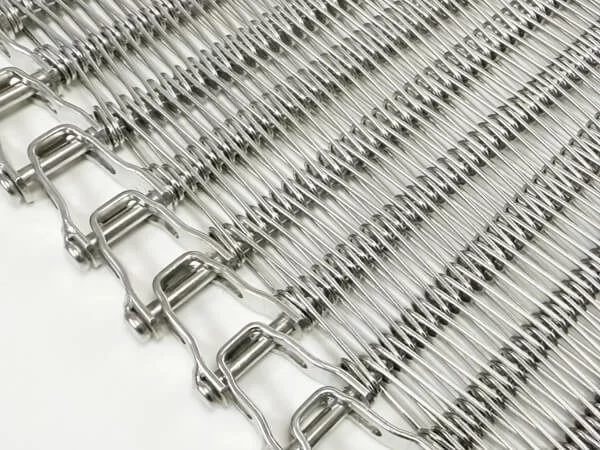
A Flexible Rod Belt is constructed from 3 components.
1. Alternating spirals take care of the belt overlay.
2. These spirals are connected to each other by means of smooth cross rods.
3. Special chain links are mounted at the outer sides, which are locked by means of button heads.
-
 Industrial Flexible Rod Conveyor Belts Grid Link Mesh Belt China Factory SuppliersHigh-performance Flexible Rod Conveyor Belts also known as Grid Link Conveyor Belts. Sourced from a leading China factory and trusted suppliers, these belts offer anti-deformation design and food-grade compliance for optimized cold chain logistics.
-
 Edge Drive Spiral Freezer Belts
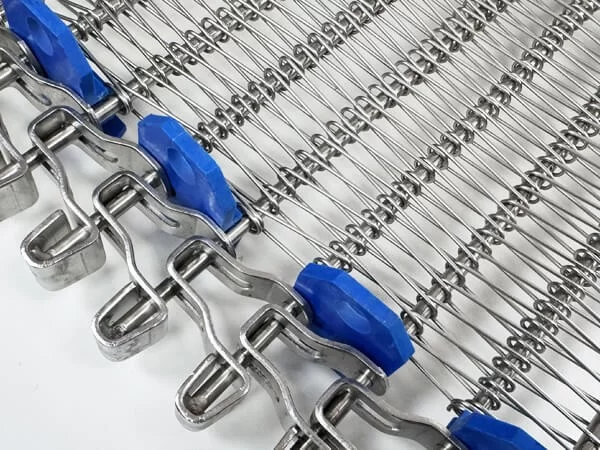
 are precision-engineered stainless steel conveyor belts used in spiral freezers across the food processing industry. Designed for edge-driven systems, these belts provide stable, hygienic, and efficient transport of food products during the freezing process. They are ideal for high-capacity operations where product integrity, airflow, and hygiene are critical.
-
 Flexible Rod Conveyor Belts
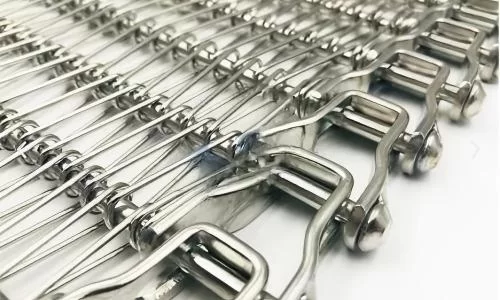
 :Also known as Grid Link Conveyor Belts.It is ……
-
 Balanced Weave Conveyor Belt Factory China Professional Mesh Belt Suppliers(2026 Edition)Looking for high-performance Balanced Weave Conveyor Belts? Our China factory and expert suppliers offer dual-spiral structures with U-shaped edge reinforcement and direct edge welding for extreme heat stability.
-
 Double Balanced Weave Conveyor Belt China Factory and SuppliersPremium Double Balanced Weave Conveyor Belts from a leading China factory. Featuring double wire wrap construction and interlocking spiral design for enhanced durability. Reliable suppliers of high-tensile industrial mesh belts for extreme temperatures.
-
 Compound Balanced Weave Conveyor Belt Factory Leading China SuppliersPremium Compound Balanced Weave Belts with welded edge from a professional China factory. Our high-density mesh belts offer extreme heat stability and precision transport. Contact leading China suppliers for durable cordweave solutions.
-
 Flat Flex Conveyor Belts China Factory Industrial Mesh Belt SuppliersHigh-performance Flat Flex Conveyor Belts from a leading China factory. Also known as Enrober or Rod Network belts, our lightweight mesh design reduces costs and downtime. Contact professional suppliers for HACCP-compliant, durable industrial solutions.
-
 September 15, 2026High Performance Wholesale Corrosion Resistant Mesh belt GuideIn high-temperature and chemically aggressive industrial environments, the integrity of the conveyor system is the primary determinant of operational uptime. This article explores the critical requirements for selecting high-performance metal belts that can withstand oxidation and chemical erosion. We will analyze how specific metallurgical properties prevent system failure in sectors like powder metallurgy and heat treatment. For procurement managers and engineers, finding a balance between tensile strength and chemical resistance is essential. Using Wholesale Corrosion Resistant Mesh belt solutions requires an understanding of how AISI 304 and 316 stainless steels behave under thermal stress and exposure to corrosive agents.
-
 May 22, 2026High Performance Powder Metallurgy Sintering Furnace Mesh BeltThe Powder Metallurgy Sintering Furnace Mesh Belt serves as the critical backbone for high-precision metal component manufacturing, ensuring that delicate green compacts are transported through extreme temperature zones without deformation. In the competitive landscape of mechanical transmission parts, the efficiency of the sintering process determines not only the structural integrity of the final product but also the overall operational cost of the production line. Understanding the nuances of mesh belt selection is essential for any manufacturer aiming to minimize scrap rates and maximize throughput. Globally, the shift toward sustainable manufacturing and the demand for lightweight, high-strength automotive and aerospace parts have placed
-
 November 02, 2026Rod Network Conveyor Belts: Integration and Maintenance FAQAnswers for buyers planning to integrate Rod Network Conveyor Belts into cooling, baking, drying, food processing, pharmaceutical processing, or industrial heat-treatment lines. Covers belt structure, airflow, materials, tracking, cleaning, and the details to prepare for a tailored belt request.
-
 April 23, 2026Industrial Balanced Weave Conveyor Belt for Stable Material TransportIn the demanding world of industrial heat treatment and food processing, the stability of material transport is paramount. A balanced weave conveyor belt serves as a critical engineering solution, designed specifically to eliminate the tracking issues and structural distortions common in standard mesh belts. By integrating a symmetrical weave pattern, these belts ensure a level distribution of tension, which is essential for maintaining high-throughput production lines without frequent downtime. Global manufacturing standards, particularly those aligned with ISO quality management, increasingly emphasize the reduction of mechanical waste and the optimization of energy efficiency.
-
 October 14, 2026High Performance Industrial Wholesale conveyor belt SolutionsIntroduction When evaluating the efficiency of a high-temperature production line, the choice of conveyor system often determines the threshold of operational success. For many procurement managers in the mechanical transmission sector, finding a reliable source for a Wholesale conveyor belt is not merely about price, but about matching specific metallurgical properties with the extreme thermal and chemical demands of the furnace environment. The integration of Metal Conveyor Belts and their corresponding Drive Components creates a critical link in industries such as powder metallurgy and electronics. If the belt fails due to thermal deformation or corrosion, the entire sintering or brazing process halts
-
 April 24, 2026Balanced Spiral Woven Conveyor Belt for Industrial Food ProcessingIn the high-stakes environment of industrial food processing and precision manufacturing, the efficiency of thermal treatment and cooling depends heavily on the reliability of the transport system. The Balanced Spiral Woven Conveyor Belt emerges as a critical engineering solution, designed to optimize vertical space while maintaining a steady, vibration-free flow of products. By blending structural stability with a woven architectural design, these belts allow industries to maximize throughput without expanding their physical plant footprint.
-
 August 10, 2026High Efficiency Industrial Flat Flex Conveyor Belt SolutionsIn the demanding world of industrial processing, the efficiency of material handling often determines the overall productivity of a production line. The Flat Flex Conveyor Belt has emerged as a critical component in this ecosystem, providing a balance of durability and flexibility that traditional belts cannot match. By utilizing a positive drive mechanism, these systems ensure that products move with precision, reducing downtime and increasing throughput across various manufacturing sectors. From a global industrial perspective, the need for hygienic and heat-resistant transport solutions has surged, particularly in the food and pharmaceutical industries.
-
 October 08, 2026High Quality Wholesale Heat treatment furnace mesh belt SystemsIn high-precision industrial processing, the transport mechanism within a furnace is as critical as the heating element itself. A specialized mesh belt must maintain structural integrity while moving components through extreme thermal zones, ensuring uniform heat distribution and preventing material deformation. This article examines the technical requirements for heat treatment conveying and how specific engineering choices impact production yield. For procurement managers and engineers, selecting the right conveyor involves balancing tensile strength, thermal resistance, and airflow permeability. Whether the application is powder metallurgy, automotive brazing, or electronics sterilization, the interaction between the belt material and the furnace environment determines the lifecycle cost
Get Your Custom Solution
Facing challenges with high-temperature conveying? Contact us now.
Our engineers will provide you with expert product consultation and tailored solutions.
Sign up
for our Newsletter
Subscribe to the weekly newsletter for all the latest updates


