- Tel: +86 15252586600 / +86 13705250816
- Email: 527966138@qq.com / 1026520412@qq.com

High Quality Silver sintering furnace mesh belt for Production
High Quality Silver sintering furnace mesh belt for Production
Optimizing Production with Silver Sintering Furnace Mesh Belt
In the high-precision world of electronic components and advanced metallurgy, the sintering process is critical for ensuring material density and conductivity. A high-quality Silver sintering furnace mesh belt serves as the backbone of this process, providing the necessary support and heat distribution to transport delicate parts through extreme temperatures. Choosing the right mesh belt not only prevents component deformation but also significantly extends the lifespan of the furnace equipment. In this comprehensive guide, we will explore the technical nuances, material requirements, and operational advantages of utilizing professional-grade mesh belts for silver sintering applications.

Material Excellence for Silver Sintering Applications
The environment inside a sintering furnace is incredibly harsh, characterized by high temperatures and potentially corrosive atmospheres. Therefore, the material composition of a Silver sintering furnace mesh belt must be meticulously selected. Typically, high-nickel alloys or stainless steel grades with superior oxidation resistance are used to ensure the belt does not warp or contaminate the silver particles. Dimensional stability is the most critical factor here; any slight stretching or shrinkage of the belt can lead to misalignment and production downtime. By utilizing precision-woven metallic fabrics, manufacturers can ensure a smooth, consistent flow of materials.
Pro Tip: Always verify the thermal expansion coefficient of your mesh belt to match your furnace's heating profile, reducing the risk of mechanical stress during rapid temperature shifts.
Performance Comparison: Mesh Belt vs. Ceramic Trays
Many facilities are transitioning from batch processing using ceramic trays to continuous processing with a Silver sintering furnace mesh belt. The primary advantage is the move toward automation and throughput. While trays require manual loading and unloading, a mesh belt allows for a steady stream of products, ensuring every piece experiences the exact same temperature gradient. This consistency is vital for the uniformity of silver sintering, where even a few degrees of variance can affect the electrical properties of the finished joint.
Key Technical Specifications for Mesh Belts
When ordering a Silver sintering furnace mesh belt, it is essential to define the technical specifications precisely. The weave pattern (such as plain, twill, or balanced weave) determines the flatness and the amount of contact between the belt and the product. A tighter weave provides more support for small particles, while a more open weave allows for better gas circulation and faster heating. Below are the common specifications used in industrial silver sintering setups:
Maintenance and Longevity of Furnace Belts
To maximize the ROI of your Silver sintering furnace mesh belt, a proactive maintenance schedule is non-negotiable. Over time, metallic belts can experience "creep" or stretching due to the combined effects of heat and tension. Regular tensioning adjustments and visual inspections for wire breakage are essential. Additionally, ensuring that the drive sprockets and rollers are perfectly aligned prevents edge wear, which is the most common cause of premature belt failure in sintering furnaces.

Industrial Applications of Silver Sintering Belts
The application of these specialized belts extends across several high-tech sectors. In the power electronics industry, they are used for sintering silver paste in IGBT modules, which requires extreme precision to ensure thermal management. In the aerospace sector, they facilitate the creation of high-strength silver bonds for sensors that must withstand extreme pressure. The ability of the Silver sintering furnace mesh belt to handle continuous loads makes it the ideal choice for any facility scaling up from laboratory prototypes to full-scale industrial production.
Choosing the Right Supplier for Sintering Mesh
Not all mesh belts are created equal. When selecting a partner, it is crucial to look for a manufacturer that understands the specific chemistry of silver sintering. A reputable supplier will offer custom weaving options and material certifications to ensure the belt won't react with the silver or the furnace atmosphere. By choosing an expert like JY Mesh Belt, you gain access to engineering expertise that helps in selecting the exact wire gauge and weave density required for your specific component size and weight.
Conclusion: Elevating Efficiency in Silver Sintering
The integration of a high-performance Silver sintering furnace mesh belt is a strategic upgrade for any precision manufacturing line. By providing unparalleled thermal stability, continuous automation, and consistent product support, these belts eliminate the bottlenecks associated with batch processing. Investing in quality materials and professional engineering ensures that your sintering process remains reliable, scalable, and efficient. For those aiming for the highest standards in electronic assembly and metallurgy, the right mesh belt is not just a component—it is a competitive advantage.
Frequently Asked Questions (FAQs)
How often should a silver sintering mesh belt be replaced?
Replacement cycles vary depending on the operating temperature and the weight of the load. Generally, belts should undergo a detailed inspection every 6 months. Signs that replacement is necessary include visible wire thinning, permanent stretching (creep) that cannot be adjusted by tensioners, or the appearance of "waves" in the belt surface. Replacing the belt before it fails prevents costly unplanned downtime and ensures that components are not shifted or damaged during the critical sintering phase.
Can the mesh belt contaminate the silver sintering process?
If the belt is made from low-grade materials, oxidation or metallic shedding can occur, potentially contaminating the silver joint. However, professional Silver sintering furnace mesh belts are constructed from high-purity alloys that are chemically inert at sintering temperatures. We recommend using electropolished belts to remove any surface impurities before installation, ensuring that the silver sintering process remains pure and the electrical conductivity of the final product is not compromised.
What is the advantage of an open weave over a tight weave?
An open weave allows for superior gas permeability and more uniform heat transfer, as the heating elements' radiation can reach the bottom of the part more effectively. This is ideal for larger components. A tight weave, conversely, provides a flatter surface and more support, which is necessary for very small or lightweight parts that might otherwise "sink" into the mesh. The choice depends entirely on the geometry of your sintered part and the specific thermal profile of your furnace.
How do I prevent the belt from tracking to one side?
Belt tracking issues are usually caused by uneven tension or misaligned rollers. To prevent this, ensure that the tensioning screws are tightened equally on both sides. Using a crown-shaped drive roller can also help naturally center the belt. Regular cleaning of the rollers to remove any accumulated silver dust or debris is also critical, as even a small amount of buildup on one side of a roller can push the belt off-center over time.
-
 Compound Weave Conveyor Belts China Factory | HighTemp Mesh Belt SuppliersLeading China factory and suppliers of high-performance Compound Weave Conveyor Belts. Also known as Stainless Steel Cordweave or Baking Band belts, our balanced woven solutions feature minimal apertures for transporting small items with extreme thermal stability up to 1250C. Ideal for food processing and precision manufacturing.
-
 Veneer Dryer Wire Mesh Belts China Factory and Leading SuppliersHigh-performance veneer dryer wire mesh belts from a leading China factory. Our suppliers provide heat-resistant stainless and galvanized steel belts up to 600C to ensure uniform drying and reduced defects in plywood manufacturing.
-
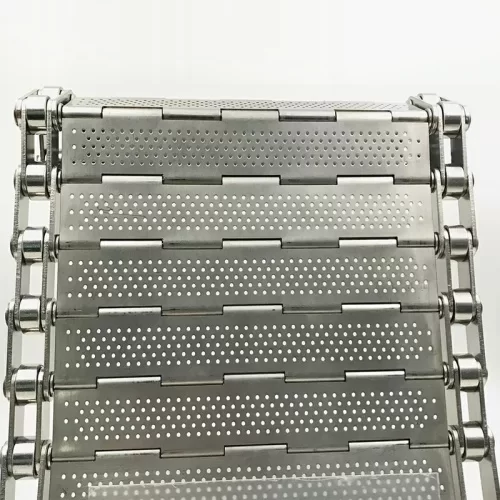 Plate Link Conveyor Belt
Plate conveyor belts are composed of hinged slats with or without holes. Hinge ……
-
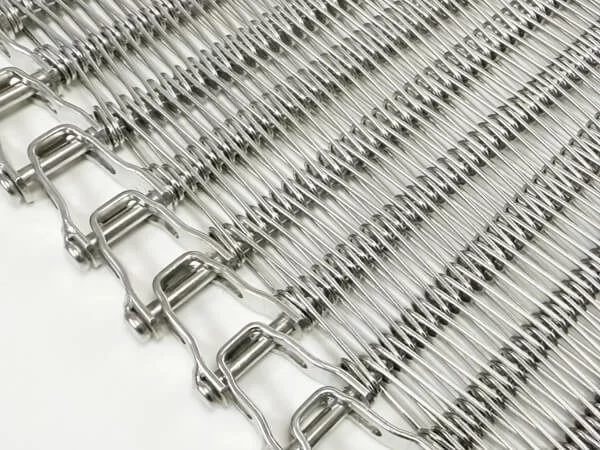 Flexible Rod Conveyor Belts
A Flexible Rod Belt is constructed from 3 components.
1. Alternating spirals take care of the belt overlay.
2. These spirals are connected to each other by means of smooth cross rods.
3. Special chain links are mounted at the outer sides, which are locked by means of button heads.
-
 Compound Balanced Weave Conveyor Belt Factory Leading China SuppliersPremium Compound Balanced Weave Belts with welded edge from a professional China factory. Our high-density mesh belts offer extreme heat stability and precision transport. Contact leading China suppliers for durable cordweave solutions.
-
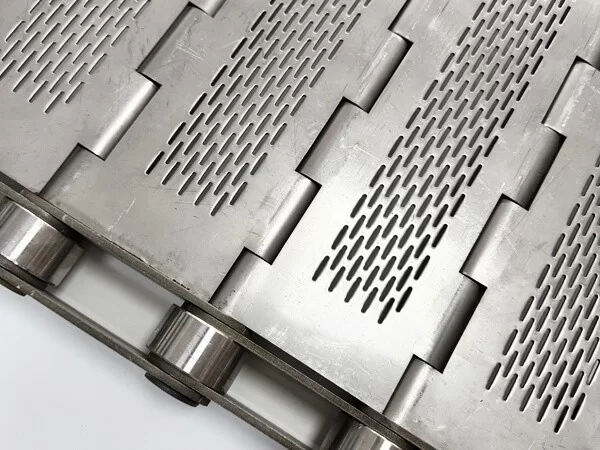 Plate Link Conveyor Belts
Plate Link Conveyor Belt is very strong, driven by stainless steel chain, made of stainless steel plate, and very suited to heavy load applications, running smoothly in the conveying process, easy to install and replace, and long in service life. Its self-supporting structure makes it be used over large widths without any support. PFM Screen’s Plate Link belt features an extremely robust design and high load capacity, making it the perfect choice for arduous engineering processes such as presswork, die-casting and forging.
-
 HighPerformance Plate Link Conveyor Belts China Suppliers and FactoryLooking for reliable Plate Link Conveyor Belt China suppliers? Our factory provides robust stainless steel belts driven by chains, ideal for heavy load applications in die-casting and forging. Experience smooth operation, easy installation, and long service life with our self-supporting industrial belts.
-
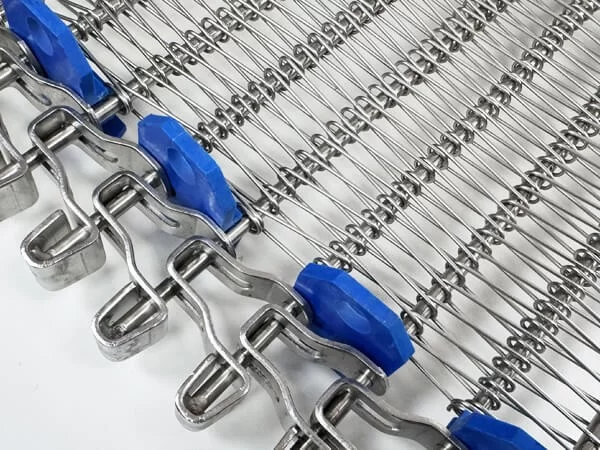 Edge Drive Spiral Freezer Belts
 are precision-engineered stainless steel conveyor belts used in spiral freezers across the food processing industry. Designed for edge-driven systems, these belts provide stable, hygienic, and efficient transport of food products during the freezing process. They are ideal for high-capacity operations where product integrity, airflow, and hygiene are critical.
-
 August 14, 2026High Precision Sintering furnace mesh belt for Industrial HeatIn the demanding realm of industrial heat treatment and material processing, the efficiency of transport systems can dictate the entire quality of the final product. A Sintering furnace mesh belt serves as the critical interface between the heating environment and the industrial components being processed, ensuring that materials move steadily and uniformly through extreme thermal zones. By utilizing high-precision engineering, these belts prevent the bottlenecks often associated with traditional conveyor systems in high-heat settings. The global shift toward automation and higher precision in metallurgy and chemical processing has placed a spotlight on the structural integrity of conveyor components.
-
 April 08, 2026Exploring the Versatility and Benefits of Metal Mesh Belt SystemsMetal mesh belt technology stands as a cornerstone of modern material handling, playing a vital role in countless industries across the globe. From food processing and pharmaceutical manufacturing to heat treatment and metalworking, these belts offer a reliable, efficient, and hygienic solution for conveying a wide range of products. Understanding the intricacies of metal mesh belt design, materials, and applications is crucial for optimizing operational efficiency and ensuring product quality in today’s competitive landscape.
-
 July 01, 2026Industrial Welded Edge mesh belt for High Stability ConveyingIn the demanding landscape of modern industrial manufacturing, the efficiency of material handling systems often dictates the overall productivity of a production line. The Welded Edge mesh belt stands as a cornerstone of these systems, providing a robust and stable platform for transporting components through extreme thermal and chemical environments. By integrating precision engineering with high-strength materials, these conveyor solutions ensure that industrial throughput remains consistent and reliable. Globally, the transition toward automation in food processing, pharmaceuticals, and automotive assembly has increased the demand for conveyor belts that can withstand rigorous operational stress without compromising structural integrity.
-
 May 25, 2026Industrial Precision Metal Sintering Mesh BeltIndustrial Precision Metal Sintering Mesh Belt Engineering Elevating mechanical transmission with world-class sintered metal mesh technology, designed for extreme temperatures and high-load industrial environments. 4200 Annual Output 164 Countries Served 6 Days Sample Lead Time 99.7 On-Time Delivery Redefining Industrial Transmission As a global leader in mechanical transmission components, our metal sintering Mesh Belt sets the gold standard for structural integrity and dimensional stability . By integrating advanced powder metallurgy, we provide solutions that outlast conventional woven belts in the most aggressive thermal environments. Our proprietary sintering process ensures that every metal sintering Mesh Belt possesses zero-stretch performance and unmatched corrosion resistance.
-
 July 17, 2026Industrial Corrosion Resistant Mesh belt for Harsh EnvironmentsIn the modern industrial landscape, the demand for high-performance conveying solutions has led to the widespread adoption of specialized materials. Among these, the Corrosion Resistant Mesh belt stands out as a critical component for industries operating in harsh environments where moisture, chemicals, and extreme temperatures are prevalent. By integrating advanced metallurgy with precision engineering, these belts ensure that production lines remain operational without the constant threat of material degradation. The global shift toward stricter hygiene standards, particularly in food processing and pharmaceutical manufacturing, has amplified the need for belts that are not only durable but also easy to sanitize.
-
 April 27, 2026Industrial Power Transmission with General Purpose BeltsIn the complex landscape of industrial automation, General Purpose Belts serve as the unsung heroes of mechanical power transmission. These versatile components are engineered to bridge the gap between various drive systems, ensuring that energy is transferred efficiently across a multitude of machinery types, from simple conveyors to intricate assembly lines. Understanding the nuances of these belts is critical for any operation looking to minimize downtime and maximize throughput. Globally, the demand for reliable transmission solutions has surged as manufacturing hubs in Asia and North America push for higher precision and faster cycle times.
-
 September 05, 2026Efficient Sushi and sashimi production lines mesh belt SystemsMaintaining the delicate texture of raw fish while ensuring high-throughput processing is a primary challenge in modern seafood industrialization. The choice of conveyor material directly impacts food safety, product integrity, and the overall hygiene of the processing environment. In the specific context of sushi and sashimi production, where precision cutting and temperature control are critical, the conveyor system must offer more than just transport. It must facilitate rapid drainage, withstand rigorous sanitization cycles, and prevent the marking of sensitive protein surfaces. Selecting the right Sushi and sashimi production lines mesh belt requires an understanding of the intersection between mechanical durability
-
 October 14, 2026High Performance Industrial Wholesale conveyor belt SolutionsIntroduction When evaluating the efficiency of a high-temperature production line, the choice of conveyor system often determines the threshold of operational success. For many procurement managers in the mechanical transmission sector, finding a reliable source for a Wholesale conveyor belt is not merely about price, but about matching specific metallurgical properties with the extreme thermal and chemical demands of the furnace environment. The integration of Metal Conveyor Belts and their corresponding Drive Components creates a critical link in industries such as powder metallurgy and electronics. If the belt fails due to thermal deformation or corrosion, the entire sintering or brazing process halts
Get Your Custom Solution
Facing challenges with high-temperature conveying? Contact us now.
Our engineers will provide you with expert product consultation and tailored solutions.
Sign up
for our Newsletter
Subscribe to the weekly newsletter for all the latest updates


