- Tel: +86 15252586600 / +86 13705250816
- Email: 527966138@qq.com / 1026520412@qq.com

High Efficiency Industrial Chain Driven mesh belt Guide
High Efficiency Industrial Chain Driven mesh belt Guide
Maximizing Efficiency with a Chain Driven Mesh Belt
In the demanding world of modern manufacturing, the precision and reliability of conveyor systems can determine the overall productivity of a production line. A Chain Driven mesh belt offers a robust solution for transporting materials under extreme conditions, combining the stability of chain propulsion with the versatility of woven mesh. Whether you are dealing with high-temperature heat treatment or hygienic food processing, selecting the right driving method and material is critical. This guide explores the technical advantages, material specifications, and industrial applications of these specialized conveyor systems to help you make an informed engineering decision.

Material Science of the Chain Driven Mesh Belt
The performance of a Chain Driven mesh belt is fundamentally tied to its metallurgy. For standard food-grade applications, 304 and 316 stainless steel are the industry benchmarks due to their exceptional hygienic properties and corrosion resistance. However, in the realm of powder metallurgy and heat treatment, the requirements shift toward oxidation resistance. Materials like 310S and 314 stainless steel are utilized to withstand temperatures reaching up to 1250°C. These high-nickel alloys prevent peeling and fractures during short thermal cycles, ensuring that the belt maintains its structural integrity even in the most aggressive furnace environments.
Material Insight: While 304 stainless steel is ideal for moisture and mild acids, 310S is specifically engineered for high-temperature stability, making it the superior choice for industrial kilns and sintering furnaces.
Structural Advantages of Compound Weave Designs
Compound weave conveyor belts are engineered for stability and strength. Unlike simple weaves, the compound structure incorporates multiple spirals and cross rods on each pitch, which significantly enhances the tensile strength. This makes them highly compatible with Chain Driven mesh belt systems where high pull-force is required. Additionally, the small open area design is a critical feature for transporting small items that would otherwise fall through a standard mesh, ensuring zero product loss during the conveying process.
Core Performance Benefits:
• Uniform Heating: Ensures consistent heat transfer across the entire belt surface.
• Chemical Resistance: High resistance against acids, alkalis, and abrasion.
• Customizable: Options to add side plates or cross flights for product separation.
• Durability: Unique structure extends the operational lifespan under heavy loads.
Comparing Chain Driven vs. Friction Driven Systems
Choosing between friction rollers and a Chain Driven mesh belt depends on the load and precision required. Friction drives are simpler and often quieter but are prone to slippage, especially when belts are lubricated or carrying heavy loads. Chain drives provide a positive mechanical connection, eliminating slip and ensuring perfectly synchronized movement. This is essential for processes where timing and spacing between products are critical for quality control.
Industrial Applications of Chain Driven Mesh Belts
The adaptability of the Chain Driven mesh belt allows it to serve multiple sectors. In the food industry, these belts are used for baking, frying, and cooling, where cleanliness is non-negotiable. In the automotive and aerospace sectors, they are integrated into powder metallurgy furnaces for sintering complex parts. The ability to add baffles and side plates means a single belt system can be used for sorting, upgrading, or separating products, making it a versatile asset in any general equipment manufacturing facility.

Technical Specifications for Mesh Belt Selection
Selecting the correct Chain Driven mesh belt requires a careful analysis of the operational environment. Factors such as the maximum temperature, the chemical nature of the products being conveyed, and the required tensile strength must be documented. For high-heat applications, nickel alloy steels are often blended to ensure the belt does not sag or stretch over time. Below are the typical specifications found in high-performance compound weave belts.
Maintenance and Longevity of Mesh Systems
To ensure a long service life for your Chain Driven mesh belt, a proactive maintenance schedule is essential. Because chain drives involve metal-on-metal contact, regular lubrication is required to prevent wear and tear. Inspecting the belt for signs of "peeling" or fractures is particularly important in high-temperature settings. Fortunately, the use of high-quality stainless steels and nickel alloys significantly reduces the frequency of replacements, providing a lower total cost of ownership over the equipment's lifecycle.
Conclusion: Optimizing Production with the Right Mesh Belt
Integrating a Chain Driven mesh belt into your manufacturing process is a strategic move toward higher reliability and efficiency. By selecting a compound weave structure and a material suited for your specific thermal and chemical environment, you can drastically reduce downtime and product waste. From high-temperature furnaces to hygienic food lines, the right belt configuration ensures consistent performance and long-term durability. Invest in quality engineering to keep your production line moving seamlessly.
Frequently Asked Questions (FAQs)
What makes a chain driven system better than a friction drive?
The primary advantage of a chain driven system is the elimination of slippage. In friction-driven systems, the belt relies on surface tension and pressure to move, which can fail if the belt is oily or heavily loaded. A chain drive provides a positive mechanical link, ensuring that the belt moves at a constant, precise speed regardless of the weight of the materials being transported. This is critical for automated timing and high-capacity industrial conveyor systems.
Which stainless steel is best for heat treatment furnaces?
For heat treatment and powder metallurgy furnaces, 310S and 314 stainless steel are the recommended choices. Unlike 304 or 316, these grades are specifically formulated for high-temperature oxidation resistance and can withstand temperatures between 1000°C and 1250°C. They prevent the belt from scaling or becoming brittle, ensuring the conveyor can handle repeated thermal cycling without fracturing or peeling.
Can I add custom parts to the compound weave mesh belt?
Yes, the versatility of the compound weave design allows for various modifications. Depending on your needs, we can integrate cross flights for lifting or separating products, side plates to prevent lateral movement, and baffles for sorting. These additions allow the Chain Driven mesh belt to be customized for highly specific industrial workflows, increasing the overall utility of the conveyor system.
How does the small open area benefit small item transport?
A "small open area" means the gaps in the weave are tighter. This is essential when transporting small components, powders, or granules that would otherwise slip through a standard mesh. It provides a more continuous supporting surface, reducing product loss and ensuring that every item reaches the end of the line. This feature, combined with high tensile strength, makes it an ideal choice for precision manufacturing and food processing.
-
 Rod Network Conveyor Belts Factory China High Temperature Flat Flex Belt SuppliersLooking for high-performance Rod Network Conveyor Belts? As leading China suppliers and a professional factory, we provide Flat Flex belts with 1200C heat resistance and 30 percent higher tensile strength for industrial conveying.
-
 High Strength Rod Network Conveyor Belts | Leading China Factory SuppliersLooking for high-performance Flat Flex belts? Our China factory provides premium Rod Network Conveyor Belts with 60 permeability and heat resistance up to 1200C. Contact the top industrial suppliers for durable food and pharmaceutical processing solutions.
-
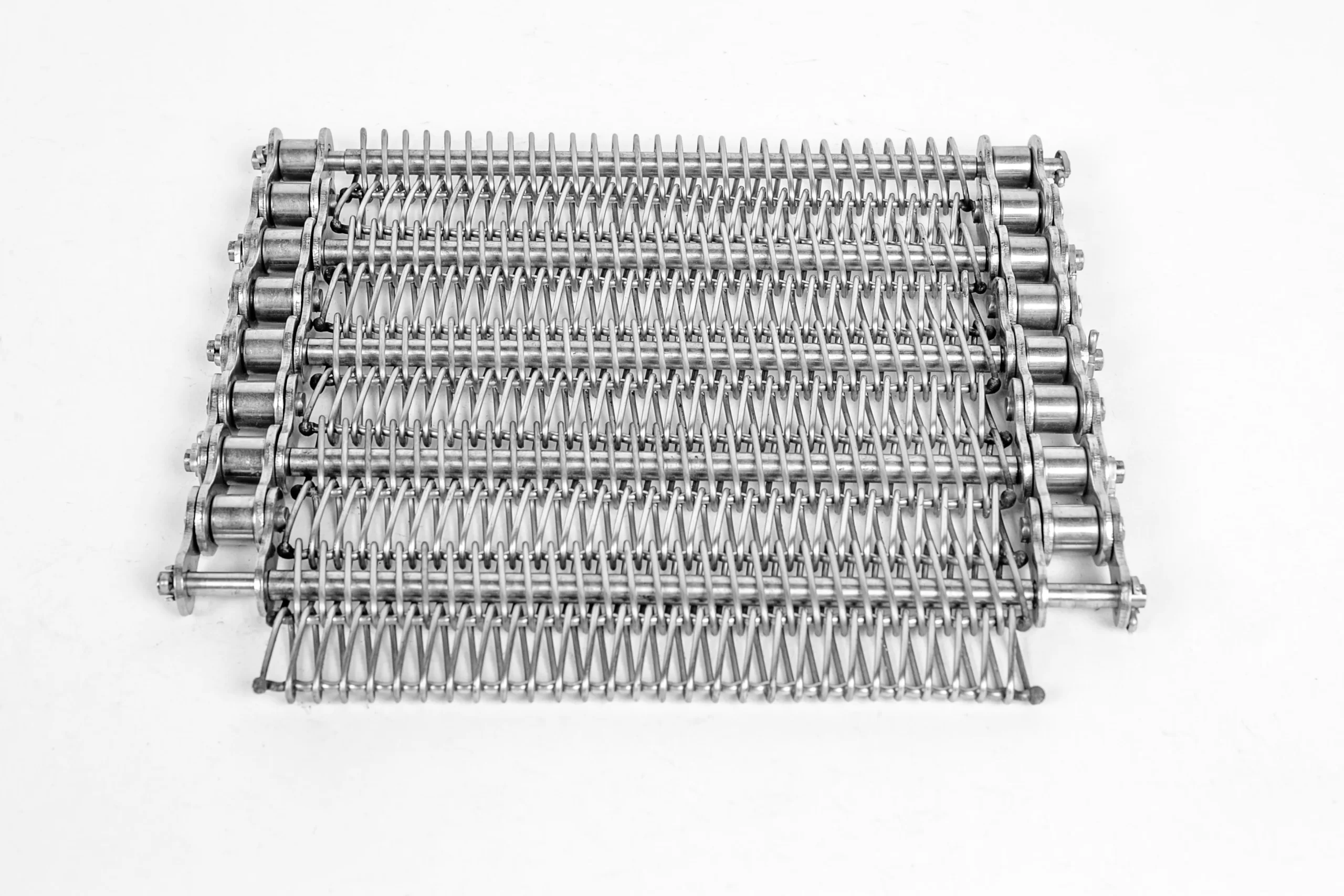 Chain Driven Conveyor Belts
Stainless steel chain link belt with precision-driven rollers
-
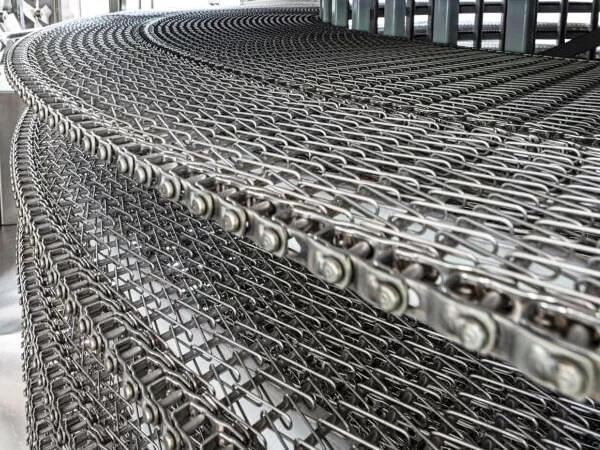 Spiral Freezer Belts
 also known as Spiral Cooler Belts or Spiral Cage Belts are specialized conveyor belts widely used in spiral freezing and cooling systems in food processing industries. They provide continuous product transport with high efficiency, optimized airflow, and minimal footprint.
-
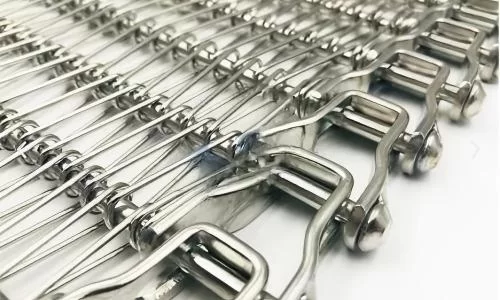 Flexible Rod Conveyor Belts
 :Also known as Grid Link Conveyor Belts.It is ……
-
 Custom Industrial Sprockets China Suppliers | High Performance Sprocket FactoryLooking for reliable sprocket China suppliers? Our factory offers a comprehensive range of standard and custom manufactured sprockets for new or replacement applications to suit any specified belt and industrial environment.
-
 Custom Honeycomb Metal Flat Wire Conveyor Belts China Factory SuppliersHigh-performance honeycomb metal flat wire conveyor belts from a leading China factory. Professional suppliers offering custom widths and butterfly pressure plate adjustments for maximum industrial stability.
-
 Compound Balanced Weave Conveyor Belt Factory Leading China SuppliersPremium Compound Balanced Weave Belts with welded edge from a professional China factory. Our high-density mesh belts offer extreme heat stability and precision transport. Contact leading China suppliers for durable cordweave solutions.
-
 September 14, 2026High Quality Wholesale Stainless Steel Wire Mesh Belt SolutionsProcuring Wholesale Stainless Steel Wire Mesh Belt solutions requires a deep understanding of how mechanical transmission components interact with specific industrial environments. In the sector of general equipment and mechanical transmission parts manufacturing, the choice of conveyor belt material and architecture directly determines the throughput and longevity of the production line. Many procurement managers face the challenge of balancing initial capital expenditure with long-term operational costs. Selecting a belt that fails to resist corrosion or sustains deformation under high loads leads to unplanned downtime, increased maintenance frequencies, and compromised product quality, particularly in temperature-sensitive industries.
-
 July 13, 2026High Temperature Conveyor Belt for Industrial Thermal SystemsThe efficiency of modern industrial processing often hinges on the reliability of the transport systems used in thermal environments. A High Temperature Conveyor Belt serves as a critical link in these processes, ensuring that materials are moved seamlessly through drying, cooling, and curing phases without compromising the integrity of the product or the machinery. As industries strive for higher throughput and stricter quality control, the demand for specialized metal mesh solutions has grown exponentially. Globally, the shift toward automated production lines has highlighted the necessity for components that can withstand extreme thermal stress while remaining lightweight and cost-effective.
-
 November 02, 2026High Quality Wholesale Spiral Mesh Belts for Industrial FurnacesWhen industrial processes encounter extreme heat and heavy mechanical stress, the choice of conveying system becomes the critical point of failure or success. Eye Link conveyor systems are engineered specifically for these harsh environments, offering a robust alternative to standard mesh options. For procurement managers in powder metallurgy or electronics manufacturing, sourcing Wholesale Spiral Mesh Belts requires a deep understanding of how belt configuration impacts product stability and heat distribution. These heavy-duty solutions eliminate the risk of product entrapment while ensuring high-precision transport through sintering and brazing furnaces.
-
 November 04, 2026Custom Brazing Furnace Belt Supplier for Reliable High-Temperature Industrial Processing
Brazing is widely used to join metal components in automotive manufacturing, heat exchangers, electrical equipment, HVAC systems, and precision engineering.
-
 July 01, 2026Industrial Welded Edge mesh belt for High Stability ConveyingIn the demanding landscape of modern industrial manufacturing, the efficiency of material handling systems often dictates the overall productivity of a production line. The Welded Edge mesh belt stands as a cornerstone of these systems, providing a robust and stable platform for transporting components through extreme thermal and chemical environments. By integrating precision engineering with high-strength materials, these conveyor solutions ensure that industrial throughput remains consistent and reliable. Globally, the transition toward automation in food processing, pharmaceuticals, and automotive assembly has increased the demand for conveyor belts that can withstand rigorous operational stress without compromising structural integrity.
-
 November 09, 2026Sintering Furnace Mesh Belt for Powder Metallurgy: Industry Trends and Manufacturing Insights from PM CHINA 2026
Powder metallurgy continues to serve a wide range of industrial applications, from precision mechanical components to automotive parts, magnetic materials, and advanced manufacturing. As production requirements evolve, manufacturers increasingly need to consider not only the quality of the finished component but also the stability, consistency, and efficiency of the processes used to produce it.
-
 June 26, 2026Industrial Efficiency with High Performance Herringbone conveyor beltThe modern industrial landscape relies heavily on the precision and reliability of material handling systems to maintain high throughput and operational efficiency. Among these systems, the specialized design of a Herringbone conveyor belt plays a critical role in ensuring that products are transported securely, especially in applications requiring high stability and grip. Understanding the nuances of these systems allows manufacturers to optimize their production lines for better performance. Globally, the demand for advanced mechanical transmission components has surged as industries shift toward automation and higher precision standards. The integration of a Herringbone conveyor belt into these workflows addresses common challenges such as slippage
-
 August 24, 2026High Performance Balanced Weave Conveyor Belt for IndustryIn the demanding landscape of modern industrial manufacturing, the efficiency of material handling systems is paramount to maintaining high throughput and product quality. A high-performance conveyor belt serves as the backbone of these systems, enabling the seamless transport of components through various stages of production, from raw material processing to final packaging. For industries dealing with extreme temperatures or stringent hygiene standards, selecting the right belt architecture is not just a matter of logistics, but a critical factor in operational safety and longevity. Across the globe, the shift toward automation and precision engineering has increased the reliance on specialized transmission components.
Get Your Custom Solution
Facing challenges with high-temperature conveying? Contact us now.
Our engineers will provide you with expert product consultation and tailored solutions.
Sign up
for our Newsletter
Subscribe to the weekly newsletter for all the latest updates


