- Tel: +86 15252586600 / +86 13705250816
- Email: 527966138@qq.com / 1026520412@qq.com

Industrial Knuckled Edge mesh belt for High Temperature Conveying
Industrial Knuckled Edge mesh belt for High Temperature Conveying
Comprehensive Guide to Knuckled Edge Mesh Belt for Industrial Conveying
In the demanding world of industrial manufacturing, the stability and durability of conveyor systems are critical to operational efficiency. The Knuckled Edge mesh belt offers a sophisticated engineering solution designed to prevent tracking issues and enhance the longevity of the belt. By utilizing a specialized edge folding technique, these belts provide superior flexibility and strength, making them indispensable in high-temperature and heavy-load environments. Whether you are operating in the food processing industry or heavy metallurgy, selecting the right edge structure can significantly reduce downtime and maintenance costs.

Structural Advantages of Knuckled Edge Mesh Belt
The core strength of a Knuckled Edge mesh belt lies in its unique bending process. Unlike welded edges, the knuckled (or folded) edge is created by bending the wire without the use of heat, which preserves the original mechanical properties and tensile strength of the metal. This results in a more ductile edge that is less prone to fractures during repetitive cycling around drive sprockets. This structural integrity is particularly vital for compound balanced weave belts, where high density and flat surfaces are required to convey very small components or ensure uniform heat transfer in baking and sintering processes.
Technical Highlight: Folded side guard edges eliminate the risk of weld-point fatigue, ensuring the belt remains flexible and resistant to "peeling" even under extreme thermal cycling up to 1200°C.
Material Selection for Knuckled Edge Mesh Belt Performance
The performance of a Knuckled Edge mesh belt is heavily dependent on the material used. For food-grade applications, 304 and 316 stainless steel are the gold standards due to their hygienic properties and corrosion resistance. However, for the heat treatment industry—such as quenching or bright annealing furnaces—high-nickel alloys and 310S/314 stainless steel are preferred. These materials prevent oxidation and maintain structural stability at temperatures exceeding 1000°C, ensuring the belt does not warp or degrade under intense heat.
Comparing Edge Types for Mesh Belt Selection
Choosing between a welded edge and a Knuckled Edge mesh belt depends on your specific mechanical requirements. While welded edges are excellent for heavy-load stability, they can be rigid. The folded or knuckled edge provides a balance of stability and flexibility. For long-distance transportation, combining the mesh with a chain edge can further reduce energy consumption and prevent the belt from running off the track. Understanding these differences allows engineers to optimize the belt for the specific tension and curvature of their conveyor system.

Key Applications of Knuckled Edge Mesh Belt Systems
The versatility of the Knuckled Edge mesh belt makes it a preferred choice across several high-precision industries. In the electronics sector, it is used in sintering and curing furnaces where small components must be moved without shifting. In the ceramic and glass industries, it provides the necessary heat resistance for annealing and drying furnaces. Furthermore, the addition of custom baffles or side plates allows these belts to be used for sorting small mechanical components, ensuring that no material is lost or jammed during transit.
Technical Specifications for Compound Weave Mesh Belts
To ensure the Knuckled Edge mesh belt fits your machinery perfectly, it is essential to define the pitch and wire diameter. The compound balanced weave structure closes the apertures, creating a high-density flat surface. Below is a specification table for common configurations used in industrial conveyor systems:
Driving Methods and Maintenance for Mesh Belts
The efficiency of a Knuckled Edge mesh belt is further enhanced by the chosen driving method. Most systems utilize friction rollers for smooth, continuous movement, while chain-driven systems are used for heavier loads requiring precise positioning. To ensure a long service life, regular inspection of the knuckled edges for any signs of fatigue is recommended. Because the folded edge does not rely on welds, it resists the "cracking" typically seen in low-quality welded belts, significantly reducing the frequency of belt replacements in high-stress industrial environments.
Conclusion: Optimizing Your Production with Knuckled Edge Belts
Selecting a Knuckled Edge mesh belt is a strategic decision for any facility prioritizing durability, temperature resistance, and operational stability. By eliminating the vulnerabilities of welding and utilizing high-grade stainless steel, these belts provide a seamless carrying surface ideal for everything from biscuit baking to electronic component sintering. Investing in high-quality mesh belt technology reduces long-term maintenance costs and ensures that your production line remains consistent and efficient.
Frequently Asked Questions (FAQs)
What is the main difference between a Knuckled Edge and a Welded Edge?
The primary difference lies in the manufacturing process and the resulting mechanical properties. A welded edge uses electric welding to secure the belt boundary, which is very strong but creates a rigid point that can become a site for stress fractures over time. In contrast, a Knuckled Edge is formed by bending the wire. This process maintains the wire's ductility and flexibility, making the belt more resistant to fatigue and "peeling" when traveling around rollers, especially in high-temperature environments.
Which material should I choose for a furnace operating at 1100°C?
For temperatures reaching 1100°C, you should choose 310S or 314 stainless steel. These specific alloys are engineered for high-temperature oxidation resistance and maintain excellent mechanical properties under extreme heat. Standard 304 or 316 stainless steel would oxidize and fail at these temperatures. Our belts made from 310S/314 are ideal for powder metallurgy and ceramic sintering furnaces, where they resist short cycles and fracture.
Can a Knuckled Edge mesh belt be used for very small items?
Yes, absolutely. When paired with a compound balanced weave, the belt has a very small open area and a high-density flat surface. This prevents small mechanical components, electronic parts, or food items (like small biscuits) from falling through the mesh. The uniformity of the surface also ensures that heat is transferred evenly across all products, which is critical for curing and baking processes.
How do I prevent the belt from running off the track?
To effectively solve the problem of tracking, we recommend using a chain edge combination. By integrating a chain and rod structure, the belt's movement becomes more synchronized with the sprocket transmission. This not only reduces the weight of the belt and energy consumption but also provides a mechanical lock that prevents the belt from drifting. You can find more custom edge solutions on the JY Mesh Belt website.
-
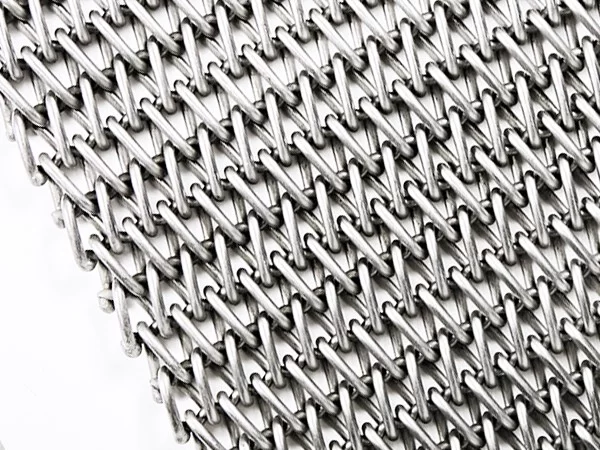 Wire Mesh Lehr Belts
Lehr Belts feature a balanced weave wire construction, composed of alternating right- and left-hand flattened spirals securely seated in crimped connector rods. The belt edges are welded to enhance durability and stability.
-
 Edge Drive Spiral Freezer Belts China Factory and Leading SuppliersHigh-performance Edge Drive Spiral Freezer Belts from a leading China factory. Our suppliers provide precision-engineered stainless steel belts for food processing, ensuring maximum airflow and hygienic transport. Order from professional China suppliers today.
-
 Rod Network Conveyor Belts Factory China High Temperature Flat Flex Belt SuppliersLooking for high-performance Rod Network Conveyor Belts? As leading China suppliers and a professional factory, we provide Flat Flex belts with 1200C heat resistance and 30 percent higher tensile strength for industrial conveying.
-
 High Temperature Wire Mesh Lehr Belts China Factory and SuppliersPremium Wire Mesh Lehr Belts from a leading China factory. Featuring a balanced weave of alternating flattened spirals and welded edges for maximum stability. Trusted suppliers of high-temperature glass annealing solutions.
-
 Premium Veneer Dryer Wire Mesh Belts China Factory and Reliable SuppliersLooking for high-performance veneer dryer wire mesh belts? As a top China factory and trusted suppliers, we offer heat-resistant stainless and galvanized steel belts stable up to 600C to ensure uniform drying and eliminate defects in plywood manufacturing.
-
 Chain Link Conveyor Belt China Suppliers Industrial Mesh Belt FactoryLooking for high-quality Chain Link Conveyor Belts? As leading China suppliers and a professional factory, we provide economical stainless steel wire mesh belts ideal for light-duty drying and cooling applications. Durable, lightweight, and energy-efficient solutions for industrial conveying.
-
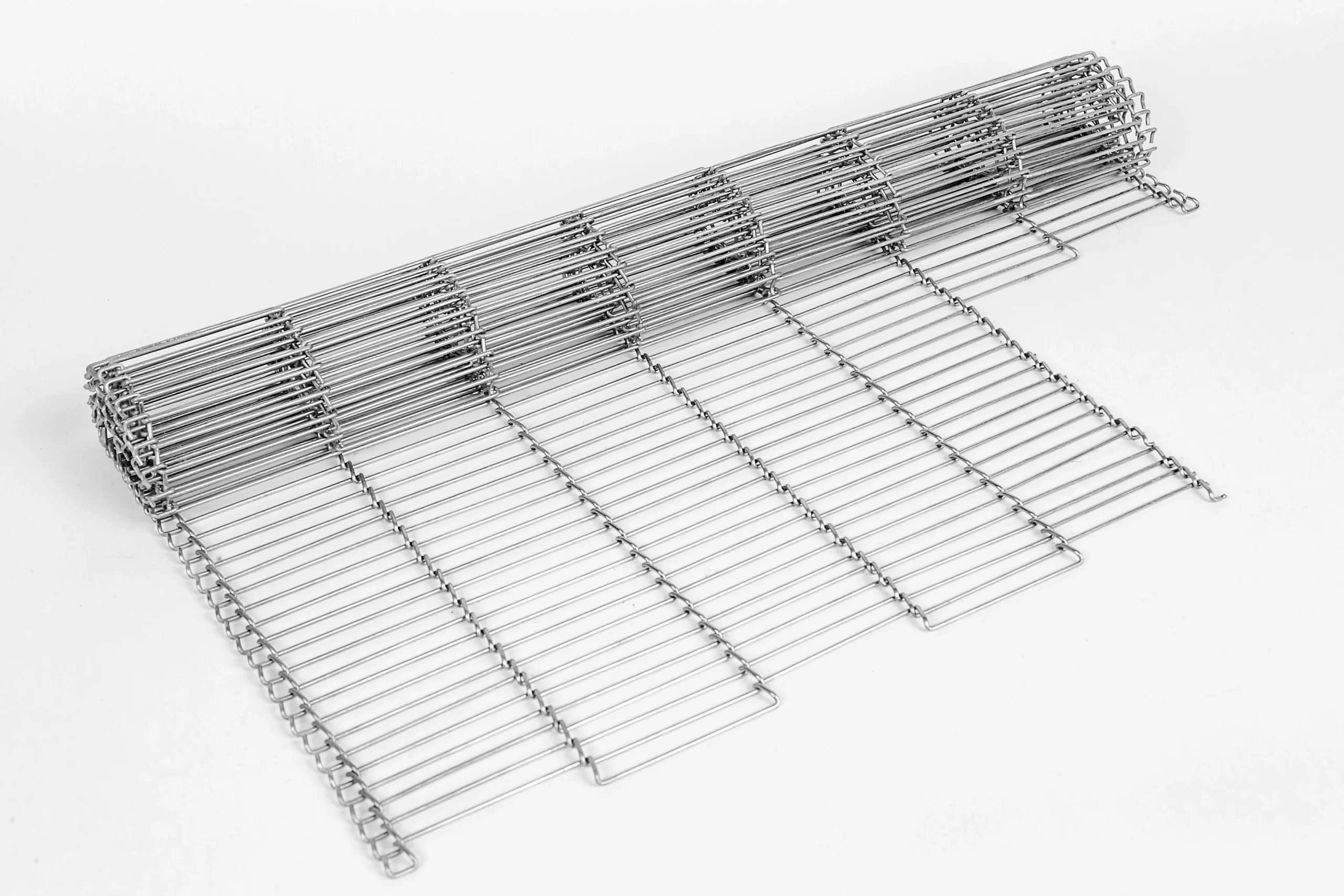 Rod Network Conveyor Belts
:Also known as Flat Flex Conveyor Belt.It is made of left and right spir……
-
 High Strength Rod Network Conveyor Belts China Factory SuppliersLooking for high-performance Rod Network Conveyor Belts? As leading China factory suppliers, we provide durable Flat Flex belts with 60 permeability and heat resistance up to 1200C for food and industrial use.
-
 June 21, 2026High Precision Semiconductor Material Sintering Mesh Belt GuideOptimizing Production with Semiconductor Material Sintering Mesh Belt In the precision-driven world of semiconductor fabrication, the stability and quality of sintering processes are critical to the final performance of electronic components. The Semiconductor Material Sintering Mesh Belt serves as the backbone of this high-temperature transport system, ensuring that delicate wafers and materials are moved uniformly through sintering furnaces without deformation or contamination. Achieving a perfect sinter requires a conveyor that can withstand extreme thermal stress while maintaining dimensional stability. This article explores the technical nuances, material benefits, and industrial applications of these specialized belts to help engineers optimize their production lines
-
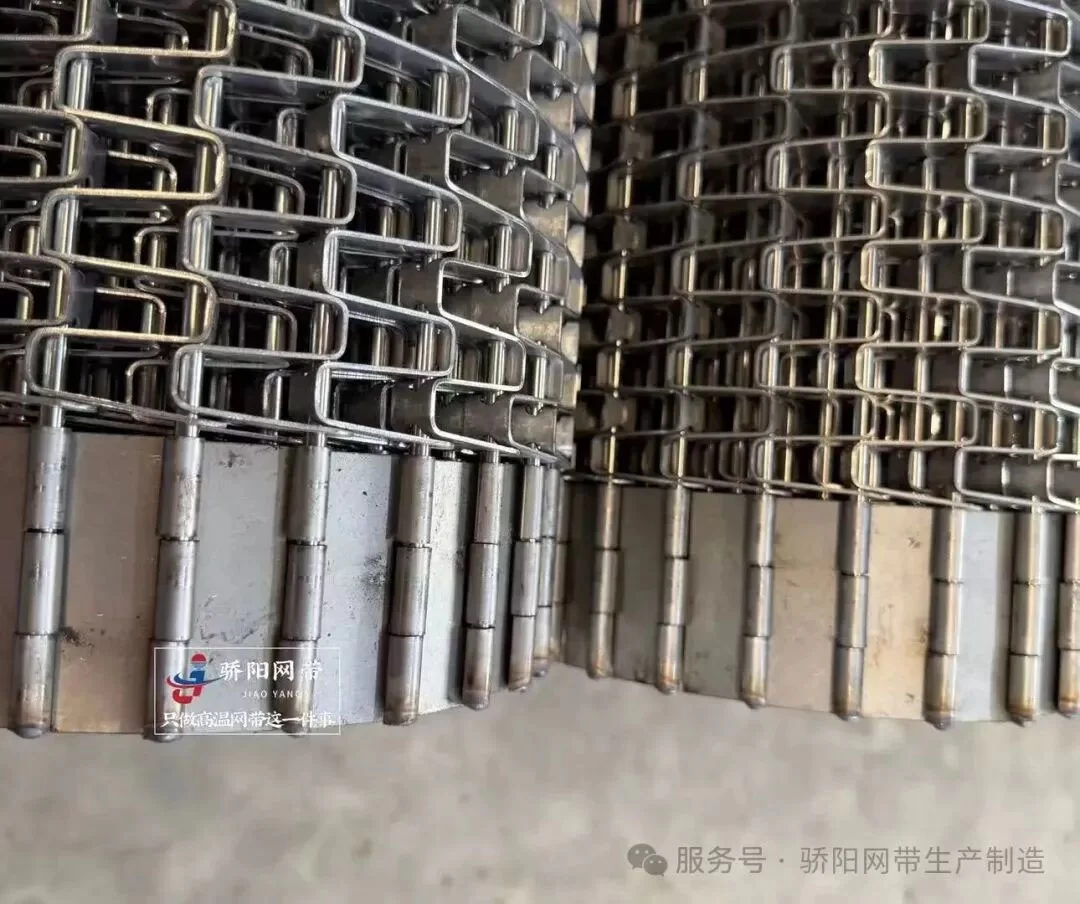 February 01, 2026What Are The Advantages Of The Great Wall Mesh Belt And Jiaoyang Products?
Jiaoyang selects excellent stainless steel materials, which meet the standards for strength, corrosion resistance, and wear resistance. Each batch of materials supports traceability.
-
 August 31, 2026High Temperature Industrial Mesh Belt Technical Selection GuideIndustrial material transport in high-temperature environments requires specialized conveyor solutions that can withstand extreme thermal stress without losing structural integrity. A high-performance mesh belt is engineered to facilitate the continuous movement of components through sintering, brazing, or drying processes, ensuring that materials are exposed to uniform heat. This article examines the technical specifications and selection criteria for these critical components in B2B manufacturing. The challenge for engineers lies in balancing porosity for airflow with the mechanical strength required to prevent elongation. In sectors such as powder metallurgy and electronics, the choice of belt construction whether spiral or rod-reinforced directly impacts production efficiency
-
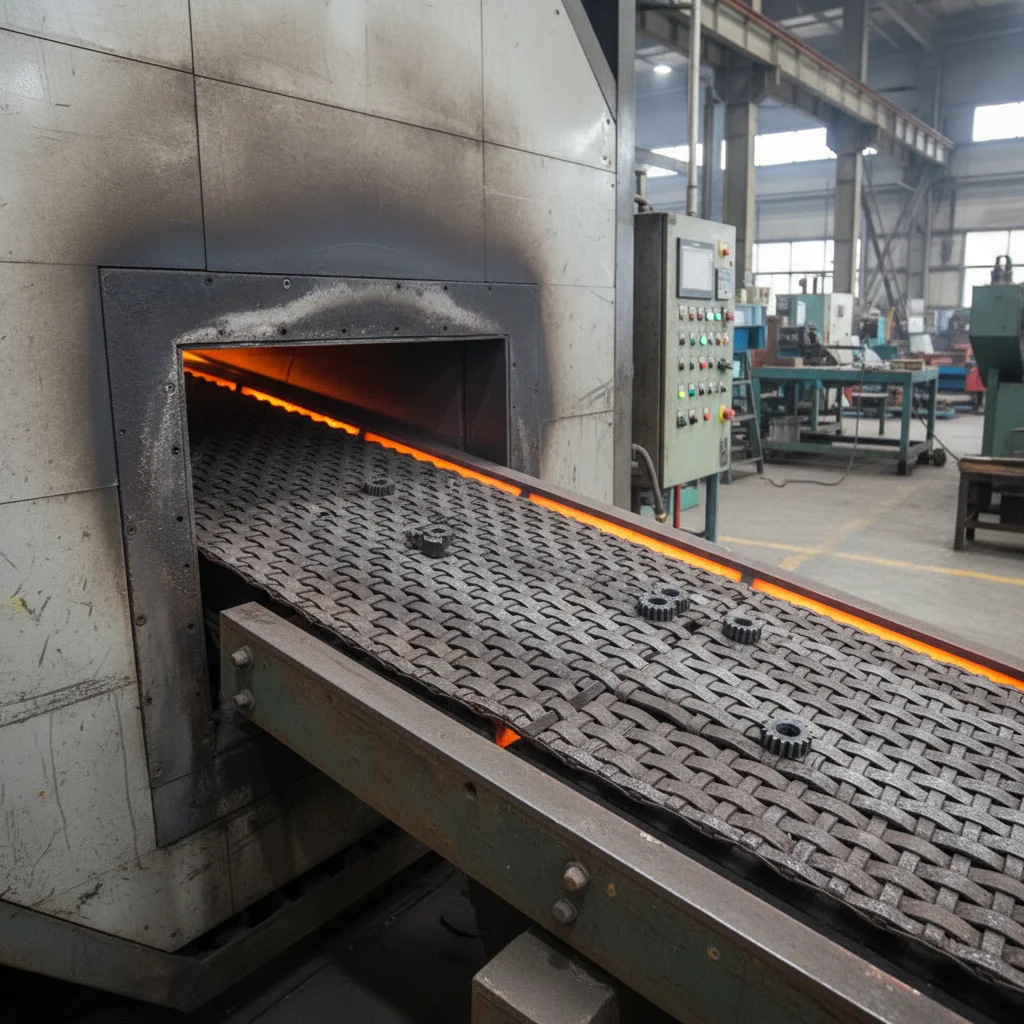 March 24, 2026Optimizing Sintering Processes with High Performance Sintering Furnace Mesh Belt SolutionsIn the realm of heat treatment processes, particularly sintering, the efficiency and reliability of the material handling system are crucial. A sintering furnace mesh belt plays a pivotal role in ensuring consistent product quality and maximizing throughput. This article will delve into the intricacies of these belts, exploring their construction, benefits, applications, maintenance, and future trends. We will also examine how selecting the right mesh belt can significantly impact your sintering process and overall operational costs. A high-quality belt means reduced downtime and a more consistent final product. A sintering furnace mesh belt is a continuous belt made of interwoven metal wires, designed to transport materials through a high-temperature sintering furnace. Sintering is a heat treatment process used to bond particles together without melting them, creating a solid mass. The mesh belt provides a stable and consistent surface for the parts to travel on, ensuring uniform heating and preventing damage. These belts are engineered to withstand extreme temperatures, resist oxidation, and maintain their shape under load.
-
 October 15, 2026High Quality Industrial Wholesale wire mesh belt SolutionsFor industrial operators managing high-temperature processing or food production lines, the choice of conveyor medium directly impacts thermal efficiency and hygiene standards. Flat Flex conveyor belts provide a specialized solution by combining a lightweight, single-layer construction with a positive drive mechanism. These systems are engineered to handle the rigorous demands of environments where corrosion resistance and high airflow are non-negotiable requirements. Utilizing high-grade stainless steel or spring wire, these belts offer an open area of up to 85, ensuring that whether you are frying, baking, or freezing, the product is exposed uniformly to the medium.
-
 June 20, 2026High Performance TunnelType Nickel Brazing Furnace mesh beltIn the modern landscape of industrial heating and food processing, the efficiency of heat transfer and material transport is paramount. The Tunnel-Type Nickel Brazing Furnace mesh belt represents a specialized engineering solution designed to handle rigorous thermal demands while maintaining structural integrity. By balancing strength with air permeability, these belts ensure that products move seamlessly through high-temperature zones without compromising quality. Global manufacturing standards, including those aligned with ISO quality management, increasingly demand equipment that reduces energy waste and enhances throughput. The implementation of a high-performance Tunnel-Type Nickel Brazing Furnace mesh belt allows operators to optimize oven temperatures and airflow
-
 June 13, 2026High Quality Silver sintering furnace mesh belt for ProductionOptimizing Production with Silver sintering furnace mesh belt In the high-precision world of electronic components and advanced metallurgy, the sintering process is critical for ensuring material density and conductivity. A high-quality Silver sintering furnace mesh belt serves as the backbone of this process, providing the necessary support and heat distribution to transport delicate parts through extreme temperatures. Choosing the right mesh belt not only prevents component deformation but also significantly extends the lifespan of the furnace equipment. In this comprehensive guide, we will explore the technical nuances, material requirements, and operational advantages of utilizing professional-grade mesh belts for silver sintering applications.
-
 April 23, 2026Industrial Balanced Weave Conveyor Belt for Stable Material TransportIn the demanding world of industrial heat treatment and food processing, the stability of material transport is paramount. A balanced weave conveyor belt serves as a critical engineering solution, designed specifically to eliminate the tracking issues and structural distortions common in standard mesh belts. By integrating a symmetrical weave pattern, these belts ensure a level distribution of tension, which is essential for maintaining high-throughput production lines without frequent downtime. Global manufacturing standards, particularly those aligned with ISO quality management, increasingly emphasize the reduction of mechanical waste and the optimization of energy efficiency.
Get Your Custom Solution
Facing challenges with high-temperature conveying? Contact us now.
Our engineers will provide you with expert product consultation and tailored solutions.
Sign up
for our Newsletter
Subscribe to the weekly newsletter for all the latest updates


