- Tel: +86 15252586600 / +86 13705250816
- Email: 527966138@qq.com / 1026520412@qq.com

High Precision Semiconductor Material Sintering Mesh Belt Guide
High Precision Semiconductor Material Sintering Mesh Belt Guide
Optimizing Production with Semiconductor Material Sintering Mesh Belt
In the precision-driven world of semiconductor fabrication, the stability and quality of sintering processes are critical to the final performance of electronic components. The Semiconductor Material Sintering Mesh Belt serves as the backbone of this high-temperature transport system, ensuring that delicate wafers and materials are moved uniformly through sintering furnaces without deformation or contamination. Achieving a perfect sinter requires a conveyor that can withstand extreme thermal stress while maintaining dimensional stability. This article explores the technical nuances, material benefits, and industrial applications of these specialized belts to help engineers optimize their production lines for maximum yield and reliability.

The Role of Semiconductor Material Sintering Mesh Belt in Thermal Processing
Sintering is a process of compacting and forming a solid mass of material by heat or pressure without melting it to the point of liquefaction. For semiconductor materials, this requires a conveyor system that is virtually inert. A high-quality Semiconductor Material Sintering Mesh Belt is engineered to provide a balanced surface that allows for optimal airflow and heat distribution. Unlike solid belts, the mesh structure prevents heat pockets from forming, ensuring that every part of the material reaches the required temperature simultaneously. This uniformity is essential for preventing internal stresses and cracks in the semiconductor substrate, which could otherwise lead to catastrophic device failure.
Technical Insight: The open-weave design of these mesh belts maximizes the exposure of the material to the furnace atmosphere, reducing the sintering cycle time and increasing throughput without compromising the crystalline structure of the material.
Material Selection for High-Temperature Sintering
Not all conveyor belts can handle the aggressive environments found in semiconductor plants. The choice of metal for the Semiconductor Material Sintering Mesh Belt usually falls between high-grade stainless steel and specialized nickel alloys. The primary requirement is oxidation resistance. At temperatures exceeding 800°C, standard steels would scale and contaminate the semiconductor material with metallic impurities. By utilizing alloys with high chromium and nickel content, the belts maintain their structural integrity and surface cleanliness over thousands of operating hours, ensuring that the purity levels required for chip manufacturing are strictly maintained.
Comparing Mesh Belt Technologies for Sintering
When selecting a belt, manufacturers must choose between different weave patterns and materials. While standard mesh is sufficient for general industrial use, semiconductor applications demand ultra-flatness and low friction. The comparison below highlights why a specialized Semiconductor Material Sintering Mesh Belt outperforms traditional conveyor options in precision environments.
Technical Specifications of the Sintering Mesh Belt
To ensure a seamless fit into existing furnace architectures, the Semiconductor Material Sintering Mesh Belt is available in various custom specifications. The focus is on balancing the wire diameter (for strength) with the mesh opening (for heat penetration). A tighter weave provides more support for smaller particles, while a wider weave is ideal for larger wafers to maximize airflow.

Maintenance and Longevity of Sintering Belts
Even the most durable Semiconductor Material Sintering Mesh Belt requires a disciplined maintenance schedule to prevent unplanned downtime. The primary enemies of these belts are mechanical tension imbalance and chemical buildup. Over time, the repetitive heating and cooling cycles can cause microscopic shifts in the weave. Regular tracking adjustments and the use of high-temperature lubricants on drive sprockets are essential. Furthermore, periodic cleaning to remove accumulated sintering residues prevents "hot spots" and ensures that the belt continues to provide uniform support across its entire width.
Impact of Belt Quality on Final Chip Yield
In the semiconductor industry, where a single micron of deviation can result in a defective chip, the quality of the conveyor belt is not a minor detail—it is a critical variable. A low-quality belt may suffer from longitudinal drift or surface irregularities, which cause the material to shift during the sintering phase. This shifting can lead to uneven densification of the material, creating internal voids or surface warpage. By investing in a precision-engineered Semiconductor Material Sintering Mesh Belt, manufacturers can significantly reduce their scrap rates and ensure consistent quality across every batch, directly impacting the bottom line profitability.
Conclusion: Enhancing Precision with High-Performance Belts
The precision of semiconductor manufacturing depends on the synergy between advanced furnaces and reliable transport systems. The Semiconductor Material Sintering Mesh Belt provides the necessary thermal stability, purity, and uniformity required to push the boundaries of electronic component performance. By selecting the right material and weave specifications, companies can ensure higher yields, lower contamination, and extended equipment life. When it comes to high-temperature sintering, the belt is not just a carrier—it is a critical component of the quality assurance process.
Frequently Asked Questions (FAQs)
How do I choose the right mesh size for my sintering process?
Choosing the correct mesh size depends primarily on the physical dimensions and weight of the material being sintered. For very small particles or thin films, a tighter weave is required to prevent the material from falling through the belt. For larger wafers, a wider mesh opening is preferred to maximize the flow of heated gases or vacuum suction, ensuring a more uniform temperature distribution. We recommend analyzing the material's minimum particle size and the required airflow rate of your furnace before selecting a specific aperture.
What materials are best for belts operating above 1000°C?
For operations exceeding 1000°C, standard 304 or 316 stainless steels are insufficient due to rapid oxidation and loss of tensile strength. Specialized alloys such as Inconel 600 or high-nickel alloys like Hastelloy are the industry standard. These materials are engineered specifically for high-temperature creep resistance and oxidation stability, ensuring that the Semiconductor Material Sintering Mesh Belt does not deform or contaminate the product at extreme temperatures.
How can I prevent the belt from tracking to one side?
Belt tracking issues are usually caused by uneven tension or misalignment of the drive rollers. To prevent this, ensure that the belt is tensioned equally on both sides using precision tensioners. Additionally, regularly check the rollers for any debris or sintering residue buildup, as even a small amount of material on a roller can change its effective diameter and push the belt off center. Installing automatic tracking sensors can also provide real-time corrections to maintain the belt's center line.
Does the mesh belt affect the sintering time?
Yes, the design of the mesh belt significantly impacts thermal efficiency. A belt with an optimized open-area ratio allows for faster heat transfer via convection and radiation to the bottom of the material. If a belt is too dense, it can act as a heat shield, slowing down the heating rate and increasing the overall cycle time. By using a precision-engineered mesh, you can achieve a more rapid and uniform thermal soak, which effectively reduces the total processing time per batch.
-
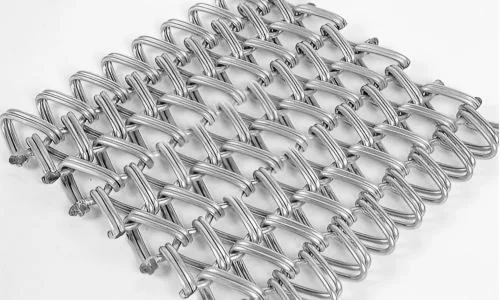 Double Balanced Weave Conveyor Belt
Double Wire Wrap Construction – Enhanced durability with interlocking spiral design……
-
 High Strength Rod Network Conveyor Belts China Factory SuppliersLooking for high-performance Rod Network Conveyor Belts? As leading China factory suppliers, we provide durable Flat Flex belts with 60 permeability and heat resistance up to 1200C for food and industrial use.
-
 Industrial Biscuit Baking Belts Factory High Quality Rolled Baking Band Suppliers in ChinaLooking for reliable Biscuit Baking Belt suppliers in China? Our factory provides premium Rolled Baking Bands and Z Belts designed for tunnel ovens. These stratified metal spiral belts offer low heat inertia and high strength for optimal industrial baking efficiency.
-
 Rod Network Conveyor Belts Factory China High Temperature Flat Flex Belt SuppliersLooking for high-performance Rod Network Conveyor Belts? As leading China suppliers and a professional factory, we provide Flat Flex belts with 1200C heat resistance and 30 percent higher tensile strength for industrial conveying.
-
 Heavy Duty Chain Driven Conveyor Belts China Factory and Mesh Belt SuppliersLooking for reliable China factory and suppliers of stainless steel chain link belts? We provide precision-driven, high-tensile, and corrosion-resistant solutions for heavy-duty industrial material handling.
-
 Balanced Weave Conveyor Belt China Factory High Temp Mesh SuppliersPremium Balanced Weave Conveyor Belts from a leading China factory. Our suppliers provide Direct Edge Welding for maximum structural integrity and U-Shaped Edge reinforcement to prevent spillage in high-heat environments.
-
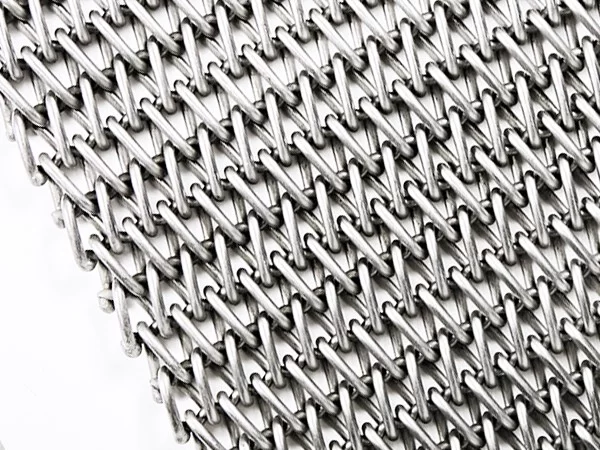 Wire Mesh Lehr Belts
Lehr Belts feature a balanced weave wire construction, composed of alternating right- and left-hand flattened spirals securely seated in crimped connector rods. The belt edges are welded to enhance durability and stability.
-
 SelfStacking Spiral Freezer Belts China Factory and Leading SuppliersLooking for high-efficiency Self-Stacking Spiral Freezer Belts? As leading China suppliers and a professional factory, we provide innovative self-supporting conveyor solutions that maximize vertical space, reduce energy costs, and ensure uniform freezing for food processing.
-
 May 25, 2026Industrial Precision Metal Sintering Mesh BeltIndustrial Precision Metal Sintering Mesh Belt Engineering Elevating mechanical transmission with world-class sintered metal mesh technology, designed for extreme temperatures and high-load industrial environments. 4200 Annual Output 164 Countries Served 6 Days Sample Lead Time 99.7 On-Time Delivery Redefining Industrial Transmission As a global leader in mechanical transmission components, our metal sintering Mesh Belt sets the gold standard for structural integrity and dimensional stability . By integrating advanced powder metallurgy, we provide solutions that outlast conventional woven belts in the most aggressive thermal environments. Our proprietary sintering process ensures that every metal sintering Mesh Belt possesses zero-stretch performance and unmatched corrosion resistance.
-
 November 10, 2026Wholesale Edge hooking mesh belt for Industrial Conveyor StabilityIn the high-precision world of mechanical transmission, the stability of belt edges often determines the overall efficiency of a conveyor system. For industries relying on continuous thermal processing or heavy-material transport, the demand for robust edge synchronization has led to a surge in the adoption of professional-grade components. Specifically, the search for Wholesale Edge hooking mesh belt solutions focuses on reducing slippage and ensuring linear precision during high-load cycles. The technical challenge lies in the interface between the mesh fabric and the drive mechanism. When edges fail to engage perfectly with sprocket wheels, the result is often belt misalignment
-
 August 10, 2026High Efficiency Industrial Flat Flex Conveyor Belt SolutionsIn the demanding world of industrial processing, the efficiency of material handling often determines the overall productivity of a production line. The Flat Flex Conveyor Belt has emerged as a critical component in this ecosystem, providing a balance of durability and flexibility that traditional belts cannot match. By utilizing a positive drive mechanism, these systems ensure that products move with precision, reducing downtime and increasing throughput across various manufacturing sectors. From a global industrial perspective, the need for hygienic and heat-resistant transport solutions has surged, particularly in the food and pharmaceutical industries.
-
 June 08, 2026High Efficiency Industrial Ceramic Sintering Mesh Belt SolutionsThe industrial landscape of high-temperature processing has been fundamentally transformed by the introduction of the Ceramic Sintering Mesh Belt , a critical component in the production of advanced ceramics and technical glass. As global demand for high-performance materials in aerospace, automotive, and medical sectors grows, the need for conveying systems that can withstand extreme thermal stress without compromising structural integrity has become paramount. Understanding the mechanics of these belts is essential for manufacturers aiming to optimize their throughput and ensure product consistency. Integrating a high-quality Ceramic Sintering Mesh Belt into a production line does more than just move materials
-
 June 25, 2026High Performance Compound Balanced Weave Conveyor Belt GuideIn the demanding world of industrial manufacturing, the precision and reliability of material handling systems are paramount. The compound balanced weave conveyor belt represents a pinnacle of engineering in mechanical transmission components, designed specifically to bridge the gap between high-density support and smooth material transit. By utilizing a complex interlocking structure, these belts ensure that even the smallest components are transported without risk of falling through the mesh. Globally, the demand for high-performance conveying solutions has surged as industries move toward greater automation and stricter quality control. From the delicate baking of biscuits to the rigorous heat treatment of powder metallurgy parts
-
 June 16, 2026High Performance Copper Brazing Furnace Mesh Belt SystemsThe efficiency of modern industrial thermal processing relies heavily on the precision and durability of its transport systems. A Copper Brazing Furnace Mesh Belt serves as the critical backbone in these environments, ensuring that components are moved through intense heat zones with absolute stability. By integrating high-performance chain links and precision-engineered edges, these systems minimize downtime and maximize throughput in demanding metallurgical applications. Globally, the demand for specialized conveyor components has surged as industries shift toward automation and tighter quality control. Whether in the automotive or electronics sector, the ability of a Copper Brazing Furnace Mesh Belt to maintain structural integrity
-
 June 11, 2026Heavy Duty Industrial Copper Brazed Wire Mesh Belt SolutionsIn the demanding landscape of modern industrial processing, the selection of a high-performance conveyor system is critical for maintaining operational efficiency and product quality. The copper brazed wire mesh belt , specifically when implemented as a heavy-duty Eye Link configuration, provides an unparalleled solution for environments that subject equipment to extreme heat and mechanical stress. By integrating advanced brazing techniques with robust material science, these belts ensure a seamless transition of materials across complex production lines. Globally, the shift toward automation in the general equipment manufacturing sector has highlighted the need for belts that offer both stability and customization.
-
 August 31, 2026High Temperature Industrial Mesh Belt Technical Selection GuideIndustrial material transport in high-temperature environments requires specialized conveyor solutions that can withstand extreme thermal stress without losing structural integrity. A high-performance mesh belt is engineered to facilitate the continuous movement of components through sintering, brazing, or drying processes, ensuring that materials are exposed to uniform heat. This article examines the technical specifications and selection criteria for these critical components in B2B manufacturing. The challenge for engineers lies in balancing porosity for airflow with the mechanical strength required to prevent elongation. In sectors such as powder metallurgy and electronics, the choice of belt construction whether spiral or rod-reinforced directly impacts production efficiency
Get Your Custom Solution
Facing challenges with high-temperature conveying? Contact us now.
Our engineers will provide you with expert product consultation and tailored solutions.
Sign up
for our Newsletter
Subscribe to the weekly newsletter for all the latest updates


