- Tel: +86 15252586600 / +86 13705250816
- Email: 527966138@qq.com / 1026520412@qq.com

High-Quality Custom Balanced Spiral Conveyor Belt Solutions for Modern Industrial Processing
High-Quality Custom Balanced Spiral Conveyor Belt Solutions for Modern Industrial Processing
As manufacturers seek more reliable continuous production, conveyor belt design is becoming an increasingly important part of industrial process optimization. A balanced spiral conveyor belt can support material transportation in applications where an open mesh structure, consistent product movement, and compatibility with specific processing conditions are required.
However, the right belt is not determined by its structure alone. Material selection, mesh geometry, operating temperature, load distribution, drive configuration, and maintenance requirements all influence its performance.
For equipment manufacturers, plant engineers, and industrial buyers, the challenge is to select a conveyor belt that fits the complete production process rather than simply replacing an existing component.

What Is Driving Demand for Better Conveyor Belt Solutions?
Continuous Production and Equipment Uptime
Manufacturers increasingly evaluate conveyor systems according to their contribution to overall production performance. A conveyor belt failure can interrupt upstream and downstream operations, making belt reliability, maintenance planning, and spare-parts availability important purchasing considerations.
In thermal processing, baking, cooling, and other continuous operations, the belt must work as part of an integrated system. Product loading, belt tracking, drive components, and operating conditions all influence performance.
This means buyers are moving beyond purchase price alone and considering the potential cost of unplanned downtime, replacement work, and production interruptions.
Space Efficiency and Process Integration
Industrial facilities often need to increase throughput without expanding their available floor space. In food processing, for example, spiral conveyor systems can move products through cooling, freezing, proofing, and other stages while making use of vertical space.
An April 2026 industry report from Frozen Food Europe, From Belt Design to System Integration, discusses how spiral belt systems are increasingly connected with airflow management, thermal consistency, and overall production-line reliability.
The important distinction is that a balanced spiral woven belt is not automatically the same as a specialized spiral-freezer belt. Buyers must confirm that the selected belt construction is compatible with the actual conveyor geometry, operating temperature, and intended process.
Thermal Performance and Energy Efficiency
For heating, annealing, cooling, and drying operations, conveyor belt construction can influence how process air, heat, or liquids interact with products.
Open mesh structures allow process media to pass through the carrying surface. However, the actual thermal performance depends on mesh opening, belt loading, airflow, product spacing, and equipment design.
As a result, industrial buyers should evaluate the belt and processing equipment together rather than assuming that a particular mesh pattern will automatically improve energy efficiency.
Customization and Lifecycle Support
Different production lines have different requirements for product size, load, temperature, belt width, and drive arrangements. Standard products may be suitable for common applications, while specialized equipment can require customized dimensions or construction details.
Buyers are also paying attention to support after installation, including tracking advice, maintenance recommendations, and replacement-part availability.
For manufacturers, the opportunity is not simply to supply a metal belt, but to help customers identify a suitable configuration for their operating environment.
How to Select the Right Balanced Spiral Conveyor Belt
A balanced spiral conveyor belt should be selected according to the production process, the conveyor system, and the material being transported. The following factors help buyers prepare a more accurate specification.
Define the Application First
Start by identifying the process in which the belt will operate. Common applications for balanced spiral woven belts include baking, heating, annealing, curing, cooling, coating, and drainage, subject to the specific belt construction.
The application determines the most important requirements. A belt used in a thermal process may require a different material from one operating in a wet cleaning environment. A line carrying small components may need a different mesh opening from one transporting larger products.
Confirm Material and Operating Conditions
Stainless steel is commonly used for metal conveyor belts, but the appropriate grade depends on the operating environment.
Before requesting a quotation, document:
Normal and peak operating temperatures
Furnace atmosphere or chemical exposure
Product weight and loading pattern
Conveyor speed and duty cycle
Cleaning requirements, where applicable
Expected operating and maintenance conditions
For high-temperature applications, material selection should account for temperature, atmosphere, thermal cycling, and mechanical loading together.
Select the Appropriate Mesh Structure
A balanced spiral woven belt generally consists of alternating left-hand and right-hand spiral coils connected by cross rods. This arrangement creates an open, flexible carrying surface.
Mesh opening, wire diameter, spiral pitch, and connecting-rod dimensions affect product support, flexibility, airflow, and mechanical behavior.
A larger opening may allow greater passage of air or liquid, but could be unsuitable for small components. A denser mesh may improve support for certain products, but its suitability depends on the required process flow and mechanical design.
Check Dimensions and Drive Compatibility
Confirm the required belt width, length, edge construction, connection details, and drive arrangement. The belt must be compatible with the conveyor's sprockets or rollers, support structure, and tensioning system.
If replacing an existing belt, provide a drawing, sample, or clear photographs of the current construction. Measurements should be checked against the equipment before the replacement is manufactured.
Evaluate Total Operating Cost
A low initial purchase price does not necessarily indicate the lowest lifecycle cost. Buyers should also consider expected service life, maintenance access, replacement time, technical support, and the consequences of production interruption.
When comparing suppliers, request clear specifications and ask how the proposed design addresses the operating conditions. A technically suitable belt is more valuable than an inexpensive product that does not match the application.
How Balanced Spiral Conveyor Belts Work
Alternating Spiral Construction
The defining feature of a balanced spiral conveyor belt is its alternating left-hand and right-hand spiral arrangement. Cross rods connect the spirals and help maintain the belt's structure across its width.
The balanced construction is designed to reduce the tendency toward lateral movement associated with some unbalanced belt arrangements. Nevertheless, actual tracking depends on the complete conveyor system, including alignment, tension, loading, support components, and drive design.
Open Mesh and Product Support
The open mesh structure provides spaces through which air, heat, and liquids can pass. This can be useful in applications involving heating, cooling, washing, drying, and drainage.
The appropriate mesh geometry must balance two requirements: allowing the necessary process flow while supporting the product securely.
For small parts, the opening should be evaluated against the smallest product dimension and the way items are positioned on the belt. For thermal applications, engineers should consider how mesh density and product loading affect the passage of process media.
Wire Dimensions and Mechanical Performance
Wire diameter and connecting-rod dimensions influence the belt's mechanical characteristics. The required construction depends on the load, belt width, operating speed, temperature, and conveyor geometry.
It is not advisable to select wire dimensions based on a generic specification alone. A manufacturer should review the actual operating conditions before confirming the design.
Edge Design and Drive Configuration
Belt edges may use different constructions according to the intended drive system and application. The choice can affect installation, tracking, wear, and compatibility with existing equipment.
Buyers should confirm the edge design and drive arrangement with the conveyor manufacturer or technical team. If the application involves unusual temperatures, heavy loads, or specialized conveying geometry, additional engineering review may be necessary.
How Yangzhou Jiaoyang Supports Industrial Belt Requirements
Yangzhou Jiaoyang Mesh Belt Manufacturing Co., Ltd. has long been engaged in high-temperature metal wire belt manufacturing. The company integrates research and development, production, sales, installation, recycling, and after-sales services.
Its stated product portfolio includes sintering furnace belts, brazing conveyor belts, heat treatment mesh belts, pyrolysis furnace mesh belts, flat wire belts, and flat flex belts. These products serve applications in powder metallurgy, electronics, building materials and glass, heat treatment, chemical fibers, catalysts, cleaning, and drying.
Manufacturing Equipment and Production Capability
According to company-provided information, its facilities include more than 30 fully automatic wire winding machines, CNC straightening machines, and intelligent embossing machines. The factory covers approximately 30 acres and has a modern production workshop staffed by 60 skilled operators.
This manufacturing infrastructure provides context for evaluating the company's metal wire belt production capabilities. The appropriate product and construction still need to be confirmed for each application.
Technical Review and Customization
For buyers considering a balanced spiral conveyor belt or a related metal mesh belt, the first step is to provide the actual process requirements.
These may include operating temperature, product dimensions, load distribution, belt width, mesh requirements, drive configuration, and installation constraints. Drawings or an existing belt sample can help clarify the required construction.
Yangzhou Jiaoyang can discuss the relevant requirements with customers and identify which products or configurations may be suitable. The exact availability of a balanced spiral belt, its technical specifications, and any customization options should be confirmed directly with the company before ordering.
Installation Guidance and After-Sales Support
A conveyor belt's performance depends on more than its manufacturing quality. Correct installation, alignment, tensioning, routine inspection, and maintenance also matter.
Yangzhou Jiaoyang emphasizes installation guidance, responsive technical support, maintenance advice, and the supply of compatible spare parts and accessories. These services are intended to help customers address operating issues and manage their conveyor belt investment over time.
The company also reports high-tech enterprise recognition and ISO 9001 management-system certification, with products exported to Southeast Asia, Europe, and other international markets. Buyers requiring certification documentation should request current certificates and verify their scope and validity.
Selecting a Belt for a Continuous Thermal Processing Line
The following is an illustrative engineering scenario, not a verified customer project completed by Yangzhou Jiaoyang.
The Production Challenge
Consider a manufacturer transporting metal components through a continuous heating and cooling process. The existing conveyor belt experiences irregular tracking and requires frequent inspection. The production team wants to improve conveying stability without making an unsuitable replacement based on dimensions alone.
The purchasing team needs to identify whether a balanced spiral woven belt is appropriate or whether another metal belt construction would better suit the application.
Step 1: Review the Operating Conditions
The engineering team documents the working temperature, furnace atmosphere, component dimensions, product weight, loading pattern, conveyor speed, and existing drive arrangement.
These details help determine the material requirements and establish whether the proposed belt construction is appropriate for the thermal and mechanical environment.
Step 2: Evaluate the Belt Construction
The team reviews the mesh opening, spiral-wire dimensions, cross rods, edge construction, and overall belt geometry.
If balanced spiral construction is being considered, the team checks whether it is compatible with the existing conveyor and whether the product can be supported securely throughout the process.
Step 3: Investigate the Tracking Problem
Rather than assuming that a new belt alone will solve the issue, the team checks conveyor alignment, tension, drive components, support wear, and load distribution.
This step is important because tracking problems may originate from the conveyor system rather than the belt construction itself.
Step 4: Confirm the Specification Before Ordering
The buyer provides drawings and operating information to the supplier for technical review. The final decision is based on material suitability, mechanical compatibility, maintenance requirements, and the intended production conditions.
The supplier should confirm the recommended construction and relevant specifications before manufacturing begins.
Expected Evaluation Criteria
The proposed solution can be assessed against practical operating indicators:
Whether the belt runs consistently under the specified load
Whether the construction is suitable for the actual temperature and atmosphere
Whether product support and process flow meet production requirements
Whether tracking and maintenance issues can be managed effectively
Whether installation, spare parts, and technical support are available
The value of this process is that it connects belt selection to measurable operating requirements rather than relying on broad claims about performance.
Frequently Asked Questions About Balanced Spiral Conveyor Belts
What is a balanced spiral conveyor belt used for?
Balanced spiral conveyor belts are used in suitable continuous processing applications, including heating, annealing, curing, cooling, baking, coating, and drainage. The exact applications depend on material, mesh construction, operating conditions, and conveyor design.
Is a balanced spiral conveyor belt suitable for high-temperature processing?
It may be suitable when the material grade and belt construction match the operating temperature, atmosphere, thermal cycle, and load. Buyers should obtain confirmation for their specific operating conditions before selecting a belt for high-temperature service.
How do I choose the right mesh opening?
Start with the dimensions and shape of the smallest product being conveyed, then consider the required airflow, drainage, and product-support conditions. The manufacturer should review these factors alongside wire dimensions and the intended application.
What information should I send when requesting a quotation?
Provide the application, operating temperature, product dimensions and weight, required belt width and length, mesh requirements, drive arrangement, order quantity, and delivery destination. Drawings, photographs, or an existing belt sample can help clarify the requirements.
Does Yangzhou Jiaoyang supply customized balanced spiral conveyor belts?
The company provides a range of metal wire belt products and related technical services. Buyers should contact Yangzhou Jiaoyang directly to confirm whether a specific balanced spiral belt construction is available and whether the required dimensions and technical features can be manufactured.

Discuss Your Industrial Conveyor Belt Requirements
A suitable balanced spiral conveyor belt must be selected according to the complete production process, including material requirements, mesh structure, mechanical loading, operating temperature, and drive configuration.
Yangzhou Jiaoyang Mesh Belt Manufacturing Co., Ltd. supports industrial customers with metal wire belt products, manufacturing capabilities, installation guidance, and after-sales services.
If you are planning a new conveying system or evaluating a replacement belt, prepare your equipment drawings and operating parameters before requesting a quotation. Contact Yangzhou Jiaoyang to discuss your application and confirm the most suitable available belt solution.
-
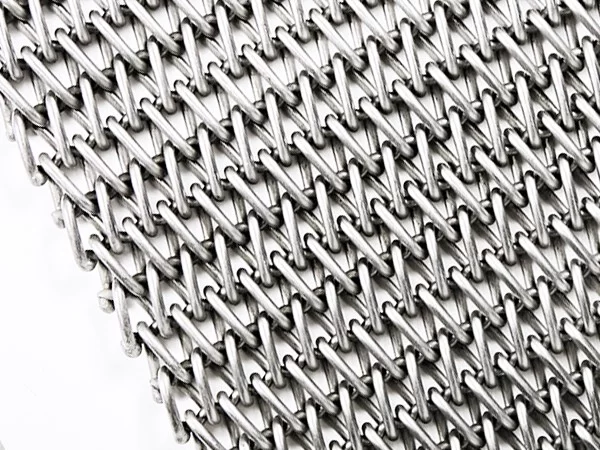 Wire Mesh Lehr Belts
Lehr Belts feature a balanced weave wire construction, composed of alternating right- and left-hand flattened spirals securely seated in crimped connector rods. The belt edges are welded to enhance durability and stability.
-
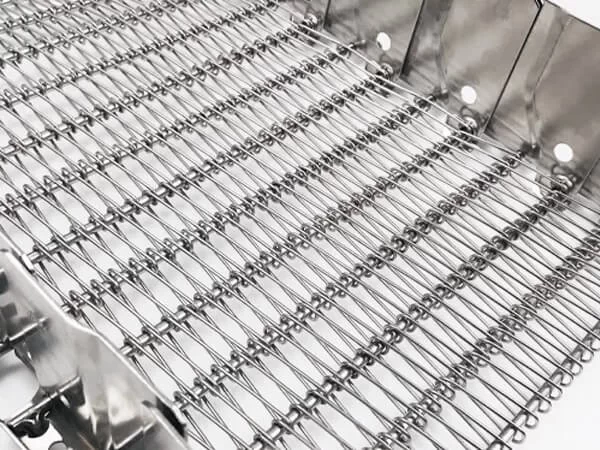 Self-Stacking Spiral Freezer Belts
Self-Stacking Spiral Freezer Belts are innovative conveyor solutions designed specifically for use in spiral freezers. With a unique stacking mechanism that eliminates the need for external support, these belts help maximize vertical space, reduce energy consumption, and improve overall freezing efficiency.
Engineered for high-performance food processing environments, these belts offer superior product handling, longer service life, and minimal maintenance — all while maintaining food quality and system hygiene.
-
 Flexible Rod Conveyor Belts China Suppliers Industrial Grid Link Belt FactoryHigh-performance Flexible Rod Conveyor Belts also known as Grid Link Conveyor Belts. Sourced from a leading China factory and trusted suppliers, these belts offer anti-deformation design and food-grade compliance for optimized cold chain logistics.
-
 Compound Balanced Weave Conveyor Belt Factory Leading China SuppliersPremium Compound Balanced Weave Belts with welded edge from a professional China factory. Our high-density mesh belts offer extreme heat stability and precision transport. Contact leading China suppliers for durable cordweave solutions.
-
 Industrial Biscuit Baking Belts Factory High Quality Rolled Baking Band Suppliers in ChinaLooking for reliable Biscuit Baking Belt suppliers in China? Our factory provides premium Rolled Baking Bands and Z Belts designed for tunnel ovens. These stratified metal spiral belts offer low heat inertia and high strength for optimal industrial baking efficiency.
-
 HighPerformance Plate Link Conveyor Belts China Suppliers and FactoryLooking for reliable Plate Link Conveyor Belt China suppliers? Our factory provides robust stainless steel belts driven by chains, ideal for heavy load applications in die-casting and forging. Experience smooth operation, easy installation, and long service life with our self-supporting industrial belts.
-
 Chain Link Conveyor Belt China Suppliers Industrial Mesh Belt FactoryLooking for high-quality Chain Link Conveyor Belts? As leading China suppliers and a professional factory, we provide economical stainless steel wire mesh belts ideal for light-duty drying and cooling applications. Durable, lightweight, and energy-efficient solutions for industrial conveying.
-
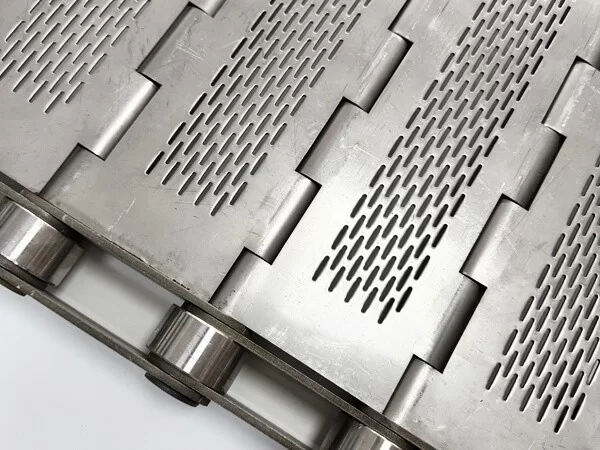 Plate Link Conveyor Belts
Plate Link Conveyor Belt is very strong, driven by stainless steel chain, made of stainless steel plate, and very suited to heavy load applications, running smoothly in the conveying process, easy to install and replace, and long in service life. Its self-supporting structure makes it be used over large widths without any support. PFM Screen’s Plate Link belt features an extremely robust design and high load capacity, making it the perfect choice for arduous engineering processes such as presswork, die-casting and forging.
-
 May 18, 2026High Performance Sintering Mesh Belt for Industrial FurnacesIn the demanding world of high-temperature industrial processing, the Sintering Mesh Belt stands as a critical component for ensuring operational stability and product quality. These specialized conveyor systems are engineered to withstand extreme thermal stress while maintaining dimensional stability, making them indispensable for powder metallurgy and advanced ceramics manufacturing. By providing a seamless transition of materials through sintering furnaces, they bridge the gap between raw compressed powder and high-performance finished components. The global shift toward precision engineering and the miniaturization of mechanical parts has placed an unprecedented premium on the reliability of heat-treatment equipment.
-
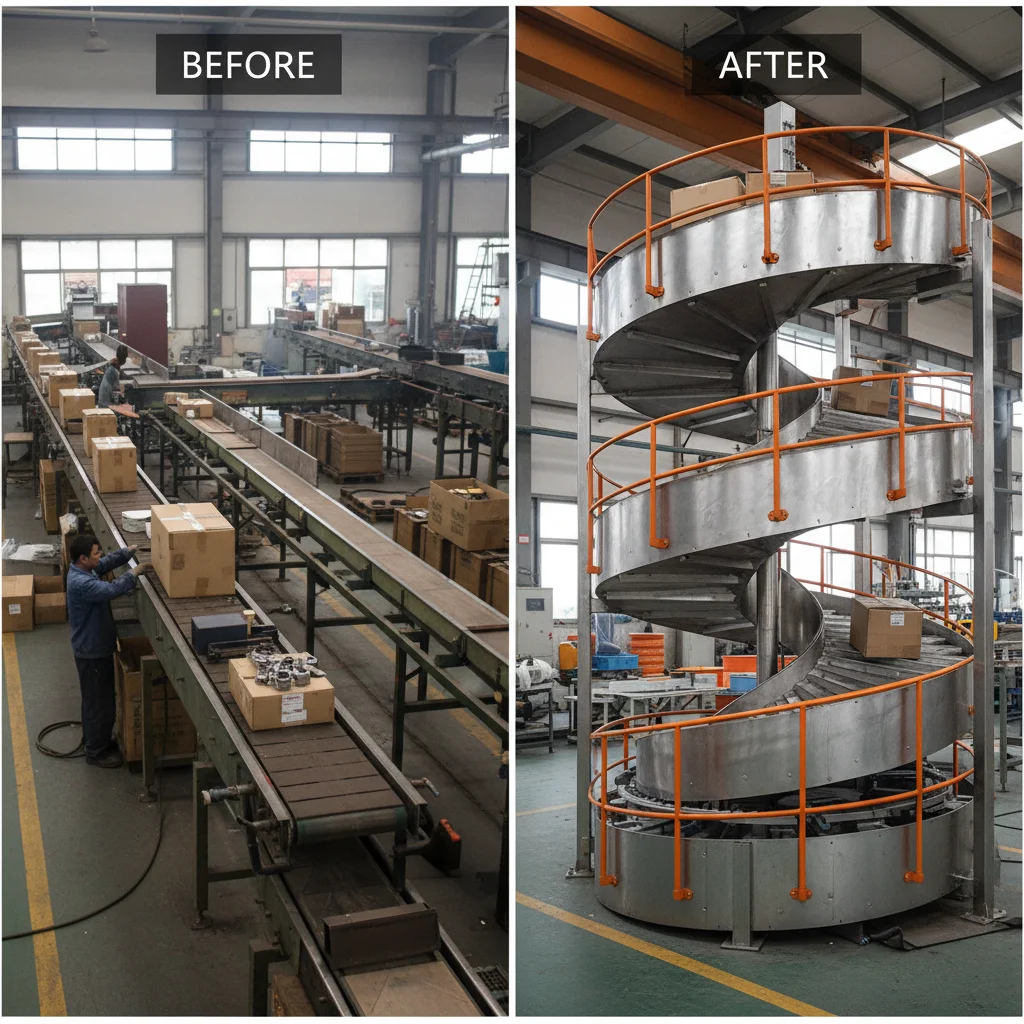 March 11, 2026Understanding the Benefits of the Balanced Spiral Conveyor Belt SystemIn the world of material handling, efficiency and reliability are paramount. The Balanced Spiral Conveyor Belt has emerged as a leading solution for vertical conveying, offering a compact design and consistent performance. This article will delve into the workings, benefits, applications, and specifications of this essential component in modern logistics and manufacturing. Whether you’re looking to optimize space, improve throughput, or reduce maintenance, understanding the nuances of balanced spiral conveyor belts is key. The balanced spiral conveyor belt uses a continuous belt arranged in a spiral pattern around a drum or series of drums. This configuration allows for a significant vertical lift in a relatively small footprint. The "balanced" aspect refers to the even distribution of weight around the spiral, minimizing stress on the belt and drive components. This ensures smoother operation, longer belt life, and reduced energy consumption. The belt is typically constructed from durable materials like polyester or nylon, reinforced with supporting elements to handle a variety of product loads. The system requires careful engineering to maintain belt tracking and prevent tilting or shifting of the conveyed materials.
-
 April 22, 2026Industrial Stainless steel conveyor belt for High EfficiencyIn the modern industrial landscape, the efficiency of material handling determines the overall productivity of a manufacturing line. The Stainless steel conveyor belt has emerged as a critical component in sectors requiring high hygiene, extreme temperature resistance, and unmatched durability. By integrating precision engineering with corrosion-resistant materials, these belts ensure that production flows remain uninterrupted even in the most demanding environments. Beyond simple transport, the adoption of a high-quality Stainless steel conveyor belt addresses the global shift toward automation and stricter sanitary regulations. Whether it is in food processing, pharmaceuticals, or heavy-duty metallurgy, the ability to withstand caustic cleaning agents
-
 June 15, 2026High Performance TunnelType Aluminum Brazing Furnace mesh beltIn the demanding landscape of high-temperature industrial processing, the Tunnel-Type Aluminum Brazing Furnace mesh belt stands as a critical component for ensuring structural precision and thermal efficiency. These specialized conveyor systems are engineered to transport delicate aluminum components through controlled heating zones, where precise brazing is essential for the integrity of the final product. By utilizing advanced compound weave structures, these belts mitigate the risks of deformation and material failure under extreme thermal stress. Globally, the push toward lightweight automotive heat exchangers and aerospace components has surged the demand for high-performance brazing solutions.
-
 June 10, 2026High Precision Brazing mesh belt for Industrial Thermal ProcessingThe industrial landscape of mechanical transmission is constantly evolving, with the demand for high-precision components reaching an all-time high. Among these, the Brazing mesh belt stands as a critical element in thermal processing and automated conveyor systems, ensuring that materials are transported with stability and precision under extreme conditions. Understanding the technical nuances of a Brazing mesh belt is essential for engineers and plant managers who seek to optimize throughput while maintaining strict quality control. From heat treatment to electronics soldering, the reliability of the conveyor determines the ultimate integrity of the finished product.
-
 September 10, 2026High Performance Battery production mesh belt for Thermal StabilityEnsuring thermal stability and precise transport is critical in the fabrication of high-energy storage components. When managing the delicate movement of electrodes or separators through curing and drying stages, the choice of conveyor architecture directly impacts yield and product consistency. High-performance metal wire belts, specifically those employing a rod network or flat flex structure, provide the necessary balance of structural rigidity and airflow permeability required for these sensitive processes. For engineers designing battery production lines, the primary challenge is mitigating mechanical stress while maintaining an environment that supports rapid heat transfer.
-
 October 01, 2026High Performance Wholesale Flat Flex Conveyor Belt GuideFlat flex conveyor belts represent a critical engineering solution for industrial processes requiring a balance between structural rigidity and flexible movement. These specialized metal mesh systems are designed to transport materials through extreme environments, such as high-temperature furnaces or chemically active zones, where traditional rubber or plastic belts would fail instantly. This article examines the technical specifications and procurement logic necessary for selecting high-performance metal conveying systems. In B2B industrial procurement, the choice of a conveyor system directly affects production uptime and product yield. For industries like powder metallurgy, electronics, and glass annealing, the belt is not merely a transport tool
-
 August 10, 2026High Efficiency Industrial Flat Flex Conveyor Belt SolutionsIn the demanding world of industrial processing, the efficiency of material handling often determines the overall productivity of a production line. The Flat Flex Conveyor Belt has emerged as a critical component in this ecosystem, providing a balance of durability and flexibility that traditional belts cannot match. By utilizing a positive drive mechanism, these systems ensure that products move with precision, reducing downtime and increasing throughput across various manufacturing sectors. From a global industrial perspective, the need for hygienic and heat-resistant transport solutions has surged, particularly in the food and pharmaceutical industries.
Get Your Custom Solution
Facing challenges with high-temperature conveying? Contact us now.
Our engineers will provide you with expert product consultation and tailored solutions.
Sign up
for our Newsletter
Subscribe to the weekly newsletter for all the latest updates


