- Tel: +86 15252586600 / +86 13705250816
- Email: 527966138@qq.com / 1026520412@qq.com

Industrial Metal Sintering Mesh Belt for High Temperature Heating
Industrial Metal Sintering Mesh Belt for High Temperature Heating
The Ultimate Guide to Metal Sintering Mesh Belt for Industrial Heating
In high-temperature industrial processing, the stability and durability of conveyor systems are non-negotiable. The metal sintering Mesh Belt has emerged as the gold standard for applications requiring extreme thermal resistance and structural integrity. Unlike traditional woven belts, sintered mesh provides a seamless, fused connection that eliminates the risk of fraying or breaking under intense heat. Whether you are operating in electronics manufacturing, aerospace, or chemical processing, understanding the nuances of this technology is key to optimizing your production line's efficiency and lifespan.

What is a Metal Sintering Mesh Belt and How It Works
A metal sintering Mesh Belt is manufactured using a powder metallurgy process where metal particles are compacted and heated (sintered) below their melting point. This process creates a rigid yet flexible structure with high porosity and exceptional strength. The resulting belt is characterized by its dimensional stability, meaning it does not stretch or shrink significantly even when exposed to rapid temperature fluctuations. This makes it an ideal choice for precision-driven industries where product alignment must be maintained throughout the heating or cooling cycle.
Technical Insight: Sintering ensures that the bonding occurs at a molecular level, providing far superior resistance to mechanical wear compared to standard welded mesh belts.
Key Advantages of Using Metal Sintering Mesh Belt
The primary appeal of the metal sintering Mesh Belt lies in its ability to withstand environments that would destroy conventional materials. Because it is typically crafted from high-grade stainless steel or nickel alloys, it offers exceptional corrosion resistance and oxidation stability. Furthermore, the precise mesh opening allows for uniform airflow and heat distribution, which is critical for drying or curing processes. This prevents "hot spots" on the product, ensuring a consistent finish and reducing waste in the production cycle.
Performance Benefits:
• High-temperature stability (up to 1100°C depending on alloy)
• Zero stretching or longitudinal deformation
• Superior resistance to chemicals and acids
• Low maintenance due to high wear resistance
Sintered Mesh vs. Woven Mesh: A Comparative Analysis
When deciding between a metal sintering Mesh Belt and a standard woven mesh, the decision usually comes down to the operating temperature and the required precision. Woven belts are flexible and cost-effective but can stretch over time, leading to tracking issues. Sintered belts, however, act as a monolithic structure. This structural rigidity eliminates the "creep" effect, ensuring that the belt stays centered on the rollers even after years of continuous operation in extreme heat.
Industrial Applications of the Metal Sintering Mesh Belt
The versatility of the metal sintering Mesh Belt makes it an indispensable tool across various sectors. In the electronics industry, these belts are used in reflow soldering ovens where precise temperature control is vital. In the food processing industry, their non-reactive surface ensures hygiene and safety during baking or roasting. Additionally, the aerospace sector utilizes sintered mesh for treating high-strength components that require uniform heat soaking without deformation. The ability to customize the pore size and material makes these belts adaptable to almost any high-heat environment.

Technical Specifications for Sintered Belts
Selecting the right metal sintering Mesh Belt requires a deep dive into the technical specifications. Factors such as wire diameter, mesh pitch, and alloy composition determine the belt's load-bearing capacity and thermal conductivity. For instance, 310S stainless steel is often chosen for its superior oxidation resistance at temperatures above 1000°C. Below is a general specification table for standard industrial sintered mesh belts:
Maintenance Tips for Prolonging Belt Life
While the metal sintering Mesh Belt is designed for extreme durability, a proactive maintenance schedule is essential for maximizing ROI. Regular inspection of the belt edges for any signs of mechanical wear or snagging is the first line of defense. Ensuring that the drive rollers are perfectly aligned prevents uneven tension, which could otherwise lead to premature fatigue. Additionally, cleaning the belt with appropriate industrial solvents removes residue that could cause "sticking" or contaminate the products being processed.
Conclusion: Choosing the Right Sintered Mesh for Your Business
Investing in a high-quality metal sintering Mesh Belt is more than just a hardware upgrade; it is a commitment to operational excellence. By eliminating the instabilities associated with traditional mesh, businesses can achieve higher throughput, better product quality, and significantly lower downtime. When choosing a provider, ensure they offer the specific alloy and precision tolerances required for your unique application. For industry-leading solutions in sintered conveyor technology, visit our experts today.
Frequently Asked Questions (FAQs)
How does a sintered belt differ from a welded belt?
A welded belt is joined at specific points using heat or electricity, which can create "weak spots" where the weld meets the base metal. In contrast, a metal sintering Mesh Belt is created through a fusion process that bonds the entire structure simultaneously. This results in a more uniform distribution of strength and significantly better resistance to thermal expansion and contraction, making it far more stable in high-heat environments.
Which material is best for high-temperature oxidation resistance?
For most standard industrial applications, SS304 is sufficient. However, for extreme heat (above 800°C), SS310S or nickel-based alloys like Inconel are highly recommended. These materials form a protective oxide layer that prevents the metal from scaling or degrading. Selecting the correct material for your metal sintering Mesh Belt is crucial for ensuring the belt doesn't become brittle over time.
Can sintered mesh belts be customized in size and aperture?
Absolutely. One of the greatest strengths of sintered technology is its customizability. Depending on the product being transported, you can specify the exact width, length, and pore size (aperture) to optimize airflow or support. Customization is often necessary for precision electronics or specialized chemical curing where the belt must act as a precise filter or support grid. You can consult with the specialists at jymeshbelt.com to determine the ideal specs for your machine.
How do I prevent the belt from slipping on the drive roller?
Slippage is typically caused by improper tension or contaminated rollers. To prevent this, we recommend regular cleaning of the drive rollers to remove oil or debris. Additionally, using a tensioning system that allows for slight adjustments as the belt settles in can be beneficial. Because the metal sintering Mesh Belt has high dimensional stability, once it is correctly tensioned and aligned, it should maintain a consistent grip much better than woven alternatives.
-
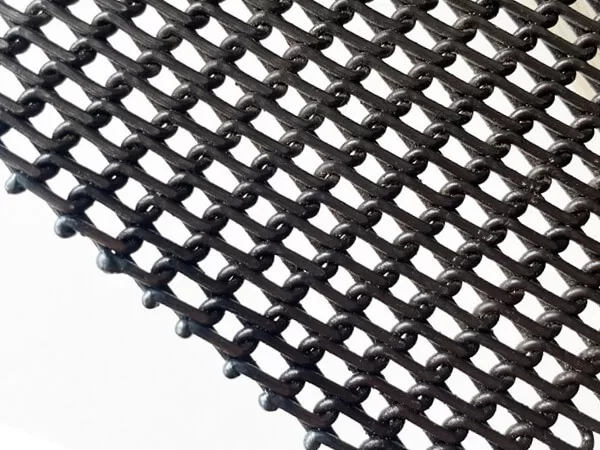 Biscuit Baking Belts | Rolled Baking Band
Biscuit Baking Belt also is known as Rolled Baking Band, Flat Rolled Baking Belt, Z Belts, Its name is based on the Z shape of the flattened spirals. The Biscuit Baking Belt is a highly usable conveyor belt for the bakery industry. The belt has been designed especially for baking biscuits directly on the belt in straight feed through ovens.
The Biscuit Baking Belt is a stratified metal spiral belt with a lightweight and a reduced thickness. Its design gives the belt low heat inertia, high strength, and good air circulation through the belt. This woven and stratified belt gives a superposition of the wires and an open mesh. The edges are looped.
-
 Flexible Rod Conveyor Belts China Suppliers Industrial Grid Link Belt FactoryHigh-performance Flexible Rod Conveyor Belts also known as Grid Link Conveyor Belts. Sourced from a leading China factory and trusted suppliers, these belts offer anti-deformation design and food-grade compliance for optimized cold chain logistics.
-
 Custom Industrial Stainless Steel Baskets China Factory and SuppliersHigh-performance industrial stainless steel baskets from a leading China factory. We offer personalized customization services for materials, styles, and mesh sizes to meet your exact needs. Contact the top suppliers for durable, corrosion-resistant solutions.
-
 Double Balanced Weave Conveyor Belt China Factory and SuppliersPremium Double Balanced Weave Conveyor Belts from a leading China factory. Featuring double wire wrap construction and interlocking spiral design for enhanced durability. Reliable suppliers of high-tensile industrial mesh belts for extreme temperatures.
-
 High Strength Rod Network Conveyor Belts China Factory SuppliersLooking for high-performance Rod Network Conveyor Belts? As leading China factory suppliers, we provide durable Flat Flex belts with 60 permeability and heat resistance up to 1200C for food and industrial use.
-
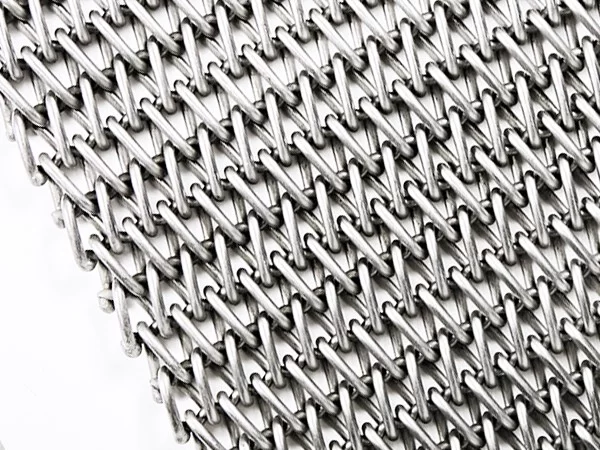 Wire Mesh Lehr Belts
Lehr Belts feature a balanced weave wire construction, composed of alternating right- and left-hand flattened spirals securely seated in crimped connector rods. The belt edges are welded to enhance durability and stability.
-
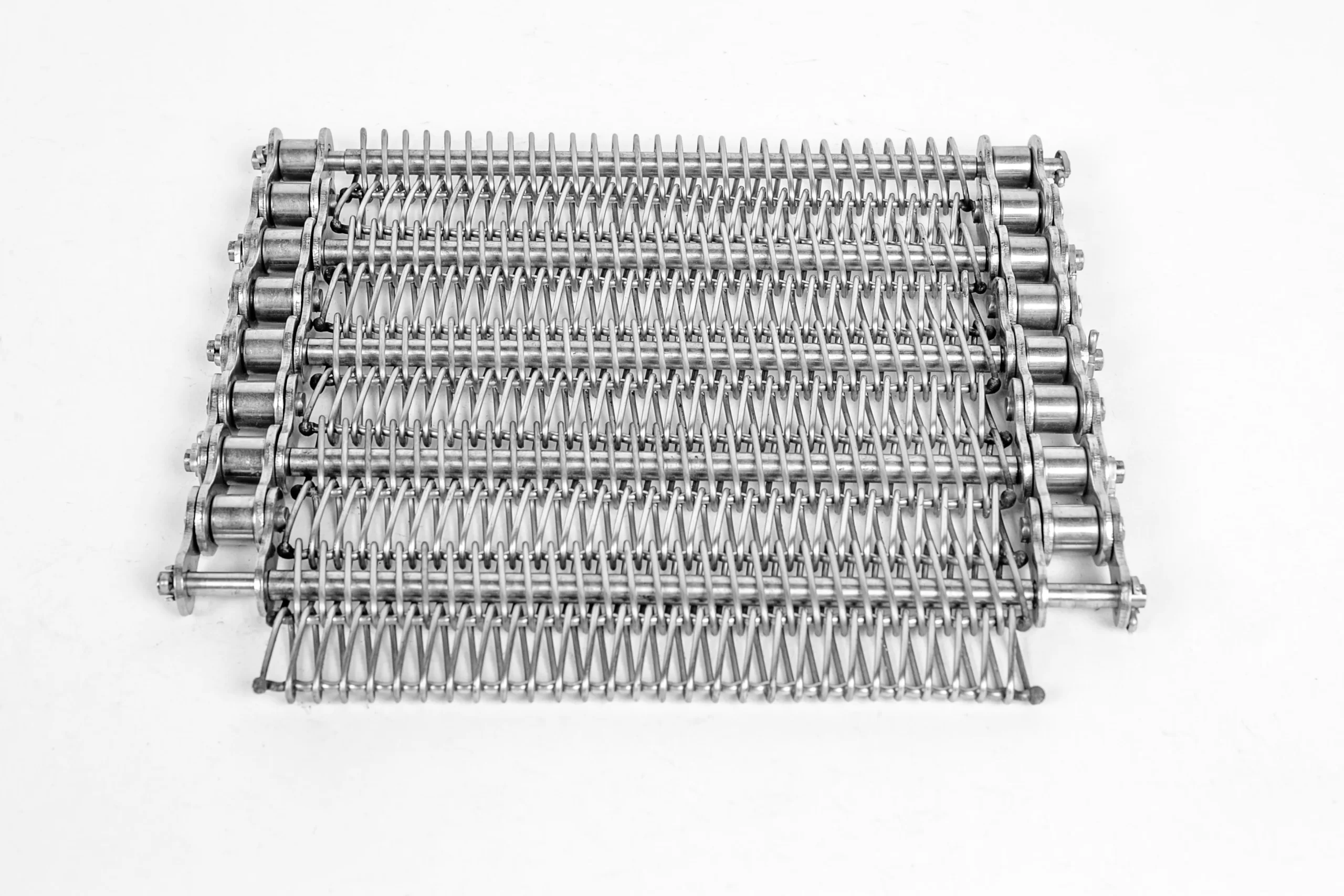 Chain Driven Conveyor Belts
Stainless steel chain link belt with precision-driven rollers
-
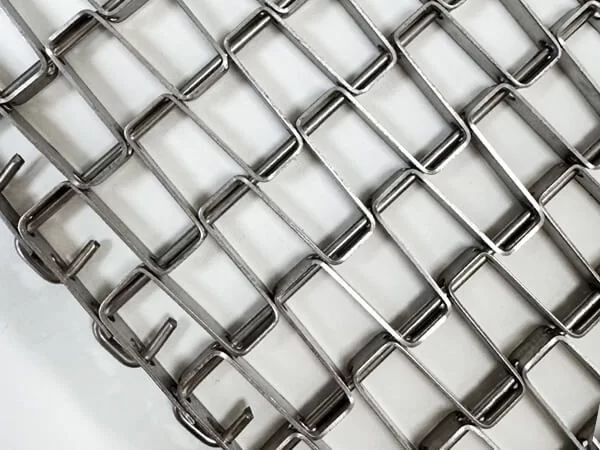 Honeycomb (Flat Wire) Conveyor Belts
Honeycomb conveyor belt, also called flat wire conveyor belt. The honeycomb belt is constructed of cross rods and a flat metal strip.
At the sides of the belt the cross rods have a welded ring (welded edges). In a number of dimensions it is possible to give the sides of the belt a clinged edge.
There are a number of predefined belt executions with different pitches and material dimensions. The belt can also be provided with side plates or flights. The flat wires are arranged in the form of lattice and jointed with the straight round rods. The material of flat wire belt are commonly high carbon steel, galvanized steel, stainless steel and other materials.
-
 November 09, 2026Sintering Furnace Mesh Belt for Powder Metallurgy: Industry Trends and Manufacturing Insights from PM CHINA 2026
Powder metallurgy continues to serve a wide range of industrial applications, from precision mechanical components to automotive parts, magnetic materials, and advanced manufacturing. As production requirements evolve, manufacturers increasingly need to consider not only the quality of the finished component but also the stability, consistency, and efficiency of the processes used to produce it.
-
 April 24, 2026Balanced Spiral Woven Conveyor Belt for Industrial Food ProcessingIn the high-stakes environment of industrial food processing and precision manufacturing, the efficiency of thermal treatment and cooling depends heavily on the reliability of the transport system. The Balanced Spiral Woven Conveyor Belt emerges as a critical engineering solution, designed to optimize vertical space while maintaining a steady, vibration-free flow of products. By blending structural stability with a woven architectural design, these belts allow industries to maximize throughput without expanding their physical plant footprint.
-
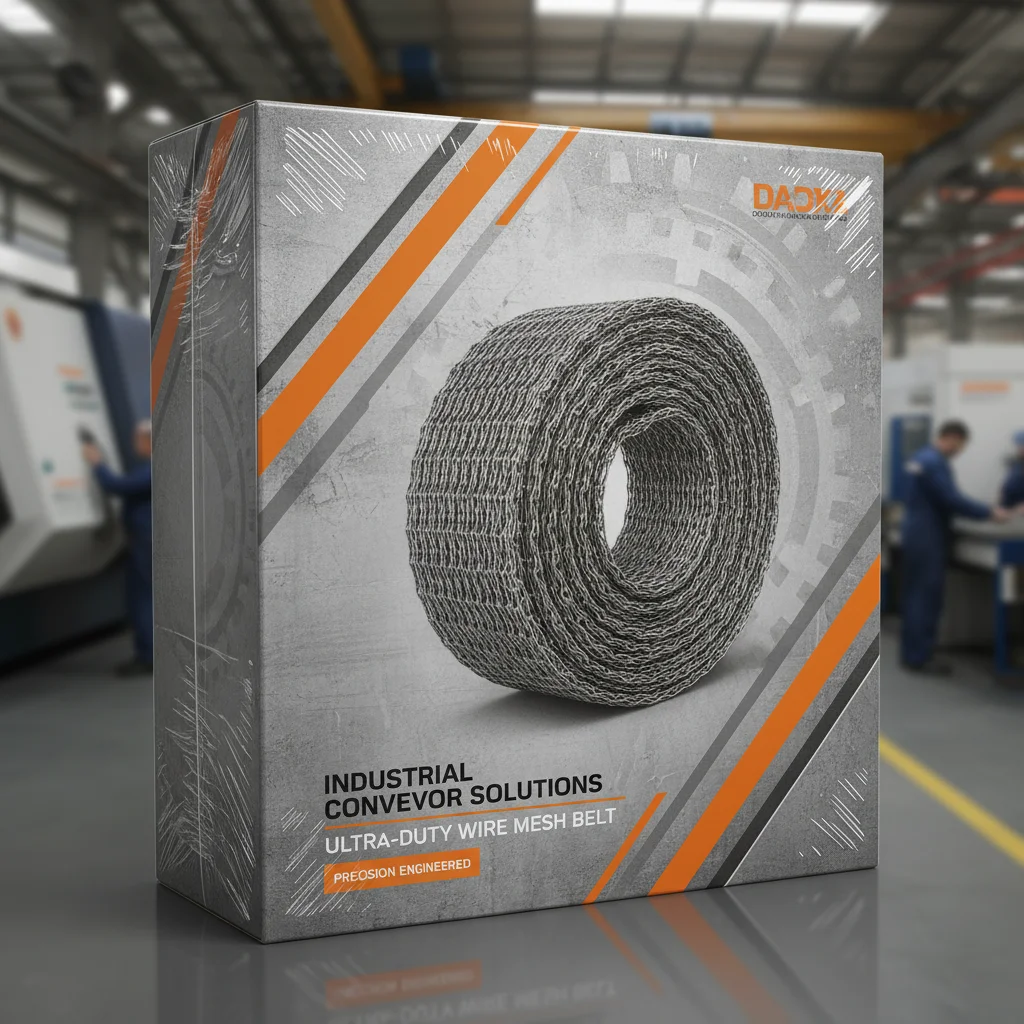 April 04, 2026Comprehensive Guide to Wire Mesh Belt Systems and Their ApplicationsIn numerous industries, efficient material handling is paramount. Wire mesh belts provide a robust and versatile solution for conveying a wide variety of products through various processes. This article delves into the world of wire mesh belts, covering their applications, benefits, types, and crucial considerations for selecting the right system for your specific needs. Whether you're involved in food processing, heat treatment, or any other industry requiring continuous conveying, understanding wire mesh belts is essential for optimizing your operations.
-
 May 18, 2026High Performance Sintering Mesh Belt for Industrial FurnacesIn the demanding world of high-temperature industrial processing, the Sintering Mesh Belt stands as a critical component for ensuring operational stability and product quality. These specialized conveyor systems are engineered to withstand extreme thermal stress while maintaining dimensional stability, making them indispensable for powder metallurgy and advanced ceramics manufacturing. By providing a seamless transition of materials through sintering furnaces, they bridge the gap between raw compressed powder and high-performance finished components. The global shift toward precision engineering and the miniaturization of mechanical parts has placed an unprecedented premium on the reliability of heat-treatment equipment.
-
 June 05, 2026Engineering Excellence In Precision Sintering Mesh BeltsEngineering Excellence In Precision Sintering Mesh Belts High-performance conveyor solutions for semiconductor materials, combining extreme thermal stability with unmatched dimensional precision for the most demanding sintering processes. 4200 Annual Output 165 Countries Served 6 Days Sample Lead Time 99.8 On-Time Delivery Advanced Solutions for Semiconductor Material Sintering As a global leader in mechanical transmission components, we provide the Semiconductor Material Sintering Mesh Belt designed for ultra-high temperature stability . Our belts are engineered to eliminate contamination and ensure uniform heat distribution in semiconductor wafer processing. Leveraging balanced weave technology , our Semiconductor Material Sintering Mesh Belt ensures straight-running tracking
-
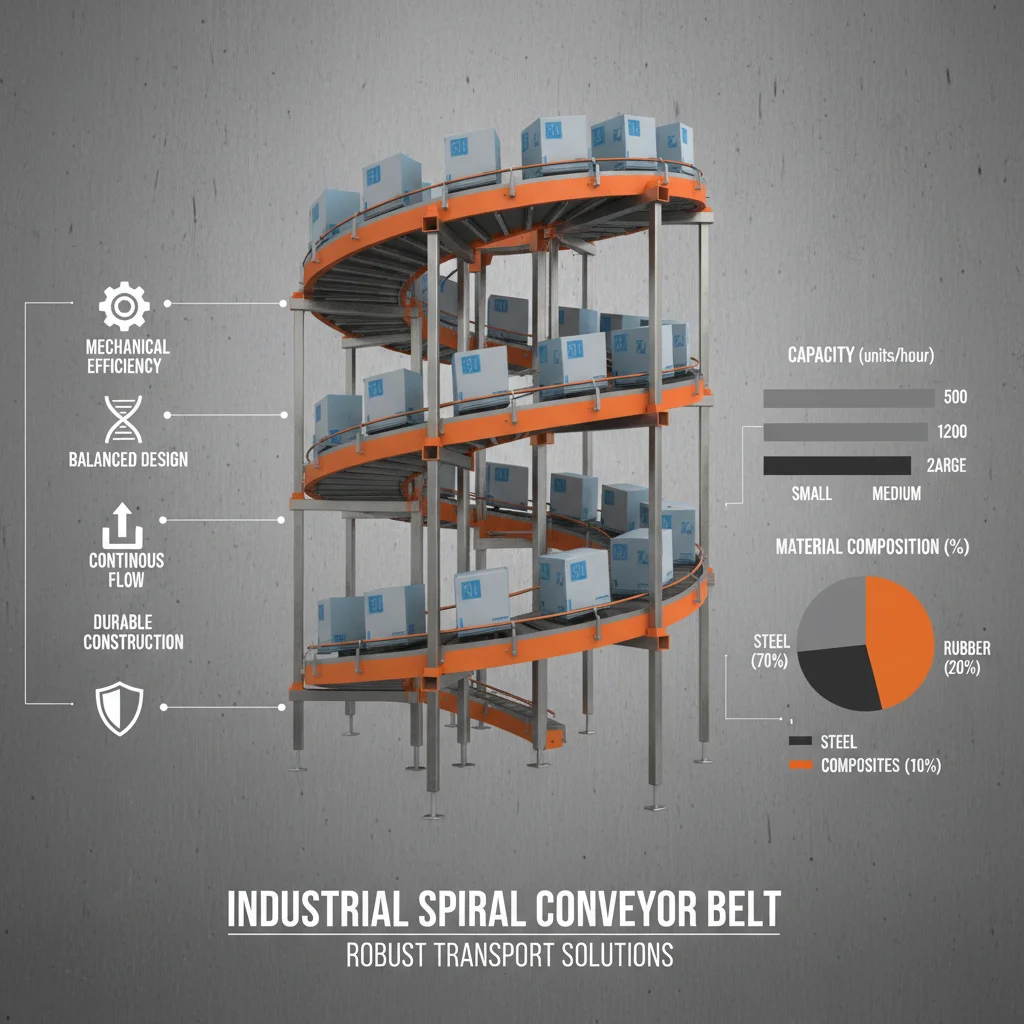 March 20, 2026Engineered For Precision Driving Your Success With ReliabilityWe specialize in the manufacture of high-quality balanced spiral conveyor belts, delivering exceptional performance and durability for a wide range of industrial applications. Our balanced spiral conveyor belts are renowned for their superior strength, stability, and longevity. We are a leading manufacturer serving diverse industries worldwide. As a premier manufacturer, we’ve established ourselves as a trusted source for high-performance balanced spiral conveyor belts. Our commitment to innovation and quality ensures that our belts consistently exceed customer expectations in demanding applications. Our technology offers unparalleled performance and efficiency.
-
 October 28, 2026High Quality Wholesale balanced weave conveyor belt for IndustryWhen optimizing a high-temperature production line, the choice of conveyor surface often determines the balance between throughput and product integrity. For industries dealing with sintering or heat treatment, a standard belt often fails to provide the necessary structural stability and airflow required for uniform processing. The shift toward specialized mesh structures has led to the increased adoption of balanced weave patterns. These belts are specifically engineered to maintain a flat profile under tension, preventing the bowing effect common in simpler weaves, which is critical for maintaining precise contact in industrial furnaces.
-
 June 01, 2026High Quality OilImpregnated Bearing Sintering Furnace Mesh BeltThe Oil-Impregnated Bearing Sintering Furnace Mesh Belt represents a critical intersection of metallurgical precision and material handling efficiency. In the demanding environment of powder metallurgy, where sintered components must be infused with lubricants to ensure lifelong performance, the conveyor system is not merely a transport mechanism but a functional part of the chemical process. By providing a stable, heat-resistant, and chemically inert platform, these mesh belts ensure that oil impregnation is uniform and efficient across thousands of units. Globally, the push toward high-precision automotive and industrial machinery has increased the demand for self-lubricating bearings.
Get Your Custom Solution
Facing challenges with high-temperature conveying? Contact us now.
Our engineers will provide you with expert product consultation and tailored solutions.
Sign up
for our Newsletter
Subscribe to the weekly newsletter for all the latest updates


