- Tel: +86 15252586600 / +86 13705250816
- Email: 527966138@qq.com / 1026520412@qq.com

Rod Network Conveyor Belts: Integration and Maintenance FAQ
Rod Network Conveyor Belts: Integration and Maintenance FAQ
Answers for buyers planning to integrate Rod Network Conveyor Belts into cooling, baking, drying, food processing, pharmaceutical processing, or industrial heat-treatment lines. Covers belt structure, airflow, materials, tracking, cleaning, and the details to prepare for a tailored belt request.

Rod Network Conveyor Belts, also called Flat Flex Conveyor Belts, are built from spiral wires in a cross-woven, Y-shaped wave structure. The rhombus or hexagonal mesh provides an open conveying surface for processes that need airflow, including cooling, baking, frying, and drying. The High Strength Rod Network Conveyor Belts product page lists stainless steel 304, 316, 310S, and Inconel material options.
How do Rod Network Conveyor Belts fit into a production line?
Plan the belt around the process conditions and the conveyor's tracking arrangement. The belt is intended for high-temperature, heavy-load, and precision conveying scenarios, with applications including industrial heat treatment and food processing. Its open area is listed as at least 60%, which supports air movement through the product bed during cooling, baking, frying, or drying.
For an integration request, send the process temperature, conveyed product, belt dimensions, line layout, and operating load. The supplier can then match the mesh size and alloy specification to the application. The product is available with tailored mesh sizes and specific alloy specifications.
Which material should be selected for a Rod Network Conveyor Belt?
The material depends on the operating environment. Stainless steel 304, 316, and 310S are listed options for the belt. Inconel is listed as a special alloy for high-temperature use, with a maximum temperature of up to 1200°C when Inconel is used.
A buyer planning a heat-treatment line should provide the actual operating temperature and the temperature profile through the conveyor. A food or pharmaceutical processor should also describe the product and cleaning routine so the belt surface and alloy can be reviewed for the line. The product surface has low adhesion and is easy to clean.
How does the belt support tracking during operation?
The Y-wave structure is designed to disperse mechanical stress, while the product description identifies enhanced track stability and a reduced risk of belt deviation. Smooth sprocket engagement and low-friction transmission are also described as contributors to quieter operation.
During integration, check the conveyor's sprocket arrangement, belt path, available clearance, and loading pattern. These details help the supplier review how the belt will run through the line instead of treating the belt as an isolated replacement part.
What cleaning methods are suitable for this belt?
The belt supports high-pressure water jetting and ultrasonic cleaning. Its smooth surface has low adhesion and is easy to clean, which can reduce adhesion from sticky resins or food during routine cleaning.
For a food or pharmaceutical line, map the cleaning method to the conveyed material and the equipment layout. The request should include the cleaning medium, cleaning frequency, and areas where residue accumulates. This gives the supplier the information needed to discuss the belt surface and material choice for the application.
What should be included in a replacement or maintenance request?
Include the existing belt dimensions, mesh structure, material, operating temperature, conveyor layout, sprocket arrangement, product being conveyed, and the maintenance issue. For a belt replacement, photos of the belt and sprockets can help identify the current arrangement, while the line drawing can show clearances and belt travel direction.
Send those details together with the required quantity and installation timing to Yangzhou Jiaoyang Mesh Belt Manufacturing Co., Ltd. when requesting a belt review or quotation.
The people

About the author
The company
Yangzhou Jiaoyang Mesh Belt Manufacturing Co., Ltd.
Yangzhou Jiaoyang Mesh Belt Manufacturing Co., Ltd. has been deeply engaged in the manufacturing of high-temperature metal wire belts for many years. It is an industry-leading enterprise integrating R&D, production, sales, installation, recycling, and after-sales services. Its core products include sintering furnace belt, brazing conveyor belt, heat treatment mesh belt, pyrolysis furnace mesh belt, flat wire belt, flat flex belt, etc.…
About Us ↗Visit company website ↗Your next step
Bring your brief. Start a useful conversation.
Use case, specification, quantity and delivery window: make the next conversation specific.
-
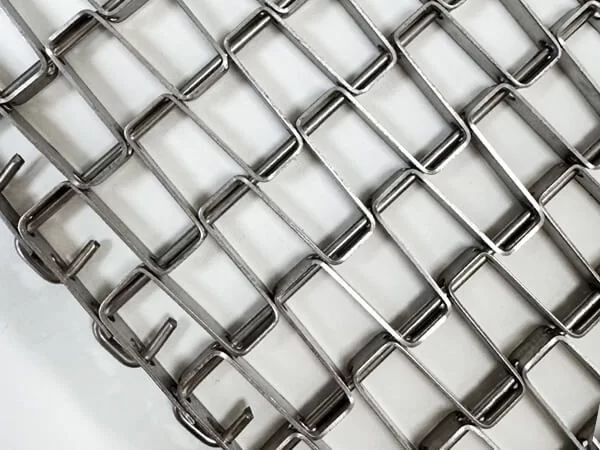 Honeycomb (Flat Wire) Conveyor Belts
Honeycomb conveyor belt, also called flat wire conveyor belt. The honeycomb belt is constructed of cross rods and a flat metal strip.
At the sides of the belt the cross rods have a welded ring (welded edges). In a number of dimensions it is possible to give the sides of the belt a clinged edge.
There are a number of predefined belt executions with different pitches and material dimensions. The belt can also be provided with side plates or flights. The flat wires are arranged in the form of lattice and jointed with the straight round rods. The material of flat wire belt are commonly high carbon steel, galvanized steel, stainless steel and other materials.
-
 HighPerformance Plate Link Conveyor Belts China Suppliers and FactoryLooking for reliable Plate Link Conveyor Belt China suppliers? Our factory provides robust stainless steel belts driven by chains, ideal for heavy load applications in die-casting and forging. Experience smooth operation, easy installation, and long service life with our self-supporting industrial belts.
-
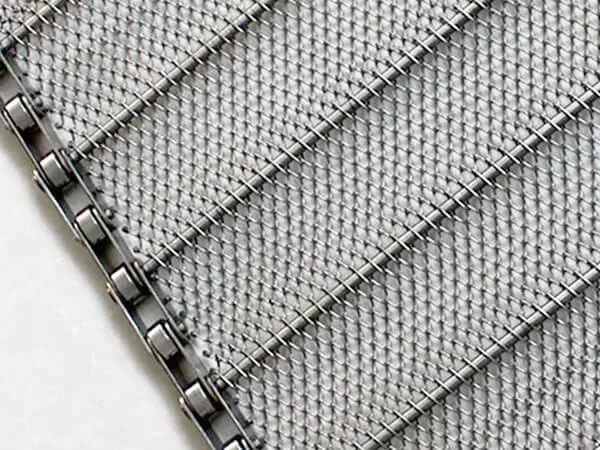 Chain Link Conveyor Belts
Chain Link Conveyor Belt, also known as stainless steel wire mesh belt or conventional mesh belt, features a simple design with interwoven spiral coils creating an open mesh. Available with knuckled or welded edges, PFM Screen’s Chain Link belt is an economical and lightweight solution for low load conveying, ideal for light-duty drying and cooling applications. With its large open area, it is perfect for energy-efficient processes like drying, cooling, and heating.
-
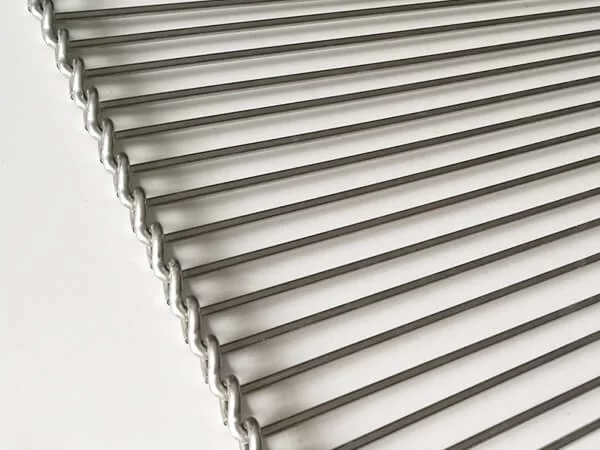 Ladder Conveyor Belts
Ladder Conveyor Belt is a simple but effective style of conveyor belt, generally used belt for common processes and common product loads. Its open design provides efficient operation with minimum maintenance as well as facilitating easy and thorough cleaning. Its lightweight and basic configuration make it a very economic and cost-effective style of belting for many different environments. The ladder belts are used in production processes with temperatures of -100ºC to +450ºC in food and other industries.
-
 Flat Flex Conveyor Belts China Factory Industrial Mesh Belt SuppliersHigh-performance Flat Flex Conveyor Belts from a leading China factory. Also known as Enrober or Rod Network belts, our lightweight mesh design reduces costs and downtime. Contact professional suppliers for HACCP-compliant, durable industrial solutions.
-
 High Strength Rod Network Conveyor Belts | Leading China Factory SuppliersLooking for high-performance Flat Flex belts? Our China factory provides premium Rod Network Conveyor Belts with 60 permeability and heat resistance up to 1200C. Contact the top industrial suppliers for durable food and pharmaceutical processing solutions.
-
 Flexible Rod Conveyor Belts China Suppliers Industrial Grid Link Belt FactoryHigh-performance Flexible Rod Conveyor Belts also known as Grid Link Conveyor Belts. Sourced from a leading China factory and trusted suppliers, these belts offer anti-deformation design and food-grade compliance for optimized cold chain logistics.
-
 Double Balanced Weave Conveyor Belt China Factory and SuppliersPremium Double Balanced Weave Conveyor Belts from a leading China factory. Featuring double wire wrap construction and interlocking spiral design for enhanced durability. Reliable suppliers of high-tensile industrial mesh belts for extreme temperatures.
-
 November 04, 2026Custom Brazing Furnace Belt Supplier for Reliable High-Temperature Industrial Processing
Brazing is widely used to join metal components in automotive manufacturing, heat exchangers, electrical equipment, HVAC systems, and precision engineering.
-
 October 23, 2026Choosing a Rod Network Conveyor Belts Manufacturer: Flexible Rod Grid Link Belts, Opening Size, Wire Diameter and ApplicationA buyer-focused guide for procurement teams comparing rod-type metal conveyor belts from Yangzhou Jiaoyang Mesh Belt Manufacturing Co., Ltd. It explains how flexible rod (grid link) belts, flat flex belts (which the manufacturer also calls Rod Network belts) and chain link belts differ in construction, drive, routing and application, which dimensions are published, and which parameters such as opening size and wire diameter must be confirmed in the inquiry before ordering.
-
 May 25, 2026Industrial Precision Metal Sintering Mesh BeltIndustrial Precision Metal Sintering Mesh Belt Engineering Elevating mechanical transmission with world-class sintered metal mesh technology, designed for extreme temperatures and high-load industrial environments. 4200 Annual Output 164 Countries Served 6 Days Sample Lead Time 99.7 On-Time Delivery Redefining Industrial Transmission As a global leader in mechanical transmission components, our metal sintering Mesh Belt sets the gold standard for structural integrity and dimensional stability . By integrating advanced powder metallurgy, we provide solutions that outlast conventional woven belts in the most aggressive thermal environments. Our proprietary sintering process ensures that every metal sintering Mesh Belt possesses zero-stretch performance and unmatched corrosion resistance.
-
 June 26, 2026Industrial Guide to High Performance Dense Mesh BeltsThe Essential Guide to Dense Mesh Belts in Industrial Conveying In the demanding world of high-temperature manufacturing and precision transport, selecting the right conveyor medium is critical for operational efficiency. Dense Mesh Belts provide a sophisticated solution for industries that require a stable, smooth, and heat-resistant surface for transporting delicate or small-scale components. Whether utilized in glass annealing or specialized chemical processing, these belts are engineered to minimize product tipping and maximize throughput. This guide explores the technical superiority and strategic advantages of integrating high-density mesh solutions into your production line.
-
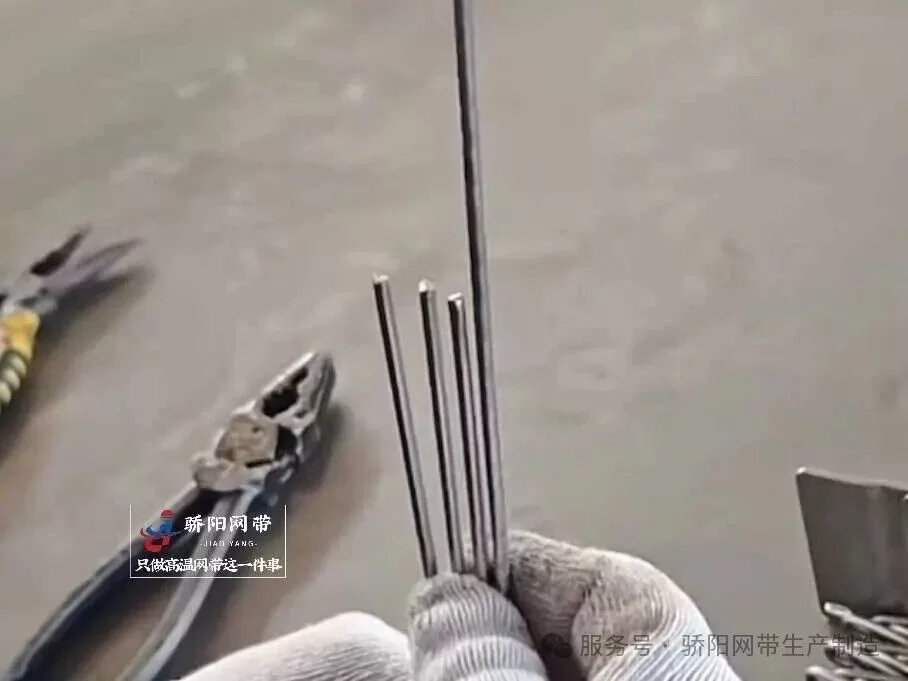 December 01, 2025How To Accurately Connect The Herringbone Mesh Belt And Blocking Plate?
In industries such as heat treatment, catalysts, and food baking, herringbone mesh belts with blocking plates are used to ensure a smooth surface and prevent material leakage.
-
 April 22, 2026Industrial Stainless steel conveyor belt for High EfficiencyIn the modern industrial landscape, the efficiency of material handling determines the overall productivity of a manufacturing line. The Stainless steel conveyor belt has emerged as a critical component in sectors requiring high hygiene, extreme temperature resistance, and unmatched durability. By integrating precision engineering with corrosion-resistant materials, these belts ensure that production flows remain uninterrupted even in the most demanding environments. Beyond simple transport, the adoption of a high-quality Stainless steel conveyor belt addresses the global shift toward automation and stricter sanitary regulations. Whether it is in food processing, pharmaceuticals, or heavy-duty metallurgy, the ability to withstand caustic cleaning agents
-
 August 14, 2026High Precision Sintering furnace mesh belt for Industrial HeatIn the demanding realm of industrial heat treatment and material processing, the efficiency of transport systems can dictate the entire quality of the final product. A Sintering furnace mesh belt serves as the critical interface between the heating environment and the industrial components being processed, ensuring that materials move steadily and uniformly through extreme thermal zones. By utilizing high-precision engineering, these belts prevent the bottlenecks often associated with traditional conveyor systems in high-heat settings. The global shift toward automation and higher precision in metallurgy and chemical processing has placed a spotlight on the structural integrity of conveyor components.
-
 September 16, 2026High Quality Wholesale Balanced Spiral Conveyor Belt SystemsIndustrial material handling requires a delicate balance between structural rigidity and fluid movement, especially when transporting heavy components through complex production stages. For operations needing high-precision positioning and robust conveying capabilities, the Plate Link system offers a sophisticated alternative to standard mesh. By utilizing a hinged slat design, these belts provide exceptional stability and strength, ensuring that materials remain secure even in challenging environments. Whether you are optimizing a pharmaceutical sorting line or an automotive assembly plant, the ability to customize plate height and thickness is critical for aligning the conveyor with existing machinery.
Get Your Custom Solution
Facing challenges with high-temperature conveying? Contact us now.
Our engineers will provide you with expert product consultation and tailored solutions.
Sign up
for our Newsletter
Subscribe to the weekly newsletter for all the latest updates


