- Tel: +86 15252586600 / +86 13705250816
- Email: 527966138@qq.com / 1026520412@qq.com

Compound Balanced Weave Belt for Powder Metallurgy: Industry Insights from PM CHINA 2026
Compound Balanced Weave Belt for Powder Metallurgy: Industry Insights from PM CHINA 2026
Powder metallurgy is an important manufacturing process for producing precision metal components used in automotive systems, industrial machinery, electrical equipment, and other engineered products. As manufacturers seek greater process consistency and production efficiency, the reliability of equipment used in material handling and thermal processing becomes increasingly important.
At the 18th China International Exhibition for Powder Metallurgy & Cemented Carbides, known as PM CHINA 2026, industry professionals gathered to explore developments across powder metallurgy, cemented carbide, advanced materials, processing equipment, and related manufacturing technologies. The exhibition took place from March 24 to 26, 2026, at the National Exhibition and Convention Center in Shanghai.
For manufacturers involved in industrial conveying, this industry context highlights an important consideration: conveyor components must be selected according to the requirements of the production process, not simply by their product category.
A Compound Balanced Weave Belt is one metal mesh belt construction worth evaluating for applications that require relatively close product support and reliable conveying under defined operating conditions. Its suitability depends on the workpiece, belt design, operating environment, and compatibility with the conveyor system.
Learn more about the exhibition through the official PM CHINA website: https://www.pmexchina.com/

Why Conveyor Belt Selection Matters in Powder Metallurgy
Powder metallurgy production can involve several stages, including powder preparation, forming, sintering, cooling, finishing, and inspection. Depending on the production line, metal mesh conveyor belts may be used to transport components through heating, cooling, drying, or other continuous-processing operations.
The operating requirements vary, but several engineering considerations are common.
Workpiece support and positioning
Small metal components may require a mesh surface that limits the risk of falling through openings or becoming caught in the belt. The relationship between workpiece dimensions and mesh openings should therefore be assessed before selecting a belt.
Thermal exposure
Belts used in sintering and heat-treatment equipment must tolerate the actual operating temperature, atmosphere, and thermal cycle. Material suitability cannot be determined from temperature alone; oxidation, load, exposure duration, and cooling conditions may also influence performance.
Continuous operation
Unexpected belt tracking problems, wear, or mechanical damage can interrupt production. Belt construction, edge design, drive compatibility, and conveyor alignment all contribute to reliable operation.
Process-specific requirements
A mesh that works well for one product may not be appropriate for another. Product geometry, loading density, airflow requirements, and the need for drainage or heat circulation can all affect the final selection.
These considerations explain why industrial buyers should evaluate a conveyor belt as part of the overall production system.
Understanding Compound Balanced Weave Belt Construction
Compound Balanced Weave Belt is a metal wire mesh belt design associated with a relatively dense, interconnected mesh structure. Depending on the specific design, the belt typically uses spiral wires connected by cross rods to form a conveying surface.
Exact construction details differ among manufacturers. Buyers should confirm the wire arrangement, pitch, dimensions, material, and edge treatment against the supplier's technical drawing.
A Closer Mesh for Small Workpieces
A relatively dense mesh can offer more continuous support than a belt with larger openings. This may be useful when transporting small components that need to remain stable during movement.
However, a denser structure is not automatically the best choice for every process. Smaller openings can reduce the available open area for airflow or heat transfer. The belt must provide the required product support while maintaining the process characteristics needed by the production line.
Wire Configuration and Mechanical Performance
The arrangement of spiral wires and cross rods influences the belt's geometry and mechanical behavior. Relevant design variables include wire diameter, pitch, material, belt width, load distribution, and the support conditions of the conveyor.
For high-temperature service, these variables should be assessed under representative operating conditions. A belt's behavior at room temperature may not fully reflect its performance during repeated heating and cooling cycles.
Material Selection for the Operating Environment
Stainless steel and selected heat-resistant alloys may be considered for different industrial environments, depending on the required properties and available belt construction.
Before ordering, buyers should specify:
Normal and peak operating temperatures
Furnace atmosphere and exposure duration
Workpiece weight and loading arrangement
Required belt width, length, and mesh dimensions
Conveyor speed and drive configuration
Corrosion, oxidation, cleaning, and maintenance conditions
These details help determine whether a Compound Balanced Weave Belt(https://www.jymeshbelt.com/product/compound-balanced-weave-conveyor-belt.html) is appropriate or whether another mesh belt design would better suit the application.
From Industry Requirements to a Practical Belt Solution
For an industrial buyer, the value of a metal mesh belt lies in how well it fits the production process. A practical selection process begins with the application and works backward to the required belt specifications.
Step 1: Define the Workpiece
Identify the material, dimensions, shape, weight, and loading arrangement of the products being conveyed. If small parts can fall through the existing mesh or become caught in its openings, evaluate whether a denser construction would provide better support.
Step 2: Document the Process Conditions
Record the temperature profile, atmosphere, line speed, support arrangement, and expected production hours. For thermal-processing applications, include the heating and cooling cycle rather than only the maximum temperature.
Step 3: Confirm Mechanical Compatibility
Check belt width, length, edge design, drive engagement, and conveyor geometry. A replacement belt must match the equipment's mechanical requirements, while a new installation should be designed with the conveyor system in mind.
Step 4: Review the Specification Before Production
Ask the supplier to confirm the proposed material, mesh configuration, dimensions, and tolerances. Drawings and representative samples can help reduce misunderstandings, especially when replacing a belt in an existing production line.
Step 5: Validate Performance
Where practical, conduct a controlled trial under representative operating conditions. Assess tracking, product stability, wear, and compatibility with the process before committing to full-scale deployment.
This approach helps industrial buyers make decisions based on engineering requirements rather than product descriptions alone.
Yangzhou Jiaoyang Mesh Belt Manufacturing Co., Ltd.: Manufacturing and Service Capabilities
Yangzhou Jiaoyang Mesh Belt Manufacturing Co., Ltd. specializes in industrial metal wire conveyor belts and provides services covering research and development, manufacturing, sales, installation guidance, recycling, and after-sales support.
The company's stated application areas include powder metallurgy, heat treatment, brazing, building materials and glass, chemical fibers, catalysts, cleaning, and drying. Its reported production equipment includes automatic wire winding machines, CNC straightening machines, and intelligent embossing machines.
For industrial customers evaluating a Compound Balanced Weave Belt, the appropriate starting point is to discuss the actual operating requirements with the technical team. A specification review should consider:
Required belt construction and manufacturing availability
Wire material and dimensions
Mesh density and workpiece support
Belt size and edge configuration
Conveyor drive and installation compatibility
Spare parts, maintenance, and technical support
The company reports an ISO 9001 quality management system and high-tech enterprise recognition. Buyers can request relevant documentation and product specifications as part of their supplier evaluation.
The key is to match the proposed belt to the customer's production conditions. Where a specific construction is required, its availability and technical suitability should be confirmed before the order is finalized.
Yangzhou Jiaoyang at PM CHINA 2026
Yangzhou Jiaoyang Mesh Belt Manufacturing Co., Ltd. participated in the 18th China International Exhibition for Powder Metallurgy & Cemented Carbides, PM CHINA 2026, held in Shanghai from March 24 to 26, 2026.
The event brought together companies and professionals working across powder metallurgy, cemented carbide, materials, and related manufacturing technologies. For suppliers serving industrial processing lines, participation in such an exhibition provides an opportunity to engage with the wider manufacturing sector and maintain awareness of evolving production requirements.
The connection between powder metallurgy and industrial mesh belts is practical: when components move through continuous thermal-processing or material-handling systems, belt design must support the workpiece while meeting the mechanical and environmental demands of the process.
For buyers seeking a metal mesh belt, a productive technical discussion should focus on the actual application, including the product being conveyed, operating conditions, belt dimensions, and conveyor configuration.
Official event information is available at PM CHINA. The link provides exhibition background and is not an endorsement or certification of any individual supplier.
Questions Industrial Buyers Should Ask Before Sourcing
Is a Compound Balanced Weave Belt suitable for powder metallurgy?
It may be suitable for certain conveying or thermal-processing applications, particularly where a relatively dense mesh is required. Suitability depends on workpiece size, temperature, atmosphere, load, and conveyor design. The supplier should confirm the proposed construction against the operating conditions.
Does a denser mesh improve product handling?
A denser mesh may provide closer support for small workpieces and reduce the risk of parts falling through larger openings. However, it can also reduce open area. The right design depends on the balance between product support and requirements such as airflow and heat transfer.
What should be considered for high-temperature use?
Material grade, peak temperature, exposure duration, atmosphere, mechanical loading, thermal cycling, and conveyor support conditions should all be reviewed. Buyers should request application-specific technical recommendations rather than relying on a general temperature claim.
Can the belt be customized?
Customization may involve dimensions, wire specifications, mesh configuration, edge construction, and other design details, depending on the manufacturer's capabilities. Buyers should provide drawings, samples, and operating parameters so the supplier can confirm feasibility.
What information should be included in a quotation request?
Include the application, workpiece dimensions and weight, operating temperature, conveyor speed, belt width and length, mesh requirements, drive arrangement, and any existing technical drawings. Complete information helps the supplier evaluate compatibility and prepare a more accurate quotation.
Discuss Your Industrial Conveyor Belt Requirements
The development of powder metallurgy and advanced manufacturing continues to place importance on reliable material handling and process-specific equipment selection. A suitable metal mesh belt should be selected according to the workpiece, thermal environment, conveyor design, and maintenance requirements.
If you are sourcing a Compound Balanced Weave Belt for powder metallurgy, sintering, heat treatment, or another industrial application, contact Yangzhou Jiaoyang Mesh Belt Manufacturing Co., Ltd.(https://www.jymeshbelt.com/) to discuss your requirements and confirm product availability.
Provide your belt drawings, operating parameters, workpiece specifications, and conveyor details to support a more targeted technical review.
-
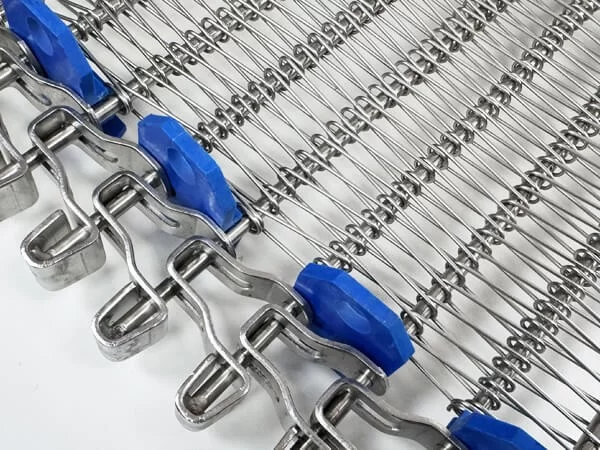 Edge Drive Spiral Freezer Belts
 are precision-engineered stainless steel conveyor belts used in spiral freezers across the food processing industry. Designed for edge-driven systems, these belts provide stable, hygienic, and efficient transport of food products during the freezing process. They are ideal for high-capacity operations where product integrity, airflow, and hygiene are critical.
-
 Industrial Flexible Rod Conveyor Belts Grid Link Mesh Belt China Factory SuppliersHigh-performance Flexible Rod Conveyor Belts also known as Grid Link Conveyor Belts. Sourced from a leading China factory and trusted suppliers, these belts offer anti-deformation design and food-grade compliance for optimized cold chain logistics.
-
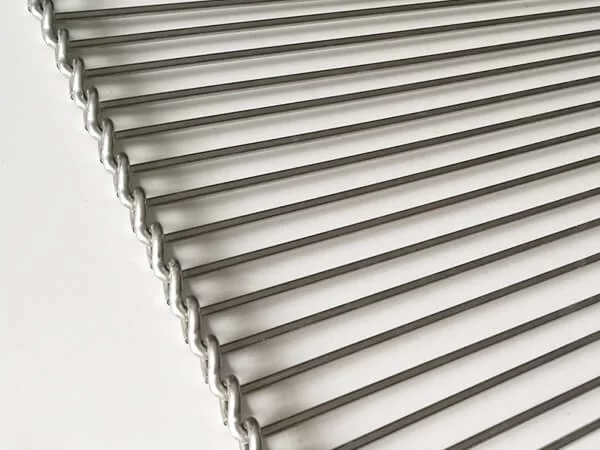 Ladder Conveyor Belts
Ladder Conveyor Belt is a simple but effective style of conveyor belt, generally used belt for common processes and common product loads. Its open design provides efficient operation with minimum maintenance as well as facilitating easy and thorough cleaning. Its lightweight and basic configuration make it a very economic and cost-effective style of belting for many different environments. The ladder belts are used in production processes with temperatures of -100ºC to +450ºC in food and other industries.
-
 Flat Flex Conveyor Belts China Factory Industrial Mesh Belt SuppliersHigh-performance Flat Flex Conveyor Belts from a leading China factory. Also known as Enrober or Rod Network belts, our lightweight mesh design reduces costs and downtime. Contact professional suppliers for HACCP-compliant, durable industrial solutions.
-
 Premium Veneer Dryer Wire Mesh Belts China Factory and Reliable SuppliersLooking for high-performance veneer dryer wire mesh belts? As a top China factory and trusted suppliers, we offer heat-resistant stainless and galvanized steel belts stable up to 600C to ensure uniform drying and eliminate defects in plywood manufacturing.
-
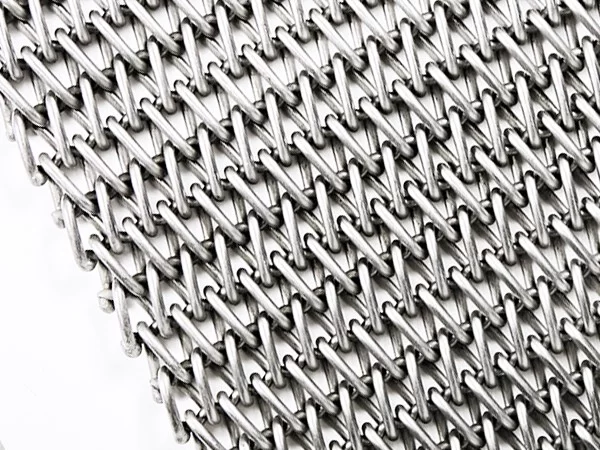 Wire Mesh Lehr Belts
Lehr Belts feature a balanced weave wire construction, composed of alternating right- and left-hand flattened spirals securely seated in crimped connector rods. The belt edges are welded to enhance durability and stability.
-
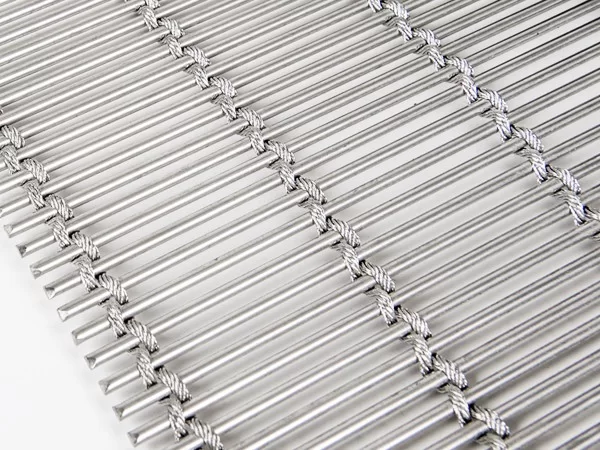 Woven Rod Bar Conveyor Belts
The woven rod bar belt is a specialized conveyor belt known for its durability, heat resistance, and versatile design, making it ideal for various industrial drying and conveying applications, especially in the food, agricultural, and chemical industries.
-
 Custom Honeycomb Metal Flat Wire Conveyor Belts China Factory SuppliersHigh-performance honeycomb metal flat wire conveyor belts from a leading China factory. Professional suppliers offering custom widths and butterfly pressure plate adjustments for maximum industrial stability.
-
 June 27, 2026Industrial Knuckled Edge mesh belt for High Temperature ConveyingComprehensive Guide to Knuckled Edge Mesh Belt for Industrial Conveying In the demanding world of industrial manufacturing, the stability and durability of conveyor systems are critical to operational efficiency. The Knuckled Edge mesh belt offers a sophisticated engineering solution designed to prevent tracking issues and enhance the longevity of the belt. By utilizing a specialized edge folding technique, these belts provide superior flexibility and strength, making them indispensable in high-temperature and heavy-load environments. Whether you are operating in the food processing industry or heavy metallurgy, selecting the right edge structure can significantly reduce downtime and maintenance costs.
-
 June 01, 2026High Quality OilImpregnated Bearing Sintering Furnace Mesh BeltThe Oil-Impregnated Bearing Sintering Furnace Mesh Belt represents a critical intersection of metallurgical precision and material handling efficiency. In the demanding environment of powder metallurgy, where sintered components must be infused with lubricants to ensure lifelong performance, the conveyor system is not merely a transport mechanism but a functional part of the chemical process. By providing a stable, heat-resistant, and chemically inert platform, these mesh belts ensure that oil impregnation is uniform and efficient across thousands of units. Globally, the push toward high-precision automotive and industrial machinery has increased the demand for self-lubricating bearings.
-
 October 28, 2026High Quality Wholesale balanced weave conveyor belt for IndustryWhen optimizing a high-temperature production line, the choice of conveyor surface often determines the balance between throughput and product integrity. For industries dealing with sintering or heat treatment, a standard belt often fails to provide the necessary structural stability and airflow required for uniform processing. The shift toward specialized mesh structures has led to the increased adoption of balanced weave patterns. These belts are specifically engineered to maintain a flat profile under tension, preventing the bowing effect common in simpler weaves, which is critical for maintaining precise contact in industrial furnaces.
-
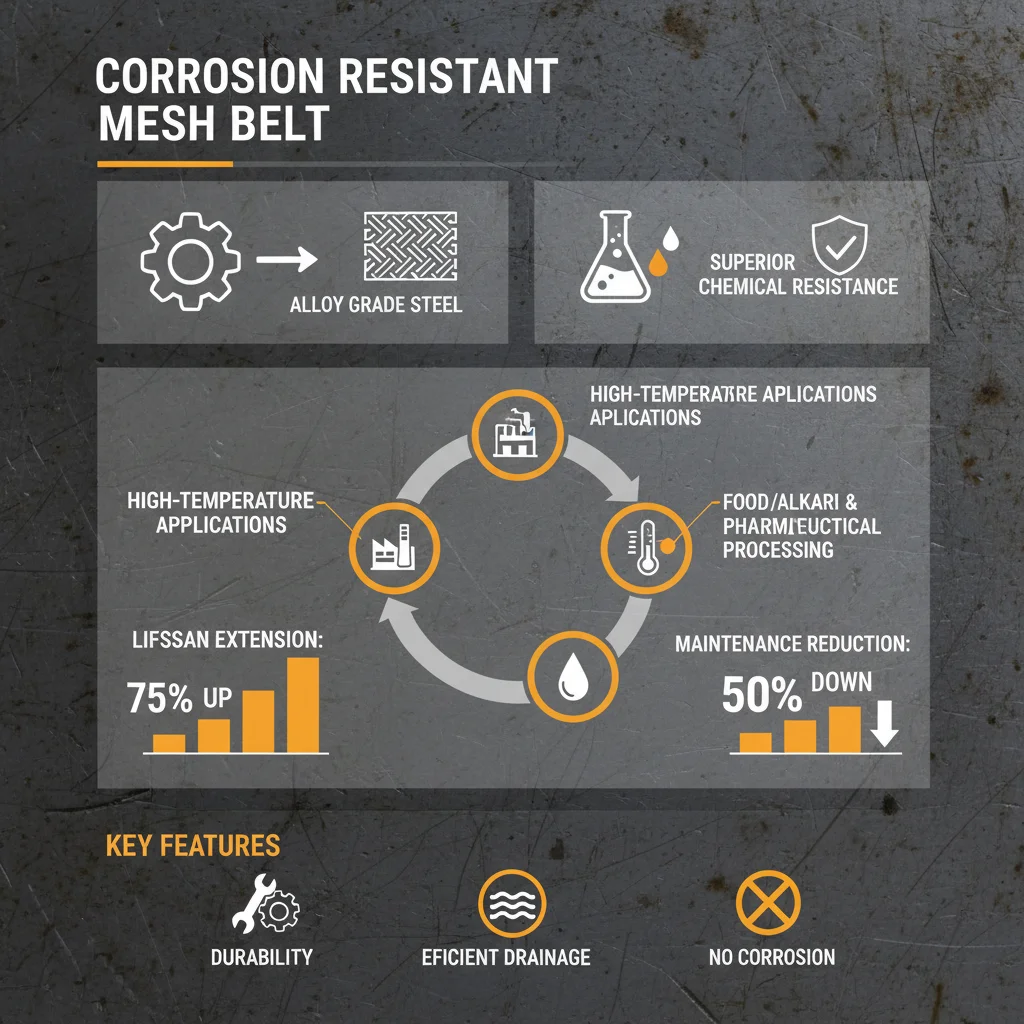 March 16, 2026Corrosion Resistant Mesh Belt SolutionsEngineered for durability, efficiency, and reliability in corrosive environments. Serving industries worldwide. Our corrosion resistant mesh belt solutions are at the forefront of materials science, offering exceptional resistance to acids, alkalis, and other corrosive agents. These belts are crucial for maintaining process integrity and minimizing downtime. We leverage advanced weaving techniques and specialized alloys to deliver superior performance, extended service life, and reduced total cost of ownership.
-
 June 25, 2026High Performance Compound Balanced Weave Conveyor Belt GuideIn the demanding world of industrial manufacturing, the precision and reliability of material handling systems are paramount. The compound balanced weave conveyor belt represents a pinnacle of engineering in mechanical transmission components, designed specifically to bridge the gap between high-density support and smooth material transit. By utilizing a complex interlocking structure, these belts ensure that even the smallest components are transported without risk of falling through the mesh. Globally, the demand for high-performance conveying solutions has surged as industries move toward greater automation and stricter quality control. From the delicate baking of biscuits to the rigorous heat treatment of powder metallurgy parts
-
 October 05, 2026High Quality Wholesale Brazing Furnace Belt for Thermal StabilityIn high-precision thermal processing, the stability of the conveyor system directly dictates the integrity of the brazed joint. Selecting a high-performance metal mesh belt for brazing environments requires a deep understanding of thermal expansion, material oxidation, and mechanical tracking. For industrial operators, the goal is to eliminate belt drift and deformation that can lead to uneven heating or catastrophic production halts. Our specialized conveyor solutions are engineered to withstand extreme cryogenic to high-heat fluctuations, ensuring that components move seamlessly through the furnace. By utilizing digital mesh weaving technology and premium stainless steel grades, these belts provide the open-grid architecture
-
 September 14, 2026High Quality Wholesale Stainless Steel Wire Mesh Belt SolutionsProcuring Wholesale Stainless Steel Wire Mesh Belt solutions requires a deep understanding of how mechanical transmission components interact with specific industrial environments. In the sector of general equipment and mechanical transmission parts manufacturing, the choice of conveyor belt material and architecture directly determines the throughput and longevity of the production line. Many procurement managers face the challenge of balancing initial capital expenditure with long-term operational costs. Selecting a belt that fails to resist corrosion or sustains deformation under high loads leads to unplanned downtime, increased maintenance frequencies, and compromised product quality, particularly in temperature-sensitive industries.
-
 October 14, 2026High Performance Industrial Wholesale conveyor belt SolutionsIntroduction When evaluating the efficiency of a high-temperature production line, the choice of conveyor system often determines the threshold of operational success. For many procurement managers in the mechanical transmission sector, finding a reliable source for a Wholesale conveyor belt is not merely about price, but about matching specific metallurgical properties with the extreme thermal and chemical demands of the furnace environment. The integration of Metal Conveyor Belts and their corresponding Drive Components creates a critical link in industries such as powder metallurgy and electronics. If the belt fails due to thermal deformation or corrosion, the entire sintering or brazing process halts
Get Your Custom Solution
Facing challenges with high-temperature conveying? Contact us now.
Our engineers will provide you with expert product consultation and tailored solutions.
Sign up
for our Newsletter
Subscribe to the weekly newsletter for all the latest updates


