- Tel: +86 15252586600 / +86 13705250816
- Email: 527966138@qq.com / 1026520412@qq.com

Optimize Production with Powder Metallurgy Sintering Furnace Mesh Belt
Optimize Production with Powder Metallurgy Sintering Furnace Mesh Belt
Optimizing Production with Powder Metallurgy Sintering Furnace Mesh Belt
In the high-precision world of industrial manufacturing, the sintering process is the heartbeat of component strength and quality. A critical yet often overlooked component in this process is the Powder Metallurgy Sintering Furnace Mesh Belt. This specialized conveyor system is designed to transport delicate powder-compacted parts through extreme temperatures while maintaining structural integrity. Selecting the right mesh belt can mean the difference between a seamless production flow and costly downtime. In this guide, we will explore how the right belt material and design impact the efficiency of your sintering furnace and how to choose the best solution for your specific metallurgical needs.

The Role of Mesh Belts in Sintering Furnaces
The primary function of a Powder Metallurgy Sintering Furnace Mesh Belt is to provide a stable, heat-resistant platform for "green" parts as they transition from compaction to final density. Because sintering occurs at temperatures often exceeding 1,100°C, the belt must possess exceptional creep resistance and oxidation stability. A high-quality mesh belt ensures that parts are moved uniformly, preventing uneven heating or deformation. Furthermore, the open-weave design allows for the efficient flow of protective atmospheres (such as nitrogen or hydrogen) and ensures that heating elements can radiate energy evenly across the product surface.
Industry Insight: The stability of the mesh weave directly correlates to the dimensional accuracy of the sintered part. Any sagging or stretching of the belt during the heating cycle can lead to part misalignment.
Material Selection for Powder Metallurgy Sintering Furnace Mesh Belt
Not all metals are created equal when facing the harsh environment of a sintering furnace. Depending on the temperature and the chemistry of the parts being produced, different alloys are required. For standard applications, high-grade stainless steels are common, but for extreme temperatures, Inconel or Nickel-based alloys are preferred due to their superior resistance to oxidation and scaling. The choice of material for your Powder Metallurgy Sintering Furnace Mesh Belt determines the overall lifespan of the equipment and the frequency of maintenance shutdowns.
Comparing Mesh Belt Designs for Sintering Efficiency
When sourcing a Powder Metallurgy Sintering Furnace Mesh Belt, the weave pattern is just as important as the material. Balanced weaves offer the best stability, while specific interlocking designs can reduce the "marking" left on the bottom of the parts. A common challenge in sintering is belt elongation, where the belt stretches over time due to heat and load. Advanced manufacturing techniques now allow for pre-tensioned weaves that significantly reduce this effect, ensuring a longer service life and more consistent part transport.

Critical Specifications for Your Sintering Mesh Belt
To ensure the seamless integration of a Powder Metallurgy Sintering Furnace Mesh Belt into your existing furnace, certain technical parameters must be precisely defined. The wire diameter affects the load-bearing capacity, while the mesh opening size determines how much support the part receives. If the openings are too large, small parts may sink or tilt; if they are too small, gas permeability is reduced, potentially affecting the sintering quality of the parts.
Maintenance Strategies for Sintering Mesh Belts
Even the most robust Powder Metallurgy Sintering Furnace Mesh Belt will experience wear over time. To maximize the return on investment, a proactive maintenance schedule is essential. Regular checks for lateral drift (belt tracking) can prevent the belt from rubbing against the furnace walls, which leads to premature failure. Additionally, removing accumulated oxide scale from the belt surface ensures that parts remain flat and prevents contamination. Using high-quality belts from reputable suppliers ensures that the metallurgical properties remain stable even after thousands of heating cycles.
Improving Overall Equipment Effectiveness (OEE)
The integration of a high-performance Powder Metallurgy Sintering Furnace Mesh Belt is a direct investment in OEE. By reducing the frequency of belt replacements and minimizing part rejects caused by deformation or surface marking, manufacturers can significantly lower their cost-per-part. Modern mesh belts are designed to operate with minimal friction, reducing the energy required to drive the conveyor system. When coupled with precise temperature control, these belts enable a continuous, high-throughput production line that meets the stringent quality standards of the automotive and aerospace industries.
Conclusion: Choosing the Right Foundation for Your Sintering Process
The Powder Metallurgy Sintering Furnace Mesh Belt is far more than a simple conveyor; it is a critical technical component that ensures the success of the sintering process. By carefully considering material grade, weave design, and technical specifications, manufacturers can ensure maximum durability and product quality. Investing in premium mesh solutions reduces downtime and enhances the precision of your final components. For those looking to optimize their powder metallurgy line, prioritizing a high-stability, heat-resistant belt is the most effective way to secure long-term operational success.
Frequently Asked Questions (FAQs)
How often should a sintering furnace mesh belt be replaced?
The replacement interval varies depending on the operating temperature and the load. Generally, belts operating at extreme temperatures (above 1,100°C) may show signs of elongation or oxidation every 12 to 24 months. Regular monthly inspections for weave integrity and tracking stability are recommended. If you notice significant sagging or "stretching" that affects part alignment, it is time for a replacement. Using premium alloys from JY Mesh Belt can significantly extend this lifespan.
What causes the mesh belt to drift or track incorrectly?
Belt drift is usually caused by uneven tensioning, wear on the drive sprockets, or thermal expansion that is not uniform across the belt width. In some cases, accumulated debris or oxide scale on the rollers can push the belt to one side. To prevent this, ensure that the furnace's tracking system is calibrated and that the belt is cleaned regularly. A precisely woven belt with consistent edge dimensions helps maintain a straight path during high-temperature transit.
Can I use standard stainless steel for all sintering applications?
While standard stainless steel (like 304 or 316) is excellent for corrosion resistance, it is often insufficient for the high temperatures required in powder metallurgy sintering. At temperatures above 1,000°C, standard stainless steels can lose structural strength and oxidize rapidly. For these applications, specialized grades like 310S or Nickel-alloys (Inconel) are necessary to prevent the belt from snapping or sagging under the heat and load.
How do I choose the correct mesh opening size for my parts?
The choice depends on the smallest dimension of your part's contact area. A general rule of thumb is that the part should be supported by at least two or three wires of the mesh to prevent "sinking" or tilting. However, you must balance this with the need for gas permeability. If the mesh is too dense, the sintering atmosphere cannot circulate effectively around the part. We recommend consulting with a technical expert at jymeshbelt.com to find the optimal balance between support and airflow.
-
 Balanced Weave Conveyor Belt China Factory High Temp Mesh SuppliersPremium Balanced Weave Conveyor Belts from a leading China factory. Our suppliers provide Direct Edge Welding for maximum structural integrity and U-Shaped Edge reinforcement to prevent spillage in high-heat environments.
-
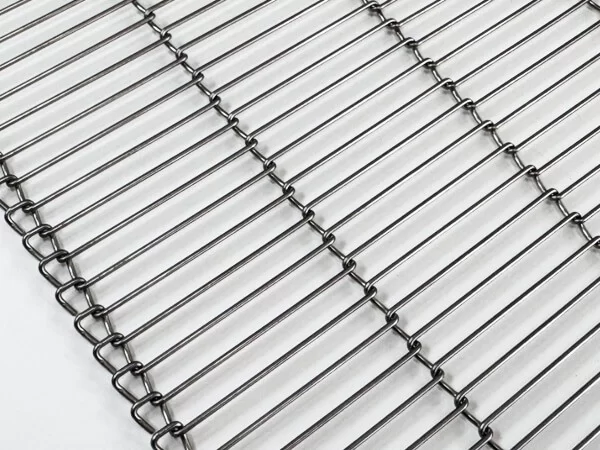 Flat Flex Conveyor Belts
 also known as Enrober Conveyor Belts, Rod Network Conveyor Belts are distinguished by their unique construction and versatile applications. These belts are constructed from a series of looped wires that interlock with one another, creating a flexible and robust mesh. The simple structure makes it economical and lightweight. It can help to save costs and reduce downtime.
-
 High Temperature Flat Flex Rod Network Conveyor Belts Factory and Suppliers in ChinaLooking for high-performance Rod Network Conveyor Belts? As leading China suppliers and a professional factory, we provide Flat Flex belts with 1200C heat resistance and 30 percent higher tensile strength for industrial conveying.
-
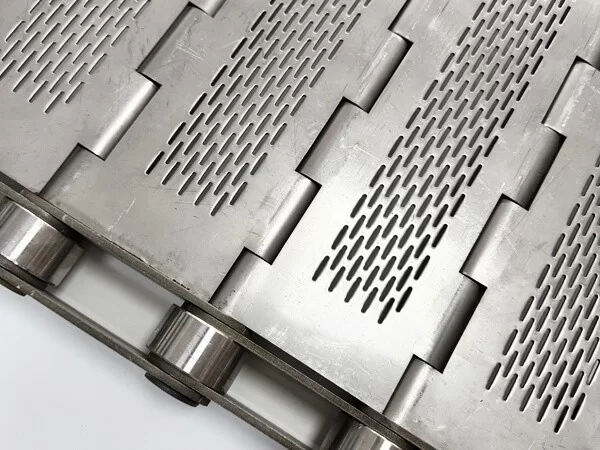 Plate Link Conveyor Belts
Plate Link Conveyor Belt is very strong, driven by stainless steel chain, made of stainless steel plate, and very suited to heavy load applications, running smoothly in the conveying process, easy to install and replace, and long in service life. Its self-supporting structure makes it be used over large widths without any support. PFM Screen’s Plate Link belt features an extremely robust design and high load capacity, making it the perfect choice for arduous engineering processes such as presswork, die-casting and forging.
-
 HighPerformance Plate Link Conveyor Belts China Suppliers and FactoryLooking for reliable Plate Link Conveyor Belt China suppliers? Our factory provides robust stainless steel belts driven by chains, ideal for heavy load applications in die-casting and forging. Experience smooth operation, easy installation, and long service life with our self-supporting industrial belts.
-
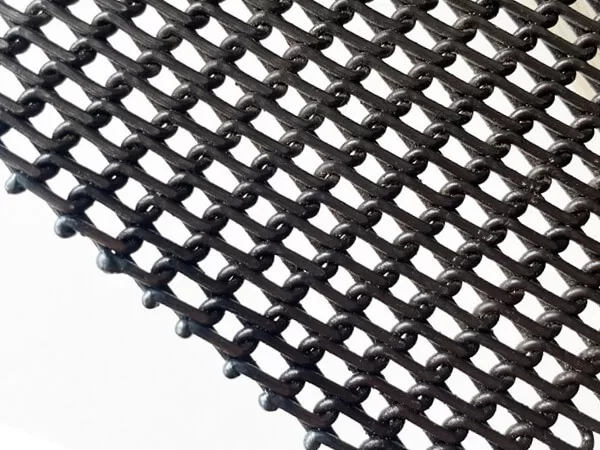 Biscuit Baking Belts | Rolled Baking Band
Biscuit Baking Belt also is known as Rolled Baking Band, Flat Rolled Baking Belt, Z Belts, Its name is based on the Z shape of the flattened spirals. The Biscuit Baking Belt is a highly usable conveyor belt for the bakery industry. The belt has been designed especially for baking biscuits directly on the belt in straight feed through ovens.
The Biscuit Baking Belt is a stratified metal spiral belt with a lightweight and a reduced thickness. Its design gives the belt low heat inertia, high strength, and good air circulation through the belt. This woven and stratified belt gives a superposition of the wires and an open mesh. The edges are looped.
-
 Custom Industrial Stainless Steel Baskets Manufacturer | China Factory SuppliersSource high-performance industrial stainless steel baskets from a leading China factory. As premier suppliers, we provide bespoke customization of materials and mesh sizes for durable, corrosion-resistant solutions tailored to your production line.
-
 HighTemperature Woven Rod Bar Conveyor Belts China Suppliers and FactoryLooking for high-performance woven rod bar conveyor belts? Our China factory provides durable, heat-resistant solutions ideal for food and chemical industries. As leading suppliers, we offer custom stainless steel mesh belts for extreme industrial drying.
-
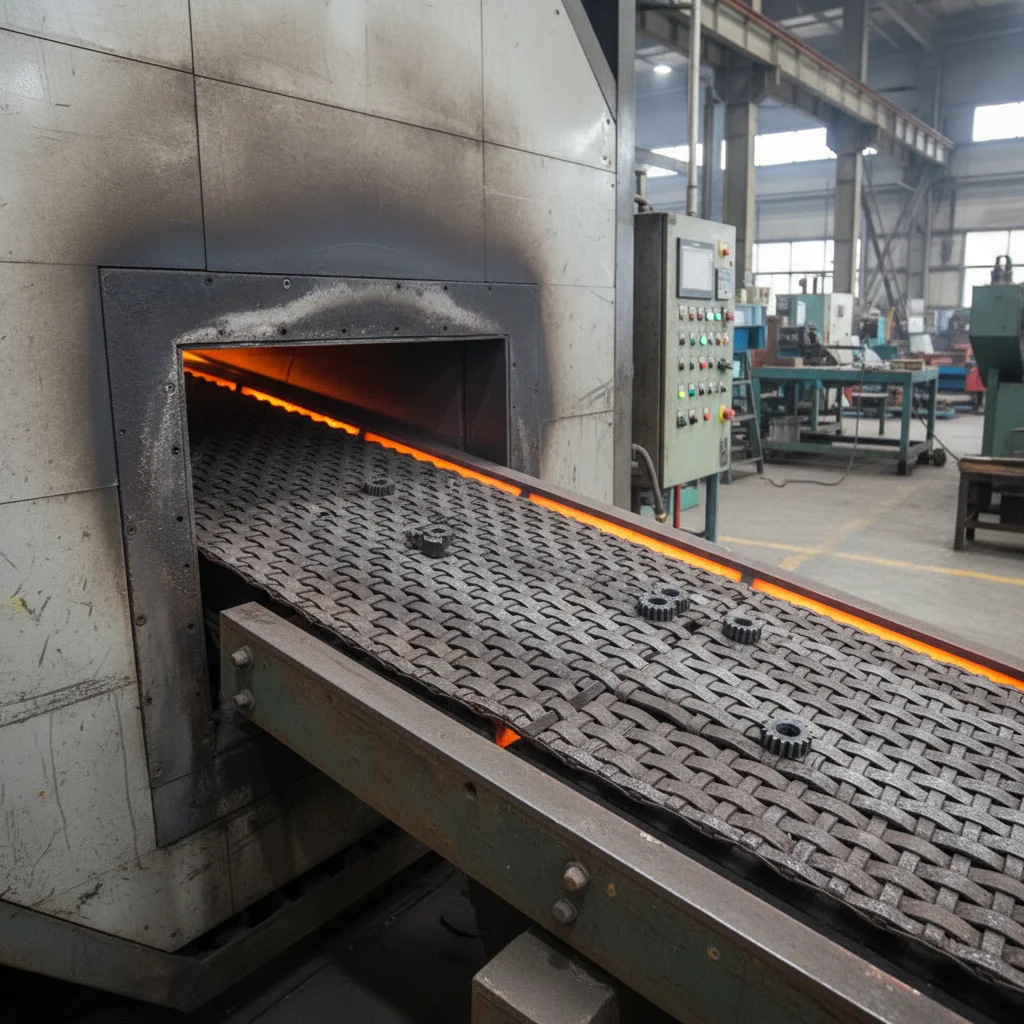 March 24, 2026Optimizing Sintering Processes with High Performance Sintering Furnace Mesh Belt SolutionsIn the realm of heat treatment processes, particularly sintering, the efficiency and reliability of the material handling system are crucial. A sintering furnace mesh belt plays a pivotal role in ensuring consistent product quality and maximizing throughput. This article will delve into the intricacies of these belts, exploring their construction, benefits, applications, maintenance, and future trends. We will also examine how selecting the right mesh belt can significantly impact your sintering process and overall operational costs. A high-quality belt means reduced downtime and a more consistent final product. A sintering furnace mesh belt is a continuous belt made of interwoven metal wires, designed to transport materials through a high-temperature sintering furnace. Sintering is a heat treatment process used to bond particles together without melting them, creating a solid mass. The mesh belt provides a stable and consistent surface for the parts to travel on, ensuring uniform heating and preventing damage. These belts are engineered to withstand extreme temperatures, resist oxidation, and maintain their shape under load.
-
 July 24, 2026Industrial Balanced Spiral Conveyor Belt for Heavy Duty LoadsIn the demanding world of industrial material handling, precision and stability are non-negotiable. The Balanced Spiral Conveyor Belt represents a sophisticated evolution in conveying technology, designed to move heavy-duty industrial loads with absolute accuracy. By integrating high-grade stainless steel with a specialized chain-driven mechanism, these systems solve the age-old problem of belt drift and deformation in high-stress environments. Across global manufacturing sectors, the need for a transport solution that can withstand extreme thermal and chemical stress while maintaining perfect synchronization is paramount. The implementation of a Balanced Spiral Conveyor Belt ensures that production lines in food processing, pharmaceutical, and automotive industries operate
-
 June 11, 2026Industrial Metal Sintering Mesh Belt for High Temperature HeatingIn high-temperature industrial processing, the stability and durability of conveyor systems are non-negotiable. The metal sintering Mesh Belt has emerged as the gold standard for applications requiring extreme thermal resistance and structural integrity. Unlike traditional woven belts, sintered mesh provides a seamless, fused connection that eliminates the risk of fraying or breaking under intense heat. Whether you are operating in electronics manufacturing, aerospace, or chemical processing, understanding the nuances of this technology is key to optimizing your production lines efficiency and lifespan.
-
 August 31, 2026High Temperature Industrial Mesh Belt Technical Selection GuideIndustrial material transport in high-temperature environments requires specialized conveyor solutions that can withstand extreme thermal stress without losing structural integrity. A high-performance mesh belt is engineered to facilitate the continuous movement of components through sintering, brazing, or drying processes, ensuring that materials are exposed to uniform heat. This article examines the technical specifications and selection criteria for these critical components in B2B manufacturing. The challenge for engineers lies in balancing porosity for airflow with the mechanical strength required to prevent elongation. In sectors such as powder metallurgy and electronics, the choice of belt construction whether spiral or rod-reinforced directly impacts production efficiency
-
 May 18, 2026High Performance Sintering Mesh Belt for Industrial FurnacesIn the demanding world of high-temperature industrial processing, the Sintering Mesh Belt stands as a critical component for ensuring operational stability and product quality. These specialized conveyor systems are engineered to withstand extreme thermal stress while maintaining dimensional stability, making them indispensable for powder metallurgy and advanced ceramics manufacturing. By providing a seamless transition of materials through sintering furnaces, they bridge the gap between raw compressed powder and high-performance finished components. The global shift toward precision engineering and the miniaturization of mechanical parts has placed an unprecedented premium on the reliability of heat-treatment equipment.
-
 October 29, 2026High Quality Wholesale Balanced Spiral Woven Conveyor Belt GuideIn high-temperature industrial processing, the stability of the transport medium directly dictates product yield and operational safety. A Balanced Weave Conveyor Belt is a specialized mesh solution designed to maintain dimensional stability under extreme thermal stress, preventing the lateral drift and deformation common in standard weaves. This article examines the engineering principles that make this dual-spiral structure essential for sintering, brazing, and glass manufacturing. For procurement officers and plant engineers, selecting the right mesh configuration involves balancing mechanical strength with thermal conductivity. The integration of precision-curled cross wires and professional welding ensures that the belt can handle heavy loads
-
 October 05, 2026High Quality Wholesale Brazing Furnace Belt for Thermal StabilityIn high-precision thermal processing, the stability of the conveyor system directly dictates the integrity of the brazed joint. Selecting a high-performance metal mesh belt for brazing environments requires a deep understanding of thermal expansion, material oxidation, and mechanical tracking. For industrial operators, the goal is to eliminate belt drift and deformation that can lead to uneven heating or catastrophic production halts. Our specialized conveyor solutions are engineered to withstand extreme cryogenic to high-heat fluctuations, ensuring that components move seamlessly through the furnace. By utilizing digital mesh weaving technology and premium stainless steel grades, these belts provide the open-grid architecture
-
 October 23, 2026Rod Network Conveyor Belts Price Comparison & Supplier ReviewCompare rod network conveyor belts pricing by aligning quotes with stainless steel 304, 316, 310S, and Inconel materials across food, pharmaceutical, and automotive applications.
Get Your Custom Solution
Facing challenges with high-temperature conveying? Contact us now.
Our engineers will provide you with expert product consultation and tailored solutions.
Sign up
for our Newsletter
Subscribe to the weekly newsletter for all the latest updates


