- Tel: +86 15252586600 / +86 13705250816
- Email: 527966138@qq.com / 1026520412@qq.com

OilImpregnated Bearing Sintering Furnace Mesh Belt Guide
OilImpregnated Bearing Sintering Furnace Mesh Belt Guide
Optimizing Production with Oil-Impregnated Bearing Sintering Furnace Mesh Belt
In the high-precision world of powder metallurgy, the efficiency of the sintering process directly dictates the quality of the final component. A critical yet often overlooked component of this system is the Oil-Impregnated Bearing Sintering Furnace Mesh Belt. These specialized belts are engineered to withstand extreme thermal cycling while transporting delicate bearing parts through vacuum or controlled-atmosphere furnaces. By providing a stable, heat-resistant platform, they ensure that the oil impregnation process is uniform, reducing friction and enhancing the longevity of the bearings. Understanding the material science and mechanical properties of these belts is essential for any plant manager looking to reduce downtime and improve yield.

The Role of Materials in Sintering Furnace Mesh Belts
The environment inside a sintering furnace is incredibly harsh, characterized by intense heat and the presence of chemical lubricants. Therefore, an Oil-Impregnated Bearing Sintering Furnace Mesh Belt must be fabricated from high-grade alloys, typically stainless steel or Inconel, to prevent oxidation and deformation. Thermal stability is the most critical factor; the belt must maintain its tension and width despite repeated expansion and contraction. High-quality mesh weaves prevent the "sagging" effect, ensuring that bearing parts remain level as they move through the heating and cooling zones, which prevents geometric distortion of the bearings themselves.
Material Advantage: Utilizing high-nickel alloys ensures that the mesh remains chemically inert when in contact with impregnation oils at temperatures exceeding 1000°C, preventing contamination of the sintered parts.
Operational Advantages of Oil-Impregnated Bearing Sintering Furnace Mesh Belt
Implementing a premium Oil-Impregnated Bearing Sintering Furnace Mesh Belt offers significant operational advantages over traditional conveyor systems. Firstly, the open-mesh design allows for superior airflow and heat penetration, ensuring that the sintering temperature is reached uniformly across the entire batch. Secondly, the ability to handle oil-impregnated components without absorbing the lubricant into the belt structure reduces waste and maintains a cleaner furnace interior. This precision control leads to a higher percentage of "first-pass" quality parts, significantly reducing the cost of scrap and rework in bearing production.
Comparison: Mesh Belts vs. Standard Sintering Trays
Many legacy facilities still use batch-style trays, but the transition to a continuous Oil-Impregnated Bearing Sintering Furnace Mesh Belt transforms the production flow. Continuous belts eliminate the downtime associated with loading and unloading trays and provide a constant, predictable thermal profile. This consistency is vital for the oil-impregnation phase, where precise timing and temperature are required to ensure the lubricant penetrates the pores of the sintered metal correctly.
Technical Specifications for Bearing Sintering Belts
Selecting the right Oil-Impregnated Bearing Sintering Furnace Mesh Belt requires a deep dive into technical specifications. The wire diameter and mesh opening must be balanced to support the weight of the bearings without allowing them to slip through or become trapped. Additionally, the belt's edges must be reinforced to prevent fraying under the constant tension of the drive sprockets. Below are the typical specifications for industrial-grade sintering belts:
Maintenance and Lifespan Extension
To maximize the return on investment for an Oil-Impregnated Bearing Sintering Furnace Mesh Belt, a proactive maintenance schedule is mandatory. The primary enemy of the mesh belt is "carbon buildup" from the oils used during impregnation. If not cleaned, this carbon can harden and create abrasive points that wear down the wires. Periodic inspection of the belt tracking is also essential; a belt that runs off-center will experience accelerated wear on the edges, leading to premature failure and costly furnace shutdowns.

Conclusion: Enhancing Bearing Quality with Precision Belting
The selection of a high-performance Oil-Impregnated Bearing Sintering Furnace Mesh Belt is not merely a purchase of a consumable, but a strategic upgrade to the entire sintering line. By ensuring thermal uniformity, reducing manual labor, and providing a chemically resistant transport medium, these belts enable manufacturers to produce bearings with superior dimensional accuracy and optimal lubrication. Investing in professional-grade mesh belts ensures that your production line remains efficient, sustainable, and capable of meeting the most stringent industry standards.
Frequently Asked Questions (FAQs)
How do I choose the correct material for my sintering furnace belt?
Choosing the correct material depends primarily on your peak operating temperature and the chemical composition of the impregnation oils. For standard sintering (up to 900°C), SS310 is often sufficient due to its excellent oxidation resistance. However, if your process exceeds 1000°C or involves highly corrosive environments, Inconel alloys are recommended. The key is to balance the cost of the material with the required lifespan of the belt; higher-nickel alloys cost more upfront but significantly reduce the frequency of replacements, lowering the total cost of ownership.
Can the mesh belt cause deformation in small bearing parts?
When designed correctly, a high-quality Oil-Impregnated Bearing Sintering Furnace Mesh Belt prevents deformation. The critical factor is the "mesh openness." If the openings are too large, small parts may tilt or sink, leading to uneven sintering. We recommend a tight-weave design for miniature bearings to provide a flatter support surface. Additionally, ensuring the belt is properly tensioned prevents sagging, which is the primary cause of part misalignment during the high-temperature phase of production.
How often should the sintering mesh belt be replaced?
Replacement intervals vary based on throughput and maintenance, but typically occur every 12 to 24 months. Signs that a belt needs replacement include visible stretching (elongation), thinning of the wires due to oxidation, or frayed edges. To extend the life of your belt, we suggest weekly inspections for tracking alignment and monthly cleaning to remove carbonized oil residues. Replacing the belt during scheduled annual maintenance shutdowns prevents unplanned production halts, which are far more costly than the belt itself.
Does the belt affect the oil absorption rate of the bearings?
Yes, the design of the belt plays a role in the efficiency of oil impregnation. An open mesh allows the oil to surround the part more effectively than a solid tray, as it permits the oil to flow through the belt and contact the underside of the bearing. This ensures a 360-degree impregnation process, which is vital for reducing friction and wear in the finished product. By using a precision-engineered Oil-Impregnated Bearing Sintering Furnace Mesh Belt, you ensure that the lubricant is distributed evenly throughout the sintered matrix.
-
 Flat Flex Conveyor Belts China Factory Industrial Mesh Belt SuppliersHigh-performance Flat Flex Conveyor Belts from a leading China factory. Also known as Enrober or Rod Network belts, our lightweight mesh design reduces costs and downtime. Contact professional suppliers for HACCP-compliant, durable industrial solutions.
-
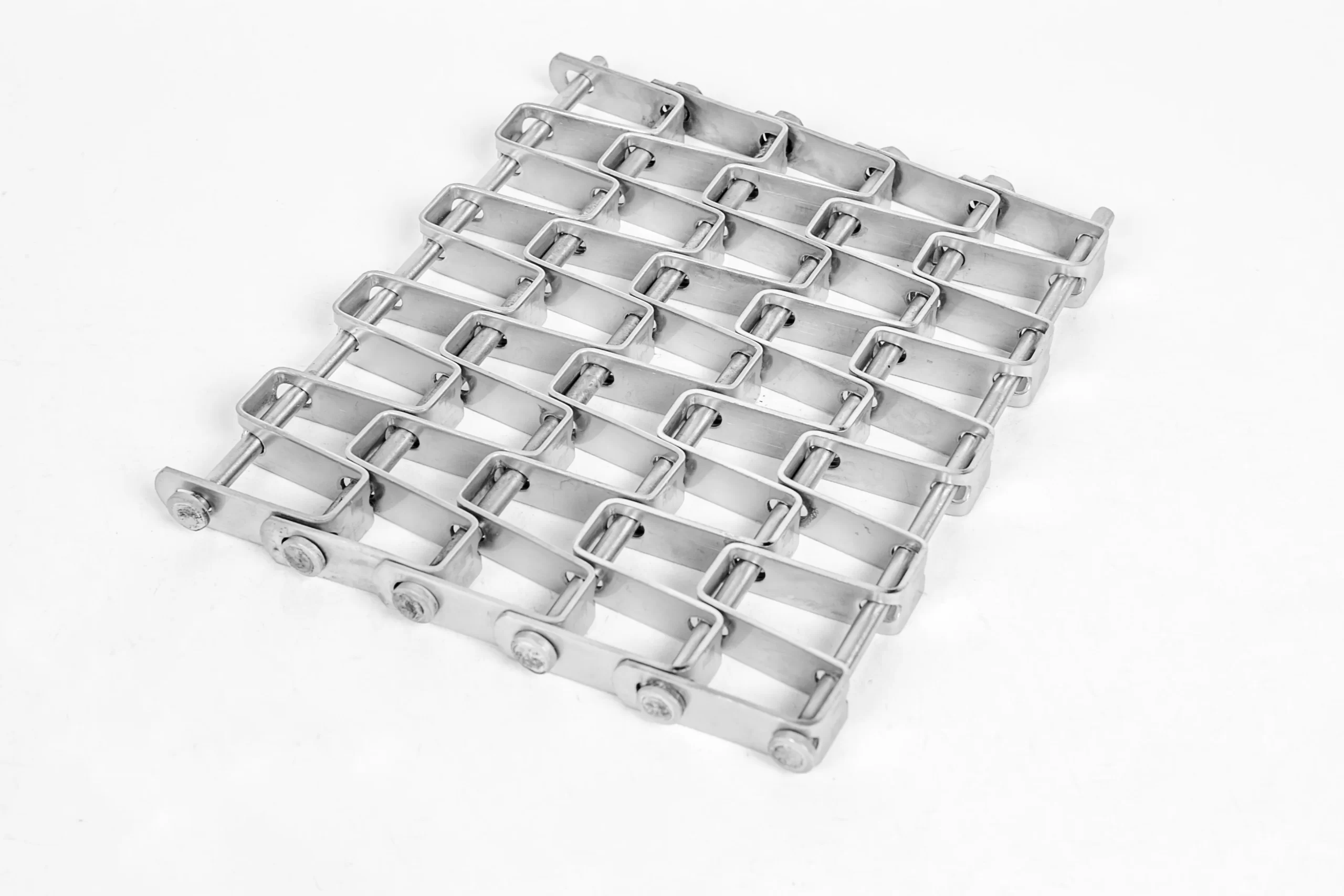 Honeycomb Conveyor Belts
Customize the butterfly pressure plate as needed
-
 Custom Industrial Stainless Steel Baskets China Factory and SuppliersHigh-performance industrial stainless steel baskets from a leading China factory. We offer personalized customization services for materials, styles, and mesh sizes to meet your exact needs. Contact the top suppliers for durable, corrosion-resistant solutions.
-
 Industrial Flexible Rod Conveyor Belts Grid Link Mesh Belt China Factory SuppliersHigh-performance Flexible Rod Conveyor Belts also known as Grid Link Conveyor Belts. Sourced from a leading China factory and trusted suppliers, these belts offer anti-deformation design and food-grade compliance for optimized cold chain logistics.
-
 Premium Spiral Freezer Belts China Factory | Professional Industrial Cooler Belt SuppliersLooking for high-performance Spiral Freezer Belts? As leading China suppliers and a certified factory, we provide durable SS304 and SS316 spiral cooler belts designed for maximum airflow, hygiene, and efficiency in food processing industries.
-
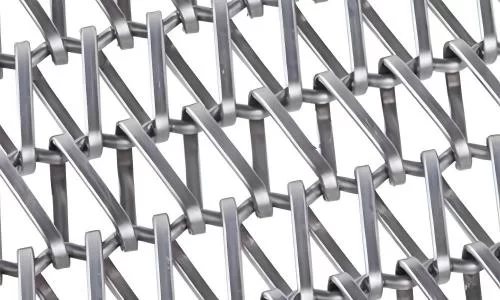 Veneer Dryer Wire Mesh Belts
Veneer dryer wire mesh belts are essential components in continuous veneer drying systems, widely used in plywood and panel manufacturing. These belts are designed to withstand high temperatures, provide stable transport, and allow optimal air circulation, ensuring uniform drying of wood veneer sheets. Made from high-quality metal or heat-resistant synthetic materials, these belts contribute to energy efficiency, reduce product defects, and enhance drying line productivity.
-
 Balanced Spiral Woven Conveyor Belts China Factory and Leading SuppliersLooking for premium Balanced Weave Conveyor Belts from a trusted China factory? As leading suppliers, we provide high-performance spiral wire link belts for food, heat treatment, and glass industries, ensuring FDA compliance and extreme temperature resistance.
-
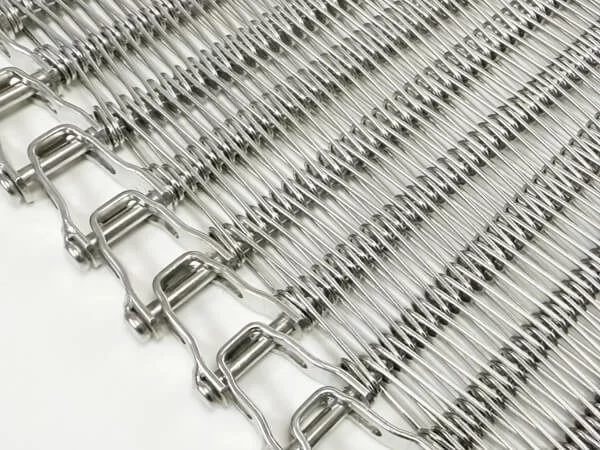 Flexible Rod Conveyor Belts
A Flexible Rod Belt is constructed from 3 components.
1. Alternating spirals take care of the belt overlay.
2. These spirals are connected to each other by means of smooth cross rods.
3. Special chain links are mounted at the outer sides, which are locked by means of button heads.
-
 August 21, 2026Industrial High Performance Dryer Mesh Belt for Thermal ProcessingIn the demanding landscape of industrial thermal processing, the selection of a conveying system can dictate the entire efficiency of a production line. A high-performance Dryer Mesh Belt serves as the critical interface between raw material and finished product, ensuring that heat is distributed evenly and moisture is removed consistently. For manufacturers operating in heavy-duty environments, the transition to precision-engineered mesh solutions is no longer an option but a necessity for maintaining competitive throughput. The global shift toward automation and higher hygiene standards has pushed the boundaries of what mechanical transmission components can achieve.
-
 May 13, 2026Industrial Edge Baffle Mesh Belt for Product ContainmentIn the complex landscape of modern industrial conveyance, the edge baffle mesh belt stands as a critical engineering solution for preventing product spillover and ensuring precise alignment during high-speed transport. By integrating vertical containment boundaries directly into the belt structure, manufacturers can significantly reduce material waste and enhance the overall safety of the production line. Globally, the demand for specialized metal conveyor components has surged as industries transition toward fully automated processing. The implementation of an edge baffle mesh belt is no longer just an optional upgrade but a necessity for sectors where product integrity and strict volumetric control are paramount
-
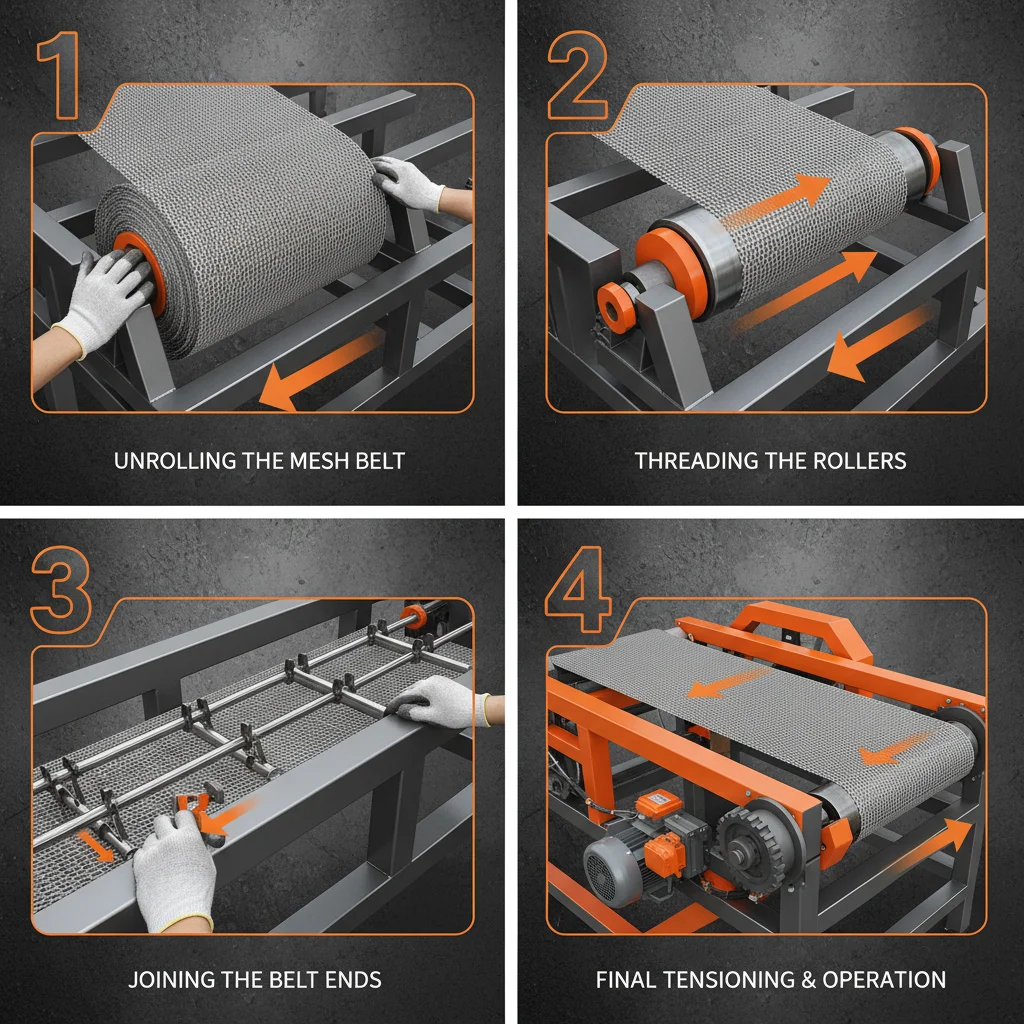 March 30, 2026Investing in a Reliable Dryer Mesh Belt for Efficient Material HandlingLook, I've spent years in the dirt, watching things get built – everything from simple warehouses to massive processing plants. And let me tell you, moving material is always the bottleneck. It's not glamorous, it's not sexy, but it's where projects live or die. That's where a solid Dryer Mesh Belt comes in. It's not just a conveyor; it’s the backbone of efficiency, and frankly, a sanity saver for everyone on site.
-
 April 29, 2026Engineering Excellence in Spiral Mesh Belts ManufacturingRedefining industrial transmission with ultra-precision spiral mesh solutions, combining aerospace-grade durability with seamless operational fluidity for global manufacturing leaders. 4200 Annual Output 168 Countries Served 6 Days Sample Lead Time 99.7 On-Time Delivery The Pinnacle of Mesh Engineering As a global benchmark in the general equipment manufacturing sector, our Spiral Mesh Belts are designed to eliminate friction-induced downtime and maximize throughput in high-load mechanical transmission systems. By integrating proprietary alloy heat-treatment and precision weave geometry, our Spiral Mesh Belts provide unparalleled dimensional stability even under extreme thermal fluctuations. Architectural Integrity Three Core Pillars Our manufacturing philosophy is anchored by three non-negotiable technical standards.
-
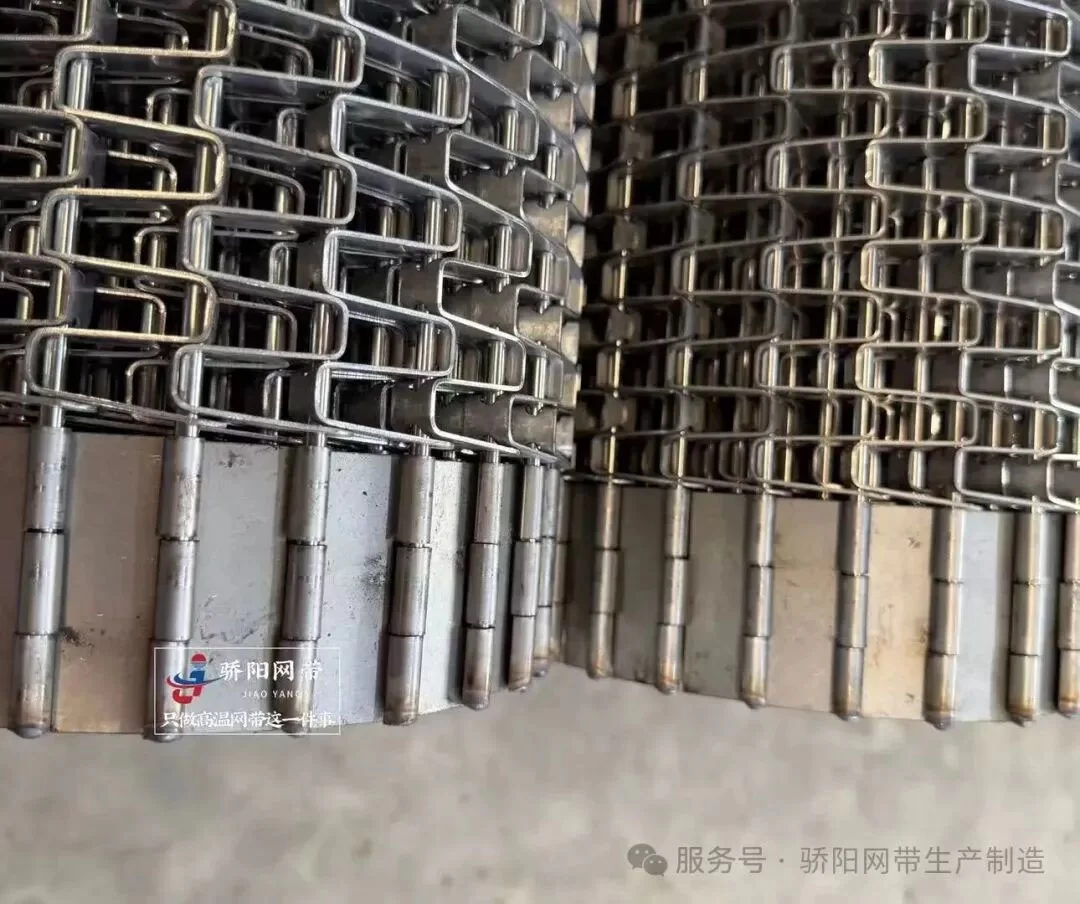 February 01, 2026What Are The Advantages Of The Great Wall Mesh Belt And Jiaoyang Products?
Jiaoyang selects excellent stainless steel materials, which meet the standards for strength, corrosion resistance, and wear resistance. Each batch of materials supports traceability.
-
 September 14, 2026High Quality Wholesale Stainless Steel Wire Mesh Belt SolutionsProcuring Wholesale Stainless Steel Wire Mesh Belt solutions requires a deep understanding of how mechanical transmission components interact with specific industrial environments. In the sector of general equipment and mechanical transmission parts manufacturing, the choice of conveyor belt material and architecture directly determines the throughput and longevity of the production line. Many procurement managers face the challenge of balancing initial capital expenditure with long-term operational costs. Selecting a belt that fails to resist corrosion or sustains deformation under high loads leads to unplanned downtime, increased maintenance frequencies, and compromised product quality, particularly in temperature-sensitive industries.
-
 May 22, 2026High Performance Powder Metallurgy Sintering Furnace Mesh BeltThe Powder Metallurgy Sintering Furnace Mesh Belt serves as the critical backbone for high-precision metal component manufacturing, ensuring that delicate green compacts are transported through extreme temperature zones without deformation. In the competitive landscape of mechanical transmission parts, the efficiency of the sintering process determines not only the structural integrity of the final product but also the overall operational cost of the production line. Understanding the nuances of mesh belt selection is essential for any manufacturer aiming to minimize scrap rates and maximize throughput. Globally, the shift toward sustainable manufacturing and the demand for lightweight, high-strength automotive and aerospace parts have placed
-
 June 09, 2026Optimize Production with Powder Metallurgy Sintering Furnace Mesh BeltOptimizing Production with Powder Metallurgy Sintering Furnace Mesh Belt In the high-precision world of industrial manufacturing, the sintering process is the heartbeat of component strength and quality. A critical yet often overlooked component in this process is the Powder Metallurgy Sintering Furnace Mesh Belt . This specialized conveyor system is designed to transport delicate powder-compacted parts through extreme temperatures while maintaining structural integrity. Selecting the right mesh belt can mean the difference between a seamless production flow and costly downtime. In this guide, we will explore how the right belt material and design impact the efficiency of your sintering furnace
Get Your Custom Solution
Facing challenges with high-temperature conveying? Contact us now.
Our engineers will provide you with expert product consultation and tailored solutions.
Sign up
for our Newsletter
Subscribe to the weekly newsletter for all the latest updates


